The Maestro: 15 Fascinating Facts About Giuseppe Verdi
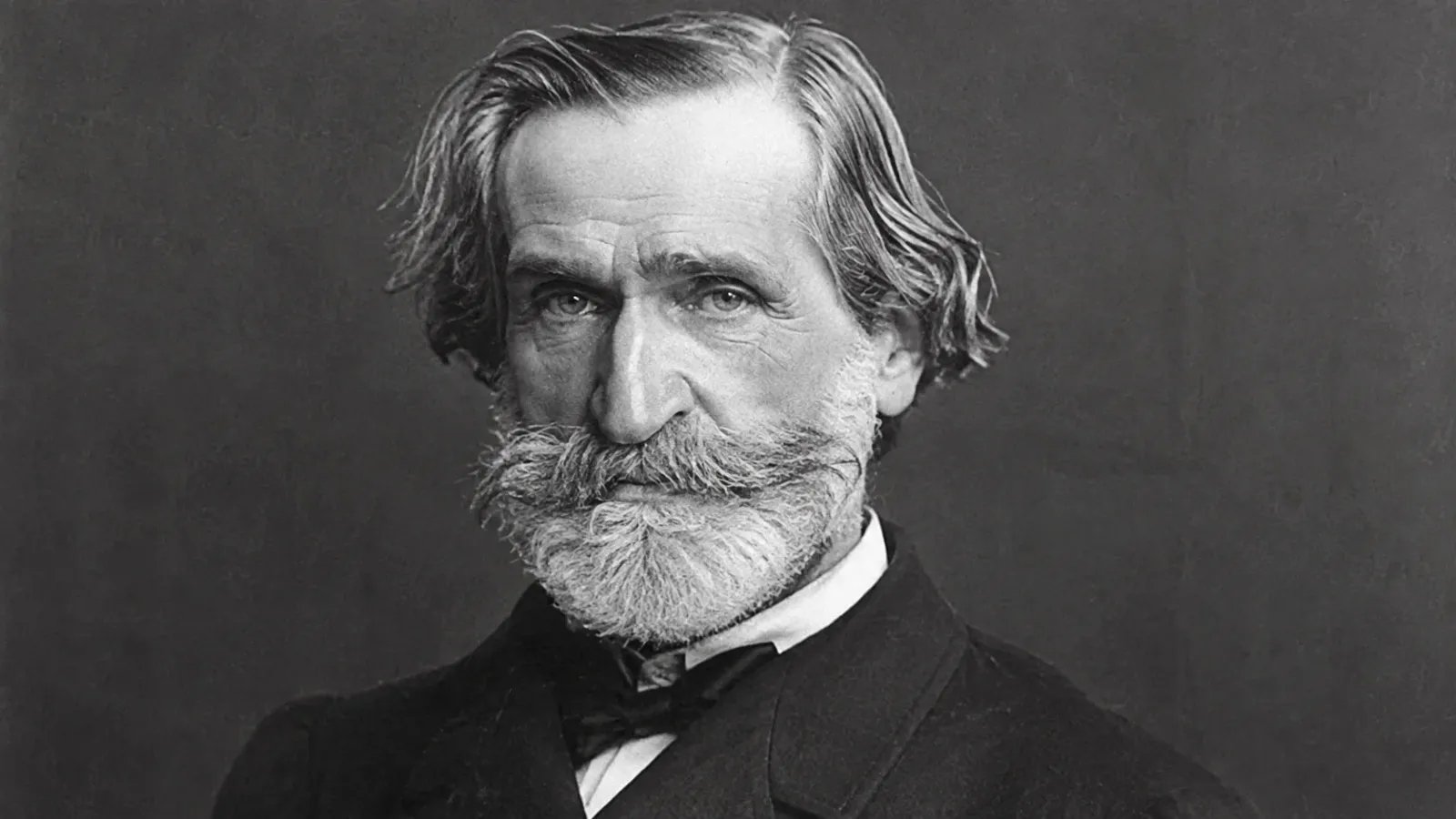
Giuseppe Verdi wasn't a simple peasant who stumbled into musical genius, a myth he eagerly promoted himself. Behind the rousing choruses of his famous operas lay a shrewd landowner, a reluctant politician, and a private philanthropist. Explore the obscure history, debunked legends, and surprising complexities that defined Italy's greatest composer and the nation he helped inspire.
1. Verdi was not the poor, illiterate peasant boy he claimed to be in his later years.
Although he cultivated an image of a humble rustic to endear himself to the Italian public, Verdi actually came from a relatively comfortable middle-class family. His father was a prosperous innkeeper and landowner who ensured his son received a comprehensive early education, entirely contradicting the composer's later claims that he learned to read and write through sheer, impoverished desperation.
2. The famous "Viva VERDI" graffiti was largely a retrospective myth rather than a coordinated revolutionary slogan during the Risorgimento.
The popular legend claims that Italians painted "Viva VERDI" on walls as a secret acronym for "Viva Vittorio Emanuele Re D'Italia" to support Italian unification. While the acronym works perfectly in hindsight, modern historians have found little to no contemporary evidence that this graffiti campaign actually occurred during the uprisings, suggesting the story was fabricated years later to solidify Verdi's status as a nationalist hero.
3. Italy's most celebrated composer was flatly rejected by the Milan Conservatory for being too old and lacking proper piano technique.
When he applied at age eighteen, the prestigious institution denied him entry, citing his age, as the cutoff was fourteen, and his unconventional, self-taught piano fingering. Ironically, after Verdi achieved international fame, the very institution that turned him away desperately petitioned to rename itself in his honor, a request the notoriously stubborn composer refused for decades.
4. Verdi's monumental Requiem was not originally written for the church, but to honor the death of an agnostic novelist.
The fiercely anti-clerical Verdi composed his dramatic Messa da Requiem in memory of Alessandro Manzoni, an Italian writer and political idol. Because of its intensely theatrical nature and operatic solos, contemporary critics famously derided the work as an opera in ecclesiastical robes, recognizing that Verdi was utilizing religious text to explore human terror and grief rather than divine salvation.
5. Verdi hated the sound of barrel organs playing his music so much that he rented out every single one in his town just to keep them quiet.
As his arias gained massive popularity, street musicians constantly ground out crude renditions of his melodies outside his window in Sant'Agata. Driven to distraction while trying to work, Verdi tracked down the local purveyors of barrel organs and paid to rent their entire inventory for the season, explicitly demanding the instruments remain locked in a warehouse where he wouldn't have to hear them.
6. He considered a retirement home for impoverished musicians, not his operas, to be his greatest masterpiece.
Recognizing that the theatrical world was deeply precarious, Verdi secretly funded and designed the Casa di Riposo per Musicisti in Milan, a sanctuary for retired singers and instrumentalists who had fallen on hard times. He obsessed over the architectural details and the residents' comfort, leaving the bulk of his immense fortune to the institution, which continues to operate and house musicians to this day.
7. Verdi campaigned aggressively to lower the standard orchestral pitch to mathematically align with the laws of acoustics.
In 1884, Verdi petitioned the Italian government to establish a standard tuning pitch of A=432 Hz, slightly lower than the rapidly rising pitch standards of his day. He argued that this lower frequency, often referred to today as Verdi pitch, was less physically taxing on opera singers' vocal cords and aligned with the mathematical principles of natural acoustics, sparking a debate that still ripples through musicological circles.
8. At the height of his musical career, Verdi practically abandoned composing to become a cutting-edge agricultural innovator.
On his vast estate at Sant'Agata, Verdi was far more interested in crop rotation, hydraulic engineering, and horse breeding than he was in musical staves. He imported the latest farming machinery from America and England, applying a rigorous, scientific approach to land management that drastically improved local agricultural yields and provided steady employment for his entire village.
9. The iconic opera Rigoletto survived near-cancellation only because Verdi agreed to demote its villain from a king to a duke.
The original libretto was based on a Victor Hugo play that depicted the King of France as a frivolous, immoral libertine, which terrified the Austrian censors controlling northern Italy. To prevent the opera from being banned outright for inciting anti-monarchist sentiment, Verdi simply changed the ruling monarch to the Duke of Mantua, a minor aristocratic title that allowed the censors to approve the exact same plot without fear of political backlash.
10. The comedic failure of his early career was composed while he was secretly enduring the deaths of his entire immediate family.
His second opera, Un giorno di regno, was a spectacular flop that was hissed off the stage on its opening night. The audience was entirely unaware that during its composition, Verdi's two infant children and his twenty-six-year-old wife had all died of separate illnesses within a span of twenty-two months, plunging the young composer into a despair so profound he vowed never to write music again.
11. Despite popular historical consensus, the opera Aida was not written to celebrate the opening of the Suez Canal.
While Verdi was indeed approached by the Khedive of Egypt to write an inaugural ode for the canal's opening in 1869, he flatly refused, claiming he did not write occasional pieces. It wasn't until two years later that he agreed to compose Aida to inaugurate Cairo's new Khedivial Opera House, and even then, the premiere was delayed because the necessary costumes and sets were trapped in Paris during the Franco-Prussian War.
12. He served in the first Italian parliament but attended sessions entirely out of guilt, rarely speaking a single word.
Pressured by the architect of Italian unification, Count Cavour, Verdi agreed to run for political office despite having zero interest in governance. He won easily based on his celebrity but hated the bureaucratic drudgery, often spending parliamentary sessions drafting musical notes in the margins of his legislative papers and eventually resigning at the earliest possible opportunity.
13. The most frequently performed opera in the world today, La Traviata, was a catastrophic failure at its premiere.
The 1853 opening night in Venice was ruined by poor casting, notably a highly robust and remarkably healthy-looking soprano chosen to play a frail courtesan dying of tuberculosis. The audience laughed out loud during the tragic death scene, leading Verdi to write a notoriously blunt letter declaring the premiere a fiasco, though he accurately predicted that future, better-cast performances would vindicate his score.
14. Despite writing some of the most moving religious choral music in history, Verdi was a staunch, lifelong anti-clerical agnostic.
His second wife famously noted that her husband believed in nothing, viewing the Catholic Church as a corrupt political entity that actively hindered the unification of Italy. The immense spiritual depth heard in his music was drawn entirely from his profound empathy for human suffering and mortality, not from any personal belief in an afterlife or a benevolent deity.
15. Verdi requested a funeral completely devoid of music, a final wish the Italian public technically honored before staging the largest public assembly in the nation's history.
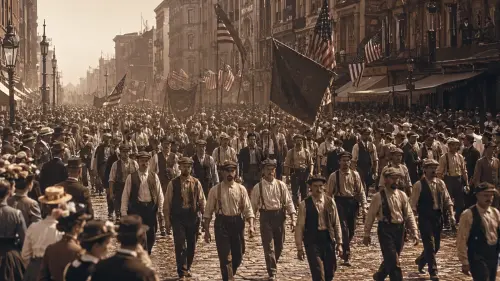
Ever the private man, Verdi demanded an early morning burial without flowers, speeches, or singing. While his immediate interment followed these strict rules, a month later when his body was moved to its final resting place at the Casa di Riposo, a staggering crowd of three hundred thousand people lined the streets, spontaneously singing the Va, pensiero chorus from Nabucco as a tearful farewell to their cultural patriarch.
Sources & References
This AI-assisted post was rigorously curated and fact-checked for accuracy by:
 Martin Roháček
How fun was this article? 🤔
Tap a star to rate it
🧠 Quiz: How closely were you paying attention?
10 questions — all answers are in the article above!
Enjoyed these facts? There's more! 💌
Fresh fun facts in your inbox. No spam, ever.