The Unseen Metropolis: 15 Fascinating Facts About Milan
Milan is globally renowned as Italy's bustling engine of high fashion and finance, yet beneath its sleek modern facade lies thousands of years of surreal secrets and bizarre history. From a centuries-old cathedral decorated with thousands of statues to secret vineyard plots, underground Renaissance tunnels, and chapels adorned with real human skulls, the city offers far more than runway shows and espresso bars. Beyond the luxury boutiques lie centuries of legendary artistic blunders, royal crowns, and bizarre local traditions. Dive into 15 astonishing facts that reveal the true, hidden character of Italy's grandest northern metropolis.
1. The Duomo Took Nearly Six Centuries to Finish
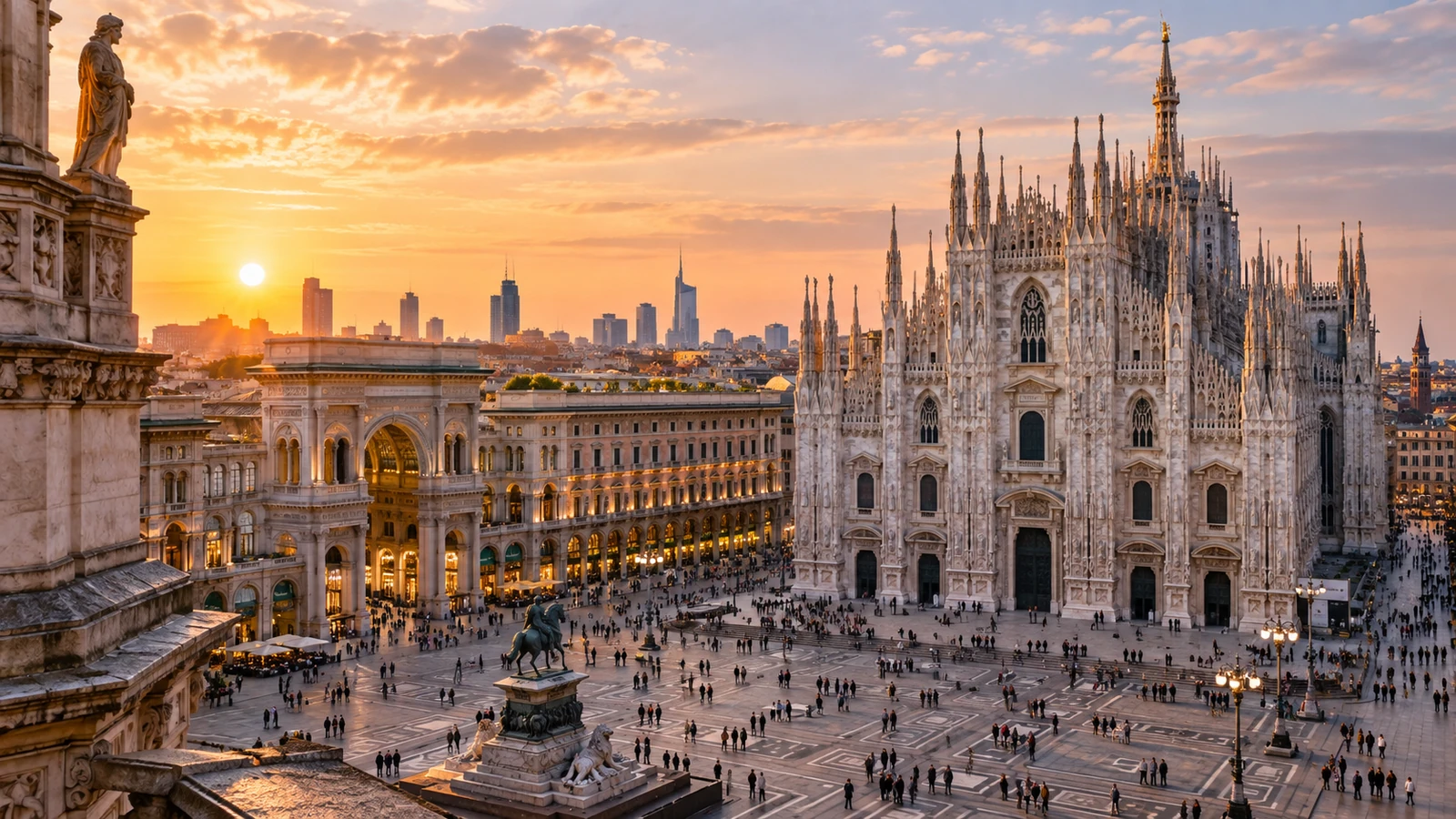
Construction on Milan Cathedral, or the Duomo, began in 1386 under the orders of Lord Gian Galeazzo Visconti. Despite hundreds of architects, sculptors, and laborers working across generations, the cathedral was not officially completed until its final bronze door was installed in 1965. This grueling 579-year timeline makes it one of the longest cathedral construction projects in human history. To manage the massive operation, the city established the Veneranda Fabbrica del Duomo, an institution that continues to oversee maintenance and restoration today. The breathtaking Gothic monument boasts over 3,400 statues, 135 spires, and a sprawling marble roof visitors can walk across for panoramic city views.
2. A Statue on the Duomo Facade Inspired the Statue of Liberty
Perched high on the facade of Milan's Duomo stands a striking marble figure sculpted by Camillo Pacetti in 1810, titled La Legge Nuova (The New Law). The statue features a draped woman wearing a radiate crown while holding a raised torch in her right hand and a tablet in her left. Historical records suggest that French sculptor Frédéric-Auguste Bartholdi visited Milan during his grand European travels and was deeply influenced by Pacetti's masterpiece. Decades later, Bartholdi incorporated these exact iconographic elements into his world-famous design for New York’s landmark sculpture. While debate lingers among art historians, the visual similarity between the two monuments remains undeniable.
3. Leonardo da Vinci Owned a Vineyard Opposite The Last Supper
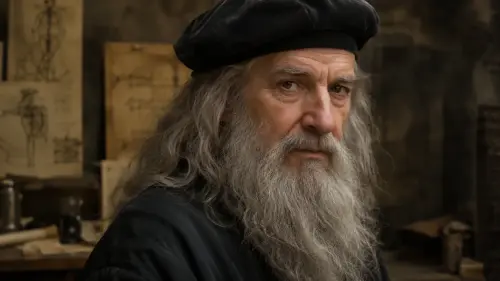
While painting The Last Supper in the refectory of Santa Maria delle Grazie, Leonardo da Vinci was gifted a lush vineyard directly across the street by Ludovico Sforza, the Duke of Milan. The Duke presented the plot of land in 1498 as appreciation for the artist's legendary masterpiece. After Leonardo died in France in 1519, the vineyard passed through various hands and was eventually built over and forgotten for centuries. In 2015, expert geneticists and oenologists excavated the original soil at Palazzo Atellani, identified preserved vine roots, and successfully replanted the exact Malvasia grape variety Leonardo cultivated. Today, visitors can sample wine crafted from the same historical vines once tended by the Renaissance genius.
4. The Last Supper Deteriorated Because of an Experimental Technique
Unlike traditional frescoes, which are applied directly onto wet plaster so paint binds permanently with the wall, Leonardo da Vinci wanted to experiment with new mediums. He sought a technique that allowed him to work slowly, make adjustments, and achieve extraordinary color luminosity. Consequently, he applied tempera and oil paint onto a double layer of dry gesso inside the humid dining hall of Santa Maria delle Grazie. Unfortunately, this experimental technique failed almost immediately; moisture trapped behind the masonry caused the paint to flake off within his own lifetime. By the late 16th century, contemporaries reported the artwork was severely degraded, prompting centuries of painstaking restoration work.
5. A Secret Network of Tunnels Lies Beneath Sforza Castle
Castello Sforzesco, the sprawling 15th-century fortress in central Milan, conceals a complex underground network of passageways and escape routes. Designed for military defense and swift troop maneuvers, these subterranean tunnels allowed the ruling Sforza dukes to exit the fortress unseen during sieges. Leonardo da Vinci drew detailed sketches of these secret passages in his notebooks while serving as a military engineer for the ducal court. Modern archaeologists have rediscovered several of these forgotten corridors beneath the cobblestones, confirming that Leonardo's theoretical drawings matched actual subterranean construction. Today, select guided tours allow adventurous visitors to explore these dark brick passages.
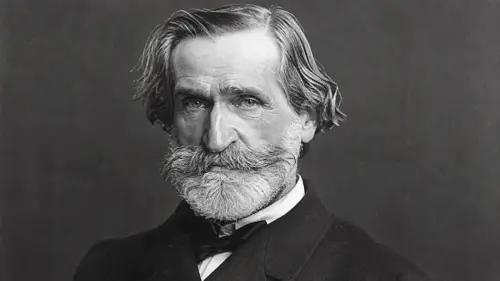
6. The Milan Conservatory Rejected Giuseppe Verdi
In 1832, an eighteen-year-old Giuseppe Verdi traveled to Milan hoping to gain admission to the prestigious Royal Music Conservatory. However, the admissions panel famously rejected the young musician who would go on to become Italy's greatest opera composer. The examiners cited two primary reasons for turning him away: they argued he was too old to begin formal music studies and claimed his piano technique demonstrated improper hand posture. Undeterred by the crushing rejection, Verdi hired a private master to continue his musical education in the city. Decades later, after Verdi achieved world renown, the conservatory attempted to rename the institution in his honor, though the composer famously refused to grant his full blessing.
 You might also like
The Phenomenal Striker: 15 Fascinating Facts About Ronaldo Nazário
You might also like
The Phenomenal Striker: 15 Fascinating Facts About Ronaldo Nazário
7. Real Pink Flamingos Live in a Hidden City Garden
Tucked away in the quiet, elegant Quadrilatero del Silenzio neighborhood lies Villa Invernizzi, a private art nouveau residence holding a surprising secret. If you peer through the wrought-iron fence along Via Serbelloni, you will spot a lively flock of Chilean and Greater Flamingos lounging in a lush courtyard. The birds were originally imported from South America in the 1970s by the wealthy cheese tycoon Romeo Invernizzi. The flock has thrived across generations in the heart of urban Milan, living off a specialized diet and bathing in custom-heated outdoor pools. Because the villa remains closed to the general public, observing these vibrant pink birds through the gates offers one of the city's most delightful unexpected sights.
8. A Church Chapel Is Decorated Entirely with Human Bones
At the Church of San Bernardino alle Ossa, visitors encounter one of the most chilling decorative displays in Europe. In 1210, a nearby hospital cemetery ran out of space, prompting church officials to erect a small room to hold displaced human bones. By 1695, the chapel was rebuilt and transformed into an extraordinary ossuary where thousands of human skulls, ribs, and long bones were arranged into intricate decorative patterns along the walls and cornices. The haunting baroque aesthetic was meant to serve as a memento mori, reminding worshippers of the brevity of human life. The unique layout was so striking that King John V of Portugal copied the design for his own chapel in Évora after visiting Milan.
9. A Mysterious Bronze Ear Serves as an Intercom
Located on the facade of Palazzo Sola-Busca at Via Serbelloni 10, an unusual bronze sculpture of a giant human ear has intrigued passersby for over a century. Crafted in the 1920s by the visionary Italian sculptor Adolfo Wildt, the installation was actually one of the earliest working intercom systems in Milan. Visitors would speak directly into the bronze ear, which carried the sound through a hidden acoustic tube straight to the porter inside the building. Known locally as Ca' de l'Oreggia (House of the Ear), the building no longer uses the device for communication, but the bronze sculpture remains attached to the portal, serving as an eccentric piece of public art.
10. Spinning on a Bull's Testicles Brings Good Luck
Inside the magnificent Galleria Vittorio Emanuele II, Italy's oldest active shopping mall, visitors regularly line up to perform an odd public ritual. Embedded in the marble mosaic floor of the central octave is a depiction of a bull, representing the heraldic coat of arms of Turin. According to popular local lore, placing your right heel directly on the bull's testicles and spinning backward three times counterclockwise will bring good fortune and ensure a return trip to Milan. The tradition is so popular among tourists that the mosaic tiles frequently wear down, requiring the city to periodically repair the floor.
11. The "Devil's Column" Allegedly Smells of Sulfur
Outside the ancient Basilica of Sant'Ambrogio stands a solitary Roman marble pillar known to locals as the Colonna del Diavolo (Devil's Column). The column features two deep, distinct holes near its base, which legend attributes to a fierce physical struggle between Saint Ambrose and the Devil. According to the myth, the frustrated Devil tried to impale the saint with his horns, missed, and pierced the solid marble instead before fleeing back to hell. Urban legend claims that if you press your nose against the two holes, you can still smell sulfur and hear the distant echoes of the underworld coming from deep within the stone.
12. Leonardo da Vinci Designed the Locks for Milan's Canals
While Milan lacks a natural river running through its center, it historically relied on an extensive network of man-made canals called the Navigli. To transport heavy marble blocks from northern quarries straight to the Duomo construction site, engineers needed a way to raise and lower boats across varying water levels. Leonardo da Vinci was hired to solve the problem and designed an innovative lock system featuring wooden mitre gates. His self-locking triangular gates utilized water pressure to seal tightly, a revolutionary engineering concept that standardized canal lock design across the globe. Remains of Leonardo's original locks can still be admired at the Conca di Via Arenula today.
🤔 Quick guess
Which crown did Napoleon Bonaparte place on his own head inside the Milan Duomo in 1805?
13. Napoleon Crowned Himself King of Italy in the Duomo
On May 26, 1805, Milan served as the backdrop for one of European history's most audacious political spectacles. Inside the grand nave of the Milan Duomo, Napoleon Bonaparte was officially crowned King of Italy during a lavish ceremony. Rather than allowing a high-ranking religious official to place the ancient Iron Crown of Lombardy on his head, Napoleon grabbed the sacred relic himself and placed it on his own brow. He famously declared during the act: "Dio me l'ha data, guai a chi la tocca!" ("God gave it to me, beware whoever touches it!"). Milan subsequently served as the imperial capital of Napoleon's Italian kingdom during his reign.
14. Parco Sempione Is Haunted by a Veil-Wearing "Lady in Black"
Milan's most famous green space, Parco Sempione, is home to one of Italy's most persistent ghost stories. According to local folklore, an enigmatic spectral figure known as the Dama Nera (Lady in Black) wanders through the park's misty pathways late at night. She is described as a tall woman dressed in mysterious black Victorian attire, wearing a dark lace veil that completely conceals her face. Legend says she lures unsuspecting night walkers into the shadows with the intoxicating aroma of violets before lifting her veil to reveal a gruesome, skinless skull. Reports of her ghostly presence have circulated in local press and folklore since the late 19th century.
15. The Iconic Christmas Bread Panettone Was Invented in Milan
Panettone, the tall, dome-shaped sweet bread studded with candied fruit and raisins, is a global holiday staple whose origins trace back to Renaissance Milan. The most famous origin story credits a humble scullery boy named Toni working in the kitchens of Ludovico Sforza, Duke of Milan. After the head chef accidentally burned the official Christmas dessert, young Toni stepped in with a backup bread made from leftover yeast, flour, eggs, butter, and dried fruit. The Duke and his royal guests were so delighted by the airy sweet bread that Sforza named it Pane di Toni (Toni's Bread), which gradually morphed into the word Panettone over the centuries.
How did these facts land?
Know someone who'd love these facts? Share them 👇
🧠 Quiz: How closely were you paying attention?
Think you remember the facts? 10 questions, tap an answer.