The Cinematic Empire: 15 Fascinating Facts About The Godfather
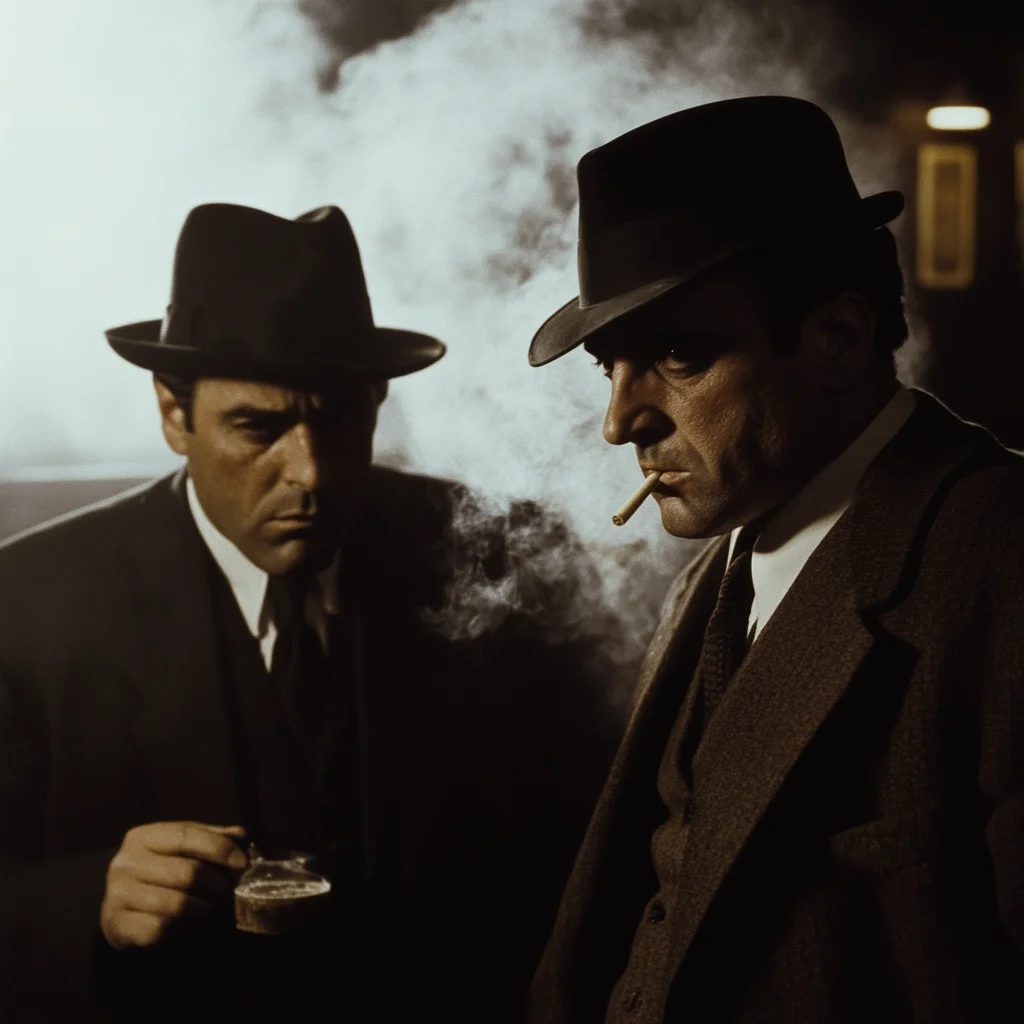
Released in 1972, Francis Ford Coppola's cinematic masterpiece redefined mob fiction and earned its place as one of the greatest films in cinematic history. Behind the scenes of this monumental epic lies a treasure trove of unexpected stories, chaotic production hurdles, and brilliant creative gambles. From real mafia intervention to legendary unscripted moments, the making of the Corleone saga was as intense as the drama on screen. Here are 15 fascinating facts about the legendary film classic that changed Hollywood forever.
1. The Opening Scene's Stray Cat Nearly Ruined the Audio
During the filming of the famous opening scene in Don Corleone's office, director Francis Ford Coppola spotted a stray cat roaming the Paramount Pictures lot and handed it to Marlon Brando. Brando, a noted animal lover, cradled and stroked the feline effortlessly while delivering his dark monologue about justice and favors. However, the cat was purring so loudly and intensely that it muffled Brando's softly spoken dialogue on the sound recording. Audio engineers were horrified when they listened to the tapes, as the purring rendered parts of the audio unusable. Consequently, several lines had to be re-recorded in post-production via automated dialogue replacement, though the cat's quiet onscreen presence remained iconic.
2. Marlon Brando Used Hidden Cue Cards Instead of Memorizing Lines
Despite his reputation as one of the greatest method actors of all time, Marlon Brando famously refused to memorize his lines for the film. Brando believed that reading his dialogue for the very first time on set produced a more authentic, spontaneous performance that mimicked real human thought. To accommodate his unusual method, the crew had to creatively hide script cue cards all over the set during production. Pages were cleverly pasted behind lamps, hidden behind potted plants, taped to furniture, and even affixed to the chests of fellow cast members just out of camera frame. This quirky technique allowed Brando to deliver his legendary performance while constantly glancing around the room in a natural, calculating manner.
3. The Infamous Horse Head Scene Used a Real Head from a Slaughterhouse
The horrifying scene where studio head Jack Woltz wakes up in a bed drenched in blood beside a severed horse head was terrifyingly real. During early rehearsals, the production team used a prop fake horse head made of papier-mâché, but Coppola felt the effect looked visibly artificial and lacked emotional weight. To achieve a genuine reaction from actor John Marley, Coppola secretly arranged to source a real severed horse head from a local dog-food company that slaughtered old horses. The prop department placed the real head in Marley's bed right before the camera rolled, keeping the actor entirely in the dark about the swap. Marley's blood-curdling screams of sheer horror on screen were completely genuine, creating one of the most shocking moments in film history.
4. The Word "Mafia" Was Deliberately Omitted from the Entire Script
Despite being the most famous mob movie ever made, the word "mafia" is never spoken once during the entirety of the first film. Prior to filming, the Italian-American Civil Rights League, headed by actual mob boss Joseph Colombo, launched intense protests against the production due to concerns about ethnic stereotyping. Paramount Pictures executives and producer Al Ruddy met directly with Colombo to negotiate a peaceful resolution. Ruddy agreed to scrub all mentions of the words "mafia" and "La Cosa Nostra" from the script in exchange for the league's cooperation. As a result, characters in the movie consistently refer to their criminal syndicate through euphemisms like "the family" or "our business."
5. Al Pacino Was Nearly Fired Early in Production
It is difficult to imagine anyone other than Al Pacino as Michael Corleone, but Paramount studio executives repeatedly tried to fire him during the initial weeks of shooting. Studio heads complained that Pacino was too short, looked unimposing, and gave an understated performance that felt dull on screen. Coppola fought tirelessly to keep the young actor in the role, urging executives to be patient until crucial dramatic scenes were shot. The turning point came when the studio watched the rushes for the famous Italian restaurant scene, where Michael assassinates Virgil Sollozzo and Captain McCluskey. Pacino's chilling transition from quiet observer to cold-blooded killer completely captivated the executives, securing his position as a rising Hollywood superstar.
6. Sonny Corleone's Tollbooth Death Was the Most Expensive Scene
The brutal ambush of Sonny Corleone at the Causeway tollbooth was the single most elaborate and expensive shot in the entire movie. Actor James Caan was outfitted with 127 individual explosive squibs packed with fake blood to simulate the devastating hail of machine-gun fire. The production team drilled over 200 tiny holes into the 1941 Lincoln Continental and wired each location with remote detonators to simulate bullet impacts. Shooting the sequence cost over $100,000, an exorbitant figure for a single scene during the early 1970s production era. The extreme violence was heavily edited in some countries, but the sequence remains a masterclass in cinematic action choreography and practical special effects.
7. Oranges Were Used as a Visual Foreshadowing of Death
Throughout the trilogy, the vibrant visual presence of oranges consistently portends imminent violence, tragedy, or death for the characters. Don Vito Corleone buys oranges right before he is shot in the street, and he later collapses in a garden while playing with an orange peel in his mouth. Similarly, oranges are prominently visible on tables shortly before Johnny Fontane's producer finds the horse head and before the deaths of several rival dons. Production designer Dean Tavoularis initially introduced the fruit simply to brighten up the darkly lit, moody color palette designed by cinematographer Gordon Willis. However, Coppola recognized the symbolic potential of the motif and deliberately integrated oranges across all three films as an ominous harbinger of doom.
8. Robert De Niro Auditioned for Sonny Before Landing Young Vito
Long before winning an Academy Award for his portrayal of young Vito Corleone in the second film, Robert De Niro originally auditioned for the first movie. De Niro aggressively pursued the role of the volatile Sonny Corleone, delivering an intensely erratic audition that fascinated Francis Ford Coppola. Although Coppola ultimately chose James Caan for Sonny, he was so impressed by De Niro's electric screen energy that he kept the young actor in mind for future projects. When development began on the sequel, Coppola immediately cast De Niro to play the younger version of Marlon Brando's character without requiring a formal callback. De Niro spent months living in Sicily to perfect his Sicilian dialect, becoming the first actor to win an Oscar for a predominantly foreign-language performance.
9. Clemenza's Famous Cannoli Line Was Unscripted Genius
One of the most famous and endlessly quoted lines in cinematic history was completely improvised on the day of shooting. In the original script written by Mario Puzo and Francis Ford Coppola, character Peter Clemenza was simply instructed to say "Leave the gun" after his henchman executes Paulie Gatto in a desolate field. However, actor Richard Castellano recalled an earlier domestic scene where Clemenza's wife nagged him to bring home a box of fresh Italian pastries. Drawing on that character detail, Castellano spontaneously added the phrase "Take the cannoli" as his character stepped back into the car. The humorous, callous contrast between cold-blooded murder and sweet dessert became an instant classic moment in motion picture history.
10. Marlon Brando's Famous Jawline Used a Custom Dental Prosthetic
Marlon Brando wanted Don Vito Corleone to look like a bulldog—intimidating, heavyweight, and weary from decades of underground power struggles. During his initial screen test, Brando stuffed his mouth with ordinary cotton balls to drop his jaw and give his cheeks a swollen, sunken shape. Paramount executives were thoroughly impressed by the dramatic physical transformation, which made the middle-aged actor look convincing as an aging patriarch. For actual filming, the makeup department commissioned a specialized dental plumper from a cosmetic dentist to replicate the effect safely. Brando wore this resin prosthetic in his lower jaw throughout production, which altered his speech cadence and contributed to his iconic, raspy voice.
11. The Sequel Was the First in History to Win Best Picture
When The Godfather Part II was released in 1974, it shattered major film industry precedents by becoming the first cinematic sequel to win the Academy Award for Best Picture. Prior to its release, Hollywood studios typically viewed sequels as cheap, low-effort cash cows designed to exploit the success of an original hit. Coppola proved that a continuation could match—and arguably surpass—its predecessor in artistic depth, narrative complexity, and critical acclaim. The film set a high bar for cinematic storytelling, expanding the Corleone family mythology across two distinct historical timelines. It remained the only sequel to achieve Best Picture status until The Lord of the Rings: The Return of the King won nearly three decades later.
12. Sofia Coppola Appears in Every Single Movie in the Trilogy
Director Francis Ford Coppola kept production closely tied to his own family, casting his daughter Sofia Coppola across all three installments of the saga. Sofia made her onscreen debut as a newborn infant playing Michael Corleone's baby nephew, Michael Francis Rizzi, during the iconic climax baptism scene of the first film. In the second movie, she briefly appeared as a young Italian immigrant girl aboard a ship arriving at Ellis Island alongside young Vito. Years later, when actress Winona Ryder abruptly dropped out of the third installment due to illness, Coppola cast his then-eighteen-year-old daughter as Michael's tragic daughter, Mary Corleone. Although her performance in the final chapter received heavy criticism from film critics, her presence created a unique real-life family thread throughout the trilogy.
13. The Cast Held Authentic Family Dinners in Character to Build Chemistry
To foster genuine family dynamics among actors who had never worked together before, Francis Ford Coppola utilized immersive rehearsal techniques. Before formal camera work began, Coppola organized mandatory family dinners at an authentic Italian restaurant for the core cast members. Marlon Brando sat at the head of the long dining table, while Al Pacino, James Caan, Robert Duvall, and Talia Shire sat around him in their assigned character relationships. The actors were required to remain entirely in character throughout the multi-course meal, eating pasta, drinking wine, and improvising interactions as the Corleones. This clever exercise successfully established natural chemistry and underlying family hierarchies that translated seamlessly onto the big screen.
14. Sylvester Stallone Was Rejected for Multiple Minor Roles
Before achieving global stardom as Rocky Balboa, Sylvester Stallone was a struggling young actor trying to get any break in Hollywood. Stallone aggressively auditioned for several minor supporting parts in the first film, specifically targeting the roles of Paulie Gatto and Carlo Rizzi. However, casting directors repeatedly turned him down, determining that he did not possess the specific physical look or screen presence required for the production. Disappointed but undeterred by the rejection, Stallone realized he needed to write his own starring opportunities to break into the movie industry. Just four years later, Stallone wrote and starred in Rocky, which went on to win Best Picture at the Academy Awards right alongside Coppola's epic masterpieces.
15. Marlon Brando Famously Boycotted His Best Actor Oscar Win
When Marlon Brando won the Academy Award for Best Actor for his legendary portrayal of Vito Corleone in 1973, he staged one of the most famous protests in television history. Instead of attending the star-studded ceremony himself, Brando refused the award and sent Native American activist Sacheen Littlefeather in his place. Dressed in traditional Apache clothing, Littlefeather stepped onto the stage and politely declined the Oscar statuette on Brando's behalf before a stunned international audience. She delivered a short speech explaining that Brando was protesting the demeaning depiction of Native Americans in film and television, as well as the ongoing standoff at Wounded Knee. The stunning, unexpected political moment shocked Hollywood establishment figures and remains one of the most talked-about events in Oscar history.
Sources & References
This AI-assisted post was rigorously curated and fact-checked for accuracy by:
 Martin Roháček
How fun was this article? 🤔
Tap a star to rate it
🧠 Quiz: How closely were you paying attention?
10 questions — all answers are in the article above!
Enjoyed these facts? There's more! 💌
Fresh fun facts in your inbox. No spam, ever.