
The Ancient Defensive Titan: 15 Fascinating Facts About the Great Wall of China
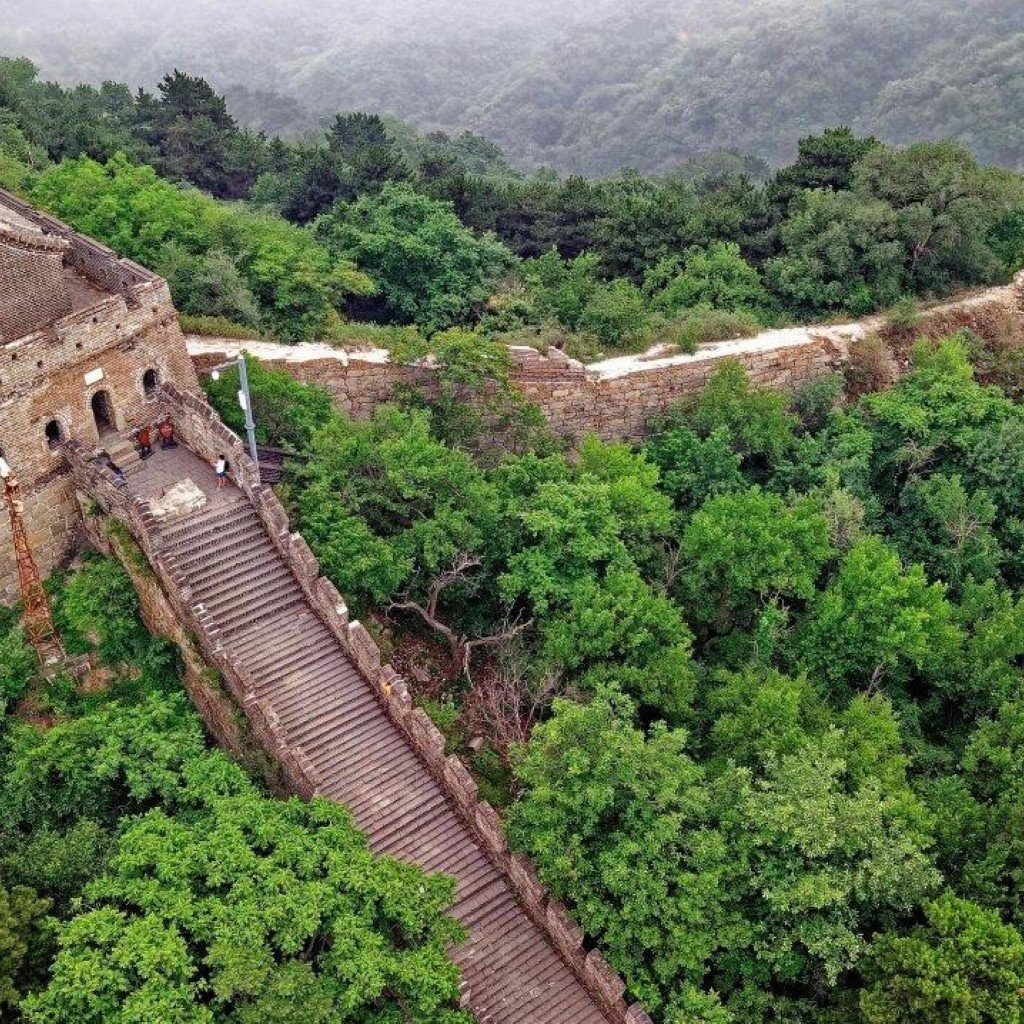
Stretching across thousands of miles of northern terrain, the Great Wall of China stands as one of the most astonishing architectural achievements in human history. Far from a single continuous barrier, this vast ancient network of fortifications, watchtowers, and trade posts was built over more than two millennia by successive imperial dynasties. Discover the surprising secrets behind its construction, including sticky rice mortar, ancient signal systems, and the truth behind famous myths surrounding this UNESCO World Heritage Site.
1. It Is Not a Single Continuous Structure
For centuries, popular imagination has depicted the Great Wall of China as one unbroken ribbon of stone stretching across the continent. In reality, it is a vast, interconnected network of defensive walls, trenches, rammed-earth ramparts, and formidable natural barriers like mountain ridges and rivers. Various ruling dynasties constructed, expanded, and repaired distinct segments across different geographical regions over thousands of years. Many sections run parallel to one another, while others feature massive gaps where steep terrain provided sufficient protection without man-made fortifications. Official mapping efforts reveal that these overlapping structures form a complex defensive matrix rather than a single linear barrier.
2. Its Total Length Exceeds 21,000 Kilometers
In 2012, China's State Administration of Cultural Heritage published the results of a comprehensive five-year archaeological survey measuring the entirety of the wall system. The survey concluded that all known segments constructed across various Chinese dynasties span a staggering total length of 21,196 kilometers (13,171 miles). This extraordinary distance is nearly half the circumference of the Earth at the equator. The measurement includes not just standing walls, but also defensive trenches, natural mountain barriers, and buried foundation remnants scattered across 15 provinces. Without this systematic mapping, the full geographical footprint of this ancient architectural project remained largely underestimated.
3. It Cannot Be Seen from Space with the Naked Eye
One of the most persistent modern urban legends claims that the Great Wall is the only human structure visible from space or the Moon without assistance. Astronauts from NASA and China's space program, including Chinese astronaut Yang Liwei, have repeatedly confirmed that the wall is completely invisible from low Earth orbit with the naked eye. Because the wall was built using locally sourced stones and soil, its colors blend seamlessly into the surrounding natural landscape. Furthermore, the width of the wall is typically only five to eight meters wide, making it visually indistinguishable from orbit without high-powered camera lenses. This debunked myth originated in 18th-century European travelogues long before human spaceflight was ever achieved.
4. Sticky Rice Was a Secret Ingredient in Its Mortar
During the Ming Dynasty, Chinese builders developed an innovative mortar recipe that made their masonry extraordinarily durable. Workers blended slaked lime with a boiled porridge made from sticky, glutinous rice, creating an organic-inorganic composite mortar. The secret behind its incredible strength was amylopectin, a complex carbohydrate found in sticky rice that locked the stone blocks tightly together. This unique formula filled tiny gaps in the brickwork, resisted water damage, and repelled vegetation growth far better than standard lime mortars. Today, many Ming-era sections remain structurally sound after more than 500 years largely because of this clever culinary engineering.
5. Convicted Criminals and Soldiers Built Much of It
Constructing such an enormous defensive barrier required an immense labor force composed of soldiers, common peasants, and convicted criminals. During the Qin and Han dynasties, hard labor on the wall was a standard punishment for non-capital crimes like tax evasion, theft, and official corruption. Convicts were often forced to work with shaved heads, face tattoos, and iron collars locked around their necks to prevent escape. Working conditions were brutal, as laborers endured extreme weather, malnutrition, and dangerous mountain terrain while quarrying heavy stones. Historians estimate that hundreds of thousands of workers perished during construction over the centuries due to exhaustion and disease.
6. The Myth of Bodies Buried Inside the Wall
A widespread legend claims that the physical remains of dead laborers were used as filler inside the wall itself to save time and materials. However, modern archaeological excavations have proven this macabre story to be entirely untrue. Integrating decomposing human bodies into the wall's core would have weakened the mortar and caused structural collapse over time. Instead, fallen workers were buried in marked, organized cemeteries near the construction sites along the length of the wall. The famous folk tale of Meng Jiangnü, whose weeping shattered a wall section after her husband died during construction, helped popularize this emotional myth.
7. It Operated as a Sophisticated Communication System
Beyond its physical height, the Great Wall functioned as an ancient high-speed telecommunications network using watchtowers and beacon towers. Strategically positioned every few hundred meters, these towers allowed sentries to relay military alerts across hundreds of miles in just a few hours. During the day, guards burned dried wolf dung and straw to create dark, dense smoke signals visible from far distances. At night, soldiers lit large signal fires, and they also used gunpowder blasts, drums, and flags to indicate the size and direction of approaching enemy forces. This sophisticated early warning system gave imperial armies precious time to mobilize reserves before an invasion occurred.
8. It Served as an Economic and Trade Control Gate
While defensive protection against northern nomadic raids was a primary goal, the wall also served crucial economic and geopolitical purposes. It functioned as an effective border control system that regulated international trade along the lucrative Silk Road networks. Designated fortress gates allowed imperial officers to collect customs duties, monitor merchant caravans, and control the flow of precious commodities like silk, tea, and jade. Additionally, the wall prevented unauthorized migration, regulated local populations, and restricted draft evaders from fleeing imperial territory. By managing both commerce and human movement, the wall generated substantial tax revenue for the imperial treasury.
9. Rammed Earth Was the Primary Material Before Bricks
Long before the iconic stone and kiln-fired brick walls of the Ming Dynasty, earlier builders relied heavily on an ancient technique called rammed earth or hangtu. Workers built wooden frame molds, filled them with layers of soil, gravel, clay, and reeds, and compacted the mixture using heavy wooden tampers until it hardened like rock. In arid regions like the Gobi Desert, builders layered tamarisk branches and reed mats between packed sand and gravel to construct durable desert ramparts. Many of these ancient rammed-earth sections have survived for over two millennia despite centuries of desert winds and weathering. This resourcefulness allowed ancient empires to construct thousands of miles of defenses without needing brick kilns or stone quarries.
10. Nearly One-Third of the Wall Has Disappeared
Despite its legendary durability, approximately 30 percent of the famous Ming Dynasty sections of the Great Wall have vanished entirely. Severe natural forces, such as wind, rain, and soil erosion, have continuously degraded the unmaintained portions over centuries. Human activities have caused even greater damage, with local residents historically stealing bricks to build houses, animal pens, and roads. In the mid-20th century, government infrastructure projects and unchecked industrial development destroyed additional historic segments. Modern conservation laws now protect the site, but vandalism, unauthorized tourism, and extreme weather continue to threaten the fragile surviving structures.
11. Construction Span Covers Over Two Millennia
The origins of the Great Wall trace back to the 7th century BCE during the Warring States period, when independent states erected individual defensive walls. In 220 BCE, Qin Shi Huang, the first emperor of a unified China, ordered these disparate regional walls to be linked together into a unified northern defense. Successive ruling dynasties, including the Han, Sui, and Jin, continued to expand, rebuild, and re-route the wall system over the subsequent centuries. The final and most extensive phase of construction occurred under the Ming Dynasty between 1368 and 1644 CE. Altogether, the grand construction project spanned more than 2,300 years of Chinese history.
12. The Wall Features Tens of Thousands of Towers and Forts
The defensive architecture of the Great Wall extends far beyond mere linear parapets. Imperial surveys have identified more than 29,500 individual watchtowers and beacon towers alongside 2,200 major defensive forts along its length. Watchtowers were typically two to three stories high, providing elevated command posts, living quarters, weapon storehouses, and battle platforms for garrisoned troops. Fortresses were constructed at critical strategic mountain passes to control narrow valleys and support major military garrisons. These integrated strongpoints transformed the wall into an active operational fortress capable of housing tens of thousands of frontline soldiers.
13. Its Height and Width Varied Depending on Terrain
The dimensions of the Great Wall were tailored to the surrounding topography rather than following a uniform blueprint. On average, the wall stands between 5 and 8 meters (16 to 26 feet) high, though certain steep mountain towers reach up to 14 meters (46 feet). Its width generally ranges from 4 to 6 meters (13 to 20 feet), allowing five cavalry riders or ten foot soldiers to march side-by-side along its flat top highway. In rugged, precipitous mountain ranges, builders made the wall thinner because the cliff faces provided natural defense. Conversely, flat plains and vulnerable valley passes received much thicker masonry walls and reinforced ramparts.
14. The Famous Badaling Section Was Built for Mass Defense
The most famous, visited, and well-preserved section of the Great Wall is Badaling, located roughly 70 kilometers (43 miles) northwest of Beijing. Constructed in 1505 during the Ming Dynasty, this strategic pass was engineered specifically to protect the imperial capital from northern incursions. Badaling was the first section of the Great Wall to open to international tourists in 1957, following extensive government restoration work. Since then, it has hosted hundreds of world leaders and millions of travelers, making it the global symbol of Chinese heritage. Its massive granite construction and grand sweeping views represent the peak of Ming military architecture.
15. It Was Declared a UNESCO World Heritage Site in 1987
Recognizing its unparalleled historical importance and engineering majesty, UNESCO designated the Great Wall of China as a World Heritage Site in 1987. The international organization cited the wall as an extraordinary masterpiece of human creative genius and a definitive symbol of ancient military architecture. Today, the Chinese government enforces strict preservation laws to combat illegal development, brick theft, and environmental damage along the wall. Global conservation organizations actively collaborate with local authorities to document, restore, and protect remote sections for future generations. It stands today not only as a defense monument, but as an enduring symbol of national unity and historical resilience.
Sources & References
This AI-assisted post was rigorously curated and fact-checked for accuracy by:
 Martin Roháček
How fun was this article? 🤔
Tap a star to rate it
🧠 Quiz: How closely were you paying attention?
10 questions — all answers are in the article above!
Enjoyed these facts? There's more! 💌
Fresh fun facts in your inbox. No spam, ever.