1. “The Terrible” is a Mistranslation
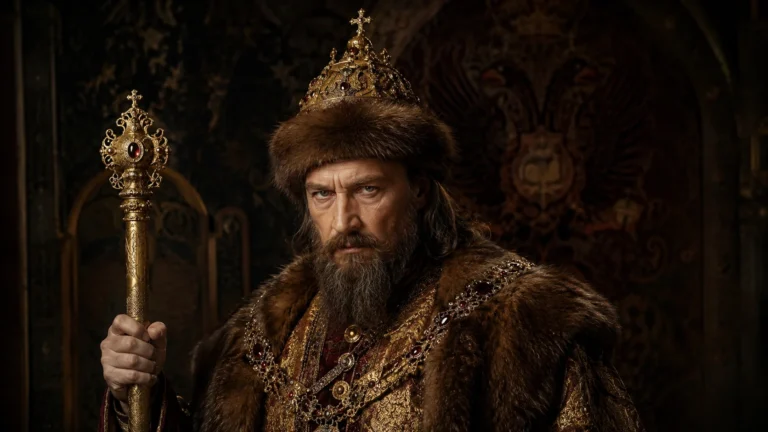
The iconic English nickname that has defined his global reputation for centuries is actually the result of a massive linguistic misunderstanding. In Russian, his title is Ivan Grozny. While “grozny” can carry negative connotations today, in the sixteenth century it did not mean “evil,” “sadistic,” or “terrible.” A much more accurate historical translation of the word is “formidable,” “awe-inspiring,” or “thunderous.” The title was originally meant to convey majestic power and strict authority, not psychotic cruelty.
2. A Deeply Traumatic Childhood
Ivan’s horrific descent into extreme paranoia was heavily fueled by a deeply abusive and chaotic upbringing. His father died when he was just three years old, and his mother was likely assassinated by poison when he was eight. The young orphan prince was completely at the mercy of the boyars (the powerful Russian aristocrats), who constantly fought for control of the throne. Ivan and his deaf brother were frequently neglected, starved, left in rags, and forced to witness brutal murders in the palace hallways.
3. He Ordered His First Execution at Age Thirteen
The severe trauma and isolation of his childhood quickly manifested into deep psychological cruelty. Ivan began torturing small animals by dropping dogs and cats from the high windows of the Kremlin. His vengeful, sadistic nature fully emerged when he was just thirteen years old. To completely assert his authority and end the abuse he suffered, the teenage prince ordered his heavily armed guards to arrest Prince Andrei Shuisky, the most powerful boyar in the palace, and had him brutally thrown to a pack of starving hunting dogs.
4. The First Official Tsar of Russia
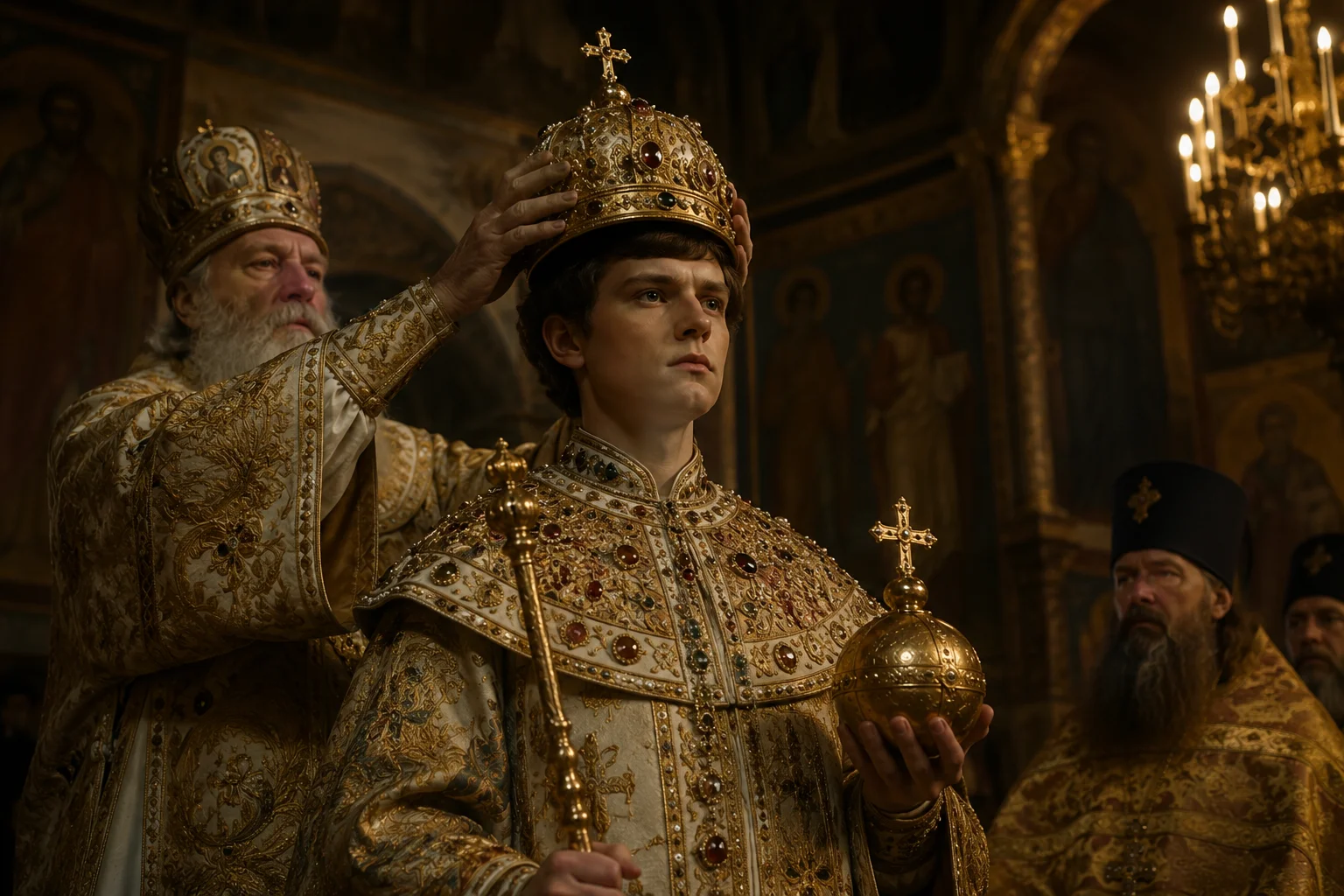
Before Ivan, the rulers of the state were officially known only as the Grand Princes of Moscow. In 1547, at the incredibly young age of sixteen, Ivan completely revolutionized Russian politics. He insisted on being officially crowned as the Tsar of all Rus. The word Tsar is a direct Slavic derivation of the Latin title Caesar. By adopting this massive, imperial title, Ivan was openly signaling to the world that Russia was the true, divinely ordained successor to the fallen Roman and Byzantine empires.
5. He Built Saint Basil’s Cathedral
Following a massive, incredibly bloody military victory over the Khanate of Kazan in 1552, Ivan commissioned the construction of an iconic monument to celebrate his triumph. The result was the legendary Cathedral of Vasily the Blessed, globally known today as Saint Basil’s Cathedral. Situated directly on Red Square in Moscow, its bright, swirling, flame-like onion domes are completely unlike any other Byzantine architecture in history and remain the most instantly recognizable symbol of Russia.
6. The Legend of the Blinded Architects
A widespread, highly dramatic legend claims that Ivan the Terrible was so completely mesmerized by the sheer beauty of Saint Basil’s Cathedral that he ordered his guards to permanently blind the two chief architects, Postnik and Barma. The gruesome story insists he blinded them so they could never build anything as beautiful for anyone else. In historical reality, this is pure myth. Documents prove that Postnik was actively employed by the Tsar to design several other fortresses and cathedrals years after Saint Basil’s was finished.
7. He Abdicated the Throne as a Political Stunt
In 1564, Ivan executed one of the most brilliant and highly risky political bluffs in history. Frustrated by the constant scheming of the aristocrats, he secretly packed up his treasury, left Moscow, and officially abdicated the throne. Knowing the city would completely collapse into chaotic civil war without a monarch, the terrified boyars and clergy literally begged him to return. He agreed to come back, but only on the strict condition that he be granted absolute, unlimited dictatorial power to execute traitors without trial.
8. He Created Russia’s First Secret Police
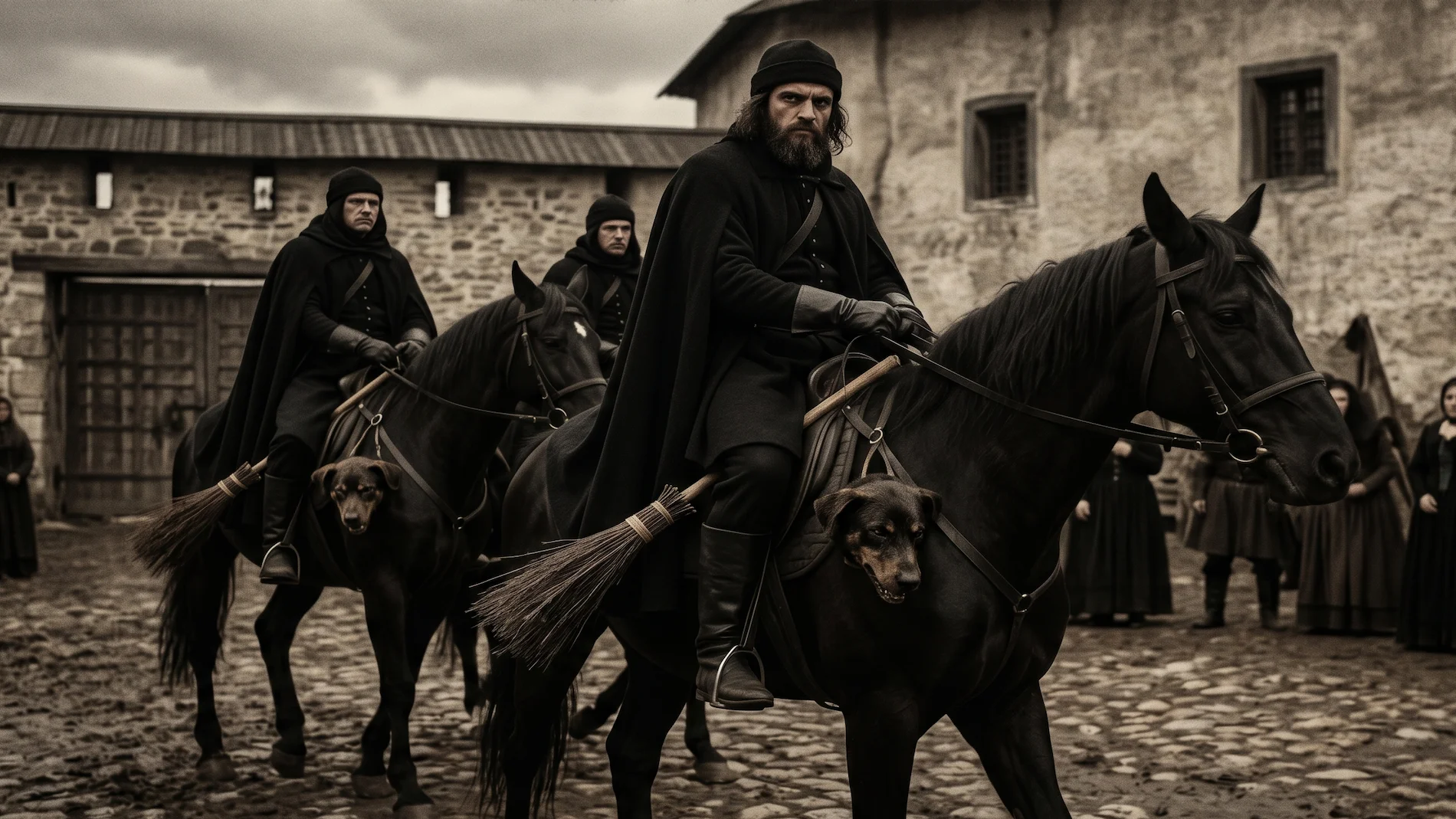
Once he secured absolute power, Ivan immediately established the Oprichnina, a massive state-within-a-state controlled entirely by him. To enforce his paranoid will, he created the Oprichniki, Russia’s very first terrifying secret police force. Numbering around six thousand men, they dressed completely in black and rode black horses. To symbolize their sworn duty to sniff out treason and sweep it away, they bizarrely rode with severed dog heads and heavy broomsticks tied directly to their saddles.
9. Mercury Made Him Mentally Unstable
Throughout his entire adult life, Ivan suffered from a highly painful, crippling bone and joint disease. To find relief, he heavily relied on the medical treatments of the era, which frequently included ingesting massive daily doses of liquid mercury and bathing in toxic ointments. Modern forensic analysis of his exhumed remains confirmed incredibly high, lethal levels of mercury in his bones. Historians heavily suspect that this severe, chronic mercury poisoning caused massive neurological damage, directly fueling his unpredictable fits of violent psychosis.
10. He Killed His Own Son and Heir
The absolute darkest, most tragic moment of Ivan’s entire reign occurred in 1581. In a sudden, explosive fit of unhinged rage, Ivan violently attacked his pregnant daughter-in-law for wearing inappropriate clothing, causing her to tragically miscarry. When his eldest son and beloved heir, Ivan Ivanovich, confronted him about the horrific assault, the Tsar lost his mind. He struck his son directly in the temple with a heavy, metal-pointed walking staff, accidentally killing the only competent heir to the Russian empire.
11. He Proposed to the Queen of England
Despite his terrifying reputation, Ivan heavily valued diplomatic trade and desperately wanted to secure a strong alliance with Western Europe. After English explorers accidentally navigated to the White Sea, Ivan established the highly lucrative Muscovy Company to trade directly with London. He engaged in a massive, years-long correspondence with Queen Elizabeth I of England. He repeatedly asked for an exclusive military alliance, requested a guarantee of political asylum if he was ever overthrown, and even formally proposed marriage to the English Queen (which she politely declined).
12. He Married Up to Eight Times
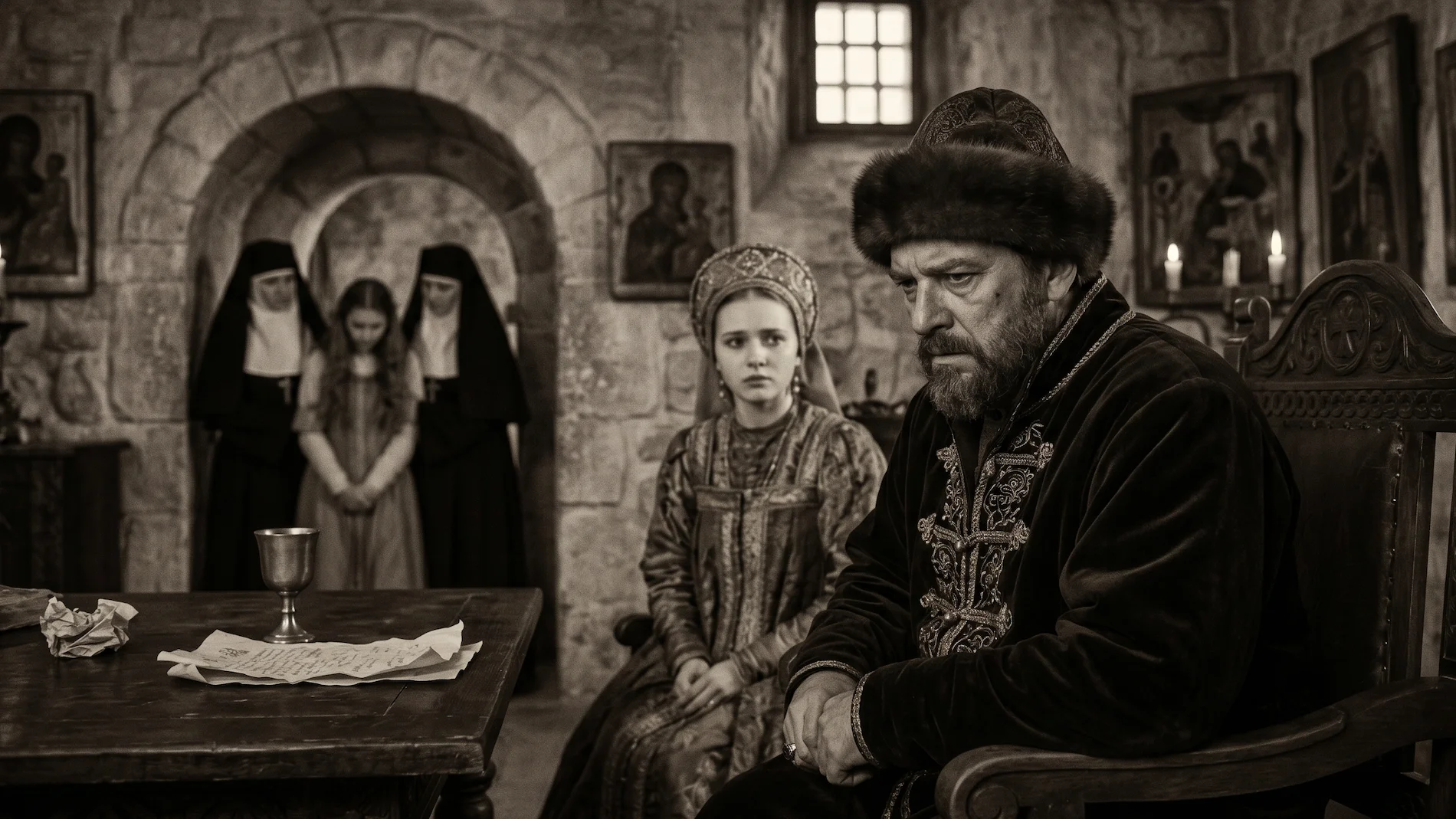
Ivan’s romantic life was highly unstable, deeply chaotic, and frequently fatal for his partners. While the Russian Orthodox Church strictly allowed a maximum of three marriages, Ivan ignored the rules and married at least seven, possibly eight times. His first, highly beloved wife, Anastasia, likely died from poisoning. Several of his subsequent wives mysteriously drowned, died within days of the wedding, or were forcibly shaved and banished to live out their remaining days locked inside freezing, isolated convents.
13. He Wrote Beautiful Church Music
Beneath the terrifying exterior of a ruthless, bloody dictator lived a highly educated, deeply religious, and culturally sophisticated man. Ivan possessed a massive personal library, was an incredibly articulate writer, and considered himself a devout Orthodox theologian. Most surprisingly, he was a highly accomplished musician and composer. Several of his beautiful, complex, polyphonic choral hymns actually survived through the centuries and are still occasionally performed by Russian choirs today.
14. He Brought the Printing Press to Russia
Ivan was deeply committed to modernizing his medieval empire and heavily supported the advancement of education and literature. In 1553, he officially ordered the construction of the massive Moscow Print Yard and personally funded Ivan Fyodorov, the very first master printer in the history of Russia. Although angry scribes who feared losing their jobs eventually burned the building down, Ivan’s initiative successfully introduced mass-produced, standardized religious texts to the Russian populace.
15. A Game of Chess Ended His Reign
By 1584, at the age of fifty-three, Ivan was a completely broken man. He looked decades older than his actual age, could barely walk due to his bone disease, and was deeply haunted by the brutal murder of his son. According to the accounts of foreign diplomats, Ivan collapsed and died of a massive stroke while sitting down to play a casual game of chess with one of his closest advisors. His death plunged Russia into a massive, chaotic succession crisis historically known as the Time of Troubles.