The Subterranean Farmers: 15 Fascinating Facts About Leafcutter Ants
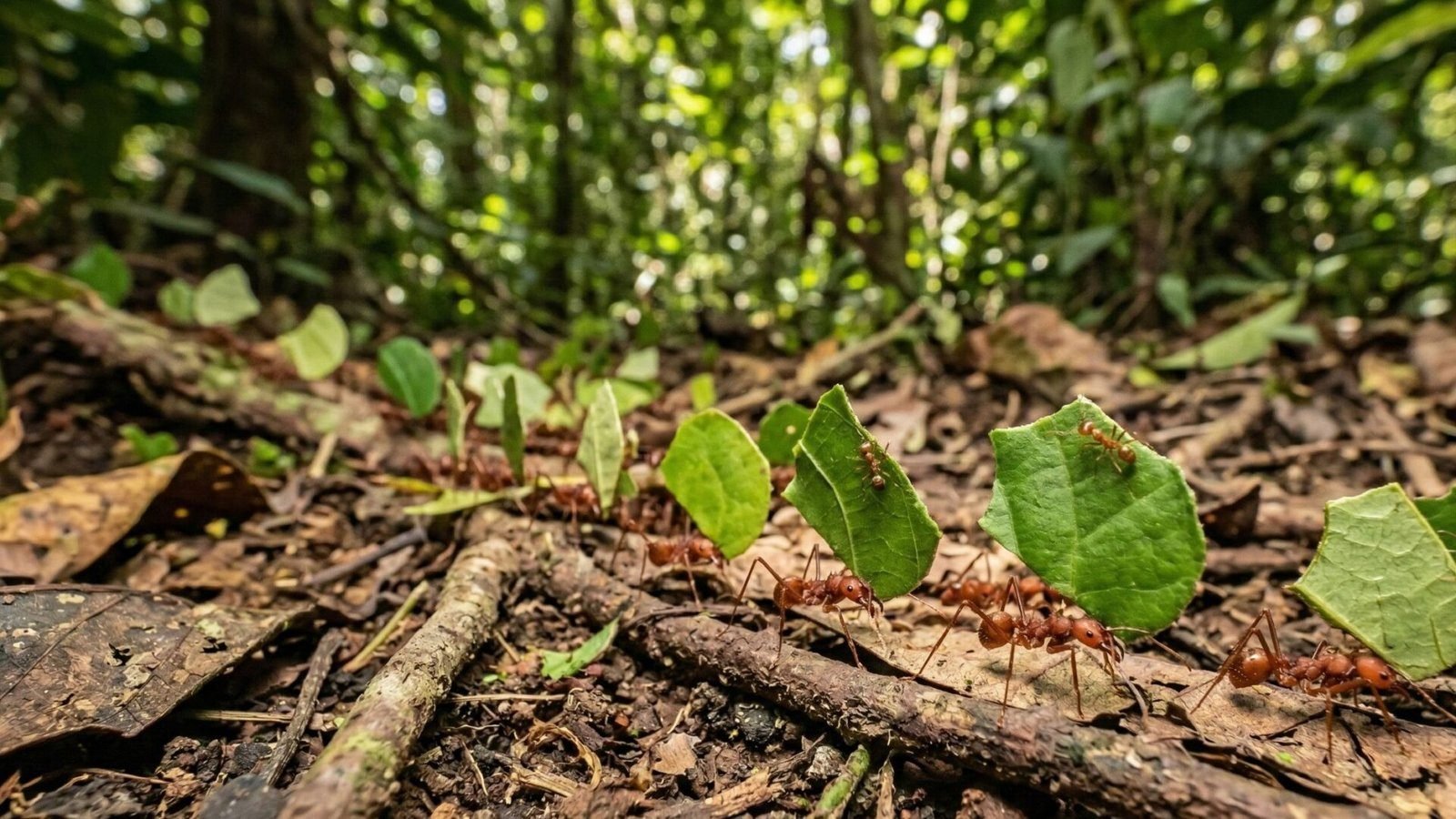
Leafcutter ants are nature's ultimate subterranean agriculturalists, constructing massive underground cities and cultivating vast fungal farms. Operating with astonishing social organization, these rainforest insects utilize chainsaw-like jaws, biological antibiotics, and specialized caste systems to sustain colonies numbering in the millions. From hitchhiking bodyguards to built-in nest air conditioning, their complex behaviors rival human civil engineering and farming. Discover 15 fascinating facts about these industrious insects and their remarkable fungal alliance.
1. They Don't Actually Eat Leaves
Despite their name, leafcutter ants do not eat the foliage they spend their lives harvesting. Instead, these tropical insects process green leaves into a moist pulp to cultivate a specialized species of fungus underground. This agricultural relationship is so ancient and complete that neither the ants nor the fungus can survive without each other. The ants continuously feed plant matter to the fungus, which in turn grows nutritious structures called gongylidia that nourish the colony. In essence, leafcutter ants were practicing industrial agriculture millions of years before humans ever walked the Earth.
2. The Fungus Acts as an External Stomach
The fungus cultivated by leafcutter ants acts as an external stomach for the entire subterranean colony. Fresh plant leaves often contain natural toxins, cellulose, and tough chemicals designed to deter herbivorous animals. The specialized fungus produces enzymes that break down these complex plant defense compounds into digestible nutrients. By allowing the fungus to perform the heavy chemical lifting, the ants bypass complex internal digestive processes. This biological division of labor allows leafcutter ants to process plant species that would otherwise be lethal to them.
3. Their Mandibles Vibrate Like Chainsaws
To cut through thick, leathery tropical foliage, leafcutter ants rely on mandibles that function like high-speed power tools. Their jaw muscles contract at extraordinary speeds, causing their mandibles to vibrate at frequencies up to 1,000 Hertz. This rapid movement acts like a microscopic chainsaw, dramatically reducing the mechanical force needed to slice through tough leaf fibers. The vibrations also stiffen the leaf material around the cut, preventing the blade from slipping during extraction. Consequently, a single worker ant can cut out a smooth leaf section larger than its own body in mere seconds.
4. A Colony Consumes as Much as a Cow
A single mature leafcutter ant colony consumes an astonishing amount of green plant matter every day. In fact, a full-sized subterranean nest can harvest as much fresh vegetation daily as a full-grown adult cow. Millions of eager workers emerge under cover of dark to strip trees, shrubs, and agricultural crops completely bare in a matter of hours. Their massive appetite makes leafcutter ants the primary herbivores in many Neotropical rainforest ecosystems. While this heavy harvesting frustrates human farmers, it plays a vital role in forest regeneration and nutrient cycling.
5. They Produce Their Own Biological Antibiotics
Monoculture farming in humid underground spaces makes ant fungus gardens highly susceptible to parasitic mold outbreaks. To defend their vital crop against deadly microfungi, leafcutter ants carry beneficial bacteria on their bodies. These symbiotic Streptomyces bacteria grow in specialized crypts on the ants' exoskeletons and secrete potent natural antibiotics. The worker ants carefully groom the fungal gardens, applying these self-produced antimicrobial compounds directly to infected areas. This incredible evolutionary partnership represents one of the oldest known uses of targeted antibiotic therapy in the animal kingdom.
6. Tiny Hitchhikers Act as Aerial Bodyguards
As large worker ants carry heavy leaf fragments back to the nest, they face constant attack from parasitic phorid flies. These tiny flies attempt to hover above the burdened workers and lay eggs directly onto their exposed heads. To prevent this fatal parasitism, tiny worker ants known as minima ride on top of the carried leaf sections. These small bodyguards aggressively snap their jaws at airborne flies and fend off prospective attacks while the carrier worker focuses on transport. This airborne defense system highlights the remarkable division of labor operating within every colony.
7. Nests Are Subterranean Megacities
The subterranean nests of leafcutter ants are monumental engineering feats that rival human cities in relative scale. A single mature colony can construct an underground complex spanning over 50 square meters and extending up to 8 meters below the surface. During the construction process, worker ants excavate and haul away up to 20 tons of soil to create thousands of interconnected chambers. These subterranean cities contain specialized rooms for fungal cultivation, brood rearing, and waste management. Such massive excavation alters soil aeration and distribution on a landscape level throughout Central and South America.
8. Nests Feature Built-In Air Conditioning
Maintaining millions of breathing insects and living fungus deep underground creates a serious microclimate challenge regarding oxygen levels and heat. Leafcutter ants solve this problem by constructing passive ventilation systems directly into the architecture of their nests. Warm, carbon-dioxide-rich air rises through central exhaust chimneys located near the top of the nest mound. This outward flow creates a natural draft that pulls cool, oxygenated air in through lower peripheral tunnels around the base. By adjusting the size and opening of these air shafts, the ants precisely regulate internal temperature and humidity.
9. Queens Mate Just Once for a 20-Year Lifespan
A prospective leafcutter queen experiences only one brief mating event during her entire lifespan of up to two decades. During a massive, synchronized nuptial flight, the virgin queen mates with several males in mid-air to collect hundreds of millions of sperm cells. She stores this entire genetic supply inside a specialized internal organ called a spermatheca, keeping the sperm viable for decades. After returning to the ground, she snaps off her own wings, digs a small founding chamber, and never mates again. Every single worker born into her multi-million-member colony over the next twenty years relies on that single mating flight.
10. A Single Queen Lays Up to 200 Million Eggs
Once established in her subterranean royal chamber, a leafcutter queen becomes an extraordinarily prolific egg-laying machine. Over her multi-decade life, a healthy queen can produce upwards of 200 million individual offspring. She remains permanently housed deep inside the central nest, attended constantly by a dedicated retinue of nurse workers that feed and groom her. The queen's continuous egg production maintains the massive population needed to sustain the colony's intensive agricultural demands. If the queen dies, the colony loses its source of new workers and inevitably collapses.
11. Worker Jobs Change as They Grow Older
Tasks within a leafcutter ant colony are divided not only by worker size but also by age, a phenomenon known as temporal polyethism. Younger worker ants remain safely inside the climate-controlled nest to tend delicate fungal gardens and care for developing larvae. As workers age and suffer physical wear on their exoskeletons and mandibles, they transition to riskier external responsibilities. Older ants take on duties like foraging, defending trail routes, and clearing heavy debris from forest floors. This age-based progression ensures that younger, undamaged workers perform sensitive indoor duties while older individuals absorb outdoor dangers.
12. Dedicated Workers Manage Underground Refuse Dumps
Maintaining pristine hygiene is essential for preventing catastrophic disease outbreaks within high-density subterranean ant nests. Leafcutter colonies solve this by constructing dedicated waste chambers located far below or away from active fungal gardens. Specialized garbage collector ants spend their entire lives moving dead ants, old fungal substrate, and organic debris into these toxic refuse dumps. To prevent cross-contamination, these waste management workers rarely enter the main fungus chambers or interact directly with other nestmates. This strict biological quarantine system protects the central colony from lethal bacterial and fungal pathogens.
13. Ants Use Fecal Droplets as Fertilizer
To maximize fungal growth, leafcutter ants do not rely solely on raw leaf material to feed their underground gardens. Instead, they actively fertilize the chewed leaf pulp using their own nutrient-rich fecal droplets. These fecal deposits contain vital nitrogen compounds along with active digestive enzymes that the ants absorb from eating the fungus itself. By depositing these droplets into freshly processed leaf pulp, the ants recycle essential biochemical catalysts directly back into their crop. This closed-loop recycling system dramatically accelerates the growth rate of the cultivated fungus.
14. Chemical Highways Guide Thousands of Workers
To coordinate the movement of millions of workers through dense rainforest terrain, leafcutter ants build clear subterranean and surface superhighways. Foraging scouts mark these routes using potent chemical pheromones produced in their abdominal glands. As hundreds of thousands of workers follow these invisible scent maps, they clear away twigs, leaves, and pebbles to create smooth highways. Some ant highways extend over 100 meters from the nest entrance and remain clearly visible on the forest floor for years. These chemical roads optimize transport speed and ensure workers return efficiently without getting lost.
15. Queens Carry Starter Cultures in Their Mouths
When a virgin queen leaves her parent colony on her nuptial flight, she cannot start her new home without her family's agricultural heritage. Before flying away, she scrapes a small tuft of living fungus mycelium from the nest garden and tucks it into a pocket inside her mouth. Known as the infrabuccal pocket, this specialized oral cavity keeps the fungal starter culture safe and moist during her flight. Once she digs her initial founding chamber underground, she spits out the fungal pellet and nurtures it using her own bodily excretions. This remarkable heirloom culture ensures that every new colony inherits the exact strain of fungus cultivated by its ancestors.
Sources & References
This AI-assisted post was rigorously curated and fact-checked for accuracy by:
 Martin Roháček
How fun was this article? 🤔
Tap a star to rate it
🧠 Quiz: How closely were you paying attention?
10 questions — all answers are in the article above!
Enjoyed these facts? There's more! 💌
Fresh fun facts in your inbox. No spam, ever.