The Tiny Superpower: 15 Fascinating Facts About Ants
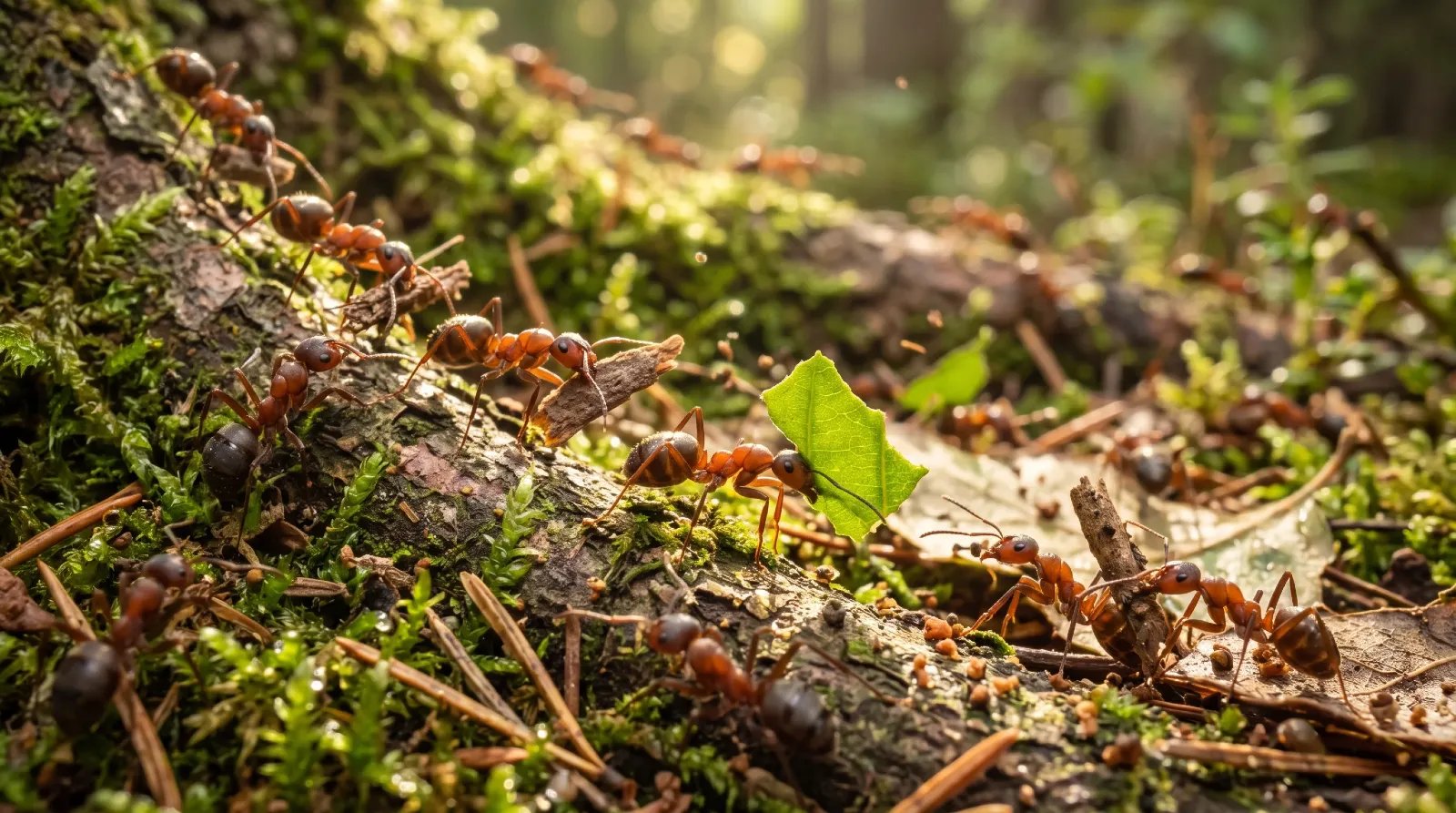
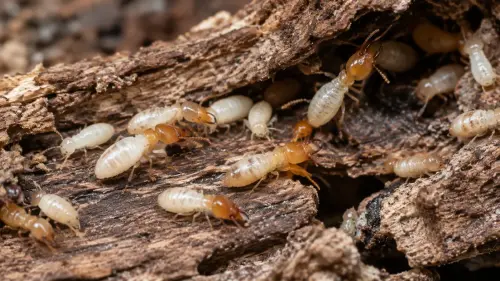
There are an estimated 20 quadrillion ants on Earth, and together they outweigh all the wild birds and mammals combined. Ants farm, wage war, build living bridges, count their steps and even keep other ants as slaves. Here are the surprising facts about the tiny insects that quietly run much of the planet.
1. There are around 20 quadrillion ants on Earth.
A 2022 study that combined hundreds of surveys from around the world estimated that about 20 quadrillion ants live on the planet at any one time. That is 20,000,000,000,000,000 ants, or roughly 2.5 million ants for every human. Ants are found on every continent except Antarctica, and only a few places such as Iceland, Greenland and Hawaii have no native species.
2. All the world's ants outweigh the wild birds and mammals.
The same study calculated that the total mass of all ants is about 12 million tonnes of carbon. That is more than all wild birds and wild mammals put together. It is, however, only about one-fifth of the total weight of all humans, which disproves the popular claim that ants and people weigh the same.
3. Ants evolved from wasps.
Ants are close relatives of wasps and bees and evolved from wasp-like ancestors during the Cretaceous period, when dinosaurs still roamed the Earth. Some of the oldest known ants have been found preserved in amber. Today, scientists have described more than 13,800 ant species, and there may be around 22,000 in total.
4. A queen ant can live for nearly 30 years.
Ant queens are among the longest-lived insects known. Some can live for up to around 30 years, while worker ants usually live from one to three years. Male ants, whose only job is to mate, often survive for just a few weeks.
5. Trap-jaw ants have the fastest bite in the animal kingdom.
Trap-jaw ants have spring-loaded mandibles that snap shut faster than any other predatory body part known. In one species, the jaws close at speeds of up to around 230 kilometres per hour. The ants can even use the force of the snap to launch themselves into the air to escape danger.
6. Desert ants count their steps.
Saharan desert ants travel far from their nest in search of food, then head home in a straight line. A 2006 experiment showed that they use an internal "pedometer" to measure distance. When researchers fitted ants with tiny stilts, they overshot their nest, and when their legs were shortened, they stopped too early.
 You might also like
The Walking Pinecone: 15 Fascinating Facts About Pangolins
7. Some ants are farmers.
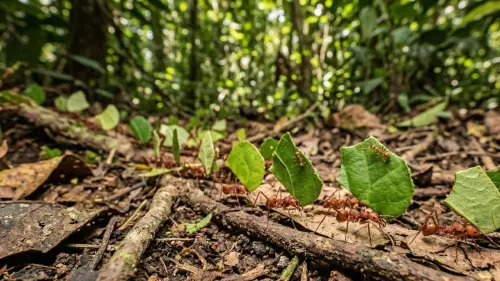
Several kinds of ants grow their own food. Leafcutter ants cut leaves to feed fungus gardens inside their nests, and the fungus becomes their only food. Other ants "herd" aphids, protecting them from predators in exchange for the sweet honeydew the aphids produce, much as humans keep dairy cows.
8. Some species keep other ants as slaves.
So-called slave-making ants raid neighbouring colonies and carry off their pupae. When the captured ants hatch, they work for their captors as if they were their own colony. Some of these raiding species, such as the Amazon ants, have become so dependent on their captives that they can no longer even feed themselves.
9. A fungus can turn ants into zombies.
Some fungi in the genus Ophiocordyceps infect ants and take control of their behaviour. An infected ant leaves its colony, climbs up a plant and clamps its jaws onto a leaf or twig. The fungus then kills the ant, grows out of its body and releases spores onto the ground below, ready to infect more ants.
10. Ants can build bridges and rafts out of their own bodies.
Some ants link their bodies together to form living bridges across gaps, chains to reach food or even walls and shelters. When floods strike, fire ants can lock legs and jaws to form floating rafts that may carry thousands of ants, with the queen and young protected in the middle, until they reach dry land.
11. One invasive ant forms a colony thousands of kilometres long.
Most ants fight members of other colonies, but the Argentine ant, which has spread to many parts of the world, behaves differently. In southern Europe, ants from nests spread over thousands of kilometres of coastline treat each other as members of the same family. Scientists call this a "supercolony", and it is one of the largest cooperative units of animals ever discovered.
12. The bullet ant has the most painful sting of any insect.
The bullet ant of Central and South America is said to have the most painful sting of any insect, with pain often compared to being shot. Its sting receives the highest rating on the Schmidt sting pain index. In a coming-of-age ritual of the Sateré-Mawé people of Brazil, boys wear gloves filled with bullet ants.
🤔 Quick guess
What do weaver ants use as 'glue guns' to stitch leaves together?
13. Ants talk with chemicals.
Ants communicate mainly through pheromones, chemical signals that they smell with their antennae. Foraging ants leave scent trails that guide nestmates to food, and an injured or alarmed ant releases chemicals that summon help. Some ants can also make squeaking sounds by rubbing parts of their bodies together.
14. Weaver ants use their larvae as glue guns.
Weaver ants build nests in trees by pulling leaves together, sometimes forming chains of ants to bridge the gap. Other workers then hold larvae in their jaws and gently squeeze them, making the larvae release sticky silk. The ants move the larvae back and forth like glue guns to stitch the leaves together.
15. A colony can contain millions of ants.
Ant colonies vary hugely in size. Some species live in groups of only a few dozen ants hidden in a single acorn or twig. Others, such as army ants and leafcutter ants, form colonies of millions of individuals, all working together as a single "superorganism".
How did these facts land?
Know someone who'd love these facts? Share them 👇
🧠 Quiz: How closely were you paying attention?
Think you remember the facts? 10 questions, tap an answer.