
The Adaptable Trickster: 15 Fascinating Facts About Coyotes
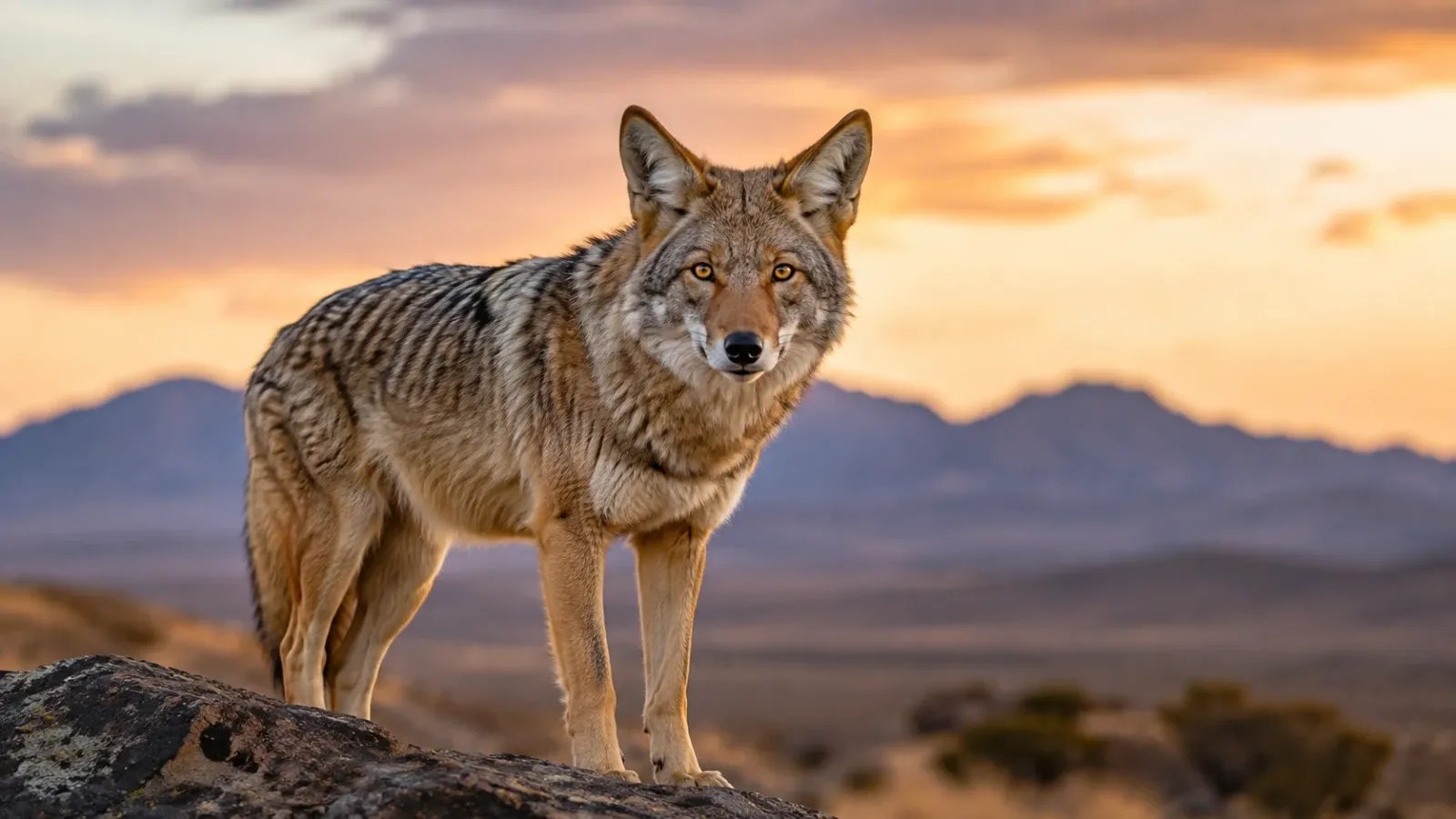
Far from the bumbling cartoon tricksters or mindless scavengers of myth, coyotes are apex ecological adapters. Often mistaken for solitary pests, they have expanded their range despite fierce eradication efforts. Discover the complex biology of North America's greatest canine survivor.
1. Eradication efforts actually trigger a biological response that causes coyotes to reproduce significantly faster.
Contrary to the intended goal of population control, killing off adult coyotes fragments their complex pack structures. When an alpha pair is eliminated, younger, subordinate females suddenly go into heat, breeding at an earlier age and producing much larger litters of pups because there is less competition for food in the surrounding environment.
2. The eastern coyote is technically a hybrid created by historical crossbreeding with wolves and domestic dogs.
As western coyotes migrated eastward over the last century, they encountered dwindling populations of eastern wolves and free-roaming domestic dogs. The resulting genetic blend gave the eastern coyote a larger skull and greater muscle mass, perfectly equipping them to hunt larger prey in the dense, forested landscapes of the eastern United States.
3. Coyotes and badgers frequently form mutually beneficial hunting partnerships.
This unlikely team-up capitalizes on the unique predatory strengths of both animals. While the badger relies on its powerful claws to unearth ground squirrels hiding in burrows, the coyote uses its incredible speed to run down any rodents that manage to flee to the surface, ensuring that neither predator goes hungry.
4. Coyotes do not howl at the moon, but instead use their complex vocalizations to conduct a localized population census.
The iconic yip-howl echoing through the night is not a reaction to lunar phases, but an auditory tool for tracking family members and warning rival packs. By listening to the overlapping responses of neighboring coyotes, they can mathematically gauge the density of other packs in the area and decide whether a territory is safe to enter or too crowded.
5. Urban coyotes have learned to navigate human traffic patterns and actively look both ways before crossing city streets.
Long-term studies of coyote populations living in major metropolitan areas like Chicago have revealed astonishing behavioral adaptations. These urban canines purposely shift their hunting schedules to the dead of night to avoid human interaction and have been observed waiting patiently at intersections for traffic to pass before darting across the road.
6. They are not strictly carnivores, but opportunistic omnivores that heavily rely on fruit and insects.
A common misconception is that coyotes survive entirely on meat, but their diets are wildly flexible depending on the season and environment. They will eagerly consume prickly pear cactus apples, blackberries, grasshoppers, and even discarded human trash like leather shoes when traditional prey is scarce.
 North American Animals
Discover the bizarre adaptations and hidden complexities of North America's most iconic wildlife, from ecosystem-engineering predators to multi-generational migrants.
See All Facts
North American Animals
Discover the bizarre adaptations and hidden complexities of North America's most iconic wildlife, from ecosystem-engineering predators to multi-generational migrants.
See All Facts
7. A coyote can run at blistering speeds of up to 43 miles per hour.
Equipped with long, slender legs and a remarkably light frame, the coyote is one of the fastest mammals in North America. This intense burst of speed allows them to successfully chase down incredibly agile prey, such as jackrabbits, that would easily outmaneuver a heavier, bulkier predator.
8. Coyotes walk entirely on their toes to move completely silently through their environments.
Like other canines, coyotes possess a digitigrade stance, meaning their heels never touch the ground. This physiological trait not only increases their stride length for faster running but also perfectly distributes their body weight to prevent dry twigs and leaves from snapping underfoot during a stealthy ambush.
9. Their geographic range has expanded by more than 40 percent since the 1950s.
While most North American predators lost their habitats to human expansion, coyotes capitalized on the shifting landscape. The mass deforestation of the continent and the aggressive extermination of their primary rival, the gray wolf, left an open ecological niche that the highly adaptable coyote eagerly filled.
10. Coyote pairs typically mate for life and are highly devoted, egalitarian co-parents.
Unlike many mammalian species where the male abandons the female after mating, male coyotes are fiercely dedicated to their offspring. The father actively protects the den, hunts continuously for the nursing mother, and regurgitates partially digested food for the pups as they begin weaning off milk.
11. They are excellent swimmers and have naturally colonized numerous islands off the North American coast.
Water is rarely an obstacle for a migrating coyote, as their hollow undercoat hairs provide excellent buoyancy. They have been documented swimming for several miles across open, choppy ocean waters to establish new populations on isolated landmasses like the Elizabeth Islands in Massachusetts.
12. A single coyote's home range can vary drastically from less than one square mile to over forty square miles.
Rather than relying on rigid biological programming, a coyote determines the size of its territory entirely based on resource availability. A city-dwelling coyote might find enough rats and garbage in a single urban park to survive, while a desert coyote must patrol a massive expanse of arid land just to find a single meal.
13. Their scientific name translates to barking dog, yet they rely on a highly sophisticated system of non-vocal body language.
While Canis latrans is famous for its vocalizations, physical communication is equally vital to their pack dynamics. They utilize subtle shifts in ear positioning, intricate tail tucks, and intense facial expressions to establish dominance hierarchies and resolve internal disputes without resorting to dangerous physical combat.
14. The coyote is one of the only medium-to-large mammals whose population rapidly grew during the expansion of European settlements.
Pioneers and settlers systematically devastated populations of bears, cougars, and wolves to protect their livestock and families. The coyote, being much smaller and far more elusive, easily slipped under the radar of early eradication programs and gorged itself on the rodents attracted to the new agricultural grain stores.
15. They can rapidly alter their physical size over a few generations depending on the prey available in a new habitat.
Coyotes are a marvel of rapid morphological adaptation, capable of shifting their average body mass to suit their environment. Populations that migrate into regions dominated by white-tailed deer naturally produce bulkier, more muscular offspring over time, while those remaining in arid deserts stay incredibly lean to hunt small reptiles and rodents.
Sources & References
This AI-assisted post was rigorously curated and fact-checked for accuracy by:
 Martin Roháček
How fun was this article? 🤔
Tap a star to rate it
🧠 Quiz: How closely were you paying attention?
10 questions — all answers are in the article above!
Enjoyed these facts? There's more! 💌
Fresh fun facts in your inbox. No spam, ever.