The Venomous Wanderer: 15 Cool Facts About Gila Monsters
Long villainized in Southwestern folklore as a swift, aggressive killer whose breath could wither plants and kill livestock, the Gila monster (Heloderma suspectum) is in reality a sluggish, reclusive marvel of desert survival. As one of only a handful of venomous lizards on Earth, this iconic reptile has survived for millions of years in the harsh Sonoran Desert not through aggressive predation, but through extreme energy conservation and unique evolutionary adaptations. Far from a deadly menace to humans—no confirmed human deaths have been documented since the 1930s—its potent chemical cocktail has actually revolutionized modern human medicine. Beyond the myths lies a docile creature whose specialized anatomy, subterranean lifestyle, and unique physiological traits reveal one of nature’s most fascinating survivalists.
1. Venom Is Delivered Through Grooved Teeth, Not Fangs
Unlike rattlesnakes that inject venom under high pressure through hollow front fangs, the Gila monster possesses a far more primitive delivery mechanism. Its venom glands are situated in the lower jaw rather than the upper head, and the neurotoxin flows along grooved teeth into the bite wound. To ensure the venom enters its victim, the lizard must chew tenaciously into the target rather than striking quickly. This grinding motion creates capillary action, drawing the painful fluid deep into the lacerations created by its sharp teeth.
2. A Compound in Its Saliva Revolutionized Diabetes Treatment
In the 1990s, medical researchers analyzing Gila monster saliva discovered a hormone component called exendin-4 that mimics human glucagon-like peptide-1 (GLP-1). This protein helps regulate blood sugar levels and insulin secretion far more effectively than natural human GLP-1 because it breaks down much slower in the bloodstream. Scientists synthesized this compound to create Exenatide (marketed as Byetta), an FDA-approved drug that has helped millions of people manage type 2 diabetes. This biological breakthrough sparked a wave of interest in reptilian venoms for pharmacological research.
3. Its Skin Is Embedded with Bony Armor
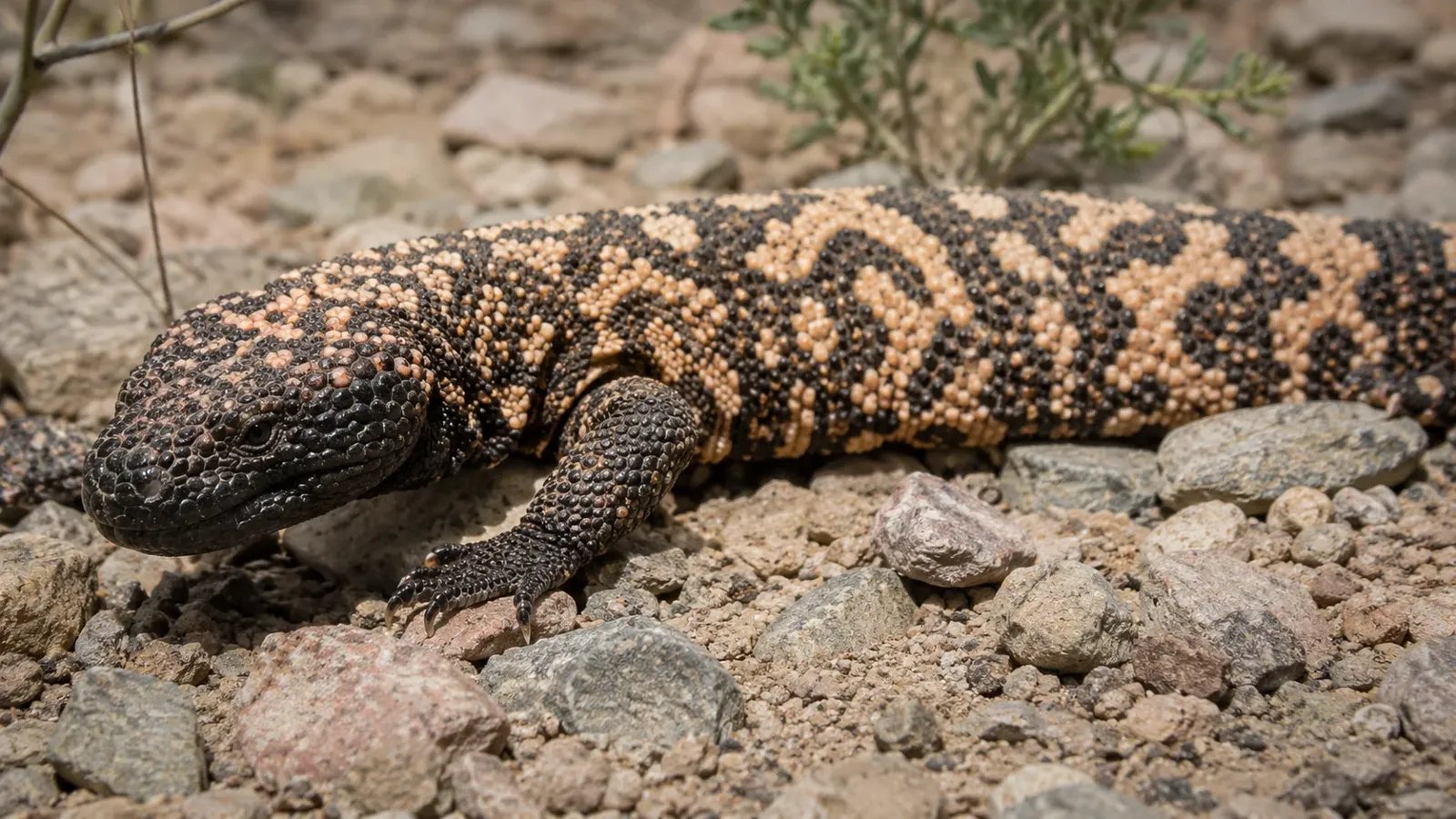
The distinctive, pebbled appearance of the Gila monster is not just decorative; it is a built-in suit of biological chainmail. Each bead on its skin is backed by an osteoderm, which is a tiny deposit of bone formed within the dermal layers. These osteoderms cover the head, back, and tail, providing physical protection against sharp rocks, desert vegetation, and potential predators like coyotes or birds of prey. This beaded texture is so distinct that it gave rise to the scientific family name Helodermatidae, meaning "studded skin."
4. It Spends Over 90% of Its Life Underground
Despite its famous reputation in Western lore, encountering a Gila monster in the wild is remarkably rare because of its secretive habits. The lizard spends approximately 90 to 95 percent of its entire life hidden away in underground burrows, rock crevices, or abandoned mammal dens. It emerges primarily in the cool morning hours of spring to forage and mate before high desert heat sets in. By remaining subterranean for most of the year, it conserves body moisture and maintains a stable body temperature.
5. Their Tails Double as Energy Storage Units
Living in an environment where prey availability is unpredictable requires specialized metabolic strategies. The Gila monster addresses this challenge by storing excess fat directly in its thick, muscular tail. During months of abundance, the tail swells noticeably as lipid reserves build up inside the tissue. In times of drought or winter brumation, the lizard relies on these energy stores to survive for months without eating a single bite.
6. Old Western Myths Claimed Their Breath Was Fatal
Early North American settlers and indigenous folklore attributed supernatural lethality to the Gila monster, claiming its breath was toxic enough to kill a person. Another common misconception was that the creature lacked an anus, causing food to rot in its stomach and produce venomous fumes. In reality, the lizard's breath is completely harmless, and its digestive system functions like that of any other reptile. These sensationalized myths were largely fueled by fear of its colorful appearance and painful bite.
7. It Was the First Venomous Animal Protected by State Law
Recognizing the rapid decline of wild populations due to habitat loss and over-collection for the pet trade, Arizona took historic conservation action in 1952. The state officially granted full legal protection to the Gila monster, making it the very first venomous animal in North America to receive such status. Today, it is illegal to kill, capture, collect, or hold a Gila monster in the wild without a specialized permit in Arizona and Nevada. These legal protections have played a crucial role in stabilizing wild populations across the American Southwest.
8. It Can Consume More Than One-Third of Its Body Weight in One Meal
When a Gila monster locates a nest of bird eggs or newborn rodents, it takes full advantage of the abundant food supply. Young lizards can consume up to 50 percent of their total body weight in a single feeding session, while adults comfortably manage about 35 percent. Their stomachs are remarkably elastic, expanding dramatically to accommodate large quantities of food rapidly. This extreme gorging capability allows an individual to meet its annual energy requirements in just three to four large meals.
9. Its Tongue Functions as a Powerful Chemical Sensor
Similar to snakes and monitor lizards, the Gila monster relies heavily on chemoreception rather than eyesight to navigate its environment. It frequently flicks its dark, deeply subtle forked tongue to collect airborne chemical particles and scents from the ground. These odor molecules are transferred to the Jacobson’s organ located in the roof of the mouth, which analyzes the signals. This acute chemical sense enables the lizard to locate buried eggs and track prey over long distances through pitch-black subterranean burrows.
10. The Venom Is Primarily Used for Defense, Not Hunting
While most venomous snakes use their venom to subdue fast-moving prey, the Gila monster uses its venom almost exclusively as a defensive weapon. Because its primary diet consists of immobile prey such as eggs, nestling rabbits, and young rodents, it does not require toxin to hunt. Instead, the excruciating pain caused by its bite acts as a severe deterrent to potential predators that attempt to attack it. The venom contains specialized proteins that trigger intense burning sensations, rapid swelling, and a drop in blood pressure in mammals.
11. Bright Patterns Serve as a Visual Warning System
The bold black, pink, orange, and yellow patterns covering a Gila monster’s body are a classic example of aposematism, or warning coloration. In the natural world, these vibrant, high-contrast designs signal to predators that the animal is toxic and dangerous to attack. Young predators learn to associate these distinct visual patterns with a painful experience, prompting them to avoid the lizard in the future. This evolutionary strategy allows the slow-moving reptile to traverse open ground with a reduced risk of ambush.
12. Females Lay Eggs that Incubate for Up to Nine Months
Unlike many reptiles that hatch within a few weeks, Gila monster eggs undergo an extraordinarily long incubation period. A female typically lays a clutch of 2 to 12 leathery eggs in an underground burrow during late summer. The embryos develop slowly over the autumn and winter months, remaining inside the nest while surviving on yolk reserves. The hatchlings finally emerge from the soil the following spring, perfectly timed with the bloom of desert life and the availability of newborn prey.
13. They Are Exceptionally Skilled Climbers and Diggers
Despite their stout bodies and clumsy gait on flat ground, Gila monsters are surprisingly agile when navigating rough terrain. They possess robust limbs equipped with long, sharp claws specifically designed for excavating hard desert soil and digging up buried nests. Furthermore, they frequently climb low desert shrubs, cacti, and rocky inclines in search of bird nests. Their strong grip and muscular tails provide stability while maneuvering along elevated branches.
14. They Belong to an Ancient Lineage Dating Back Millions of Years
The Gila monster is not merely a modern desert specialist; it is a living representative of an ancient evolutionary lineage. Fossil records indicate that members of the family Helodermatidae have existed largely unchanged since the Cretaceous period, over 60 million years ago. This long evolutionary history means that ancestors of the Gila monster shared the landscape with dinosaurs. Their survival through multiple prehistoric mass extinction events highlights the efficiency of their low-energy lifestyle.
15. Cold Desert Winters Force Them into Brumation
To endure the freezing temperatures of Southwestern desert winters, Gila monsters enter a state of dormant rest known as brumation. Starting around November, as ambient temperatures drop, the lizard retreats deep into an underground burrow where humidity and warmth remain stable. During this period, its metabolic rate drops drastically, and heart function slows to conserve energy. It remains largely inactive until spring temperatures rise, signaling time to emerge and begin the annual reproductive cycle.
Sources & References
This AI-assisted post was rigorously curated and fact-checked for accuracy by:
 Martin Roháček
How fun was this article? 🤔
Tap a star to rate it
Enjoyed these facts? There's more! 💌
Fresh fun facts in your inbox. No spam, ever.