The Ingenious Aquatic Mammal: 15 Fascinating Facts About Otters
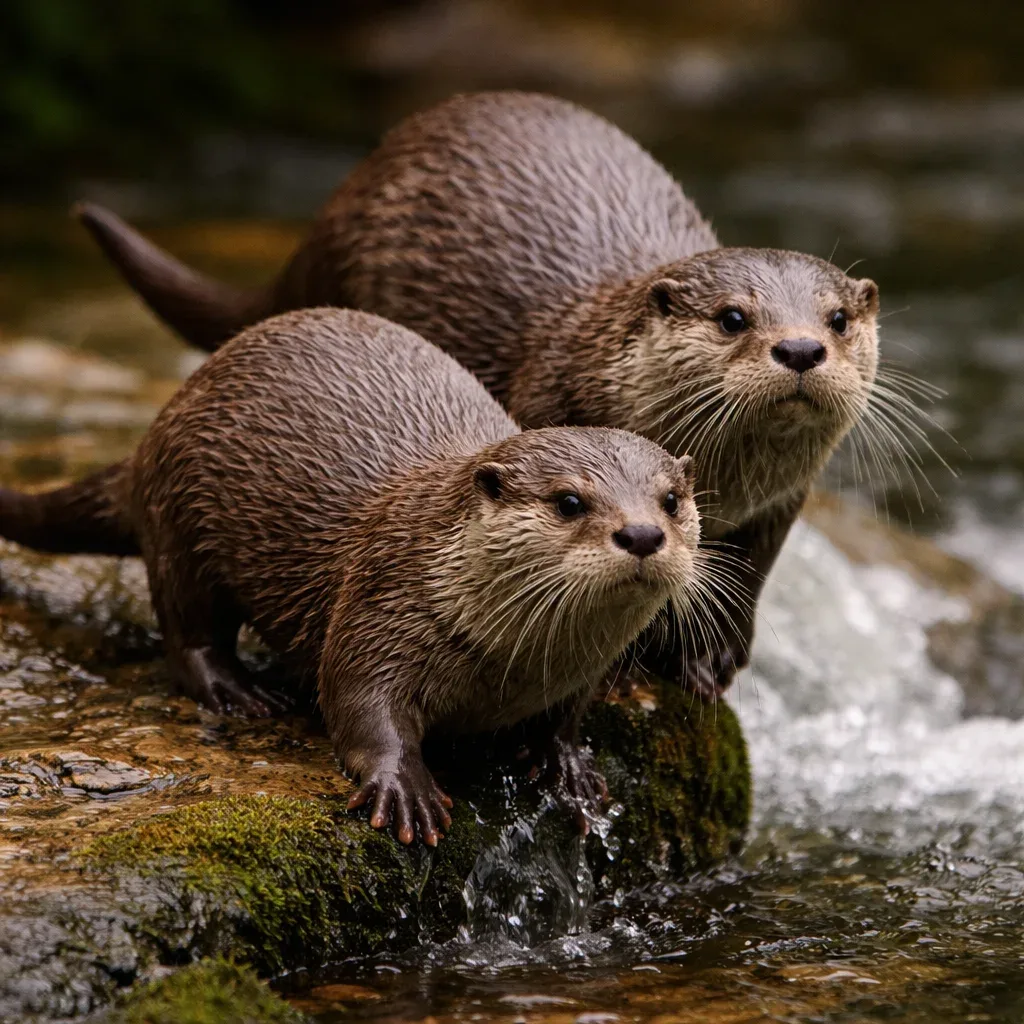
Otters are far more than just web-footed creatures sliding down muddy riverbanks for fun. From carrying favorite rocks in built-in armpit pockets to controlling entire marine ecosystems as vital keystone predators, these marine and freshwater mammals possess extraordinary physical adaptations and behavioral quirks. Discover the incredible world of otters, including their record-breaking dense coats, specialized hunting techniques, and surprisingly pleasant scent markers.
1. The Floating Hand-Hold Strategy
Sea otters frequently hold hands while floating on their backs to keep from drifting apart in ocean currents. This behavior, known as forming a raft, can involve just two otters or large social groups numbering in the hundreds. To further secure themselves while resting or sleeping, otters will wrap themselves and their companions in floating fronds of giant kelp. This natural anchorage prevents them from being swept out into open ocean while asleep. It is both a practical survival tactic and one of the most famous social behaviors in the marine mammal world.
2. The Thickest Fur in the Animal Kingdom
Unlike seals or whales, sea otters completely lack an insulating layer of blubber to withstand frigid ocean waters. Instead, they possess the densest pelt of any mammal on Earth, boasting up to one million hairs per square inch. This incredible coat consists of two layers: a dense underfur and longer guard hairs that trap a protective blanket of air directly against their skin. This trapped air layer prevents cold water from ever touching their skin, keeping them warm even in icy northern waters. However, maintaining this barrier requires constant work, as any dirt or oil destroys its insulating capability.
3. Lifetime Favorite Tool Pockets
Sea otters are among the very few non-human mammals that routinely use tools, specifically selected stones used to crack open hard-shelled prey like clams and sea urchins. Under their forelegs, sea otters have loose folds of skin that form specialized structural pouches, often compared to armpit pockets. An otter will store its gathered shellfish in these pouches while diving, along with its preferred rock tool. Remarkably, individual otters often keep and reuse the exact same favorite rock for years, carrying it everywhere they hunt.
4. Seaweed Anchors for Buoyant Babies
When female sea otters need to dive to the ocean floor to forage for food, they cannot take their newborn pups with them. Newborn sea otter fur is so dense and buoyant that the pups literally float on top of the water like corks, unable to submerge even if they try. To ensure her baby does not drift away in wind or currents while she is underwater, the mother carefully wraps the pup in floating fronds of giant kelp. This secure seaweed anchor keeps the buoyant pup safe on the surface until the mother returns with food.
5. The Amazonian "River Wolves"
The giant river otter of South America's Amazon basin is a massive freshwater predator that can reach lengths of up to six feet and weigh over 70 pounds. Known locally as lobos de río or river wolves, these creatures are highly vocal, hyper-social, and hunt in cooperative family packs. Working together, a pack of giant otters can successfully hunt large fish, piranhas, and even anacondas or caimans. Their intense territoriality and collective aggression are powerful enough to deter top land predators like jaguars from approaching the riverbanks.
6. Extreme Metabolism and Daily Feasts
To survive in chilly water without blubber, otters rely on an extraordinarily fast metabolic rate that generates tremendous internal body heat. A sea otter must consume approximately 20 to 25 percent of its total body weight in food every single day just to maintain its internal temperature. For an average adult sea otter, this translates to catching and eating upwards of 20 pounds of seafood daily. Consequently, otters spend nearly half of their waking hours hunting, cracking shells, and feeding.
7. Playful Sliding as Energy-Efficient Travel
North American river otters are famous for their playful antics, particularly sliding down muddy riverbanks, sand dunes, and snow-covered slopes on their bellies. While this behavior certainly serves a social and recreational purpose, researchers have discovered it is also a highly efficient mode of locomotion. Sliding down inclined surfaces allows otters to travel long distances across snow or slippery terrain while expending far less metabolic energy than running. This ingenious combination of play and conservation of energy gives them a significant advantage during harsh winters.
8. Keystone Ecological Guardians
Sea otters play a critical role as a keystone species in maintaining the health of coastal marine ecosystems. Their primary diet includes herbivorous invertebrates, particularly sea urchins, which graze voraciously on giant kelp forests. Without sea otters to keep their populations in check, sea urchins multiply rapidly, creating underwater barrens by devouring entire kelp forests. By keeping urchin populations under control, otters preserve these kelp forests, which serve as vital nurseries for hundreds of marine species and act as major carbon sinks.
9. Unique Group Names On Land vs. In Water
Language reflects the dual nature of otters, as collective nouns for otters change depending on whether the animals are in water or on land. When a group of otters is floating together in the water, it is correctly referred to as a raft. On dry land, however, a gathering of otters is called a romp, a name inspired by their energetic, bounds-and-tumbles style of play and movement. Occasionally, researchers and enthusiasts also refer to land groups as a family or a bevy, but romp remains the most popular term.
10. Exceptionally Pleasant-Smelling Droppings
While animal waste is typically known for its repulsive odor, otter droppings—known scientifically as spraint—have a surprisingly pleasant scent. Biologists and field researchers frequently describe the smell of river otter spraint as smelling like crushed violets, fresh hay, or jasmine tea. Otters use spraint as a complex chemical communication system to mark territorial boundaries, signal reproductive status, and identify individual group members along riverbanks.
11. Specialized Underwater Adaptations
Otters possess remarkable anatomical adaptations that allow them to thrive as semi-aquatic or marine hunters. During deep foraging dives, a sea otter can hold its breath for over five minutes, though most routine dives last between one and two minutes. As soon as an otter submerges, specialized muscular valves automatically seal shut its nostrils and small ears to completely exclude water. Additionally, their eyes feature custom-curved lenses and powerful ciliary muscles that enable sharp visual acuity both above and below the surface.
12. Lifesaving Daily Grooming Rituals
For sea otters, meticulous grooming is not a matter of vanity, but a non-negotiable requirement for physical survival. Because they lack insulating blubber, any dirt, oil, or matted fur permits cold ocean water to penetrate their dense coat and reach their skin, leading rapidly to fatal hypothermia. Otters spend up to several hours every day meticulously rubbing, squeezing, and blowing air into their fur with their paws and teeth. This painstaking routine traps fresh air bubbles within the undercoat, restoring the vital insulating layer that keeps them warm.
13. Built-In Armpit Shopping Bags
In addition to holding tools, the loose skin pouches located beneath an otter's forearms function as convenient built-in storage bags during foraging dives. When an otter dives to the ocean floor, it can collect multiple clams, crabs, or sea urchins in a single trip, stuffing them into these elastic armpit pockets. This allows the otter to maximize efficiency by gathering a full feast before swimming back up to the surface. Once at the surface, the otter rolls onto its back, unloads its armpit pockets onto its chest, and begins eating.
14. The Devastating Impact of the Fur Trade
During the 18th and 19th centuries, maritime fur traders relentlessly targeted sea otters for their luxurious, high-density pelts, known as soft gold. This commercial exploitation decimated sea otter populations across the North Pacific, driving the global population from an estimated 300,000 down to fewer than 2,000 individuals by the early 20th century. Entire regional populations were completely wiped out, leading many biologists at the time to fear the species was headed for extinction. International treaties, including the Fur Seal Treaty of 1911, finally granted legal protections that allowed populations to slowly recover.
15. Deep Evolutionary Roots and Diversity
Otters belong to the subfamily Lutrinae within the mustelid family, sharing ancestral roots with weasels, badgers, and ferrets. Today, there are 13 distinct species of otters distributed across six continents, ranging from the small-clawed otter of Asia to the marine otter of the South American Pacific coast. Fossil records reveal that ancient otter relatives first appeared over 10 million years ago during the Miocene epoch. Over millions of years, these adaptable carnivores evolved from purely terrestrial predators into some of the most accomplished, highly specialized semi-aquatic hunters on the planet.
Sources & References
This AI-assisted post was rigorously curated and fact-checked for accuracy by:
 Martin Roháček
How fun was this article? 🤔
Tap a star to rate it
🧠 Quiz: How closely were you paying attention?
10 questions — all answers are in the article above!
Enjoyed these facts? There's more! 💌
Fresh fun facts in your inbox. No spam, ever.