The Edge of Europe: 15 Fascinating Facts About Portugal
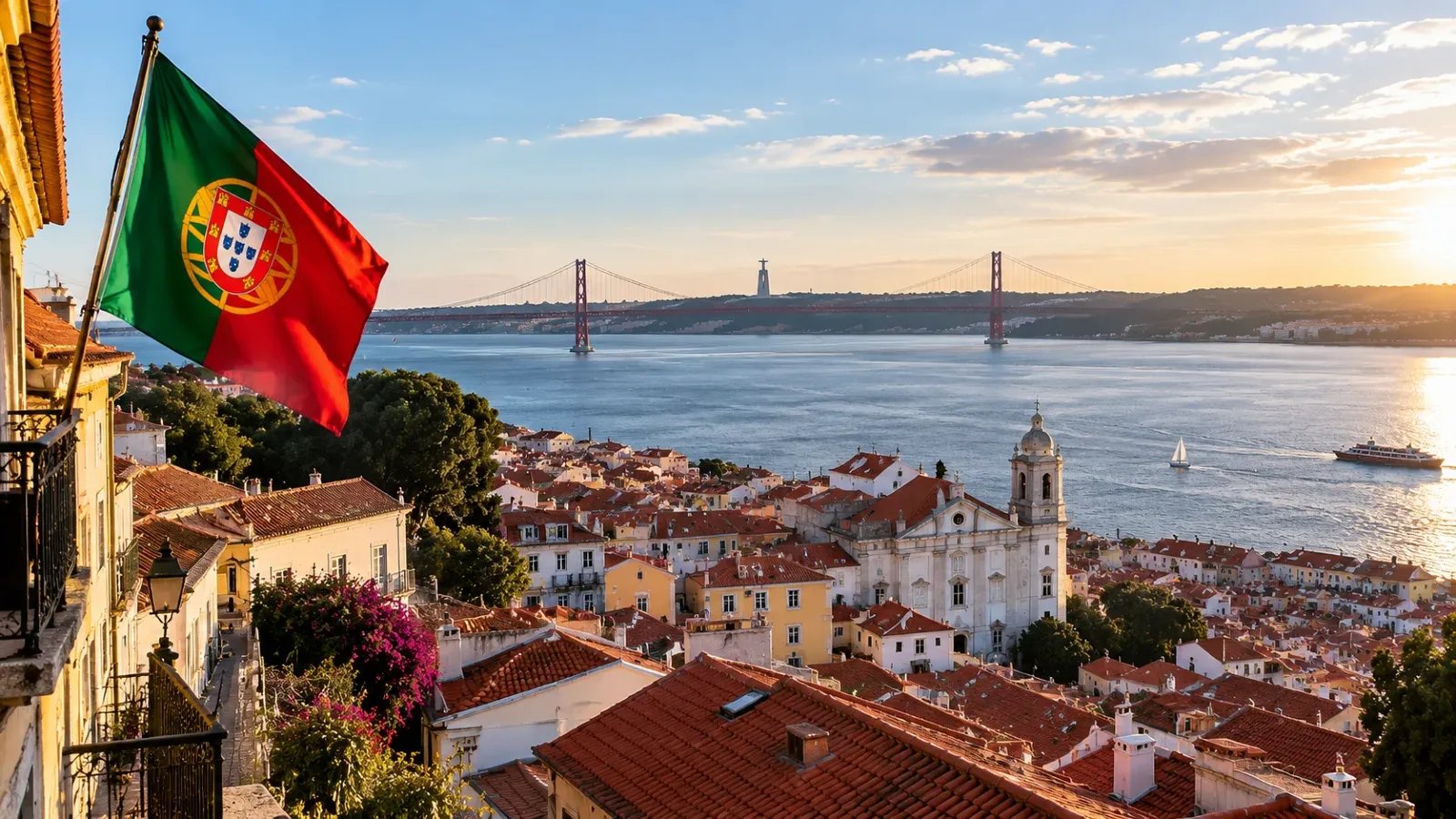
Portugal sits on Europe's western edge, with sunny beaches, hilltop palaces, tiled facades, and a seafaring past that connected continents. It has some of the oldest borders in Europe and one of the oldest alliances in the world. Discover 15 fascinating facts about the country of explorers.
1. Portugal has some of the oldest borders in Europe.
Portugal's land border with Spain has been essentially unchanged since the Treaty of Alcañices in 1297. This makes it one of the oldest fixed national borders in Europe. Portugal's independence, declared in the 12th century, is also among the oldest in the continent.
2. It is part of one of the world's oldest alliances.
The Anglo-Portuguese Alliance, whose origins go back to a treaty of 1373 and which was confirmed by the Treaty of Windsor in 1386, is often described as the oldest diplomatic alliance in the world that is still in force. England and Portugal have been trading partners for centuries, and the alliance helped Portugal during several wars.
3. A huge earthquake destroyed Lisbon in 1755.
On 1 November 1755, All Saints' Day, a powerful earthquake struck Lisbon, followed by a tsunami and fires. Tens of thousands of people died, and much of the city was destroyed. The Marquis of Pombal led the reconstruction, creating the orderly grid of the Baixa district with early earthquake-resistant building techniques.
4. Portuguese sailors opened sea routes to Asia.
In the 15th century, Portugal began exploring the African coast, supported by Prince Henry the Navigator. In 1498, Vasco da Gama reached India by sailing around Africa. These voyages opened a sea route to Asia and created a Portuguese trading empire that stretched from Brazil to Macau.
5. Lisbon's trams and lifts are part of the city's character.
Tram 28, with its vintage yellow cars, rattles through the hilly neighborhoods of Alfama and Graça. The Santa Justa Lift, opened in 1902, is a neo-Gothic iron elevator that links the lower Baixa district with the higher Carmo Square. Both are popular with visitors.
6. The pastel de nata comes from a monastery.
The custard tart, called pastel de nata, was developed by monks at the Jerónimos Monastery in Belém. After the monastery closed in the 1830s, the recipe was sold, and in 1837 a bakery next door, Pastéis de Belém, began selling the tarts. The bakery still uses a secret recipe, and the tarts are eaten across Portugal, often with cinnamon.
7. The Douro was one of the world's first demarcated wine regions.
In 1756, the Marquis of Pombal established boundaries for the production of port wine in the Douro Valley, an arrangement often described as the world's first wine region demarcation. Port is a sweet fortified wine, aged in cellars across the river in Vila Nova de Gaia. The terraced vineyards of the Alto Douro are a UNESCO World Heritage Site.
8. Portugal produces about half of the world's cork.
Cork is harvested from the bark of the cork oak, which grows back after it is stripped, and the trees are not cut down. Portugal produces around half of the world's cork, mainly in the Alentejo region. It is used for wine stoppers, flooring, fashion items, and many other products.
9. Fado is Portugal's soulful music.
Fado is a style of music with melancholy lyrics about longing and fate, usually sung to the accompaniment of a Portuguese guitar. It developed in the neighborhoods of Lisbon in the 19th century. UNESCO added it to the list of intangible cultural heritage in 2011.
10. Sintra is a fairy-tale landscape.
The hills of Sintra, near Lisbon, are covered with palaces and villas. The colorful Pena Palace, built in the mid-19th century for King Ferdinand II, mixes Romantic, Gothic, and Moorish styles. The Cultural Landscape of Sintra was added to the UNESCO World Heritage List in 1995.
11. The Azores have Portugal's highest mountain.
Mount Pico, a volcano on the island of Pico in the Azores archipelago in the Atlantic, rises to 2,351 meters. It is the highest point in Portugal. The Azores and the island of Madeira are autonomous regions of Portugal, known for volcanic landscapes, hot springs, and whale watching.
12. The University of Coimbra dates from 1290.
The University of Coimbra was founded in 1290 and is one of the oldest universities in Europe. Its baroque library, Biblioteca Joanina, is famous for its gilded decoration and for the bats that live there and protect the books from insects. The university's historic buildings are a UNESCO World Heritage Site.
13. Around 260 million people speak Portuguese.
Portuguese is spoken by about 260 million people around the world, mostly in Brazil, but also in Portugal, Angola, Mozambique, and other countries. It is an official language in nine countries.
14. Cod is a national obsession.
Bacalhau, dried and salted cod, is the best-known Portuguese food, and there are said to be hundreds of recipes for it. A popular saying claims there is one for every day of the year. The Portuguese eat a large amount of cod, although much of it is imported.
15. The Algarve has dramatic cliffs and sea caves.
Portugal's southern coast, the Algarve, is known for golden cliffs, rock formations, and sandy beaches. The Benagil Cave, a sea cave with a hole in its roof that lets sunlight stream onto a small beach, can be reached by boat or kayak and is one of the most photographed spots in the region.
Sources & References
This AI-assisted post was rigorously curated and fact-checked for accuracy by:
 Martin Roháček
How fun was this article? 🤔
Tap a star to rate it
🧠 Quiz: How closely were you paying attention?
10 questions — all answers are in the article above!
Enjoyed these facts? There's more! 💌
Fresh fun facts in your inbox. No spam, ever.