The Chivalrous Sultan: 15 Fascinating Facts About Saladin
 By Martin Roháček
·
February 14, 2026
By Martin Roháček
·
February 14, 2026
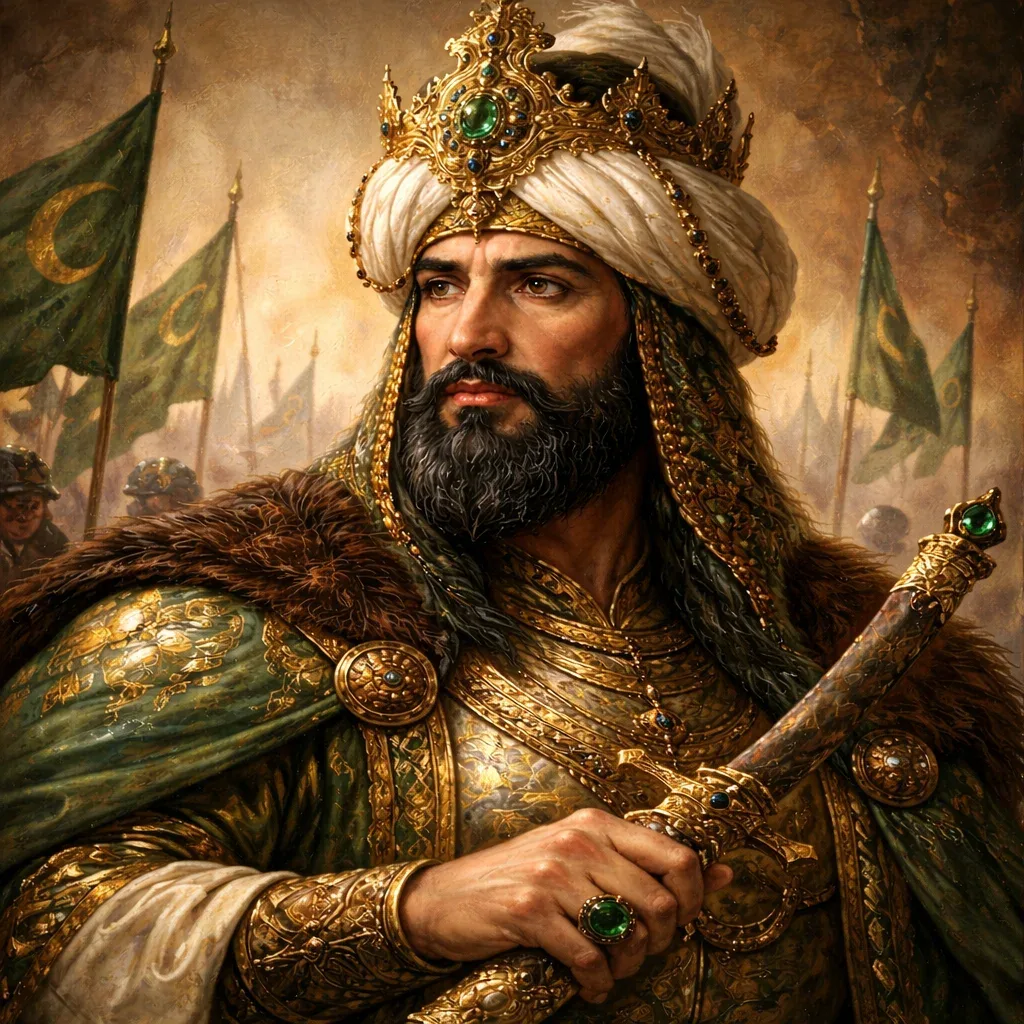
Before becoming the legendary Sultan who reshaped the medieval Middle East, Saladin was a quiet Kurdish scholar who preferred poetry and theology to the battlefield. Rising to power in 12th-century Egypt and Syria, he famously united Muslim factions and recaptured Jerusalem from Crusader hands in 1187. Celebrated across both the Islamic world and Western Europe for his chivalry, generosity, and military genius, his legacy remains unmatched in medieval history. Discover 15 fascinating facts about the life, campaigns, and enduring honor of Saladin.
1. His Real Name Was Yusuf, and "Saladin" Was an Honorific Title
While Western history universally knows him as Saladin, his birth name was actually An-Nasir Salah ad-Din Yusuf ibn Ayyub. The moniker "Saladin" is a European corruption of his Arabic honorific title, Salah ad-Din, which translates to "Righteousness of the Faith." Throughout his early life, he was simply called Yusuf by his family and close associates. In the medieval Islamic world, honorific titles were awarded or assumed to reflect political prestige and religious commitment. His official titles expanded as his realm grew, but it was the Westernized version of his religious title that stuck in European military chronicles.
2. He Was of Kurdish Descent Rather Than Arab
Despite becoming the political and military leader of the Arab-Islamic world during the Crusades, Saladin was not ethnically Arab. He was born in 1137 in Tikrit, located in modern-day Iraq, into a prominent Kurdish family originating from Dvin in Armenia. His family belonged to the Rawadid tribe, an assimilated Kurdish clan that served as military commanders for local Seljuk rulers in Mesopotamia. His non-Arab ethnicity initially created political hurdles when he took power in Egypt, as Arab and Turkish elites viewed him as an outsider. However, his military success and dedication to Islamic unity eventually silenced his political rivals.
3. He Was a Scholar First and Joined the Army Under Pressure
As a young man growing up in Damascus, Saladin exhibited far more passion for theology, geometry, and poetry than military tactics. He was deeply educated in Islamic jurisprudence and memorized extensive Arab genealogical traditions, particularly regarding horse breeding. He showed so little initial ambition for soldiering that he only joined his first military expedition under duress. His uncle, the prominent general Asad al-Din Shirkuh, virtually forced the reluctant young scholar to join his Syrian military campaign into Egypt in 1164. That campaign set off a chain of events that transformed the quiet academic into one of history's greatest military strategists.
4. Saladin and Richard the Lionheart Never Met Face-to-Face
The Third Crusade is legendary for the duel between Saladin and King Richard I of England, yet the two iconic monarchs never actually saw each other in person. Their confrontation was conducted entirely through armed forces, diplomatic envoys, and written correspondence. Despite the intense, bloody nature of their military conflict, both commanders developed a profound mutual admiration that bordered on chivalric friendship. Their messengers frequently crossed war zones carrying diplomatic gifts, strategic proposals, and expressions of personal respect. This long-distance rivalry gave rise to romanticized European literature that immortalized both leaders as models of knightly honor.
5. He Sent Fresh Warhorses to King Richard in the Heat of Battle
During the fierce Battle of Jaffa in 1192, Saladin demonstrated an extraordinary act of chivalry toward his greatest enemy. Observing from a distance, Saladin noticed that King Richard was fighting on foot in the thick of combat because his mount had been killed underneath him. Dismayed that a monarch of Richard's stature was forced to fight on foot like a common foot soldier, Saladin dispatched a groom with two fresh Arabian warhorses. The messenger rode straight into the chaotic battle line to deliver the royal steeds to the English king. Richard accepted the gift with gratitude and mounted one of the horses to continue leading his forces.
6. He Sent Mountain Snow and Fresh Fruit to Treat His Rival’s Fever
When King Richard fell dangerously ill with a high fever during the siege of Acre, Saladin responded with medical relief rather than military exploit. Recognizing his opponent's distress, the Sultan dispatched personal physicians alongside couriers carrying packed snow from Mount Hermon to cool the king's body. The shipments also included fresh pears and pomegranates from Syrian orchards to nourish the bedridden Crusader king. European crusaders were stunned by this extraordinary generosity toward an enemy leader in the middle of a brutal war. This act cemented Saladin's reputation in Western Europe as a compassionate and noble sovereign.
7. The Victory at Hattin Decisively Broke Crusader Power
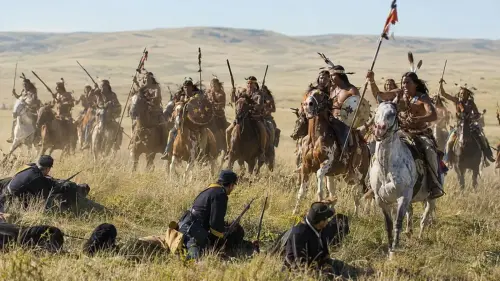
Saladin's masterpiece of military tactics occurred in July 1187 at the Battle of Hattin in northern Palestine. By tricking the Crusader army into marching across arid terrain under the scorching summer sun, he cut off their access to water from the Sea of Galilee. Saladin's forces set fire to the dry grass, surrounding the dehydrated European knights with blinding smoke and intense heat. The trapped Christian army was systematically annihilated, resulting in the capture of King Guy of Jerusalem and the loss of the True Cross. This total victory destroyed the primary military force of the Crusader states and opened the road to Jerusalem.
8. He Recaptured Jerusalem Without Executing a Mass Massacre
When Saladin captured Jerusalem in October 1187, his army showed remarkable restraint that shocked contemporary observers. Eighty-eight years earlier, the First Crusaders had slaughtered thousands of Muslim and Jewish residents, turning the city streets into rivers of blood. Despite calls from his advisers to avenge that historical atrocity, Saladin strictly forbade looting, execution, or revenge killings. Residents were allowed to purchase their freedom for a modest ransom, and Saladin even paid the ransom fees for thousands of impoverished families out of his own pocket. Christian holy sites, including the Church of the Holy Sepulchre, were preserved and protected under guard.
9. He Founded the Ayyubid Dynasty Across Egypt and the Levant
Saladin's rise to absolute political power began in Egypt, where he served as vizier before abolishing the Fatimid Caliphate in 1171. He proclaimed himself Sultan and founded the Ayyubid Dynasty, named in honor of his father, Najm ad-Din Ayyub. Over two decades of shrewd diplomacy and military campaigns, he expanded his realm to encompass Egypt, Syria, northern Mesopotamia, Hijaz, and Yemen. By uniting these fractured Islamic territories under a single centralized authority, he created a unified front against Crusader forces. His empire established economic stability and revived Sunni Islamic scholarship across the Middle East.
10. He Survived Assassination Attempts by the Order of Assassins
Saladin's campaigns were repeatedly threatened by the Nizari Ismaili order, famously known in Western history as the Assassins. Led by Rashid ad-Din Sinan, the group made two separate attempts on Saladin's life during his military campaigns in Syria between 1175 and 1176. During one nighttime attack, an assassin managed to strike Saladin's helmet with a dagger, though his mail armor saved him from fatal injury. Following these terrifying close calls, Saladin took extreme security precautions, including sleeping in a custom-built wooden tower and wearing concealed body armor at all times. He eventually marched on their stronghold at Masyaf to force a peaceful truce.
11. He Died Penniless After Giving Away His Empire's Wealth
When Saladin passed away in Damascus in March 1193 at the age of 55, his ministers made a shocking discovery in the royal treasury. Despite ruling a vast and prosperous empire spanning several modern countries, the Sultan left behind only one gold dinar and forty silver dirhams. Throughout his life, he donated virtually all public revenue and war booty to construct schools, hospitals, and mosques, as well as helping poor citizens. His personal generosity was so absolute that his family had to borrow money from friends to purchase his burial shroud and pay for his funeral expenses.
12. He Maintained an Exhausting Desert Campaign Schedule
Saladin was renowned among his soldiers for his incredible physical stamina during long desert marches. He frequently spent up to twelve hours a day in the saddle, personally inspecting defensive fortifications and maintaining order among his troops. Despite the brutal Middle Eastern heat, he led his armies year after year with minimal rest between major campaigns. His personal diet was famously frugal, consisting mainly of boiled rice, barley water, and light broths rather than extravagant royal feasts. This modest lifestyle earned him deep respect from common soldiers, who saw their ruler enduring the same hardships as the men on the front lines.
13. He Formally Guaranteed Christian Pilgrimages to Jerusalem
Following months of stalemate during the Third Crusade, Saladin and King Richard concluded the Treaty of Jaffa in September 1192. The peace agreement left Jerusalem under Islamic control while allowing Christian pilgrims and merchants unarmed access to the holy sites. Saladin insisted on guarantee clauses that ensured European travelers would not be harassed or taxed unfairly during their journeys. This diplomatic compromise brought an end to the Third Crusade and established a peaceful framework that endured beyond his death. The treaty stands as an early landmark in international law regarding the protection of religious minorities.
14. He Was Fluent in Four Languages and Modest in Stature
Historical accounts describe Saladin as a man of slender build and modest physical height, standing roughly five feet four inches tall. Despite his unimposing physical appearance, his calm demeanour and gentle voice commanded immediate authority and absolute loyalty. He was exceptionally literate and fluent in four languages: Kurdish, Arabic, Persian, and Turkish. This multilingual ability allowed him to communicate directly with diverse military commanders and foreign diplomats without relying on translators. His love for classical Arabic poetry and historical texts remained a defining trait throughout his military career.
15. His Tomb Features a Marble Sarcophagus Gifted by a German Emperor
Saladin was laid to rest in a simple garden mausoleum adjacent to the famous Umayyad Mosque in Damascus, Syria. His body rests inside an unadorned wooden sarcophagus made of carved walnut wood, reflecting his lifelong commitment to modesty. Directly beside his original tomb stands an ornate white marble sarcophagus donated centuries later in 1898 by German Emperor Wilhelm II during his visit to Damascus. The Kaiser was so moved by Saladin's historical legacy of chivalry and leadership that he paid for the marble monument and a golden wreath to honor the Muslim ruler. Today, visitors to the mausoleum can see both sarcophagi resting side by side.
Sources & References
This AI-assisted post was rigorously curated and fact-checked for accuracy by:
Martin Roháček
How fun was this article? 🤔
Tap a star to rate it
🧠 Quiz: How closely were you paying attention?
10 questions — all answers are in the article above!
Enjoyed these facts? There's more! 💌
Fresh fun facts in your inbox. No spam, ever.