The Cinematic Lagoon: 15 Fascinating Facts About Venice Film Festival
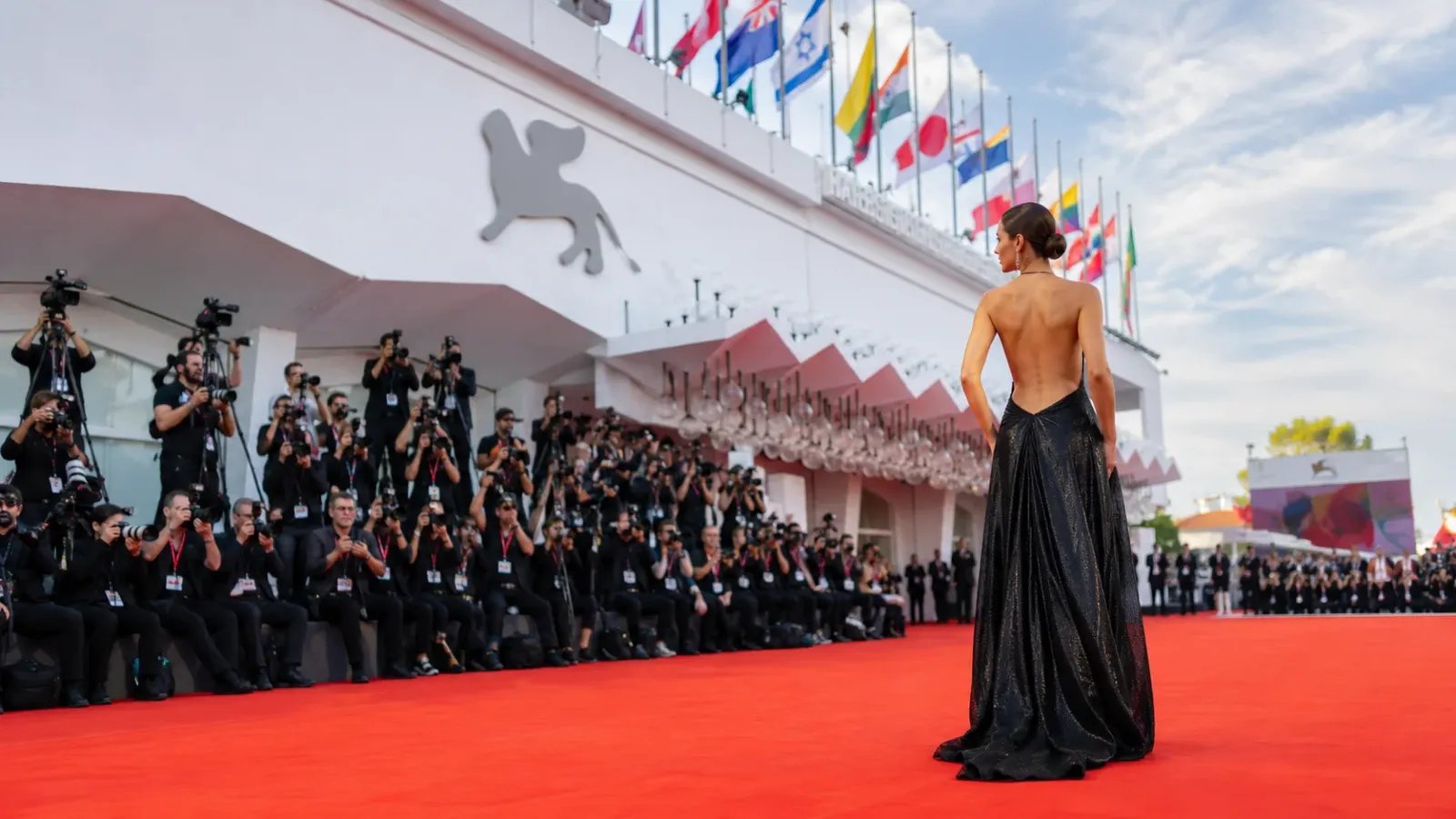
People often assume the Venice Film Festival is merely a glamorous excuse for celebrities to ride water taxis in couture. In reality, it is the world's oldest film festival, born under a fascist regime before evolving into a fierce battleground for art. Let's look past the red carpet to explore the true history of this pioneering event.
1. The festival was originally founded in 1932 by a fascist regime to promote political propaganda alongside tourism.
Conceived by Count Giuseppe Volpi di Misurata, Luciano De Feo, and Antonio Maraini, the inaugural exhibition was heavily backed by Benito Mussolini. The dictator recognized the immense power of cinema to influence the masses, aiming to establish Italy as a global cultural superpower while attracting wealthy, international tourists to the Venetian coast.
2. No official jury existed during the inaugural festival, meaning the first awards were decided entirely by audience applause.
During the 1932 edition, organizers had not yet established the formal, critical juries that define modern film festivals. Instead, the audience voted for their favorite films and performances using a referendum system, rewarding highly specific achievements like most amusing film and most touching film based on the decibel level of their cheers in the theater.
3. The festival's original top prize was named the Mussolini Cup before being permanently abolished after World War II.
From 1934 to 1942, the Coppa Mussolini was awarded to the best Italian and best foreign films. The award's overt political nature became a blatant mechanism for fascist self-congratulation, leading to intense controversy, particularly in 1938 when it was awarded to a Nazi propaganda film and an Italian war film, completely bypassing the international jury's preferences.
4. The Cannes Film Festival was created specifically as a democratic retaliation against the political corruption of Venice.
Following the rigged 1938 Venice awards, where Nazi and Fascist pressure explicitly overturned the jury's votes, outraged French, American, and British diplomats withdrew from the festival in protest. In response, a French official named Philippe Erlanger lobbied his government to create a rival, censorship-free cinematic event, which ultimately blossomed into the Cannes Film Festival.
5. The first film ever screened at Venice was an American horror classic, not a prestigious European art house drama.
The festival officially opened on the terrace of the Hotel Excelsior on the evening of August 6, 1932, with a screening of Rouben Mamoulian's Dr. Jekyll and Mr. Hyde. Starring Fredric March, who would go on to win an Academy Award for the role, the film demonstrated the early festival's openness to Hollywood genre cinema before geopolitical tensions tightened programmatic control.
6. The festival's iconic Golden Lion award did not actually exist until seventeen years after the event was founded.
Introduced in 1949, the Leone d'Oro replaced the previously defunct Mussolini Cup and the brief, postwar Grand International Prize of Venice. The trophy is physically modeled after the winged Lion of Saint Mark, the ancient symbol of the Venetian Republic, permanently grounding the festival's highest honor in the city's rich medieval and Renaissance history.
7. The editions held between 1940 and 1942 are no longer officially recognized by the festival due to their extreme propagandistic nature.
As World War II raged, the festival was relocated from the Lido to cinemas in Venice proper and restricted almost entirely to films from the Axis powers. Because the screenings were heavily curated by the Italian Ministry of Popular Culture to exclusively feature fascist and Nazi propaganda, modern festival historians classify these years as illegitimate, erasing them from the official numerical count.
8. The prestigious Volpi Cup for Best Actor and Actress still bears the name of Mussolini's former finance minister.
Count Giuseppe Volpi, a wealthy businessman and prominent fascist politician, founded the festival and funded its early iterations. Despite his deep ties to the Mussolini regime, his instrumental role in establishing the festival and turning Venice into a cinematic hub allowed his name to survive the postwar purges, remaining attached to the major acting awards to this day.
9. The festival completely eliminated all competitive awards for over a decade in response to intense political protests.
In 1968, following the global student uprisings and political unrest that swept across Europe, radical protesters in Venice argued that the festival's competitive nature was inherently capitalist and bourgeois. Yielding to the pressure, directors of the festival abolished all prizes from 1969 until 1979, turning the event into a purely non-competitive exhibition until the Golden Lion was reinstated.
10. It took nearly half a century for a female director to win the festival's highest honor.
Margarethe von Trotta broke the festival's long-standing gender barrier in 1981 when she took home the Golden Lion for her film Marianne and Juliane. This milestone paved the way for future female laureates, though the statistical representation of female filmmakers at the festival remained overwhelmingly low for decades, only seeing a deliberate push toward gender parity in recent years.
11. The film festival is technically just one localized department of a massive contemporary art organization.
While it enjoys global fame as a standalone event, the Venice Film Festival is officially known as the International Exhibition of Cinematographic Art. It operates under the umbrella of the Venice Biennale, a massive cultural foundation established in 1895 that also organizes world-renowned exhibitions for contemporary art, architecture, dance, music, and theater across the city.
12. Venice became the crucial launching pad for streaming platforms after Cannes outright banned films without theatrical releases.
When the Cannes Film Festival implemented strict rules requiring local theatrical releases for all competing films, Netflix effectively pulled its content from the French Riviera. Venice capitalized on this rift by welcoming streaming giants with open arms, allowing digital films to premiere, win top prizes, and build vital momentum for global award seasons.
13. To solve infrastructure constraints, the festival occasionally constructs massive temporary cinemas directly on the Venetian lagoon.
The physical limitations of the Lido island mean that permanent real estate for sprawling cinema multiplexes is incredibly scarce. During particularly crowded anniversary years or when historic buildings are undergoing renovations, organizers have engineered massive temporary, tent-like arenas called PalaBiennale structures, maximizing the island's capacity without permanently altering its landscape.
14. The festival was originally hosted on the Lido specifically to boost the struggling business of a luxurious beachside hotel.
Before it became synonymous with highbrow cinema, the Lido was a high-end beach resort whose tourism numbers were rapidly dwindling due to the Great Depression. The Italian government and local businessmen conceptualized the film festival explicitly as a marketing gimmick to fill the empty rooms of the Hotel Excelsior, utilizing its grand terrace for the first open-air screenings.
15. Merely premiering at the festival is statistically a better predictor of Oscar success than actually winning the Golden Lion.
While taking home the top prize at Venice is a massive critical achievement, the Golden Lion winner rarely aligns with the Academy Award for Best Picture. However, using Venice as a launchpad has become a definitive strategy for Oscar campaigns, with recent Best Picture winners relying heavily on the festival's early September buzz rather than its jury awards to capture the attention of American voters.
Sources & References
This AI-assisted post was rigorously curated and fact-checked for accuracy by:
 Martin Roháček
How fun was this article? 🤔
Tap a star to rate it
🧠 Quiz: How closely were you paying attention?
10 questions — all answers are in the article above!
Enjoyed these facts? There's more! 💌
Fresh fun facts in your inbox. No spam, ever.