
The Global Legend: 15 Fascinating Facts About Santa Claus
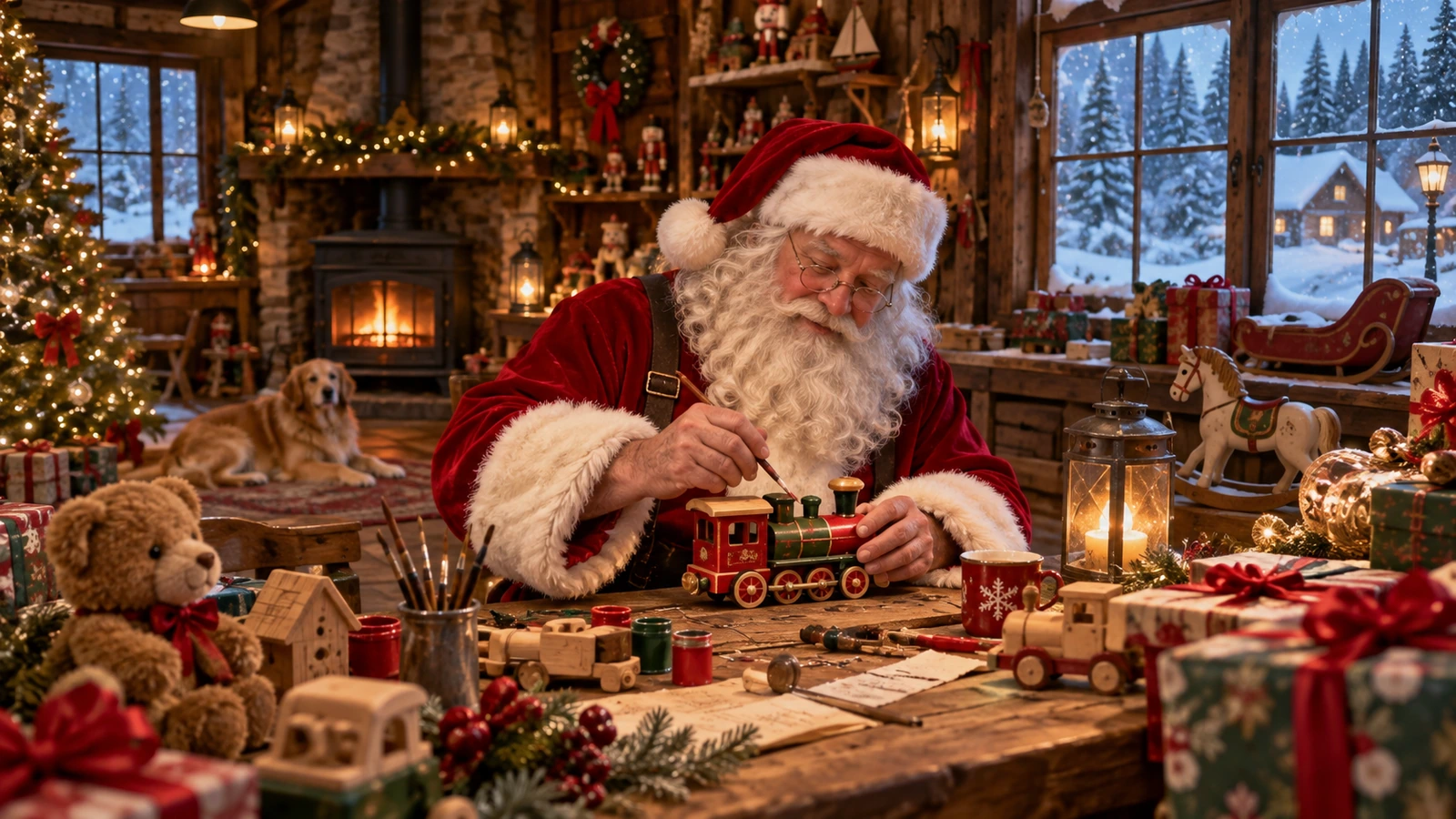
Santa Claus is much more than a cheerful figure delivering presents on Christmas Eve; he is a complex cultural icon shaped by centuries of history, folklore, and clever marketing. From a generous fourth-century bishop in ancient Asia Minor to viral promotional characters created for department stores, his legend spans continents and millennia. Behind the red suit and magical flying sleigh lie real government passports, cold war defense tracking operations, and ancient Norse mythology. Here are 15 fascinating facts that reveal the true history and surprising quirks behind the world's favorite holiday figure.
1. St. Nicholas Was a Real Fourth-Century Bishop in Turkey
The historical figure behind Santa Claus was Saint Nicholas of Myra, a Greek Christian bishop who lived during the fourth century in modern-day Demre, Turkey. Renowned for his extraordinary generosity, Nicholas inherited a vast fortune from his parents and secretly gave it away to help the poor and suffering. One famous legend recounts how he dropped bags of gold down a impoverished family's chimney, landing inside stockings hung by the fire to dry. This act saved three young sisters from destitution and established the global tradition of hanging Christmas stockings. Over time, his feast day on December 6th became intimately associated with secret gift-giving across Western Europe.
2. The Norse God Odin Helped Shape Santa's Flying Legend
Long before Saint Nicholas merged with Anglo-Saxon folklore, the Norse deity Odin exerted a massive influence on early winter festival traditions across Northern Europe. During the pagan festival of Yule, Odin was often depicted as an old man with a long white beard, wearing a hooded cloak and riding his eight-legged flying steed, Sleipnir. Children would fill their boots with sugar and carrots for Sleipnir, placing them by the chimney before going to sleep. In return, Odin would reward the children by replacing the food with treats and gifts. This ancient ritual provided the structural foundation for leaving carrots for reindeer and stockings by the hearth.
3. Dutch Settlers Introduced "Sinterklaas" to North America
The English name "Santa Claus" is a direct phonetic corruption of the Dutch word Sinterklaas, an abbreviated form of Sint Nicolaas. Dutch colonists carried their beloved Sinterklaas traditions to New Amsterdam—modern-day New York City—during the seventeenth century. In 1809, author Washington Irving helped popularize these customs across America through his satirical book A Knickerbocker's History of New York, which featured a pipe-smoking version of Saint Nicholas soaring over rooftops. Subsequent American writers and artists adapted this Dutch heritage into the distinctly American figure recognized today globally.
4. Santa Originally Drove a Wagon Instead of a Flying Sleigh
Before the early nineteenth century, Santa Claus was rarely depicted traveling through the night sky in a reindeer-drawn sleigh. Washington Irving's early writings described Santa riding over the tops of trees in a traditional horse-drawn wagon while smoking a long clay pipe. It was not until 1821, when an anonymous poem titled "A New-Year's Present" was published in New York, that Santa was paired with a single reindeer pulling a sleigh. Two years later, the famous 1823 poem "A Visit from St. Nicholas" expanded his team to eight distinct, named flying reindeer.
5. Coca-Cola Did Not Invent Santa's Red Suit
A widespread urban legend claims that the Coca-Cola Company created Santa's iconic red suit to align with its corporate branding colors. In reality, Santa Claus was regularly depicted wearing red garments throughout the nineteenth century by illustrator Thomas Nast in Harper's Weekly and on vintage postcard art. However, Swedish-American illustrator Haddon Sundblom did standardize Santa's modern image when he created oil paintings of a plump, jolly, human-sized Santa for Coca-Cola advertisements beginning in 1931. Sundblom's imagery was so widely distributed that it permanently replaced earlier, more elf-like or austere depictions in the public consciousness.
6. Rudolph the Red-Nosed Reindeer Began as a Department Store Promotion
Rudolph was not part of original folklore, nor did he appear in Clement Clarke Moore's classic 1823 poem. Instead, copywriter Robert L. May created Rudolph in 1939 while working for the Montgomery Ward department store in Chicago. The store wanted a custom Christmas coloring book to hand out as a promotional gift to children, leading May to craft the story of an outcast reindeer with a glowing red nose. Montgomery Ward distributed over 2.4 million copies that first year, and the story became an international phenomenon after May's brother-in-law turned it into a hit song recorded by Gene Autry in 1949.
 Holidays and Traditions
Explore the surprising, dark, and deeply fascinating origins of the world's most beloved holidays. From ancient pagan rituals to modern marketing triumphs, discover the true stories behind our annual traditions.
See All Facts
Holidays and Traditions
Explore the surprising, dark, and deeply fascinating origins of the world's most beloved holidays. From ancient pagan rituals to modern marketing triumphs, discover the true stories behind our annual traditions.
See All Facts
7. Mrs. Claus Arrived in Literature Much Later Than Her Husband
For several centuries, Saint Nicholas and his regional variations were depicted as solitary figures without immediate family. Mrs. Claus did not make her literary debut until 1849, when author James Rees published the short story "A Christmas Legend." In the story, a weary elderly couple carrying bundles of food on Christmas Eve reveal themselves to be Mr. and Mrs. Claus. Over the next few decades, publications like Harper's Magazine popularized her as the warm, cookie-baking caretaker of the North Pole who manages the workshop operations alongside her husband.
8. The United States Government Issued Santa an Official Pilot's License
In December 1927, the United States Department of Commerce officially issued Santa Claus a commercial pilot's license. Assistant Secretary of Commerce for Aeronautics William P. MacCracken Jr. formally presented the documentation to Santa, assuring him that airway maps were prepared and that federal light beacons would guide his journey across American skies. The government publicists arranged the stunt to reassure nervous citizens that commercial aviation was safe and well-regulated. Subsequent administration officials have periodically renewed his license and verified that his sleigh meets all federal transport guidelines.
9. Canada Granted Santa Official Citizenship and a Unique Postal Code
In 2008, Canada's Minister of Citizenship and Immigration officially declared Santa Claus a Canadian citizen, asserting territorial jurisdiction over the North Pole. To handle his staggering volume of mail, Canada Post created a dedicated, recognized postal code specifically for him: H0H 0H0. Every year, thousands of Canadian postal volunteers read and respond to millions of letters written by children from all corners of the globe. The letters are answered in over 30 languages, including Braille, ensuring that every child receives a personal reply from the North Pole.
10. France Mandates by Law That Letters to Santa Must Receive a Reply
France takes children's letters to Santa Claus so seriously that the government established a national legal framework to handle them. Since 1962, the French national postal service, La Poste, has operated a specialized secretary center in Libourne dedicated exclusively to answering mail addressed to Père Noël. The law mandates that every single piece of mail sent to Santa from within France must be opened and answered with a formal postcard reply. The program was originally championed by Françoise Dolto, a renowned French child psychoanalyst and sister of the Postmaster General at the time.
11. NORAD's Santa Tracker Started from a Newspaper Phone Number Misprint
The world-famous military tracking of Santa Claus began purely by accident in December 1955. A Sears Roebuck department store in Colorado Springs printed a newspaper advertisement inviting children to call Santa directly on a special telephone hotline. However, one digit was printed incorrectly, directing calls straight to the unlisted operational hotline of the Continental Air Defense Command (CONAD, now NORAD). Colonel Harry Shoup, the director of operations on duty, realized the mistake when a small child asked if he was Santa, and he instructed his radar staff to provide real-time location updates on Santa's flight trajectory throughout the night.
12. Puritans Once Completely Outlawed Santa and Christmas Celebrations
During the seventeenth century, enjoying festive Christmas celebrations—including honoring figures like Santa Claus—was strictly illegal in parts of England and North America. Following the English Civil War, Oliver Cromwell's Puritan-led Parliament banned all Christmas festivities in 1647, considering them pagan, frivolous, and morally suspect. Across the Atlantic, the General Court of Massachusetts enacted a law in 1659 banning the observance of Christmas in Boston, fining anyone caught feasting, taking time off work, or celebrating five shillings. The law remained active for over two decades before being repealed in 1681.
13. In Italy, Santa Shares His Duties with a Magical Christmas Witch
While Santa Claus (known locally as Babbo Natale) has gained widespread popularity across Italy, traditional Italian culture reserves January 5th for a completely different holiday icon. Known as La Befana, this kindly old witch flies through the night sky on a broomstick on the eve of the Epiphany. According to folklore, she enters homes via the chimney to fill children's stockings with fruit, candy, and small toys if they were good. If children were mischievous during the year, La Befana leaves behind dark candy made to look like coal, accompanied by garlic or onions.
14. The First Department Store Santa Appeared in Massachusetts in 1890
The iconic experience of visiting Santa Claus at a commercial shopping center traces back to a Scottish immigrant named James Edgar. In 1890, Edgar owned a thriving dry goods department store in Brockton, Massachusetts, and decided to dress up as Santa Claus in a custom-tailored suit to entertain customers' children during the holiday rush. The publicity stunt was such a staggering commercial success that children traveled from miles away on trains just to speak with him. Within two years, department stores across North America adopted the tradition, creating a permanent retail fixture.
15. According to Physics, Santa Must Travel at Supersonic Speeds
Physicists and mathematicians have repeatedly calculated the absurd engineering metrics required for Santa Claus to deliver presents globally in a single evening. Accounting for global time zones and Earth's rotation, Santa has approximately 31 hours of darkness to visit roughly 200 million homes. To complete his route, his sleigh would need to travel at roughly 650 miles per second—over 3,000 times the speed of sound. At these extreme hypersonic velocities, atmospheric friction would generate millions of degrees of heat, proving that Santa's annual flight relies entirely on pure holiday magic rather than classical mechanics.
Sources & References
This AI-assisted post was rigorously curated and fact-checked for accuracy by:
 Martin Roháček
How fun was this article? 🤔
Tap a star to rate it
🧠 Quiz: How closely were you paying attention?
10 questions — all answers are in the article above!
Enjoyed these facts? There's more! 💌
Fresh fun facts in your inbox. No spam, ever.