
The Palme d'Or Paradise: 15 Fascinating Facts About the Cannes Film Festival
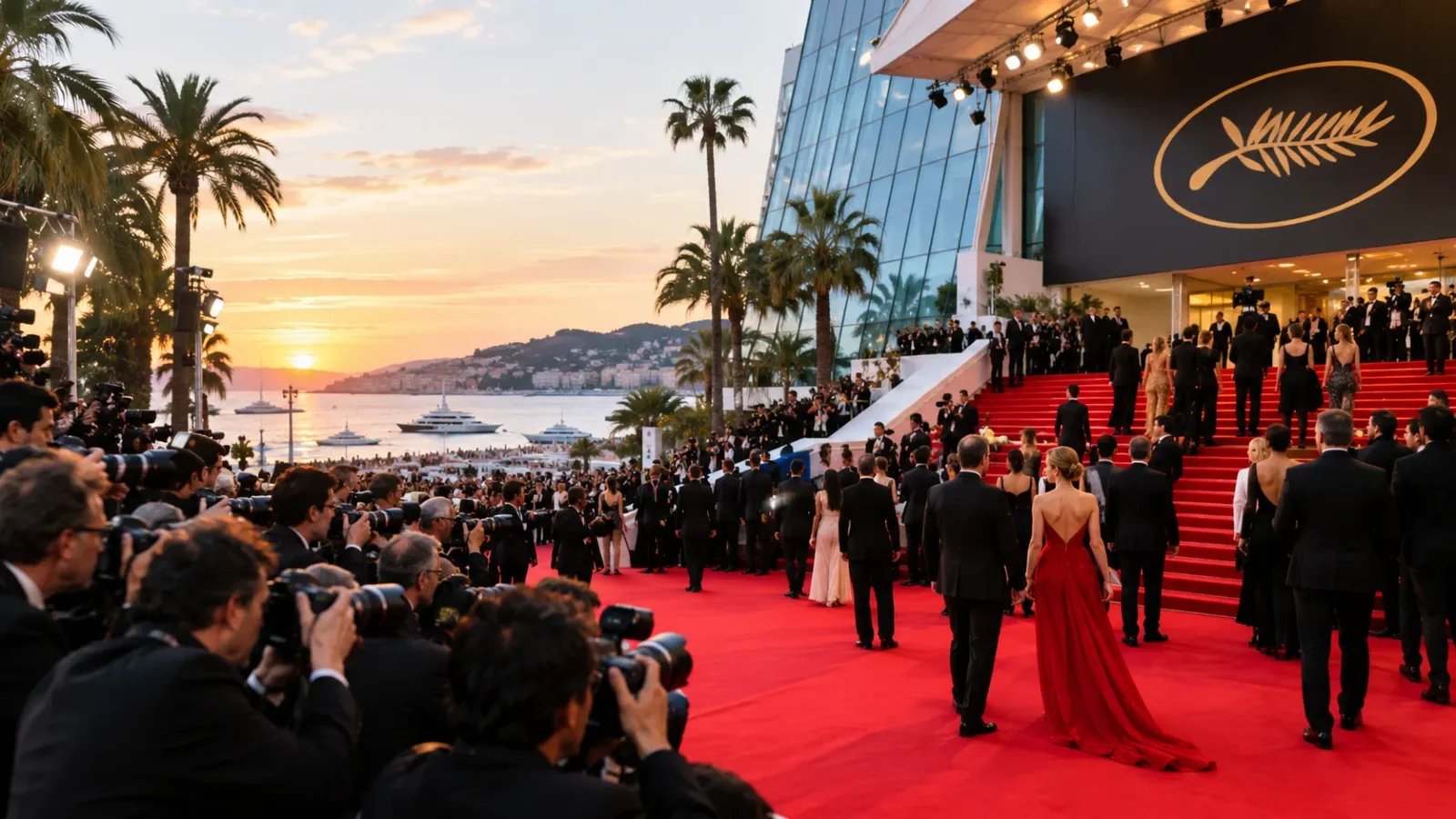
The Cannes Film Festival is the most glamorous event in cinema, but its history is full of surprises. Its first edition was cancelled by a world war, a later one was shut down by rebellious directors, and it even hands out a prize to the best dog. Here is what really happens on the French Riviera every May.
1. The first festival was cancelled by World War II.
Cannes was created as a free alternative to the Venice Film Festival, which had come under the political influence of Mussolini's fascist Italy. The first edition was scheduled to open on 1 September 1939, with film pioneer Louis Lumière as its president. That same day, Germany invaded Poland, and the festival was cancelled. It finally took place in 1946.
2. In 1968, film directors shut the festival down.
In May 1968, France was rocked by student protests and nationwide strikes. Directors including Jean-Luc Godard and François Truffaut demanded that the festival stop in solidarity with the protesters, and some filmmakers withdrew their films from competition. During one screening, protesters even hung on to the stage curtains to prevent it from opening. The festival was halted on 19 May, and no awards were given that year.
3. The Palme d'Or was not always the top prize.
For its first years, the festival's main award was called the Grand Prix. The Palme d'Or, inspired by the palm trees on the coat of arms of Cannes, was introduced in 1955. It was briefly replaced by the Grand Prix again between 1964 and 1974 before returning for good. Since 1998, the trophy has been made by the jewellery house Chopard from 18-carat gold, resting on a cushion of crystal.
4. A bikini on the beach made Brigitte Bardot famous.
In 1953, an 18-year-old Brigitte Bardot was photographed on the beach during the festival wearing a bikini, which was still considered daring at the time. The pictures were published around the world and helped turn the young actress into an international star. They also cemented the image of Cannes as a place where cinema and glamour meet.
5. Grace Kelly met her prince because of the festival.
In 1955, the American actress Grace Kelly attended the festival and was invited to a photo session at the palace of Prince Rainier III in nearby Monaco. The two struck up a correspondence after that first meeting. They were married the following year, and the Hollywood star became Princess Grace of Monaco.
6. A woman did not win the Palme d'Or until 1993.
New Zealand director Jane Campion became the first woman to win the Palme d'Or for "The Piano" in 1993, sharing the award with Chen Kaige's "Farewell My Concubine". It took until 2021 for a woman to win it outright, when Julia Ducournau triumphed with "Titane". Justine Triet followed in 2023 with "Anatomy of a Fall".
7. The Palme d'Or was once awarded to two actresses as well as the director.
In 2013, the jury led by Steven Spielberg gave the Palme d'Or to "Blue Is the Warmest Colour". In an unprecedented move, the award went not only to director Abdellatif Kechiche but also to the film's two lead actresses, Adèle Exarchopoulos and Léa Seydoux. It was the first time performers had shared the festival's top prize.
8. "Parasite" won at Cannes before making Oscar history.
In 2019, Bong Joon-ho's "Parasite" became the first South Korean film to win the Palme d'Or. A few months later, it became the first non-English-language film to win the Academy Award for Best Picture. It was the first film since "Marty" in 1955 to win both the Palme d'Or and the Oscar for Best Picture.
9. Quentin Tarantino answered a heckler with a rude gesture.
When "Pulp Fiction" won the Palme d'Or in 1994, not everyone in the audience agreed with the jury. As Quentin Tarantino accepted the award, a woman in the crowd shouted her disapproval. Tarantino responded by raising his middle finger at her, one of the most famous moments in the festival's history.
10. Wearing flat shoes once got women turned away from the red carpet.
Cannes is famous for its strict black-tie dress code. In 2015, several women were reportedly refused entry to a premiere for wearing flat shoes instead of high heels, causing a scandal dubbed "Heelgate". In protest, stars such as Julia Roberts and Kristen Stewart later went barefoot or took off their heels on the red carpet.
11. Selfies are banned on the red carpet.
The festival's director, Thierry Frémaux, has repeatedly criticised stars and guests for stopping on the red carpet to take selfies, saying it slows everything down and looks ridiculous. The festival first discouraged the practice in 2015 and later officially banned red-carpet selfies. Photographers and guards are on hand to keep the famous steps moving.
12. Ordinary people cannot buy tickets.
Unlike many film festivals, Cannes is not open to the general public. Screenings in the official selection are reserved for accredited film professionals, journalists and invited guests. The only exception is the Cinéma de la Plage, where the public can watch free screenings of classic and new films on the beach under the stars.
13. There is a prize for the best performance by a dog.
Since 2001, a group of film critics has presented the Palm Dog, an unofficial award for the best canine performance at the festival. The winner receives a leather dog collar. In 2023, the prize went to Messi, the border collie from "Anatomy of a Fall", who became one of the most talked-about stars of that year's festival.
14. Netflix films are effectively barred from competing.
Since 2018, films in the main competition must be released in French cinemas. Because French rules then required a long gap between a cinema release and streaming, Netflix chose not to put its films forward. The dispute began in 2017, when two Netflix productions in competition, "Okja" and "The Meyerowitz Stories", were met with boos from part of the audience.
15. It is home to the world's busiest film market.
Behind the glamour, Cannes is a huge business event. The Marché du Film, founded in 1959, is the busiest film market in the world, where producers, distributors and sales agents buy and sell the rights to thousands of films. Many movies that later become hits are first sold in the meeting rooms and hotel suites along the Croisette.
Sources & References
This AI-assisted post was rigorously curated and fact-checked for accuracy by:
 Martin Roháček
How fun was this article? 🤔
Tap a star to rate it
🧠 Quiz: How closely were you paying attention?
10 questions — all answers are in the article above!
Enjoyed these facts? There's more! 💌
Fresh fun facts in your inbox. No spam, ever.