The Unyielding Statesman: 15 Fascinating Facts About Winston Churchill
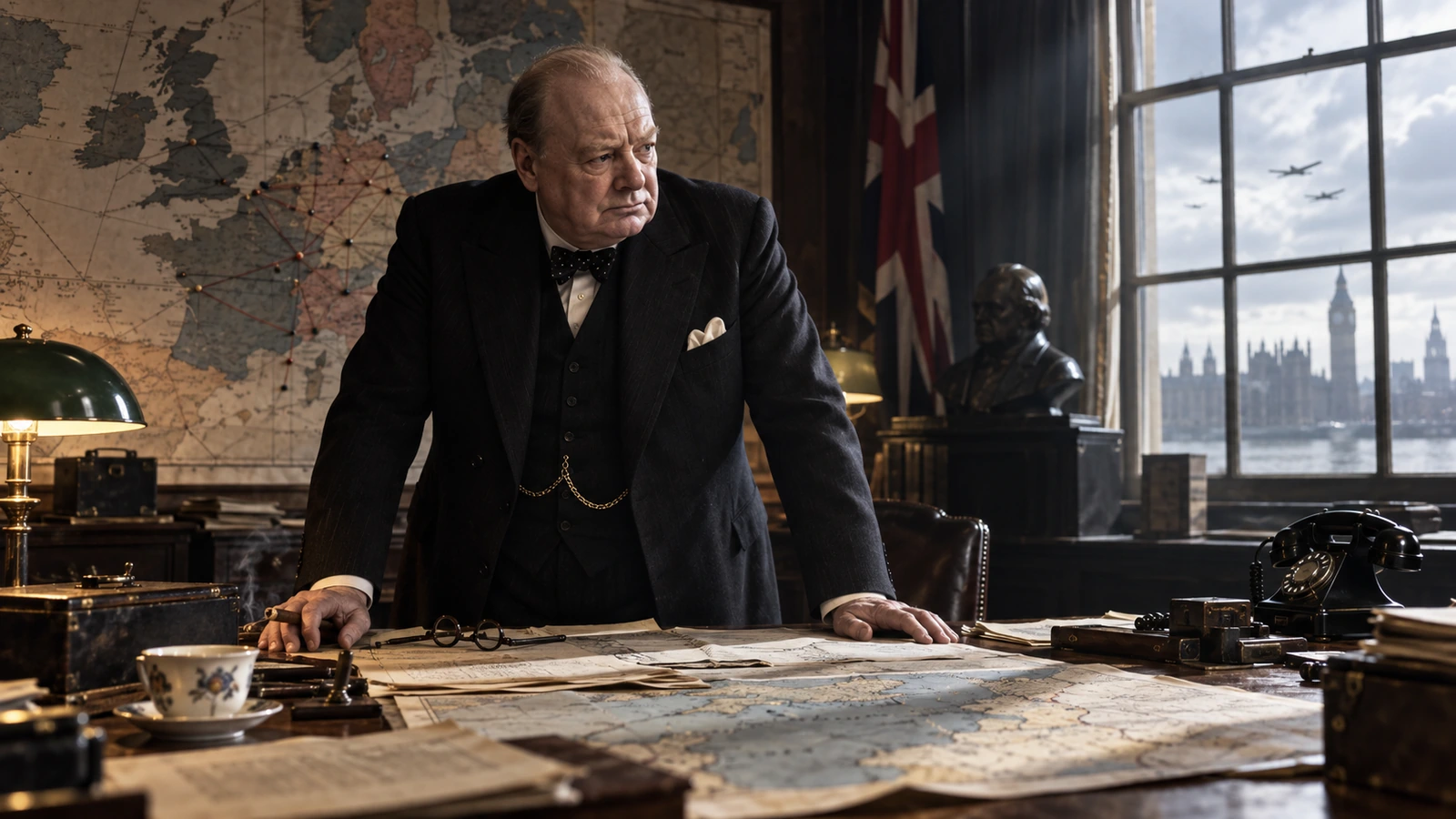
Winston Churchill is celebrated worldwide as the formidable Prime Minister who led Great Britain through the darkest days of World War II. Yet behind his iconic stern glare and inspiring wartime speeches lies a life filled with surprisingly eccentric habits, daring exploits, and hidden talents. From escaping a South African prison camp to earning a Nobel Prize in Literature, Churchill lived a life far more colorful than standard history books often reveal. Here are 15 fascinating facts about the famous British leader that showcase the man behind the myth.
1. The First Recorded Use of "OMG" Was Sent to Him
In a September 1917 letter to Churchill, retired First Sea Lord Admiral John "Jacky" Fisher used the abbreviation "O.M.G." to express excitement about a newly instituted order of knighthood. Fisher wrote, "I hear that a new order of Knighthood is on the tapis—O.M.G. (Oh! My God!)—Shower it on the Admiralty!" This marks the earliest known written occurrence of the iconic modern acronym in the Oxford English Dictionary. Churchill maintained a lively correspondence with Fisher during World War I, and this casual letter unwittingly made digital linguistics history.
2. He Escaped a Boer War Prisoner of War Camp
Before his political career took off, Churchill served as a war correspondent during the Second Boer War in South Africa. In November 1899, his armored train was ambushed, leading to his capture by enemy forces and imprisonment in Pretoria. Undeterred, the 25-year-old climbed over a high fence while guards were distracted and fled into the night without a compass or plan. He hid in a coal mine for three days with the help of a sympathetic English mine manager before stowing away on a freight train to Mozambique. His daring escape transformed him into a national hero back in Britain almost overnight.
3. He Won the Nobel Prize in Literature, Not Peace
Many people assume that Churchill was awarded the Nobel Peace Prize for his monumental leadership during World War II, but he actually won the Nobel Prize in Literature. In 1953, the Nobel Committee selected him "for his mastery of historical and biographical description as well as for brilliant oratory in defending exalted human values." Over his lifetime, Churchill wrote dozens of books, including a comprehensive multi-volume history of World War I and II, earning more income from writing than from politics. Unable to attend the award ceremony in Stockholm due to official duties, his wife Clementine accepted the prestigious honor on his behalf.
4. He Was a Certified Card-Carrying Bricklayer
To manage stress and unseat himself from political pressures, Churchill took up bricklaying at his beloved Chartwell estate in Kent. He built cottage walls, garden structures, and swimming pools with his own hands, thoroughly mastering the trade. In 1928, he applied for and was granted official membership in the Amalgamated Union of Building Trade Workers. When fellow politicians mocked his unusual hobby, Churchill countered that manual labor provided essential mental clarity during turbulent times.
5. He Invented the "Siren Suit" Wartime Onesie
Long before modern comfortable loungewear became popular, Churchill designed a custom one-piece garment known as the "siren suit." Created in the late 1930s, the design allowed him to dress instantly over his pajamas whenever air raid sirens sounded during the Blitz. He had several versions tailored, including lush velvet ones for formal evening meetings and utilitarian canvas ones for field visits. The all-in-one outfit became his signature informal workwear and inspired similar protective garments for civilians across wartime Britain.
6. A New York Taxi Hit Him Because He Looked the Wrong Way
In December 1931, while visiting New York City during a lecture tour, Churchill stepped off a curb on Fifth Avenue and was struck by a moving taxi. Accustomed to British traffic patterns, he had instinctively looked left instead of right before crossing the busy street. The impact dragged him along the pavement, causing severe bruises, a cracked rib, and a heavy scalp wound that required hospitalization. Ever the pragmatist, Churchill took full responsibility for the accident, befriended the distressed driver, and wrote a magazine article detailing his near-death experience.
 Wars and Conflicts of the 20th Century
Explore the hidden realities of 20th-century warfare and geopolitical conflicts. From world-altering military campaigns and covert intelligence operations to the eccentricities of ruthless dictators, uncover the surprising truths behind the events that shaped the modern world.
See All Facts
Wars and Conflicts of the 20th Century
Explore the hidden realities of 20th-century warfare and geopolitical conflicts. From world-altering military campaigns and covert intelligence operations to the eccentricities of ruthless dictators, uncover the surprising truths behind the events that shaped the modern world.
See All Facts
7. He Was Half-American Through His Heiress Mother
Churchill possessed strong American roots through his mother, Jennie Jerome, a wealthy Brooklyn-born socialite. Her father, Leonard Jerome, was a prominent financier and owner of The New York Times who built a fortune in finance and horse racing. Jennie married Lord Randolph Churchill in 1874, blending American high-society wealth with British aristocratic lineage. Churchill always felt a deep kinship with the United States, often emphasizing his dual heritage when courting American support during World War II.
8. He Became the First Honorary U.S. Citizen
In April 1963, President John F. Kennedy issued a presidential proclamation declaring Sir Winston Churchill the first honorary citizen of the United States. Although Congress had previously granted citizenship to foreign historic figures posthumously, Churchill was the first living person to receive this unique honor. Kennedy praised Churchill's unwavering courage and unyielding devotion to liberty, declaring that his spirit belonged to the entire free world. Suffering from frail health at age 88, Churchill watched the White House ceremony via live satellite television from his London home.
9. He Painted Over 500 Artworks to Battle Depression
Churchill openly struggled with severe bouts of depression throughout his life, famously referring to his mental illness as his "black dog." To combat these dark moods, he picked up oil painting in his 40s after the disastrous Gallipoli campaign in World War I. Painting became a lifelong therapy, resulting in over 500 impressionistic landscapes, still lifes, and portraits created at home and abroad. He was so self-conscious about his work that he often submitted paintings to prestigious Paris exhibitions under the pseudonym "Charles Morin."
10. His Daily Routine Included Dictating Speeches From Bed
Churchill maintained an eccentric daily schedule that baffled many of his political colleagues and military advisors. He typically woke around 7:30 a.m. but remained in bed until noon, eating a lavish breakfast, smoking cigars, and dictating memos to secretaries. After a mid-afternoon lunch, he routinely took a two-hour nap, which he considered non-negotiable for maintaining sharp mental stamina. This split sleep routine allowed him to hold late-night war cabinet meetings that frequently stretched until 3:00 or 4:00 in the morning.
11. He Overcame a Severe Speech Impediment
Despite becoming one of history's most celebrated public speakers, Churchill fought a persistent speech impediment throughout his youth. He suffered from a noticeable lisp and a slight stammer, particularly struggling with the pronunciation of the letter "s." Rather than letting it hinder his ambitions, he spent countless hours rehearsing speeches, mastering rhythm, and choosing vocabulary that minimized difficult sounds. His painstaking preparation transformed what could have been a liability into his greatest political weapon during Britain's finest hour.
12. He Traveled to the Boer War With a Massive Private Bar
When Churchill departed for South Africa as a young war correspondent in 1899, he was determined not to sacrifice his favorite beverages while in the field. His personal luggage included an astounding collection of alcohol packed into crate after crate for the voyage. Records show he brought 18 bottles of scotch, 24 bottles of champagne, six bottles of vintage port, six bottles of vermouth, and several bottles of brandy. He believed that moderate drinking kept up morale, famously remarking that wine was an essential requirement for field campaign operations.
13. He Equated His Personal Yacht with an Armed Fortress
Churchill loved traveling by sea, but during World War II, enemy submarines posed a constant threat to his maritime journeys. When traveling aboard British warships or his personal preferred vessels, he insisted on heavy defense preparations to prevent capture by Nazi forces. He arranged for armed lifeboats featuring heavy machine guns to be stationed on board, vowing to fight to the end rather than be taken alive. Churchill even carried a personal pistol at all times, making it clear to his staff that surrender was never an option.
14. He Was Born in a Ladies' Cloakroom
Sir Winston Churchill arrived in the world under unusually frantic circumstances on November 30, 1874. His pregnant mother, Lady Randolph Churchill, unexpectedly went into premature labor while attending a grand black-tie ball at Blenheim Palace in Oxfordshire. Because the estate's main bedrooms were far away from the ballroom, staff rushed her into a nearby ladies' cloakroom that had been temporarily cleared. Churchill was successfully delivered amidst coats, hats, and evening wraps, starting his dramatic life in an improvised makeshift delivery room.
15. He Smoked an Estimated 250,000 Cigars
Churchill's affection for cigars was legendary, consuming an estimated quarter of a million cigars over his long life. He started smoking heavily during his time as a young officer in Cuba in 1895 and rarely appeared in public without a Cuban cigar between his fingers. His habit was so unrelenting that during high-altitude flights in World War II, engineers designed a specialized oxygen mask with a built-in hole so he could smoke in unpressurized cabins. Even when his doctors urged him to cut back in his later years, Churchill steadfastly refused to abandon his beloved smokes.
Sources & References
This AI-assisted post was rigorously curated and fact-checked for accuracy by:
 Martin Roháček
How fun was this article? 🤔
Tap a star to rate it
🧠 Quiz: How closely were you paying attention?
10 questions — all answers are in the article above!
Enjoyed these facts? There's more! 💌
Fresh fun facts in your inbox. No spam, ever.