1. He Dropped Out of School in the Fourth Grade
Before becoming an industrial titan, Milton Hershey experienced a highly unstable childhood that severely derailed his formal education. His father was an eccentric dreamer who constantly moved the family around Pennsylvania to chase failed business schemes and oil rushes. By the time he was thirteen years old, Milton had attended seven different schools and found the constant transitions incredibly difficult. His pragmatic mother eventually decided that he should drop out of school entirely after the fourth grade to pursue a practical trade.
2. He Was Fired for Ruining a Printing Press
Following his premature exit from formal schooling, a young Milton was secured an apprenticeship with a local newspaper publisher who printed in German and English. He absolutely despised the monotonous work of loading paper and preparing ink for the massive machines. After just a few months on the job, he accidentally dropped his wide-brimmed straw hat directly into the heavy printing press, creating a massive, disastrous ink pie that ruined the equipment. His furious boss immediately fired him, inadvertently pushing him toward a completely different career path in the confectionery business.
3. His First Two Candy Businesses Failed Miserably
It is a massive misconception that Hershey was an instant success, as his early career was actually defined by crushing bankruptcy. He borrowed seed money from his aunt to open his very first candy shop in Philadelphia when he was just eighteen years old, but the grueling venture collapsed after six exhausting years. He then traveled to Denver to learn how to make fresh milk caramels and subsequently tried to launch a second business in New York City. This venture also failed completely, leaving him penniless and forcing him to return to his hometown as a perceived failure.
4. He Narrowly Avoided Sailing on the Titanic
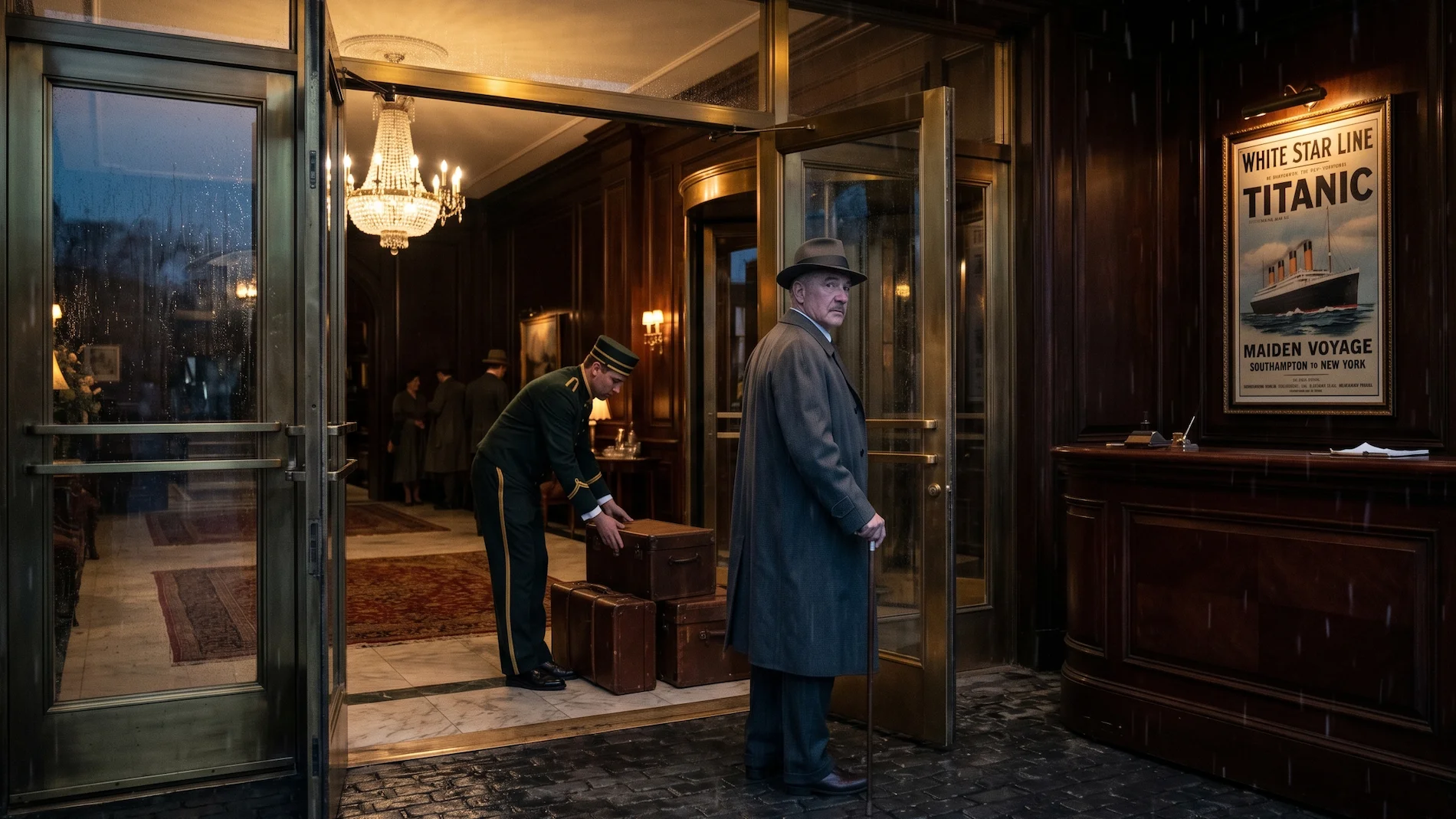
In one of the most incredible twists of historical fate, the chocolate king almost went down with the most famous shipwreck in human history. Hershey and his wife had spent the winter vacationing in Europe and officially wrote a three hundred dollar deposit check to secure a VIP stateroom on the maiden voyage of the RMS Titanic. However, a sudden business emergency required him to return to the United States earlier than anticipated. He abruptly canceled his highly coveted ticket and instead sailed safely back to New York on a German liner named the Amerika just days before the tragedy.
5. He Built His Fortune on Caramel Rather Than Chocolate
Long before he ever manufactured his famous milk chocolate bars, Hershey finally achieved incredible wealth by mastering a completely different sweet treat. After returning to Pennsylvania from his failed ventures, he founded the Lancaster Caramel Company and began producing soft, chewy candies made with fresh milk. His Crystal A caramels became a massive national sensation, transforming his struggling startup into a booming business employing thousands of workers. In a shocking business move in 1900, he sold his entire caramel empire to a fierce rival for one million dollars simply because he believed caramel was a passing fad.
6. A World’s Fair Exhibit Ignited His Chocolate Obsession
The catalyst for his massive chocolate empire occurred completely by chance while he was visiting the World’s Columbian Exposition in Chicago in 1893. While exploring the massive fairgrounds, Hershey became absolutely captivated by a working exhibit of German chocolate-making machinery. He stood entirely mesmerized as the heavy granite rollers crushed roasted cocoa beans into a smooth, dark paste. Convinced that chocolate was the ultimate future of the candy industry, he purchased the entire mechanical assembly right off the exposition floor and had it shipped back to his caramel factory in Pennsylvania.
7. He Invented a Secret Formula to Mass-Produce Milk Chocolate
At the dawn of the twentieth century, smooth milk chocolate was considered a highly exclusive luxury item manufactured almost entirely by secretive Swiss confectioners. Hershey was obsessed with cracking the chemical code to create a delicious milk chocolate recipe that could be cheaply mass-produced for everyday American consumers. He spent three grueling years experimenting with boiling milk, sugar, and cacao beans, desperately trying to figure out how to prevent the raw milk from spoiling during production. He eventually perfected the highly guarded Hershey Process, a proprietary manufacturing method that remains a closely held corporate trade secret today.
8. He Built a Utopian Town for His Factory Workers
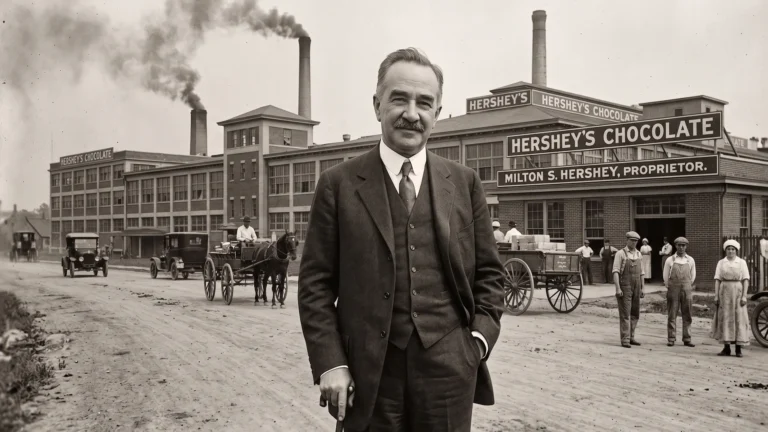
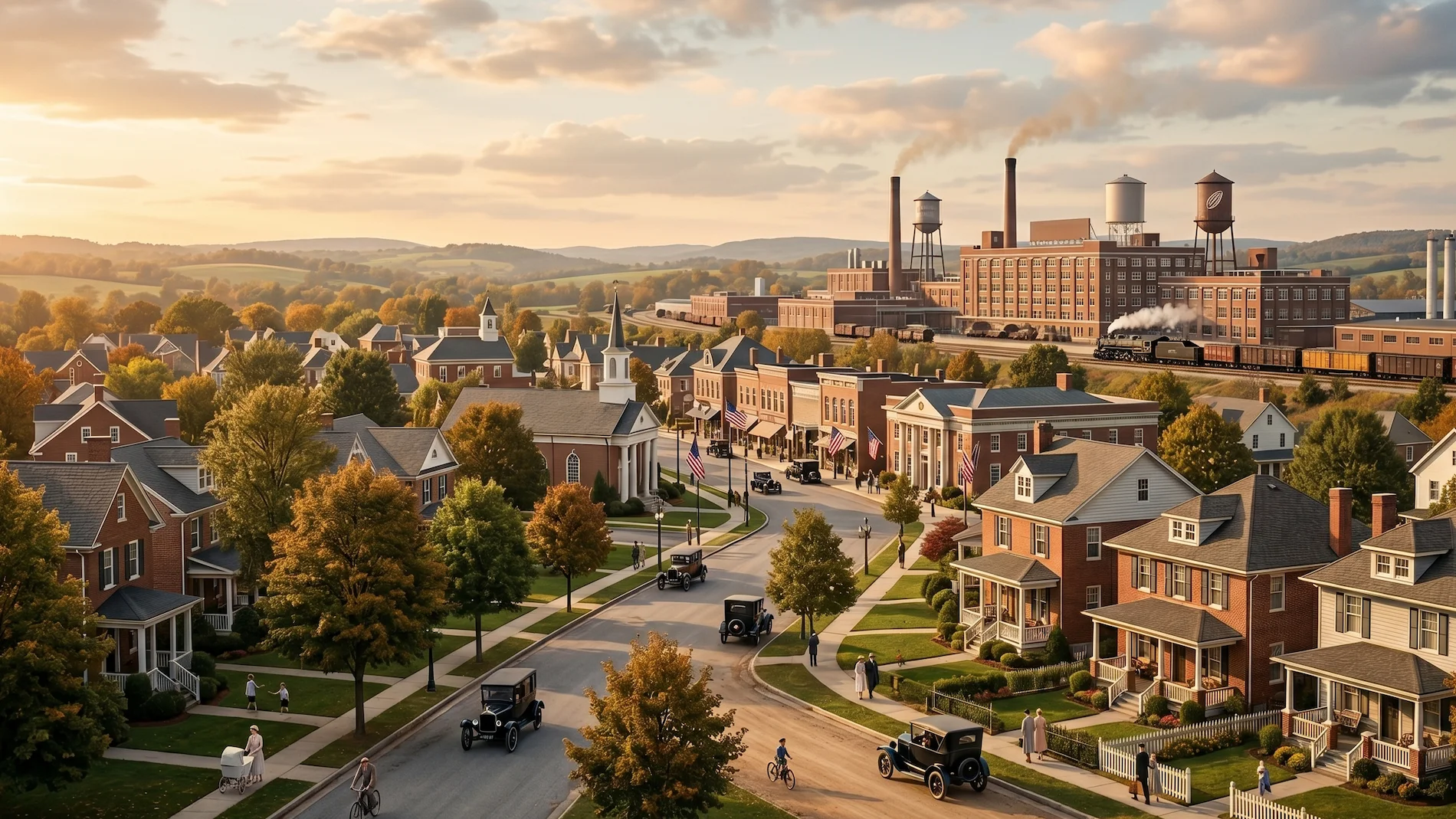
Rather than constructing a drab, polluted company town filled with depressing row houses, Hershey envisioned a beautiful utopian community for his employees. When he broke ground on his massive new chocolate factory in the middle of empty Pennsylvania farmland, he simultaneously built a gorgeous town complete with paved streets, modern plumbing, and electricity. He constructed high-quality public schools, massive parks, a community theater, and a convenient trolley system to ensure his workers had a rich cultural life. To this day, the downtown streets of Hershey are lined with iconic streetlamps shaped exactly like wrapped and unwrapped chocolate kisses.
9. He Left His Entire Fortune to an Orphanage
Despite their immense wealth and deep love for children, Milton and his wife Catherine were tragically unable to have any biological children of their own. Channeling their resources into profound philanthropy, they founded the Hershey Industrial School in 1909 to provide free housing, clothing, and top-tier education for orphaned boys. In a stunning act of generosity shortly after his wife passed away, Hershey quietly transferred his entire massive fortune and all his company shares to the school’s trust. The modern Milton Hershey School now serves thousands of disadvantaged boys and girls every year using the massive endowment he left behind.
10. He Built Another Hershey Town in Cuba
To ensure his massive Pennsylvania factory never ran out of the crucial sugar required to mass-produce milk chocolate, Hershey aggressively expanded his corporate footprint into the Caribbean. Beginning in 1916, he purchased sixty thousand acres of lush agricultural land in Cuba to establish his very own sugarcane plantations and massive refining mills. Mirroring his utopian efforts in the United States, he built an identical company town for his Cuban workers, officially naming it Central Hershey. The Caribbean town featured free public schools, a baseball diamond, medical clinics, and an advanced electric railway system that connected it to Havana.
11. He Kept His Town Employed During the Great Depression
When the catastrophic economic collapse of the Great Depression swept across the United States, millions of Americans instantly lost their jobs and homes. Refusing to let his beloved community suffer, Hershey launched a massive, privately funded construction initiative known as the Great Building Campaign to keep his residents employed. He hired hundreds of local men to construct a luxurious resort called The Hotel Hershey, a massive sports arena, and an elegant community theater. He famously boasted that absolutely nobody was fired from their job in his town during the darkest financial years in American history.
12. He Supplied the Military With Three Billion Chocolate Bars
During the height of World War II, the United States military approached Hershey with a highly specific and difficult logistical request. They needed a high-energy survival ration that weighed exactly four ounces, would not melt in extreme tropical heat, and tasted just a little better than a boiled potato so soldiers wouldn’t eat it as a snack. The factory successfully developed the famous Ration D and Tropical Chocolate Bars, operating round the clock to meet the massive wartime demand. By the end of the conflict, the company had produced and shipped over three billion specialized chocolate bars to Allied troops across the globe.
13. Hersheypark Started as a Simple Picnic Ground
The massive, thrilling amusement park that currently draws millions of tourists to central Pennsylvania actually began as a quiet, private perk for chocolate workers. Hershey originally opened a serene green space along Spring Creek in 1906, intending it to be a relaxing picnic ground where his employees could unwind and play baseball on their days off. As the community grew, he slowly began adding modest recreational attractions, including a scenic carousel, a public swimming pool, and eventually a small wooden roller coaster. This humble employee picnic area eventually evolved into the largest privately owned amusement park in North America.
14. His Bronze Statue is Exactly His Actual Height
Visitors entering the main gates of Hersheypark are immediately greeted by a beautiful, life-sized bronze statue of the legendary candy maker standing inside Founders Circle. Unlike most historical monuments that are massively scaled up to make their subjects look like towering, mythical figures, this specific sculpture was designed to be incredibly realistic. The bronze figure stands exactly five feet and seven inches tall, which was Milton Hershey’s actual physical height during his lifetime. This grounded, relatable monument perfectly reflects his humble personality and his deep desire to remain closely connected to the everyday people who enjoyed his park.
15. He Designed a Circular Dining Room to Avoid Corner Tables
When Hershey commissioned the construction of The Hotel Hershey during the Great Depression, he took a very hands-on approach to the architectural design of the interior spaces. As a solo traveler who frequently felt marginalized or hidden away by restaurant hosts, he harbored a deep personal hatred for being seated at dark, cramped corner tables. To permanently solve this hospitality issue, he demanded that the hotel’s primary restaurant be built as a massive, sweeping semi-circle surrounded by brilliant glass windows. The famous Circular dining room features absolutely no corners, ensuring every single guest enjoys a premium seat with an unobstructed view of the formal gardens.
Sources and References