
The Shadowy Masterpiece: 15 Fascinating Facts About Nosferatu
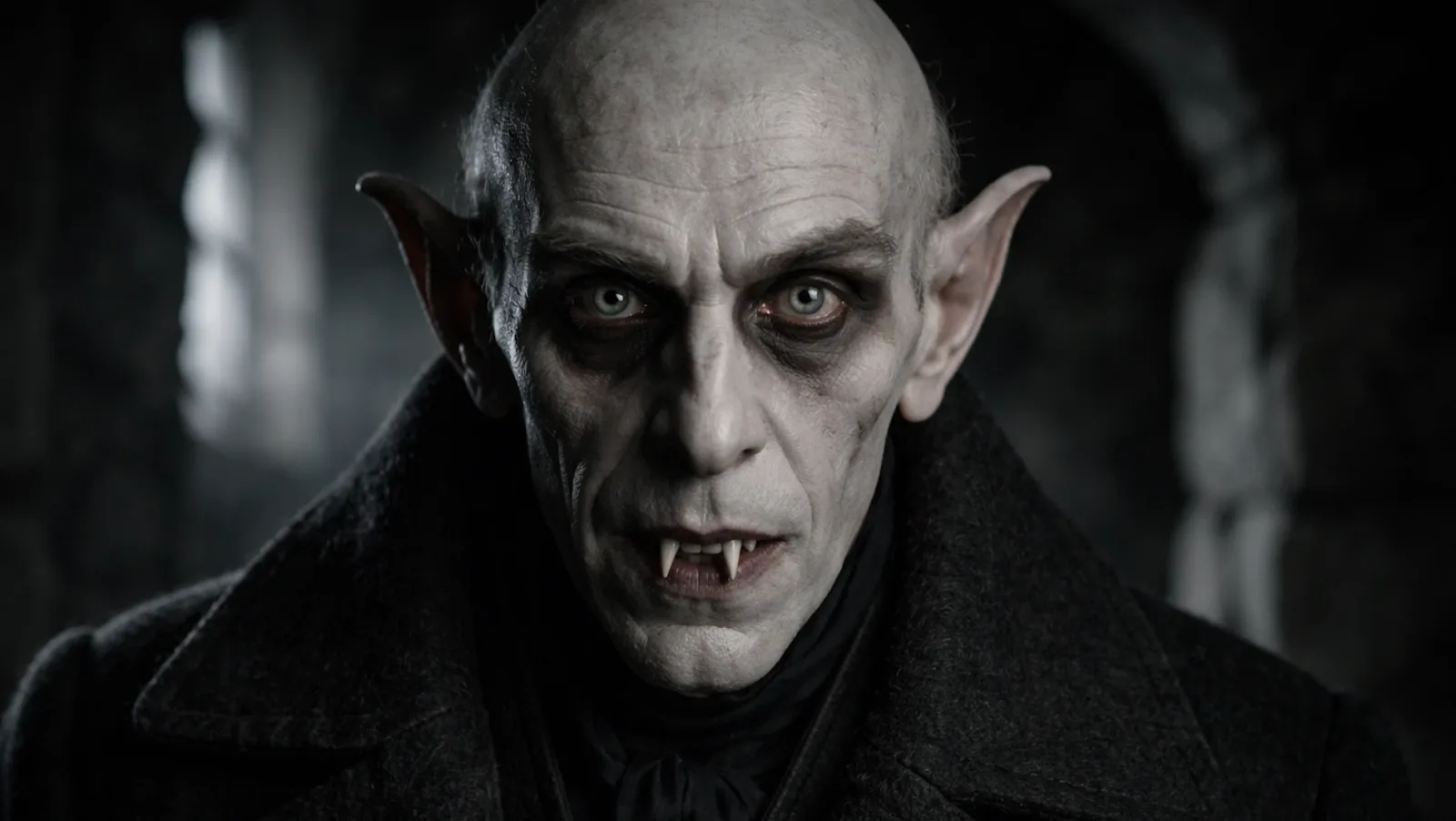
Released in 1922 as an unauthorized adaptation of Bram Stoker's Dracula, F. W. Murnau's Nosferatu became an untouchable landmark of silent horror. Despite a brutal court order demanding the destruction of every single print, contraband reels survived to revolutionize vampire mythology forever. From method-acting urban legends to occult symbolism and pioneering visual effects, Count Orlok's shadow still stretches over modern cinema. Here are 15 fascinating facts about the legendary silent film that refused to die.
1. An Illegal Adaptation of Bram Stoker's Dracula
German production company Prana Film attempted to adapt Bram Stoker's famous 1897 novel Dracula without securing the copyright rights from his estate. To circumvent international intellectual property laws, director F. W. Murnau and screenwriter Henrik Galeen altered character names and minor plot details. Count Dracula was renamed Count Orlok, Jonathan Harker became Thomas Hutter, and the setting shifted from England to the fictionalized German town of Wisborg. Despite these cosmetic alterations, the storyline remained a transparent copy of Stoker's gothic masterpiece. This deliberate infringement set off one of the most famous legal battles in silent cinema history.
2. Florence Stoker's Relentless Legal Crusade
Bram Stoker's widow, Florence Stoker, only learned about the film's existence when she received an anonymous package containing a promotional program from the Berlin premiere. Furious over the unauthorized plagiarism of her late husband's work, she immediately launched a fierce lawsuit against Prana Film through the British Incorporated Society of Authors. Florence sought financial damages and the total destruction of every copy of the film to protect the literary legacy. Her legal battle lasted for years in German courts, firmly refusing any cash settlement offered by the desperate filmmakers. Ultimately, the judge ruled completely in her favor, declaring the movie an illegal theft of intellectual property.
3. The Court-Ordered Destruction of Every Single Copy
In 1925, German courts issued an extreme ruling commanding that every negative and physical print of Nosferatu be immediately destroyed. The legal defeat proved so financially devastating that Prana Film was forced to file for bankruptcy before it could even produce a second movie. Court bailiffs and legal authorities systematically hunted down and burned master prints and distribution copies across Germany. Had the court order been flawlessly executed, Murnau's masterpiece would have been permanently wiped from human history. The bankruptcy of Prana Film meant that Nosferatu stood as the studio's first and final cinematic release.
4. A Smuggled Copy Saved the Movie from Extinction
Despite the strict court order to destroy all prints, Nosferatu survived because several copies had already been distributed internationally. Crucially, a few prints had been shipped overseas to the United States and France, where foreign distribution networks kept them hidden from German authorities. Because American courts did not enforce the German destruction order, bootleg copies began circulating through underground cinema societies and private collectors. Over the following decades, film enthusiasts carefully preserved these surviving prints, allowing the movie to slowly cultivate its legendary status. Modern viewers owe the existence of this masterpiece to those contraband reels that escaped destruction.
5. Max Schreck's Method Acting Built a Terrifying Urban Legend
Actor Max Schreck brought an extraordinarily eerie commitment to his performance as Count Orlok, staying fully in character between takes. He remained isolated from the rest of the cast and crew on set, wandering the location shoots in full prosthetic makeup while maintaining an unsettling demeanor. His bizarre behavior deeply unnerved co-stars like Greta Schröder, adding genuine fear to their onscreen reactions. Because Schreck was primarily an obscure stage actor with few credited film roles, rumors spread among contemporary audiences that he was an actual vampire. This persistent myth gained so much traction over the decades that it became part of global film folklore.
6. The Legend Inspired the Oscar-Nominated Shadow of the Vampire
The urban legend surrounding Max Schreck's mysterious life and haunting performance eventually inspired a major Hollywood film eight decades later. Released in 2000, Shadow of the Vampire presented a fictionalized, dark comedic take on the making of Nosferatu. In the film, Willem Dafoe portrayed Schreck as a genuine, blood-drinking creature of the night hired by director F. W. Murnau, played by John Malkovich. Dafoe earned an Academy Award nomination for Best Supporting Actor for his captivating performance as the mythical undead actor. The project demonstrated how the lore surrounding Nosferatu had grown into a mythos as enduring as the movie itself.
7. It Invented the Trope that Sunlight Kills Vampires
Prior to Nosferatu, vampires in folklore and literature were not instantly incinerated by exposure to daylight. In Bram Stoker's original novel, Count Dracula could freely walk around during the daytime, though his supernatural abilities were somewhat diminished. Director F. W. Murnau and screenwriter Henrik Galeen dramatically altered this mythology by inventing the concept that sunlight is fatal to the undead. In the film's climax, Count Orlok becomes so distracted by feeding on Ellen that he forgets the approaching dawn and dissolves into smoke. This creative decision revolutionized the horror genre, forever embedding fatal sunlight sensitivity into modern vampire lore.
8. A Revolutionary Masterpiece of German Expressionist Shadows
F. W. Murnau transformed modern cinema by utilizing psychological shadows and atmospheric staging rather than graphic violence. Rather than relying entirely on lighting hardware, the production team went so far as to paint dark, exaggerated shadows directly onto set walls to enhance the surreal mood. The iconic shot of Count Orlok's elongated silhouette creeping up a staircase toward Ellen's bedroom remains one of the most famous images in cinema history. This brilliant visual language established key tenets of German Expressionism, prioritizing emotional dread and internal psychology over realistic representation. Murnau's innovative camera angles created a pervasive sense of claustrophobia that captivated audiences worldwide.
9. Shot on Location in Authentic Transylvanian Castles
Unlike most German Expressionist films of the 1920s, which were shot exclusively inside highly controlled, artificial studio soundstages, Nosferatu was filmed largely on location. Murnau transported his cast, crew, and bulky camera equipment to real-world sites across Slovakia and Northern Germany to achieve a gritty atmosphere of authentic decay. The exterior and interior shots of Count Orlok's crumbling estate were filmed at Orava Castle, a striking 13th-century fortress perched high on a rocky cliff in Slovakia. Additional footage was captured in the historic towns of Dolný Kubín and High Tatras to ground the fantastical nightmare in real geography. This blending of real-world locations with surrealistic framing set the film apart from its contemporaries.
10. Embraced by Surrealist Masters like Salvador Dalí
In the years following its release, Nosferatu was embraced by the leaders of the French Surrealist movement as a triumph of subconscious art. Visionary artists such as André Breton and Salvador Dalí were mesmerized by the film's dreamlike pacing, irrational logic, and hypnotic visual texture. They viewed Count Orlok not as a standard movie monster, but as a poetic embodiment of suppressed human desires and nightmare logic. Surrealists organized private screenings and wrote passionate essays championing Murnau's work in avant-garde publications. Their artistic endorsement helped elevate Nosferatu from a controversial B-movie knockoff into a celebrated masterpiece of world cinema.
11. Designed by an Occultist Filled with Hermetic Symbols
The haunting aesthetic of Nosferatu was heavily shaped by its producer and production designer, Albin Grau, who was a committed practitioner of the occult. Grau was a member of secret esoteric societies, including the Fraternitas Saturni, and used his positions on set to infuse the film with mystical symbolism. He carefully drew authentic hermetic runes, astrological charts, and occult diagrams onto property props, contracts, and promotional posters. Grau even designed Count Orlok's physical appearance based on a nightmarish encounter he claimed to have had during World War I with a Serbian peasant who believed his father was a vampire.
12. Count Orlok Personified Post-War Anxiety and the Spanish Flu
Unlike the suave, romantic bloodsuckers of later film adaptations, Count Orlok was designed as a repulsive, rodent-like manifestation of disease. His pointed ears, elongated claws, and prominent incisors were explicitly styled after rats, linking him visually to pestilence and decay. In the film, Orlok travels to Wisborg aboard a ship laden with soil-filled coffins and swarms of plague-carrying rats, bringing death wherever he lands. Film historians note that this narrative deeply resonated with 1920s European audiences who had just survived the horrors of World War I and the devastating 1918 Spanish Flu pandemic. The vampire functioned as a literal allegory for airborne contagion and invisible, unstoppable mortality.
13. Pioneered Unsettling Special Effects with Negative Film and Speed Manipulation
To make Count Orlok's world feel uncanny and supernatural, Murnau used innovative in-camera special effects that pushed silent film technology to its limits. During the eerie carriage ride through the dark forest, the director used negative film stock, causing the trees to appear as glowing, ghost-white skeletons against a pitch-black sky. He also utilized frame-rate manipulation by under-cranking the camera, making the phantom carriage move with an unnatural, jerky speed across the terrain. Furthermore, stop-motion animation was employed to show the coffin lid sliding open on its own accord. These groundbreaking visual tricks constructed an unsettling reality that felt completely disconnected from natural human experience.
14. Directly Inspired Visionary Directors like Kubrick and Burton
The pioneering visual language of Nosferatu left a permanent mark on generations of cinema directors. Visionary filmmakers such as Stanley Kubrick, Guillermo del Toro, and Tim Burton have frequently cited Murnau's masterpiece as a foundational influence on their own atmospheric world-building. In 1979, legendary German director Werner Herzog paid direct homage by directing an acclaimed shot-for-shot remake titled Nosferatu the Vampyre, starring Klaus Kinski. The film's signature use of stark shadows, high-contrast lighting, and architectural framing helped define the visual grammar of modern horror, film noir, and dark fantasy cinema.
15. The Original Orchestral Score Was Lost for Decades
When Nosferatu premiered at the Marble Hall in the Berlin Zoological Garden in March 1922, it was accompanied by a live, full-length symphonic score composed by Hans Erdmann. However, during the legal destruction of the film's materials, most of Erdmann's original score was destroyed, leaving behind only incomplete piano reductions and orchestral suites. For decades, screenings relied on improvised organ accompaniments or generic silent-film tracks. It was not until the late 20th century that musicologists meticulously reconstructed Erdmann's haunting original score using surviving manuscript fragments and historical performance reviews. Today, restored editions allow modern viewers to experience the movie accompanied by its original, terrifying musical composition.
Sources & References
This AI-assisted post was rigorously curated and fact-checked for accuracy by:
 Martin Roháček
How fun was this article? 🤔
Tap a star to rate it
🧠 Quiz: How closely were you paying attention?
10 questions — all answers are in the article above!
Enjoyed these facts? There's more! 💌
Fresh fun facts in your inbox. No spam, ever.