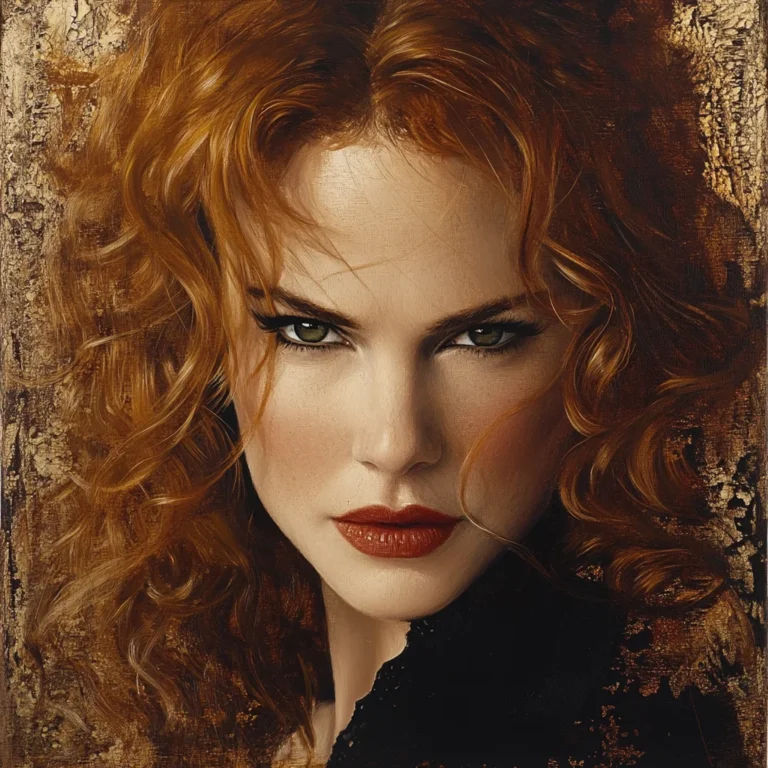
Nicole Kidman: 15 Fun Facts uncovers the most surprising and entertaining details about this renowned actress. Dive in to discover what makes Nicole Kidman a true Hollywood icon.
Nicole Kidman
Nicole Kidman was born in Hawaii to Australian parents, giving her dual citizenship.
Her nickname at school was “Stalky” because of her extreme height.
Nicole Kidman is a natural redhead, but she often dyes her hair blonde for movie roles.
She started learning ballet when she was just three years old.
The Oscar winner is allergic to both bees and horses, making some film roles more challenging.
She learned to play the piano for her role in “Cold Mountain.”
Nicole Kidman is taller than her ex-husband, Tom Cruise, by about two inches.
Kidman is passionate about philanthropy and supports causes such as women’s rights and children’s health.
She once broke her rib while filming “Moulin Rouge!” and continued working despite the pain.
Singing in “Moulin Rouge!” helped Kidman overcome her fear of performing live.
She was named the highest-paid actress in the world in 2006.
Nicole Kidman can speak some French and often uses it during interviews abroad.
While filming “The Others,” she would avoid sunlight to enhance her character’s pale look.
She holds a Guinness World Record for the highest-paid actress in a commercial for Chanel No. 5.
In Nicole Kidman enjoys skydiving in her free time and finds it thrilling.
How useful was this post?
Click on a star to rate it!
This AI-assisted post was rigorously curated and fact-checked for accuracy by:
Audiences know Elisabeth Moss for her intense dramatic roles in hit shows. However, her background is surprisingly cheerful and unique. For instance, she originally trained to become a professional ballet dancer. Furthermore, she started acting before she could even read scripts properly. Consequently, her career path is full of hidden surprises. Therefore, dig into these secrets about the queen of peak TV. You will see her differently.
Elisabeth Moss
Elisabeth Moss started acting at a very young age. Specifically, she voiced a character in the cartoon Frosty Returns at age ten.
She originally wanted to be a ballerina. In fact, she moved to New York specifically to study ballet at the School of American Ballet.
Surprisingly, she graduated high school two years early. Because she was home-schooled, she finished her studies at age sixteen.
Elisabeth Moss kept a prop from Mad Men. She took the thermos that her character Peggy Olson used frequently.
Her marriage was incredibly short and chaotic. She married comedian Fred Armisen, but they separated after only eight months.
She is a powerhouse producer today. Currently, Elisabeth Moss produces The Handmaid’s Tale and has significant creative control.
She played the president’s daughter on The West Wing. Uniquely, she landed this recurring role when she was only seventeen.
Although she plays Americans, she holds dual citizenship. Because her father is British, she owns a UK passport.
She is a massive sports fan. Specifically, Elisabeth Moss loves the Chicago Cubs and attends their games often.
She directs episodes of her own shows. For instance, she directed several intense episodes of The Handmaid’s Tale herself.
She filmed The Invisible Man with no co-star. Instead, she acted against a green man or empty space.
Elisabeth Moss was raised in the Church of Scientology. Consequently, she defends the religion in interviews despite public controversy.
She loves horror movies deeply. Therefore, starring in Us and The Invisible Man was a dream come true.
She rarely takes breaks between projects. Colleagues often describe her as the hardest-working person on any film set.
Finally, Elisabeth Moss makes history often. She won two Emmys in the same year for acting and producing.
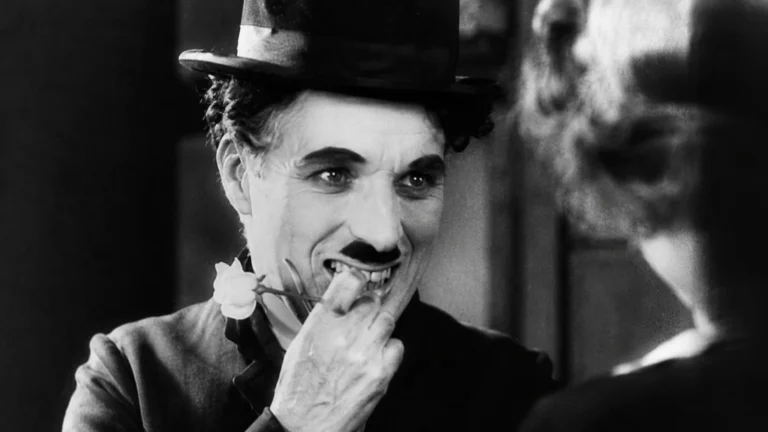
Charlie Chaplin is arguably the most recognizable figure in the history of cinema. With his bowler hat, oversized shoes, bamboo cane, and iconic toothbrush mustache, "The Tramp" became a universal symbol of comedy and resilience during the early 20th century. However, behind the slapstick humor and silent pantomimes was a fiercely independent, highly controversial, and incredibly complex artist. From surviving grave robbers to refusing to speak on camera for over a decade, here are 15 fascinating, lesser-known facts about the legendary Charlie Chaplin.
Charlie Chaplin
1. He Lost His Own Look-Alike Contest
At the height of his global fame in the 1910s, “Chaplinitis” swept the world, and theaters frequently hosted Charlie Chaplin look-alike contests. According to widespread legend and historical newspaper accounts, Chaplin once secretly entered one of these contests in San Francisco. Hilariously, he failed to even make the finals, with the judges reportedly completely dismissing his pantomime walk as inaccurate.
2. His Body Was Held for Ransom
In one of the most bizarre post-mortem crimes in history, Chaplin’s body was stolen from his grave in Switzerland in 1978, just months after his death. Two mechanics dug up his heavy oak coffin and demanded a $600,000 ransom from his widow, Oona O’Neill. She flatly refused to pay, stating that her husband would have found the whole situation ridiculous. The police eventually caught the grave robbers, and Chaplin was reburied under a massive layer of impenetrable concrete.
3. He Fought the “Talkies” for a Decade
When synchronized sound was introduced to movies in 1927, revolutionizing Hollywood, Chaplin flatly refused to participate. He believed that the addition of dialogue would ruin the universal appeal of his Tramp character, who was understood by audiences globally regardless of their language. He stubbornly continued making silent films, including masterpieces like City Lights and Modern Times, well into the 1930s.
4. He Could Not Read Sheet Music
Despite composing the musical scores for almost all of his feature films, Chaplin had no formal musical training and could not read or write a single note of sheet music. Instead, he would hire professional musical directors and arrangers, spending hours humming, singing, and playing melodies by ear on the piano or violin while they hastily transcribed his brilliant compositions onto paper.
5. The Record-Breaking 342 Takes
Chaplin was an infamous perfectionist who had complete financial and creative control over his productions. During the filming of City Lights, he demanded an agonizing 342 takes of a single, silent scene where a blind flower girl mistakes the Tramp for a wealthy millionaire. He even fired the actress, Virginia Cherrill, halfway through the process, only to rehire her when he realized reshooting her scenes would cost too much money.
6. He Composed a Massive Pop Hit
Chaplin’s musical talents extended far beyond the cinema. He composed the beautiful, melancholic instrumental theme for his 1936 film Modern Times. Almost two decades later, lyricists John Turner and Geoffrey Parsons added words to the melody, creating the classic song “Smile.” The track was subsequently recorded by Nat King Cole in 1954 and became an enduring, massive pop music standard.
7. He Was the First Actor on Time Magazine
In July 1925, Charlie Chaplin made publishing history when he became the very first actor to ever be featured on the cover of Time magazine. The prominent placement solidified his status not just as a mere vaudeville entertainer, but as a major cultural, artistic, and historical force in American society.
8. Exiled From the United States
Despite living, working, and paying taxes in the United States for nearly 40 years, Chaplin never became an American citizen. During the paranoia of the McCarthy era in the early 1950s, the U.S. government suspected him of having communist sympathies. When Chaplin traveled to London for a movie premiere in 1952, the U.S. Attorney General revoked his reentry permit, effectively exiling him. He chose to settle in Switzerland and did not return to America for twenty years.
9. He Had Striking Blue Eyes
Because audiences only ever saw him on the silver screen in high-contrast black-and-white film stock, the entire world simply assumed that Chaplin had dark brown or black eyes to match his dark hair and heavy makeup. In reality, he had piercing, highly expressive blue eyes, a fact that frequently shocked people who met him in person for the first time.
10. A Bitter Feud with Marlon Brando
For his final film as a director, A Countess from Hong Kong in 1967, Chaplin cast Hollywood heavyweights Sophia Loren and Marlon Brando. The production was an absolute nightmare. Brando, a pioneer of the emotional “method acting” technique, clashed violently with Chaplin’s rigid, old-school directing style, where the director would personally act out every single movement he wanted. Brando called Chaplin “sadistic,” while Chaplin dismissed Brando as “impossible.”
11. Co-Founding United Artists
Chaplin was a remarkably shrewd businessman. In 1919, tired of powerful film studios dictating his salary and creative output, he teamed up with fellow industry titans Mary Pickford, Douglas Fairbanks, and D.W. Griffith. Together, they founded the United Artists distribution company, giving themselves unprecedented, complete control over their own work and forever changing the financial landscape of Hollywood.
12. Albert Einstein Was His Movie Date
Chaplin ran in the highest intellectual circles of his era. When his masterpiece City Lights premiered in Los Angeles in 1931, his personal guest of honor was none other than legendary physicist Albert Einstein. When the crowd erupted into massive cheers for the two men, Chaplin famously turned to Einstein and quipped, “They cheer me because they all understand me, and they cheer you because no one understands you.”
13. A Delayed Knighthood
Chaplin’s political controversies in the United States also damaged his reputation in his native England. While his name was frequently proposed for a knighthood as early as the 1930s, the British government continuously blocked the honor out of fear of angering their American allies during the Cold War. It wasn’t until 1975, when he was 86 years old, that Queen Elizabeth II finally dubbed him Sir Charles Chaplin.
14. An Oscar Won Two Decades Late
Chaplin composed the brilliant score for his 1952 film Limelight, but because he was exiled from the United States that same year, the film was boycotted and not widely released in American theaters. According to Academy rules, a film must play in Los Angeles to be eligible for an Oscar. Limelight finally received its qualifying Los Angeles theatrical run in 1972, allowing Chaplin to win the Academy Award for Best Original Score in 1973—a staggering 21 years after the movie was originally made.
15. The Hitler Connection
Chaplin and Adolf Hitler were born just four days apart in April 1889. Hitler, well aware of Chaplin’s massive global popularity, reportedly styled his mustache directly after the Tramp to endear himself to the working class. Chaplin capitalized on their physical resemblance and used his own money to produce The Great Dictator in 1940, a scathing, heavily satirical takedown of the fascist leader, which became his most commercially successful film.