Audiences know Elisabeth Moss for her intense dramatic roles in hit shows. However, her background is surprisingly cheerful and unique. For instance, she originally trained to become a professional ballet dancer. Furthermore, she started acting before she could even read scripts properly. Consequently, her career path is full of hidden surprises. Therefore, dig into these secrets about the queen of peak TV. You will see her differently.
Elisabeth Moss
Elisabeth Moss started acting at a very young age. Specifically, she voiced a character in the cartoon Frosty Returns at age ten.
She originally wanted to be a ballerina. In fact, she moved to New York specifically to study ballet at the School of American Ballet.
Surprisingly, she graduated high school two years early. Because she was home-schooled, she finished her studies at age sixteen.
Elisabeth Moss kept a prop from Mad Men. She took the thermos that her character Peggy Olson used frequently.
Her marriage was incredibly short and chaotic. She married comedian Fred Armisen, but they separated after only eight months.
She is a powerhouse producer today. Currently, Elisabeth Moss produces The Handmaid’s Tale and has significant creative control.
She played the president’s daughter on The West Wing. Uniquely, she landed this recurring role when she was only seventeen.
Although she plays Americans, she holds dual citizenship. Because her father is British, she owns a UK passport.
She is a massive sports fan. Specifically, Elisabeth Moss loves the Chicago Cubs and attends their games often.
She directs episodes of her own shows. For instance, she directed several intense episodes of The Handmaid’s Tale herself.
She filmed The Invisible Man with no co-star. Instead, she acted against a green man or empty space.
Elisabeth Moss was raised in the Church of Scientology. Consequently, she defends the religion in interviews despite public controversy.
She loves horror movies deeply. Therefore, starring in Us and The Invisible Man was a dream come true.
She rarely takes breaks between projects. Colleagues often describe her as the hardest-working person on any film set.
Finally, Elisabeth Moss makes history often. She won two Emmys in the same year for acting and producing.
How useful was this post?
Click on a star to rate it!
This AI-assisted post was rigorously curated and fact-checked for accuracy by:
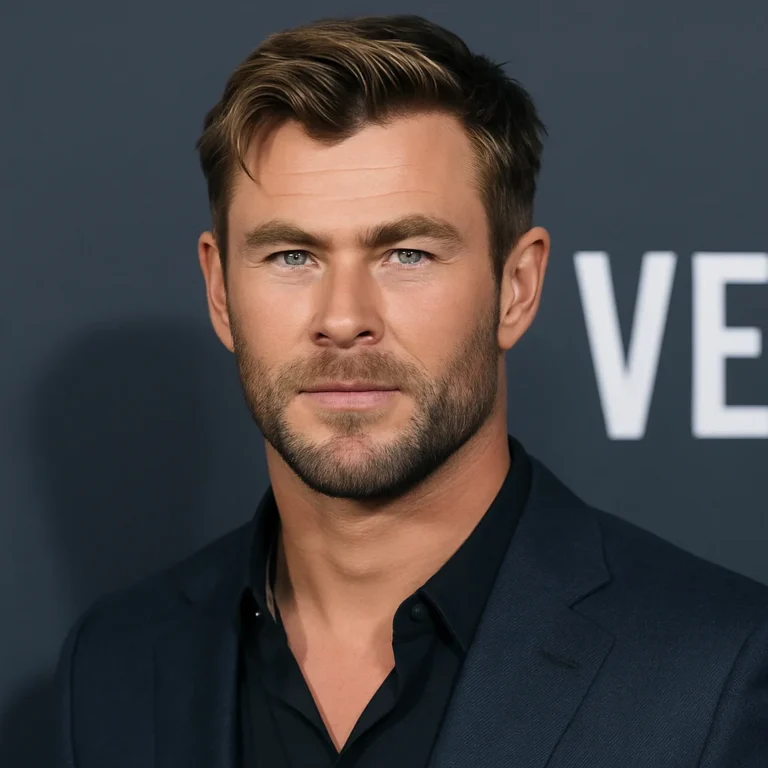
Chris Hemsworth rose from Australian TV to global stardom playing Thor, but his path included surprising challenges and diverse roles. Learn lesser-known facts about his career, family, and personal dedication that make him one of Hollywood’s most fascinating stars.
Chris Hemsworth
Chris Hemsworth almost lost the Thor role because Marvel executives feared fans would not take him seriously after his appearances on Dancing with the Stars Australia.
Before fame, Chris worked cleaning dairy machines at a pharmacy to support his family financially during tough times.
He originally auditioned for James Kirk in Star Trek (2009) but was considered too tall at 6’3″.
Chris is the middle of three acting brothers; both Luke and Liam Hemsworth are also successful actors.
His first big break was on the Australian soap Home and Away, where he appeared in 171 episodes.
Hemsworth played King Arthur in the Australian miniseries Guinevere Jones for two episodes early in his career.
He lost 33 pounds and survived on 500 calories a day for the survival film In the Heart of the Sea (2015).
For his role as Thor, he gained 20 pounds of muscle in a short period through strict training and diet.
Chris co-founded Wild State, a production company focusing on health and wellness content, including his series Limitless with Chris Hemsworth.
Despite being famous as Thor, he actively chooses diverse roles like Formula One driver James Hunt in Rush (2013) and a villain in Furiosa (2024).
His rhythm and movement skills from Dancing with the Stars helped him in choreographing fight scenes in Marvel films.
His breakthrough Hollywood role in Star Trek was only about five minutes long, but it opened doors for bigger roles.
Chris brings his whole family to events; he often shares personal moments and supports his wife and children publicly.
He nearly quit acting when Australian film roles disappointed him before taking a risky leap into Hollywood.
Known for his down-to-earth personality, Chris regularly emphasizes family, fitness, and mental health in interviews and social media.
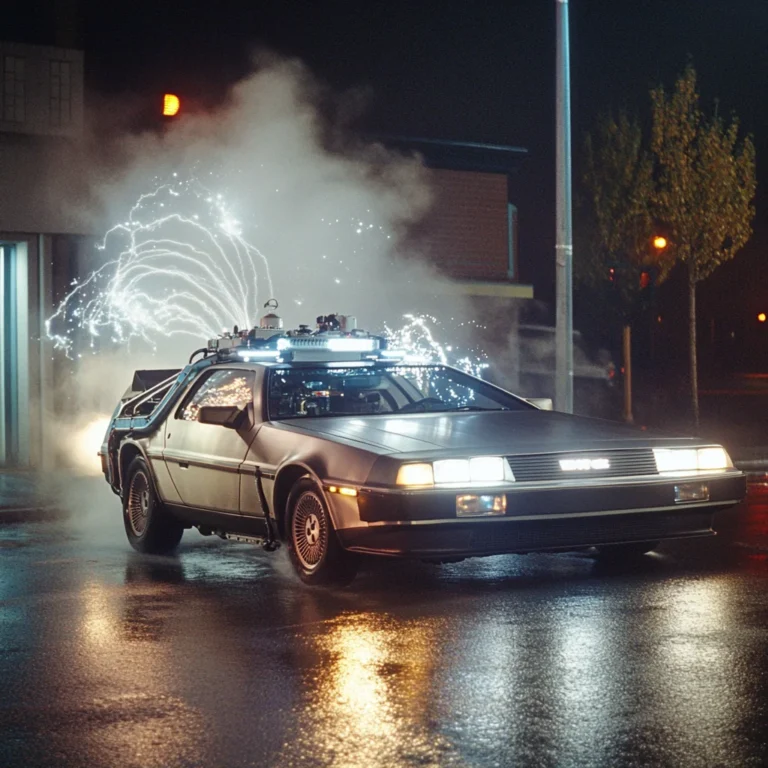
The Back to the Future trilogy defined 1980s cinema with its clever writing and memorable characters. It turned a quirky car into a global icon for time travel. Furthermore, the film's production faced massive challenges that almost cancelled the project entirely. Consequently, these movies remain beloved classics decades later. Explore these fascinating details about Marty McFly and Doc Brown.
Back to the Future
The time machine was originally a refrigerator. In early scripts, Doc Brown attached the device to a household fridge. However, the writers changed it because they feared children would lock themselves inside refrigerators to copy the movie.
Eric Stoltz originally played Marty McFly. He filmed for six weeks before the director fired him. Unfortunately, his performance was too serious for the comedic tone the filmmakers wanted.
The script was rejected over 40 times. every major studio passed on the project. Disney refused it because they thought the mother falling in love with her son was too inappropriate for a family movie.
A studio executive wanted to change the title. Sid Sheinberg hated the name Back to the Future. Instead, he suggested Spaceman form Pluto, but Steven Spielberg thankfully convinced him to keep the original title.
Michael J. Fox worked two jobs simultaneously. He filmed the TV show Family Ties during the day. Then, he rushed to the movie set at night and slept only three hours a day for months.
The DeLorean engine sound is fake. The real car had a weak V6 engine. Therefore, the sound designers dubbed over it with the roar of a powerful V8 engine to make it sound faster.
They chose 88 miles per hour for a simple reason. It had no scientific basis. The production designers simply thought the digital numbers looked cool and easy to remember on the speedometer.
Doc Brown’s pet was originally a chimpanzee. The early drafts featured a chimp named Shemp. Later, the studio head demanded they change the animal to a dog named Einstein.
Elijah Wood made his film debut in Part II. He plays one of the young boys playing the Wild Gunman arcade game. Unimpressed, he mocks Marty for using his hands to play a “baby’s toy.”
Flea from the Red Hot Chili Peppers appears in the sequels. He plays the character Needles. He challenges Marty to a street race that changes his future in the second and third films.
Huey Lewis cameos as a judge. The singer of “The Power of Love” appears early in the first film. Ironically, he tells Marty that his band is “just too darn loud” during the audition.
Part II and Part III were filmed back-to-back. This was a revolutionary strategy at the time. It saved the studio millions of dollars and allowed them to release the sequels only six months apart.
Robert Zemeckis lied about hoverboards. He joked in an interview that hoverboards were real but banned for safety. consequently, thousands of parents called toy stores demanding to buy the non-existent product.
Thomas F. Wilson carried cards to answer fan questions. The actor who played Biff got tired of answering the same questions. So, he handed out cards that confirmed the manure was fake and Michael J. Fox was nice.
Finally, the DeLorean is now a registered historic vehicle. The Library of Congress added the film to the National Film Registry. Thus, the car remains one of the most famous automobiles in cinema history.