The Legendary Corleone: 15 Fascinating Facts About Al Pacino
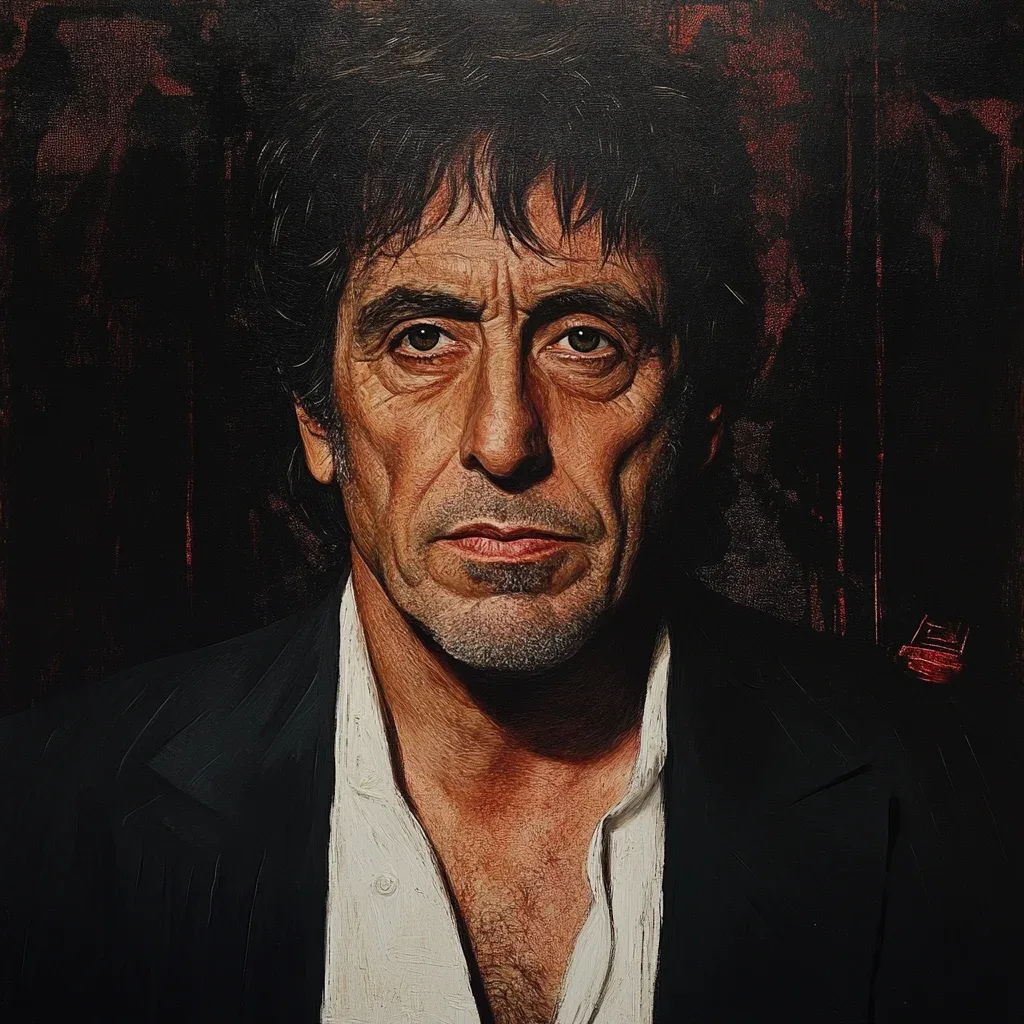
Al Pacino is undeniably one of the most celebrated and recognizable actors in cinematic history. From his star-making turn as Michael Corleone to his explosive performance as Tony Montana, he has delivered some of the silver screen's most unforgettable moments. Yet, behind the roaring characters and the method acting intensity lies a man who once struggled to afford bus fare and passionately obsesses over Shakespeare. Dive into the life of this Hollywood icon and discover the wild stories behind his legendary career.
1. A Humble Start and an Amusing Firing
Before becoming a Hollywood titan, a teenage Alfredo James Pacino dropped out of New York's prestigious High School of Performing Arts to help support his mother. To fund his private acting classes, he took on a grueling series of odd jobs across the city. His resume included stints as a messenger, a busboy, a janitor, and a postal clerk. He even worked as a movie theater usher, though he was reportedly fired for pausing to admire his own reflection in the lobby mirrors. These humble beginnings instilled a fierce work ethic that would define his eventual ascent to stardom.
2. A Real-Life Run-In with the Law
Long before he played mobsters and cops on screen, a 20-year-old Pacino found himself on the wrong side of the law in real life. In 1961, he and two friends were pulled over by police in Rhode Island while circling a block in a suspicious vehicle. Officers found a loaded .38 caliber pistol in the trunk, and because they were carrying black masks and gloves, the trio was arrested and charged with carrying a concealed weapon. Pacino spent three days in jail before authorities verified his story that they were actors on their way to a gig and the gun was a mere theatrical prop. The mugshot from that night remains a fascinating glimpse into his rebellious youth.
3. The Indie Film That Changed Everything
Pacino's breakthrough didn't come from a glamorous leading man role, but rather a gritty portrayal of a heroin addict in the 1971 indie drama The Panic in Needle Park. His intense, twitchy performance caught the eye of director Francis Ford Coppola, who was casting an upcoming mafia epic. Studio executives at Paramount were pushing for established stars, but Coppola relentlessly championed the unknown stage actor based entirely on his work in that bleak film. That singular performance practically served as his audition tape for the role that would change cinematic history forever.
4. Surviving The Godfather Cutting Block
Paramount Pictures vehemently opposed casting Pacino as Michael Corleone in The Godfather. Studio bosses disparagingly referred to him as a diminutive nobody and desperately wanted box-office draws like Robert Redford, Warren Beatty, or Jack Nicholson for the pivotal role. Coppola literally put his own job on the line, threatening to quit if his preferred leading man was ousted. After several excruciating screen tests, Pacino finally won over the executives by flawlessly executing the famous Italian restaurant assassination scene. His legendary performance vindicated Coppola and birthed one of the most iconic characters in cinema.
5. Boycotting the Biggest Night in Hollywood
Despite the immense critical acclaim for his portrayal of Michael Corleone, Pacino boldly boycotted the 45th Academy Awards in 1973. He was nominated for Best Supporting Actor, while his co-star Marlon Brando was nominated for Best Actor. Pacino felt insulted by the categorization, pointing out that he had significantly more screen time than Brando and was unequivocally the central protagonist of the film's narrative arc. His refusal to attend the ceremony was an early indicator of his uncompromising artistic integrity, proving he wasn't afraid to challenge Hollywood's political machinery.
6. A Massive Salary Leap
While The Godfather became a historic blockbuster, its leading man hardly saw a financial windfall from the initial release. Pacino was paid a mere $35,000 for his grueling, star-making turn in the 1972 original. However, the film's staggering success completely transformed his negotiating power for the sequel just two years later. For 1974's The Godfather Part II, his salary rocketed to $500,000, plus a lucrative 10 percent of the film's gross profits. This massive pay bump permanently cemented his status as an A-list Hollywood heavyweight.
7. Taking Method Acting to the Streets
Pacino is renowned for his deep immersion into characters, a technique that occasionally bleeds into his real life. While filming the 1973 biographical crime drama Serpico, he became so absorbed in playing the incorruptible undercover cop Frank Serpico that he forgot he wasn't actually a police officer. While driving home from the set one evening in a rented cab, he was cut off by an exhaust-spewing truck. Furious, Pacino pulled the truck driver over and angrily threatened to place him under citizen's arrest, fully embodying his on-screen persona on the streets of New York.
8. The Roles He Left Behind
Few actors have a "roles turned down" resume quite as impressive as Al Pacino's. Throughout the 1970s and 1980s, he declined several parts that eventually launched or cemented other actors' legendary careers. Most famously, he was offered the role of Han Solo in Star Wars, but passed because he confessed he simply didn't understand the script. He also famously turned down the roles of John McClane in Die Hard, Ted Kramer in Kramer vs. Kramer, and Edward Lewis in the smash hit rom-com Pretty Woman.
9. An Explosive Injury on the Scarface Set
The chaotic energy of Brian De Palma's 1983 crime epic Scarface wasn't limited to what audiences saw on screen. During the filming of the movie's explosive climax, Pacino suffered a severe injury that halted production for two weeks. He accidentally grabbed the barrel of his prop M16 assault rifle immediately after firing multiple rounds of blanks. The intensely hot metal gave him third-degree burns on his hand, requiring emergency medical treatment and forcing the crew to shoot scenes that didn't require their star until he fully recovered.
10. The Secret Behind the Famous Roar
Fans of Pacino's early work often note the stark difference between the soft-spoken Michael Corleone and the boisterous, roaring characters he played later in his career, like Tony Montana or Frank Slade. This dramatic vocal shift wasn't entirely an acting choice; it was heavily influenced by decades of chain-smoking. Pacino reportedly smoked up to four packs of cigarettes a day at the height of his habit, permanently altering his vocal cords and giving him that unmistakable, gravelly resonance. He eventually quit smoking in the 1990s to preserve his health and his famous vocal instrument.
11. Securing the Triple Crown
Pacino belongs to an elite and exclusive club of performers who have achieved the "Triple Crown of Acting." This prestigious honor requires winning a competitive Academy Award, an Emmy Award, and a Tony Award in acting categories. He secured his two Tonys early in his career for Does a Tiger Wear a Necktie? and The Basic Training of Pavlo Hummel, before eventually snagging his Oscar for Scent of a Woman. He rounded out the crown with Emmy wins for his powerhouse television roles in Angels in America and You Don't Know Jack.
12. A Historic Night at the Oscars
The 1993 Academy Awards were a remarkably bittersweet triumph for the veteran actor. He achieved the incredibly rare feat of being nominated for two acting Oscars in the same year: Best Supporting Actor for Glengarry Glen Ross and Best Actor for Scent of a Woman. When he finally won the Best Actor trophy that night, it ended an infamous two-decade losing streak consisting of seven previous nominations without a single victory. His impassioned acceptance speech received a legendary standing ovation from his peers, who felt the honor was long overdue.
13. A Lifelong Devotion to the Bard
While modern audiences associate him with mobsters and cops, Pacino's true lifelong passion is the work of William Shakespeare. He has repeatedly eschewed lucrative movie roles to return to the stage and tackle classic theatrical texts. This devotion culminated in his 1996 directorial debut, Looking for Richard. The fascinating documentary explores the ongoing relevance of Richard III while simultaneously chronicling Pacino's own attempts to stage the famously complex play, revealing a deeply intellectual side to the often explosive actor.
14. Blind Commitment to His Craft
To authentically portray the blind, irritable Lieutenant Colonel Frank Slade in Scent of a Woman, Pacino took his method acting to staggering extremes. He requested that the cast and crew treat him as if he were genuinely blind even when the cameras stopped rolling. He mastered an unfocused gaze, relying entirely on his hearing and his cane to navigate the set. This intense level of commitment led to a real-life mishap when he miscalculated his steps and fell into a bush, suffering minor injuries because he refused to break character and look where he was going.
15. Embracing Fatherhood in His Eighties
Pacino's personal life made global headlines in 2023 when it was announced he was expecting a child at the astonishing age of 83. His girlfriend, film producer Noor Alfallah, gave birth to a baby boy named Roman, making Pacino one of the oldest known celebrity fathers in history. Roman is the actor's fourth child, joining his eldest daughter Julie, and twins Anton and Olivia from previous relationships. Despite his advanced age, sources close to the star report that he was overjoyed to expand his family and embrace fatherhood once again.
Sources & References
This AI-assisted post was rigorously curated and fact-checked for accuracy by:
 Martin Roháček
How fun was this article? 🤔
Tap a star to rate it
🧠 Quiz: How closely were you paying attention?
10 questions — all answers are in the article above!
Enjoyed these facts? There's more! 💌
Fresh fun facts in your inbox. No spam, ever.