The Versatile Trailblazer: 15 Fascinating Facts About Amy Adams
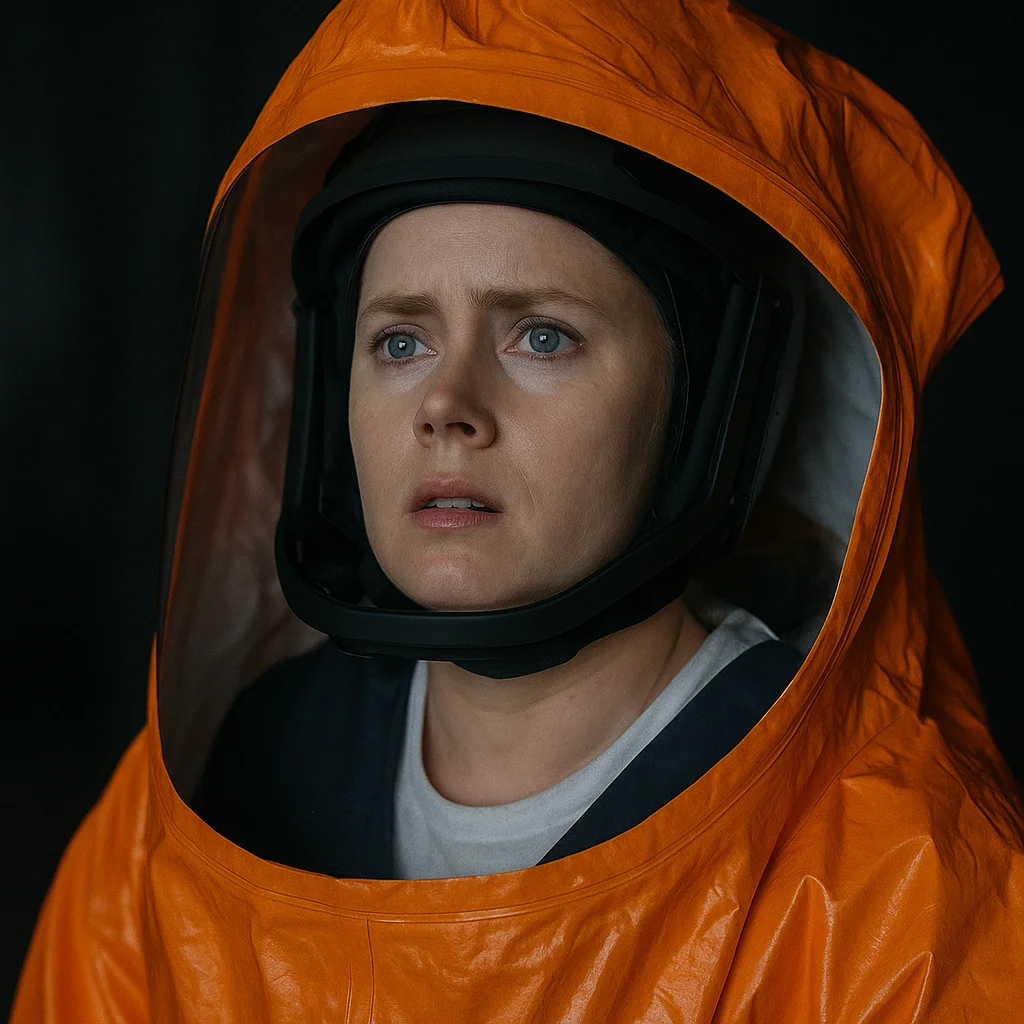
From her humble beginnings as a dinner theater dancer to earning six Academy Award nominations, Amy Adams has quietly built one of the most impressive filmographies in modern Hollywood. Known for her extraordinary chameleon-like range, she has captivated audiences in everything from fairytale musicals to gritty crime dramas and cerebral science fiction. Along the way, she overcame career setbacks, radical hair transformations, and intense roles to become an A-list icon. Here are 15 fascinating facts about the remarkably talented actress.
1. She Was Born on an American Military Base in Italy
Amy Adams was born in Vicenza, Italy, while her father was stationed there with the United States Army. She spent the first eight years of her life moving around military bases before her family eventually settled in Castle Rock, Colorado. Raised in a large family with six siblings, Adams was brought up in the Church of Jesus Christ of Latter-day Saints until her parents divorced. Her upbringing in a military household taught her discipline and resilience, traits that served her well during her early years as a struggling performer. Although she left Italy as a young child, her international birth gives her a unique background among Hollywood's leading ladies.
2. She Worked at Hooters and The Gap to Buy Her First Car
Before achieving Hollywood stardom, Adams worked several entry-level service jobs to financially support herself. At age 17, she took a job as a greeter at The Gap while pursuing dance and theater in high school. Shortly after turning 18, she began working as a hostess at Hooters, a job she took primarily to earn enough money to buy a used car. She worked at the restaurant for about three weeks until she saved enough cash to purchase a Chevrolet Camaro. Adams has frequently spoken openly about these early jobs, noting that they taught her valuable lessons about customer service and real-world discipline.
3. She Started Her Performing Career as a Professional Dinner Theater Dancer
Long before landing movie roles, Adams pursued a career as a professional dancer in dinner theater. She began working at the Country Dinner Playhouse in Colorado, where she performed as a chorus dancer and waitress for several years. She later moved to Minnesota to perform at the Chanhassen Dinner Theatres, honing her skills in musical theater and live dance numbers. Her grueling schedule required her to perform multiple shows a week while serving meals to guests, building incredible stamina. However, a persistent muscle pulling injury eventually forced her to shift her focus away from professional dance toward screen acting.
4. Changing Her Hair Color to Red Completely Transformed Her Career
Adams is naturally blonde, but changing her hair color to red dramatically altered the trajectory of her career. In 2004, at age 27, she dyed her hair strawberry blonde for a role in the short-lived TV series Dr. Vegas. To her surprise, casting directors immediately began viewing her differently, moving her away from stereotypical blonde roles into more nuanced, intelligent characters. Adams has openly stated that her natural hair color kept her boxed into limited archetypes, whereas red hair opened doors to far more complex scripts. Within a year of changing her hair color, she landed the career-defining role that earned her her first Academy Award nomination.
5. She Almost Quit Acting Permanently at Age 30
Despite years of hard work in Hollywood, Adams came close to abandoning her acting dream altogether. After being abruptly fired from the television show Dr. Vegas in 2004, she found herself demoralized and financially insecure at age 30. Feeling that her career was stalled and going nowhere, she seriously considered packing up and moving back to Colorado to pursue a different path. It was during this period of immense self-doubt that she received the low-budget indie script for Junebug. Deciding to give acting one final attempt, her performance in the film changed her life and permanently secured her place in Hollywood.
6. Her Breakthrough Role in Junebug Was Filmed on a Micro-Budget
Adams received widespread critical acclaim for playing Ashley Johnsten, a naive and cheerful pregnant woman, in the 2005 indie film Junebug. The movie had a tiny production budget of less than $1 million and was filmed in just 21 days in North Carolina. Despite the movie's limited financial resources, Adams delivered a heartbreaking performance that stole every scene she appeared in. Her portrayal earned her the Special Jury Prize at the Sundance Film Festival and her first Academy Award nomination for Best Supporting Actress. The breakthrough transformed her from an unemployed actress into one of the most sought-after talents in Hollywood.
7. She Beat Out Over 300 Actresses to Star in Disney's Enchanted
When Disney began casting for the 2007 live-action musical comedy Enchanted, over 300 actresses auditioned for the lead role of Giselle. Director Kevin Lima was seeking someone who could bring a genuinely naive, fairytale-like quality without coming across as ironic or mocking. Adams blew the filmmakers away with her audition, showcasing a rare mix of comedic timing, innocence, and impressive vocal ability. Her theatrical background from her dinner theater days gave her the precise physical expression and vocal control needed for the musical numbers. The film went on to gross over $340 million worldwide and turned Adams into an international superstar.
8. She Auditioned for Lois Lane Twice Before Securing the DCEU Role
Playing Lois Lane in the DC Extended Universe was a long process for Adams, who tried out for the iconic reporter multiple times before landing the part. She first auditioned for the character in the early 2000s for a scrapped Superman project written by J.J. Abrams. Years later, she auditioned again for Superman Returns in 2006, but the role eventually went to Kate Bosworth. When director Zack Snyder set out to reboot the franchise with Man of Steel in 2013, he cast Adams without making her re-audition, praising her intelligence and screen presence. She went on to portray Lois Lane in three blockbuster DC films: Man of Steel, Batman v Superman: Dawn of Justice, and Justice League.
9. She Performed Her Own Vocals Live on Stage at the Academy Awards
Her background in live musical theater allowed Adams to handle demanding musical roles with ease and confidence. For Disney's Enchanted, she sang all of her own songs on the soundtrack, including iconic tracks like "Happy Working Song" and "That's How You Know." Both tracks received Oscar nominations for Best Original Song at the 80th Academy Awards in 2008. During the live Oscar broadcast, Adams stepped onto the stage in front of millions of viewers to perform "Happy Working Song" live. Her flawless live vocal performance proved to critics and audiences that her musical talents extended far beyond movie studio dubbing.
10. Her Collaboration with David O. Russell Redefined Her Onscreen Persona
Director David O. Russell played a pivotal role in shifting public perception of Adams from sweet and bubbly to fierce and formidable. In The Fighter in 2010, Russell cast her as Charlene Fleming, a tough-talking, gritty bartender, breaking her out of her usual lighthearted casting molds. The two teamed up again for American Hustle in 2013, where Adams played Sydney Prosser, a manipulative and seductive con artist. Her fearless performances in both films earned her critical raves and consecutive Oscar nominations. These intense collaborations demonstrated her incredible dramatic range and established her as a truly versatile lead actress.
11. She Won Back-to-Back Golden Globe Awards in 2014 and 2015
Adams achieved a rare feat in Hollywood by winning back-to-back Golden Globe Awards for Best Actress in a Motion Picture – Comedy or Musical. Her first win came in January 2014 for her dazzling role as con artist Sydney Prosser in American Hustle. Just one year later, in January 2015, she won the same award for portraying painter Margaret Keane in Tim Burton's biographical drama Big Eyes. Winning two consecutive Golden Globes in lead acting categories placed her in elite Hollywood company and cemented her status as one of her generation's top stars. Her heartfelt acceptance speeches highlighted her deep gratitude for complex female roles in modern cinema.
12. She Worked with Real Linguists to Prepare for Arrival
To portray Dr. Louise Banks in Denis Villeneuve's acclaimed 2016 sci-fi masterpiece Arrival, Adams immersed herself in the world of linguistics. She spent time studying with real university professors to understand how linguists analyze unfamiliar sound structures and construct written languages. Adams learned about phonetic transcriptions and decoding non-verbal communication to ensure her portrayal felt authentically academic. Her subtle, emotionally grounded performance as a grieving mother communicating with extraterrestrials received widespread praise from critics and scientific professionals alike. Many film experts considered her performance one of the finest of her career, making her Oscar snub that year a major talking point.
13. She Starred Alongside Meryl Streep and Philip Seymour Hoffman in Doubt
In the 2008 drama Doubt, Adams delivered a standout performance as Sister James, a young, innocent Catholic school teacher trapped between two formidable figures. She shared intense scenes with cinematic titans Meryl Streep and Philip Seymour Hoffman, holding her own alongside the acting legends. Streep actively mentored Adams during filming, praising her deep emotional presence and professional dedication. The role earned Adams her second Academy Award nomination for Best Supporting Actress. Working on the heavy drama helped refine her dramatic instincts and proved that she could stand shoulder-to-shoulder with Hollywood's greatest dramatic talents.
14. She Exec-Produced and Starred in the Harrowing Series Sharp Objects
In 2018, Adams took on one of the most demanding projects of her career by starring in and executive producing the HBO miniseries Sharp Objects. Based on Gillian Flynn's dark mystery novel, Adams played Camille Preaker, an alcoholic reporter suffering from severe trauma and self-harm who returns to her hometown to cover a murder. The intense role required Adams to spend hours in makeup every day applying elaborate prosthetics representing bodily scars. She openly admitted that taking on such a dark, psychologically heavy character took a significant emotional toll on her personal life during production. Her gripping performance earned her critical acclaim, a Golden Globe nomination, and a Primetime Emmy Award nomination.
15. She Holds Six Oscar Nominations Without a Win
Adams is widely recognized as one of the most accomplished and celebrated actresses of her generation, yet she holds a curious Oscar distinction. She has been nominated for six Academy Awards—five for Best Supporting Actress (Junebug, Doubt, The Fighter, The Master, and Vice) and one for Best Actress (American Hustle). Despite her extraordinary body of work, she has yet to take home the golden statuette, putting her in a celebrated group of legendary actors with multiple unrewarded nominations. However, her consistent recognition by the Academy highlights her exceptional consistency and respected standing within the film industry. Fans and critics alike remain confident that her elusive Oscar win is only a matter of time.
Sources & References
This AI-assisted post was rigorously curated and fact-checked for accuracy by:
 Martin Roháček
How fun was this article? 🤔
Tap a star to rate it
🧠 Quiz: How closely were you paying attention?
10 questions — all answers are in the article above!
Enjoyed these facts? There's more! 💌
Fresh fun facts in your inbox. No spam, ever.