The Imperial Jewel: 15 Fascinating Facts About Budapest
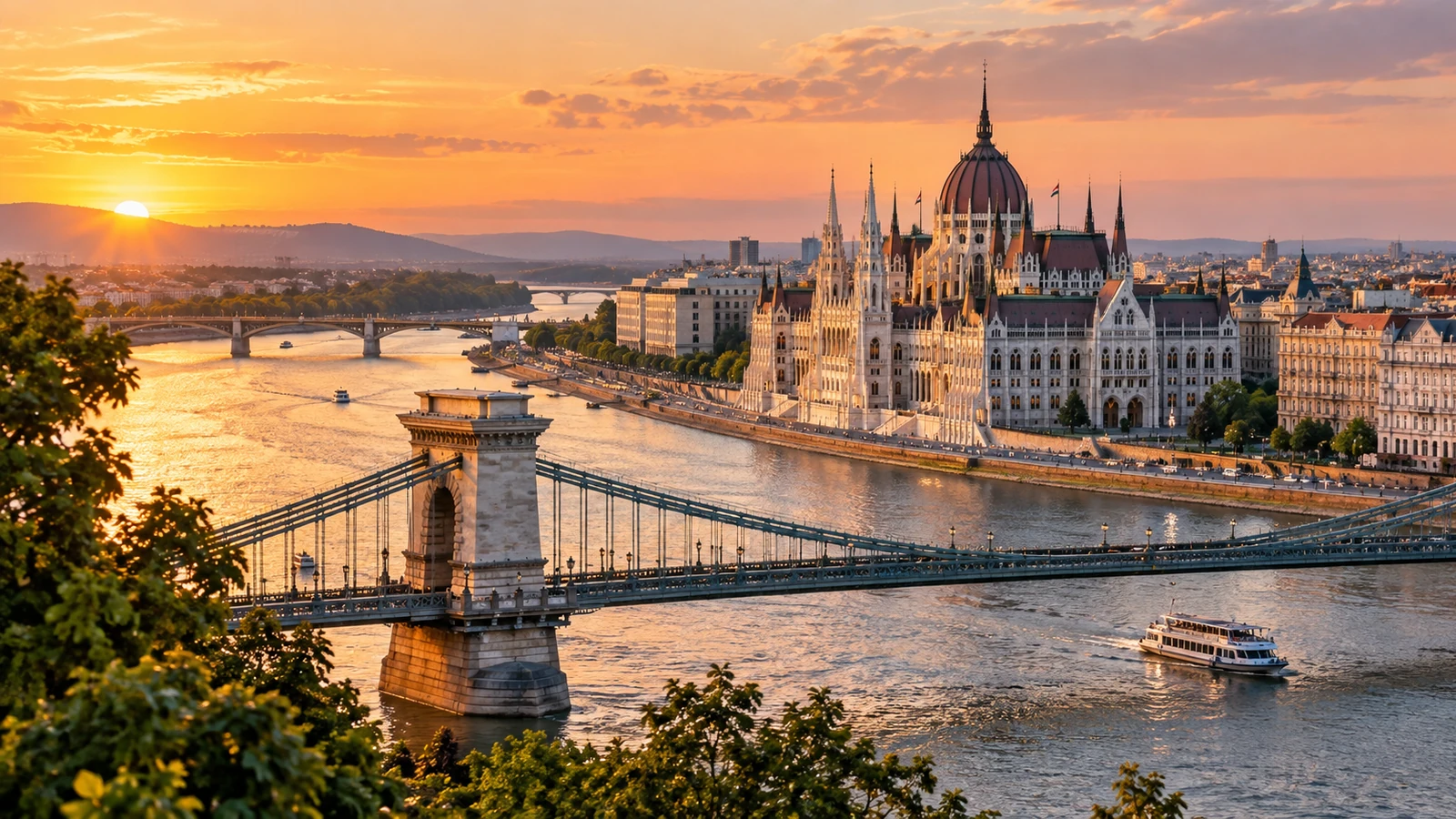
Budapest is one of Europe's most enchanting capital cities, celebrated for its dramatic architecture, vibrant culture, and thermal spa heritage. Straddling the majestic Danube River, the Hungarian metropolis was born from the historic unification of three distinct towns in the late 19th century. From subterranean cave systems and historic ruin bars to royal palaces and continental Europe's oldest subway line, Budapest offers a captivating mixture of historic grandiosity and modern energy. Discover fifteen remarkable facts that reveal why this jewel of Central Europe continues to captivate millions of travelers every year.
1. The Tripartite Unification of 1873
Budapest as we know it today did not exist until late in the 19th century. On November 17, 1873, three distinct towns—hilly Buda, flat Pest, and ancient Óbuda—were officially unified into a single municipality. Before this merger, Pest was the fast-growing commercial center, Buda served as the royal seat on the western hills, and Óbuda boasted ancient Roman ruins. The iconic Danube River had long separated these independent communities both physically and culturally. Today, the unified capital retains the unique characteristics of its historic founding towns across its twenty-three districts.
2. Continental Europe’s First Underground Railway
Budapest is home to the oldest subterranean electric railway system in continental Europe and the second oldest in the world after London's Underground. Opened in May 1896 for Hungary's Millennium celebrations marking 1,000 years of Magyar history, Line 1 is officially known as the Millennium Underground Railway. Built beneath the elegant Andrássy Avenue using the cut-and-cover construction method, it moved thousands of passengers daily using state-of-the-art electric carriages. The charming wooden-tiled stations and vintage yellow trains remain operational today. UNESCO recognized this groundbreaking transit line as a World Heritage Site in 2002.
3. The Symbolic 96-Meter Architectural Ceiling
A strict urban rule in central Budapest maintains that no building can stand taller than 96 meters. Both the magnificent Hungarian Parliament Building and the historic St. Stephen’s Basilica reach this exact height. This specific number pays tribute to the year 896 AD, when Árpád led the Magyar tribes into the Carpathian Basin to establish the Hungarian nation. By enforcing an equal height limit for the city's premier political and religious monuments, town planners symbolically declared that state and church held equal stature. Today, this traditional rule continues to protect the city's historic skyline from modern skyscrapers.
4. The World's Most Plentiful Thermal Water Capital
Budapest earned its famous moniker, the "City of Spas," because it sits directly atop a massive geological fault line brimming with thermal springs. Over 120 underground hot springs pump more than 70 million liters of mineral-rich water into the surface baths every day. Temperatures ranges from warm thermal baths to near-boiling spring waters infused with calcium, magnesium, and sulfate minerals. While ancient Celtic and Roman settlers first utilized these springs, the bathing culture truly expanded under 16th-century Ottoman Turkish rule. Famous historic complexes like Széchenyi and Gellért continue to draw visitors seeking relaxation and medicinal healing.
5. Europe’s Largest Synagogue Complex
Situated in the historic 7th district, the Dohány Street Synagogue stands as the largest synagogue in Europe and the second largest in the world. Constructed between 1854 and 1859, the grand building was designed by Austrian architect Ludwig Förster in a striking Moorish Revival style. It features twin octagonal towers rising 44 meters, intricate geometric brickwork, and a lavish interior seating up to 3,000 people. Remarkably, the interior layout incorporates elements reminiscent of Christian basilicas, reflecting the unique cultural assimilation of 19th-century Hungarian Jews. The rear courtyard houses the Raoul Wallenberg Holocaust Memorial Park and its iconic weeping willow sculpture.
6. Birthplace of the World-Famous Rubik’s Cube
The iconic Rubik’s Cube was invented in Budapest in 1974 by Ernő Rubik, a professor of architecture and interior design. Working at the Academy of Applied Arts, Rubik developed the 3D mechanism as a physical tool to help his students comprehend complex spatial movement and geometry. Originally named the "Magic Cube," the prototype was crafted entirely from wooden blocks, rubber bands, and paper clips. Rubik famously spent over a month trying to solve his own puzzle after scrambling it for the very first time. Since its global rebranding in 1980, hundreds of millions of cubes have been sold worldwide.
7. A Hidden Underworld and "Dracula’s Prison"
Beneath the cobblestone streets of Buda Castle lies an intricate 10-kilometer network of naturally formed limestone caves and artificial cellars. For centuries, these dark passageways served as wine cellars, bomb shelters during World War II, and subterranean military garrisons. According to centuries-old regional accounts, King Matthias Corvinus imprisoned Vlad the Impaler—the infamous Wallachian ruler who inspired Dracula—in these damp caverns during the 15th century. Today, brave visitors can explore sections of the Buda Castle Labyrinth and nearby Pálvölgyi Cave system to experience the chilly subterranean atmosphere.
8. The Innovation of Abandoned Ruin Bars
Budapest’s vibrant nightlife is globally famous for its unique "ruin bars" (romkocsmák), which revitalized derelict spaces in the Jewish Quarter. The movement started in the early 2000s when visionary creators converted crumbling pre-war apartment buildings scheduled for demolition into eclectic watering holes. The pioneer venue, Szimpla Kert, filled its open-air courtyard with discarded vintage furniture, old cinema chairs, retro art, and overgrown plants. Rather than repairing structural flaws, the owners celebrated the architectural decay to form cozy, bohemian gathering hubs. This unconventional nightlife model successfully preserved historic urban facades while creating a world-class cultural phenomenon.
9. Legendary Lions Guarding the Széchenyi Chain Bridge
When the Széchenyi Chain Bridge opened in 1849, it became the first permanent stone bridge connecting Buda and Pest across the Danube. Designed by English engineer William Tierney Clark, the suspension bridge was considered an engineering masterwork of the 19th century. Four massive stone lions carved by Hungarian sculptor János Marschalkó guard the bridge abutments on either bank. A popular urban myth claims that Marschalkó forgot to sculpt tongues inside the lions' mouths and threw himself into the river when a child pointed out the flaw. In reality, the lions do possess fully carved tongues, but they are tucked down and only visible from above.
10. A Historic Church Built Inside a Natural Cavern
Constructed directly into the rocky southern face of Gellért Hill, the Gellért Hill Cave Church (Sziklatemplom) offers one of Budapest's most unusual spiritual sanctuaries. Inspired by pilgrimage sites in Lourdes, Pauline monks established the chapel inside a massive natural cave system in 1926. The cavern had previously served as the retreat for Saint Ivan, a hermit who reportedly cured the sick using thermal mud from nearby springs. Following World War II, the Soviet-backed communist regime raided the cave church, imprisoned the resident monks, and sealed the entrance with thick concrete. The sanctuary was finally reopened and reconsecrated in 1989 after communism collapsed.
11. Grand Architecture of the Hungarian Parliament
The Hungarian Parliament Building (Országház) is a sprawling masterpiece of Neo-Gothic architecture dominating the eastern bank of the Danube. Constructed between 1885 and 1904 using designs by Imre Steindl, the building contains 691 rooms, 10 internal courtyards, and over 20 kilometers of stairs. Over 40 million bricks and 40 kilograms of 22-carat gold leaf were used to create its lavish gilded interior. The central dome room proudly displays the Holy Crown of Hungary, which has been guarded around the clock by elite soldiers since 2000.
12. Sziget Festival Transforms an Island in the Danube
Every August, Óbuda Island in the middle of the Danube transforms into a bustling temporary island nation for Sziget Festival. Founded in 1993 as a small student gathering following the end of communist rule, Sziget has evolved into one of Europe's largest cultural events. Over the course of seven days, the festival welcomes more than 500,000 attendees from over 100 countries. Known affectionately as "Szitizens," festivalgoers enjoy a diverse lineup featuring global pop stars, indie bands, electronic artists, theatrical troupes, and art installations across dozens of stages.
13. The Colorful Ceramic Tiles of Central Market Hall
Opened in 1897, the Central Market Hall (Nagyvásárcsarnok) is the largest and oldest covered market in Budapest. Designed by architect Samu Pecz, the majestic Neo-Gothic structure features a magnificent roof clad in colorful Zsolnay ceramic tiles produced in Pécs. Inside, three spacious floors host hundreds of stalls selling fresh local produce, cured meats, and traditional spices like Hungarian paprika. The upper level is famous for traditional food stands serving Hungarian specialties such as lángos, a deep-fried flatbread topped with garlic oil, sour cream, and grated cheese.
14. A Historic Color-Coded Transit System
Budapest operates an intricate public transit system featuring a memorable color-coding convention rooted in municipal history. Trams around the city are painted a bright canary yellow, including the famous Tram Line 2, which snakes along the Danube riverbank and is frequently rated among the world's best scenic tram routes. Meanwhile, the city's electric trolleybuses operate in Pest and are painted vibrant red. Interestingly, the first trolleybus line began operating in 1949 and was designated route number 73 to honor Soviet leader Joseph Stalin's 70th birthday, establishing a numbering system that persists today.
15. The Most Beautiful Cafe in the World
During the late 19th century, coffeehouse culture flourished across Budapest as intellectual hubs for writers, poets, and journalists. Opened in 1894 inside the New York Palace hotel, the New York Café quickly earned a reputation as the grandest coffeehouse in Central Europe. The opulent interior features dramatic Italian Renaissance pillars, glittering chandeliers, gilded stucco, and ceiling frescoes painted by Gusztáv Mannheimer. Legendary Hungarian author Ferenc Molnár allegedly threw the café’s front door keys into the Danube on opening night so the iconic venue could never close its doors.
Sources & References
This AI-assisted post was rigorously curated and fact-checked for accuracy by:
 Martin Roháček
How fun was this article? 🤔
Tap a star to rate it
🧠 Quiz: How closely were you paying attention?
10 questions — all answers are in the article above!
Enjoyed these facts? There's more! 💌
Fresh fun facts in your inbox. No spam, ever.