The Explosive Classic: 15 Fascinating Facts About Die Hard
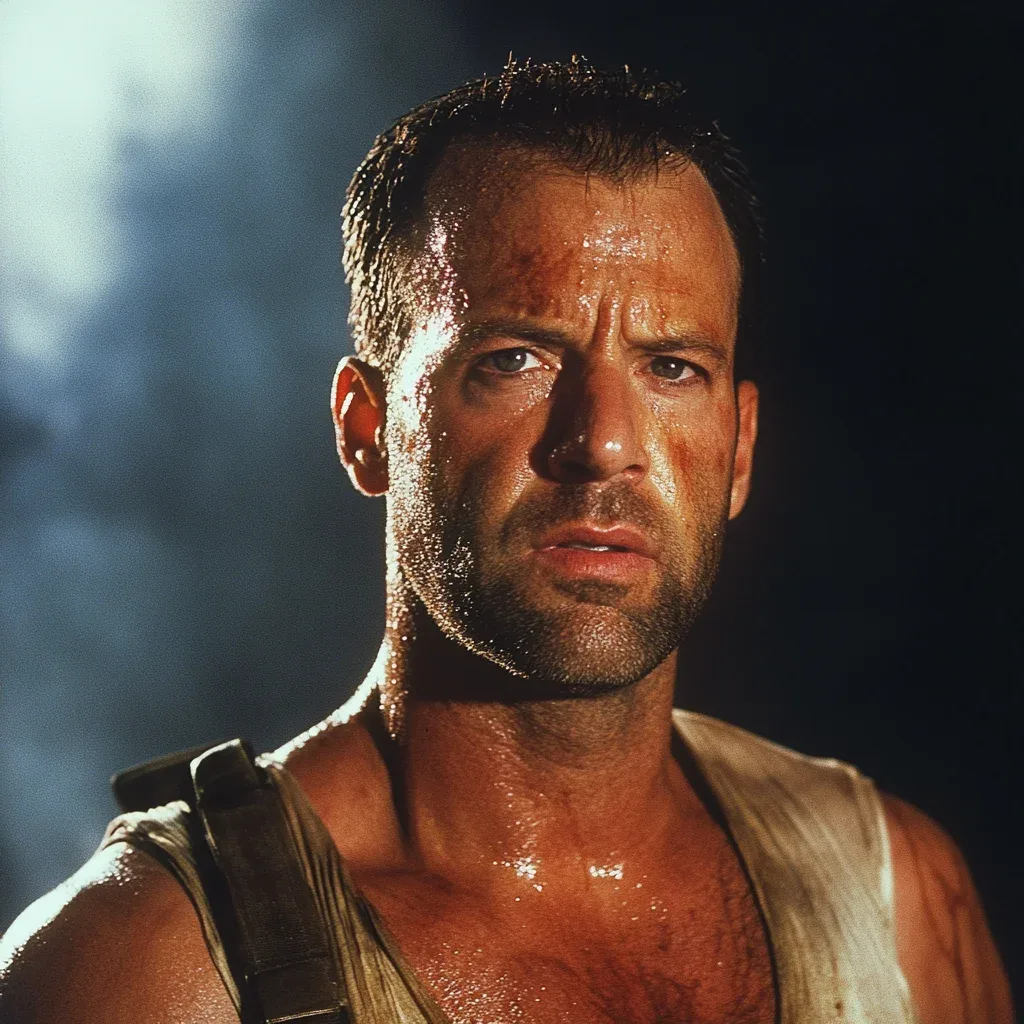
Released in the summer of 1988, Die Hard revolutionized the action cinema genre by introducing an everyday, vulnerable protagonist trapped inside an iconic Los Angeles skyscraper. What began as an unheralded project based on an obscure novel quickly morphed into one of the most beloved and quoted films in movie history. From unexpected casting obligations to genuine physical injuries on set, the behind-the-scenes story of John McClane's ordeal is just as thrilling as the movie itself. Here are 15 fascinating facts about the explosive holiday classic.
1. Frank Sinatra Had First Right of Refusal to Play McClane
Before Bruce Willis was ever considered for the role, 73-year-old Frank Sinatra was legally required to receive the first offer to star in the film. Die Hard was based on Roderick Thorp's 1979 novel Nothing Lasts Forever, which was a direct sequel to his 1966 novel The Detective. Because Sinatra had starred in the 1968 film adaptation of The Detective, his original contract stipulated that he had to be offered any potential cinematic sequels. Unsurprisingly, the legendary crooner politely turned down the physically demanding role, clearing the path for a complete reimagining of the character. This bizarre contractual quirk remains one of Hollywood's most remarkable trivia items.
2. Bruce Willis Was Far From the First Choice for the Role
After Sinatra declined, 20th Century Fox spent months offering the role of John McClane to virtually every major male star in Hollywood. Action icons like Arnold Schwarzenegger, Sylvester Stallone, and Clint Eastwood all passed on the project, as did Harrison Ford, Robert De Niro, and Al Pacino. At the time, Bruce Willis was primarily known as a comedic television actor on the hit series Moonlighting and was not considered action-hero material. Studio executives only approached Willis after being turned down by nearly every top-billed actor in town. His eventual casting ended up redefining the modern action hero as a relatable underdog rather than an invincible muscular giant.
3. Willis Maintained a Brutal Filming Schedule
Taking on the role of John McClane required Bruce Willis to push his physical limits both on and off camera. Because he was still under contract for his hit television show Moonlighting, he had to shoot both projects simultaneously over several exhausting months. Willis would film scenes for Moonlighting during the day and then immediately drive across town to shoot Die Hard throughout the night. This grueling schedule left him perpetually fatigued, which surprisingly enhanced his performance by giving McClane a genuinely exhausted and worn-down demeanor. The grueling pace paid off, launching Willis into global cinematic superstardom.
4. Nakatomi Plaza Was the Real 20th Century Fox Headquarters
The sleek skyscraper known as Nakatomi Plaza was actually the brand-new, under-construction headquarters of 20th Century Fox in Los Angeles. Because the building was owned by the production studio, the filmmakers were able to use it extensively for exterior shots and interior set decoration. To keep production accounting legal and accurate, the studio actually charged its own film division rent for using the unfinished facility. Filming in a real, functional building allowed director John McTiernan to create a sense of geographical realism that traditional soundstages could never match. Today, the building remains an iconic landmark for film enthusiasts visiting California.
5. Alan Rickman’s Terrified Reaction Was Completely Genuine
When villain Hans Gruber falls to his death from Nakatomi Plaza, actor Alan Rickman's expression of sheer horror is entirely real. To film the dramatic drop, Rickman was suspended on a rig 70 feet above a blue-screen stunt pad and instructed that he would be dropped on the count of three. However, stunt coordinator Charlie Croman secretly instructed the crew to drop Rickman on the count of two to capture a genuine reaction of shock. The surprise drop worked flawlessly, catching Rickman completely off guard and producing one of the most realistic death reactions in action movie history. Though Rickman was reportedly furious about the deception, the resulting frame remains unedited in the final cut.
6. A Chance Encounter Created the "Bill Clay" Scene
One of the most tense scenes in the film occurs when John McClane stumbles upon Hans Gruber posing as an American hostage named "Bill Clay." This iconic scene was not in the original script and was added late into production by screenwriter Steven E. de Souza. During filming, director John McTiernan discovered that British theater actor Alan Rickman possessed an extraordinary ability to mimic an American accent. Recognizing an opportunity to create a high-stakes standoff, the crew quickly penned the encounter to demonstrate Gruber's cunning adaptability. Rickman executed the transition so flawlessly that audiences were as fooled by his fake persona as McClane initially appeared to be.
7. Bruce Willis Suffered Permanent Hearing Loss During Filming
The intense gunfights featured throughout the movie came at a high physical cost for its lead actor. During the iconic scene where McClane shoots a terrorist through the bottom of a long table, director John McTiernan wanted exceptionally loud gunshot sound effects. To achieve maximum visual and auditory impact, the prop master used specialized extra-strength blank cartridges in Willis's handgun. Because the scene was filmed in an enclosed space underneath the table, the concussive blast was far louder than anticipated. As a result, Willis suffered permanent two-thirds hearing loss in his left ear, a residual effect he lives with to this day.
8. The Terrorists Spoke Complete Gibberish in German
While Hans Gruber's henchmen are portrayed as a highly organized group of German mercenaries, their dialogue left native German speakers utterly confused. In the theatrical release, much of the German spoken by the actors was grammatically incorrect, mispronounced, or completely nonsensical gibberish. Many of the actors playing the henchmen were not actually German speakers and were simply reciting phonetically written lines. The errors were so glaring that 20th Century Fox had to completely dub over the terrorists' dialogue with proper German phrasing for the film's home video release in German-speaking countries. In some versions, the group was even rebranded as radical international mercenaries rather than Germans.
9. McClane's Bloodied Tank Top Is in the Smithsonian
John McClane's grime-covered, bloodstained white tank top became one of the most recognizable costume pieces in modern cinematic history. As the film progresses, the undershirt visually tracks McClane's grueling physical decline, shifting from clean white to filthy gray and crimson. In 2007, prior to the release of the fourth installment in the franchise, Bruce Willis officially donated the original movie shirt to the Smithsonian Institution in Washington, D.C. The artifact is preserved in the National Museum of American History alongside other legendary pop culture items like Indiana Jones's fedora and Dorothy's ruby slippers. It serves as a testament to how profoundly the movie altered the landscape of action cinema.
10. Barefoot Footwear Protected Willis During the Glass Scene
One of the movie's most harrowing sequences involves McClane fleeing barefoot across a floor littered with shattered glass. While the broken shards on screen were actually made from specialized breakaway candy glass, running across them barefoot would still have caused injury. To keep Bruce Willis safe during these scenes, the production crew designed custom rubber shoes molded to look like bare feet. Willis wore these prosthetic foot coverings throughout the sequence, allowing him to sprint through the debris without puncturing his skin. If viewers look closely at McClane's feet in certain high-definition frames, they can occasionally spot the subtle seams of the rubber slip-ons.
11. "Yippee-Ki-Yay" Began as an Off-Camera Joke
The immortal catchphrase "Yippee-ki-yay, motherf***er" was never intended to be the central tagline of a blockbuster franchise. During an early rehearsal, Bruce Willis ad-libbed the cowboy phrase purely as a joke to amuse the crew members standing behind the camera. He believed the line was far too silly to make it into the finished product and expected it to end up on the cutting room floor. However, director John McTiernan recognized that the line perfectly encapsulated McClane's rebellious, sarcastic humor and decided to keep it in the edit. The catchphrase resonated so strongly with preview audiences that it became the signature battle cry for the entire film series.
12. The Oversized Teddy Bear Reappeared in Another Film
At the beginning of the movie, John McClane travels to Los Angeles holding a giant stuffed teddy bear wrapped in a ribbon as a gift for his children. This identical prop made a surprise second appearance in another film directed by John McTiernan two years later. In the 1990 submarine thriller The Hunt for Red October, the exact same giant teddy bear can be seen sitting on a shelf in Jack Ryan's daughter's bedroom. McTiernan included the plush toy as an intentional easter egg, linking his two high-octane thrillers through a subtle visual detail. It remains one of the funnest prop crossovers in studio history.
13. Early Posters Intentionally Hid Bruce Willis’s Face
When marketing for the film began in early 1988, studio executives were deeply anxious about whether audiences would buy Bruce Willis as a lead action star. Because Willis was primarily recognized for his comedic work on television, Fox feared his face on posters would cause moviegoers to mistake the film for a comedy. As a result, the initial promotional posters prominently featured Nakatomi Plaza towering in the night sky, completely omitting Willis's image. It was only after the movie opened to massive box office numbers and ecstatic audience reactions that the studio revised the marketing campaign. Updated posters put Willis's battered face front and center, declaring him Hollywood's newest star.
14. The Source Novel Featured a Horrifyingly Dark Ending
While the film balances tense action with witty humor, its source novel, Nothing Lasts Forever, was a remarkably bleak story. In Roderick Thorp's original book, the main protagonist is an aging retired police detective named Joe Leland who visits his daughter at her corporate office. Rather than saving the day and rekindling his marriage, the novel ends in absolute tragedy when Leland's daughter falls to her death alongside the lead terrorist. Screenwriter Steven E. de Souza reworked the story significantly, changing the protagonist into a younger NYPD cop trying to reconcile with his estranged wife. This shift transformed a tragic noir tale into a triumphant holiday blockbuster.
15. The Script Added a Major Plot Point to Fix an Editing Hole
During principal photography, director John McTiernan realized he had created a massive plot hole regarding the terrorists' escape plan. Originally, Hans Gruber and his crew were supposed to escape in a stolen ambulance hidden inside a larger delivery truck. However, early footage revealed that the delivery truck arrived at Nakatomi Plaza without an ambulance inside, making its sudden appearance at the climax completely illogical. To fix the continuity error, McTiernan shot extra footage showing the terrorists systematically unloading parts to assemble the escape vehicle inside the building. This quick production adjustment saved the film's climax from falling apart under fan scrutiny.
Sources & References
This AI-assisted post was rigorously curated and fact-checked for accuracy by:
 Martin Roháček
How fun was this article? 🤔
Tap a star to rate it
🧠 Quiz: How closely were you paying attention?
10 questions — all answers are in the article above!
Enjoyed these facts? There's more! 💌
Fresh fun facts in your inbox. No spam, ever.