The Progressive Pioneers: 15 Fascinating Facts About Jethro Tull
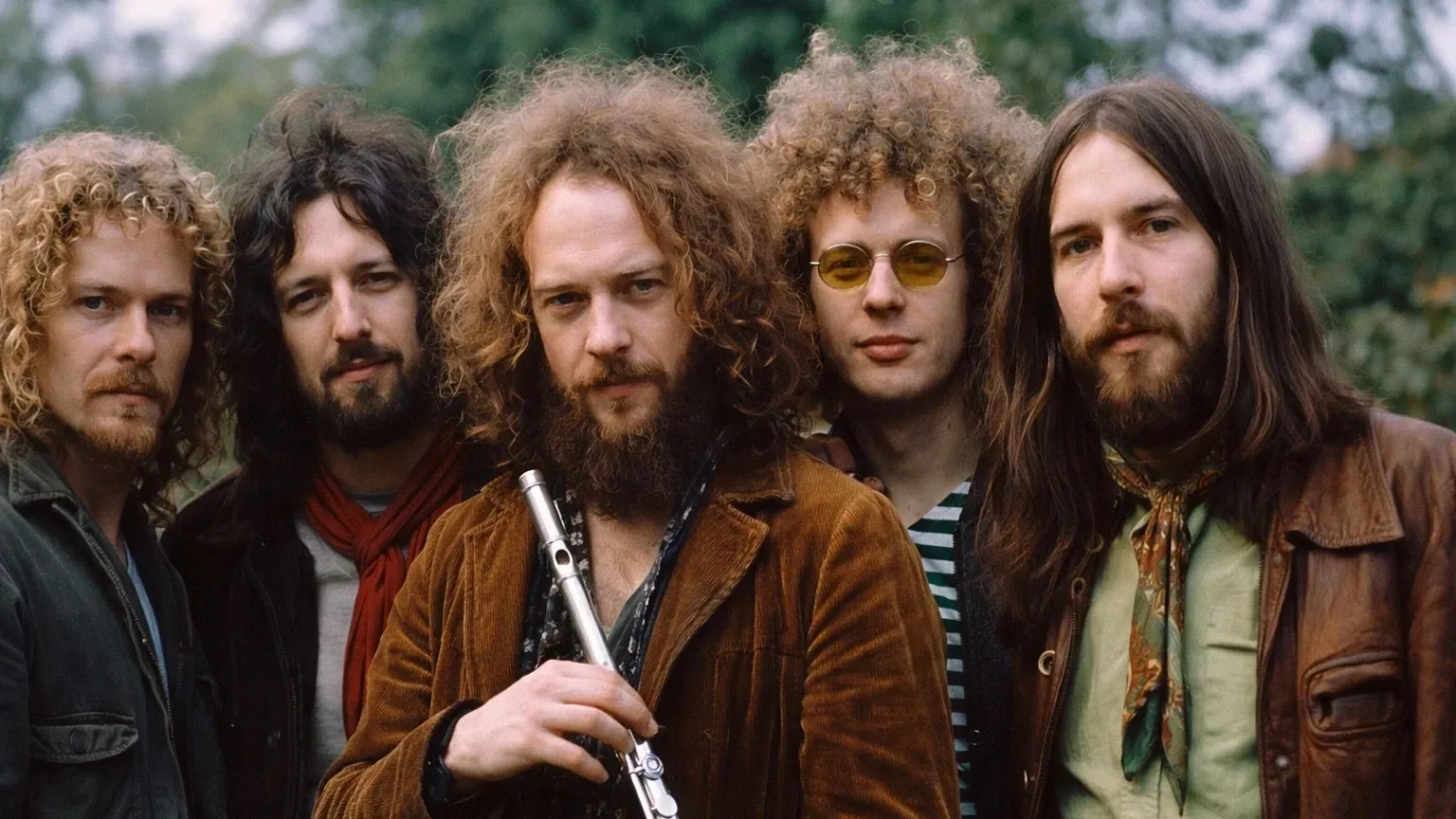
From accidental space duets and salmon farming empires to an infamous Grammy shocker that stunned heavy metal fans worldwide, Jethro Tull stands as one of rock history's most eccentric and enduring bands. Formed during the late 1960s British blues revival, the group redefined progressive rock by placing a flute front and center. Led by the enigmatic Ian Anderson, their story is filled with bizarre coincidences, technical brilliance, and musical satire. Here are 15 fascinating facts about the legendary flute-powered rock pioneers.
1. Named After an 18th-Century Agricultural Pioneer
When Jethro Tull formed in the late 1960s, their booking agents frequently renamed them so venue owners wouldn't realize they were rehiring a band they had disliked the previous week. The band went through dozens of temporary names before their manager's assistant, a history enthusiast, suggested Jethro Tull, the 18th-century English agriculturist who invented the mechanical seed drill. It happened to be the name they were using when a manager at the famous Marquee Club in London liked their set enough to invite them back for a recurring residency. Forced to stick with the moniker that secured them repeat gigs, the musicians were unexpectedly locked into an agricultural history reference forever.
2. Ian Anderson Traded Guitar for Flute Due to Eric Clapton
In the mid-1960s, a teenage Ian Anderson was aiming to be a lead guitarist, playing a Fender Stratocaster in early rhythm and blues bands. However, after listening to virtuosos like Eric Clapton, Jimi Hendrix, and Jeff Beck, Anderson realized he would never reach their level of technical brilliance on six strings. Deciding he would rather be a big fish in a small pond, he traded his electric guitar for a shiny nickel-plated student flute and a microphone. Despite having never taken a single formal lesson, he resolved to invent his own approach to the instrument within rock music.
3. Anderson Developed a Unique Technique by Vocalizing into the Flute
Because Ian Anderson was entirely self-taught, he initially did not know the standard fingering or embouchure techniques used by classical flutists. Instead, he drew inspiration from jazz pioneer Rahsaan Roland Kirk, who combined flute playing with vocal humming, grunting, and rhythmic clicking. Anderson began singing directly into the mouthpiece while blowing hard to create a raspy, aggressive, and percussive sound that could cut through heavy guitar amps. This unconventional tone gave Jethro Tull a sonic signature unlike any other rock group of the era.
4. The Famous One-Legged Posture Was Originally a Matter of Balance
Ian Anderson's visual trademark—standing like a frantic flamingo on one leg while playing intricate flute solos—was not originally a planned stage gimmick. In the band's earliest days, Anderson played harmonica while wearing a long, bulky coat and holding his flute at his side. When switching to the flute mid-song, he had to hoist the mic stand, balance on one foot to keep his long coat from tripping him, and play simultaneously. Critics noted the bizarre one-legged stance in early reviews, prompting Anderson to intentionally adopt it as the band's enduring theatrical motif.
5. Crossing Paths with Led Zeppelin During the Aqualung Sessions
Jethro Tull recorded their 1971 masterpiece, Aqualung, at Island Studios in London, directly adjacent to where Led Zeppelin was recording their untitled fourth album. The studio was housed in a converted church, with Jethro Tull using the large, cold main room and Zeppelin occupying a smaller upstairs studio. Guitarist Jimmy Page frequently wandered into Tull’s recording space to observe Martin Barre and Ian Anderson tracking intricate acoustic passages. The mutual creative respect between the two legendary groups blossomed despite Anderson struggling with the cavernous acoustic reverb of the main hall.
6. Thick as a Brick Was Created as a Masterful Parody of Prog Rock
Following the immense success of Aqualung, critics hailed Jethro Tull as leaders of the progressive rock concept album movement, a label Ian Anderson found pretentious and inaccurate. In response, Anderson decided to craft the ultimate parody of a progressive concept album by writing one continuous, 43-minute piece of music broken across two sides of vinyl. Titled Thick as a Brick, the 1972 release was packaged inside a mock 12-page local newspaper complete with surreal articles, absurd puzzles, and a fake backstory attributing the lyrics to a fictional eight-year-old boy. To the band's amusement, many fans and critics took the elaborate spoof completely seriously.
7. The Infamous 1989 Grammy Shock Over Metallica
At the 31st Annual Grammy Awards in 1989, the Recording Academy introduced the inaugural category for Best Hard Rock/Metal Performance. Heavy metal frontrunners Metallica were heavily favored to win for their acclaimed album ...And Justice for All, and even performed live at the ceremony. Shocking the music industry, the award was given to Jethro Tull for their album Crest of a Knave, despite the band rarely being classified as heavy metal. Expecting to lose, neither Ian Anderson nor any band members attended the event, leaving presenter Alice Cooper looking bewildered on stage while audience members openly booed the result.
8. An Astronaut Played a Space Duet with Ian Anderson
In April 2011, NASA astronaut Cady Coleman brought an original flute belonging to Ian Anderson aboard the International Space Station. To commemorate the 50th anniversary of Yuri Gagarin’s historic first human spaceflight, Coleman recorded a zero-gravity flute solo from orbit. Her space recording was merged with video of Anderson playing on Earth, creating a groundbreaking orbital duet of the song "Bourée." Coleman later revealed that practicing in weightlessness presented unique challenges, as the lack of gravity meant breath air didn't dissipate normally and her fingers drifted off the keys.
9. Over 30 Musicians Have Been Official Members of the Group
Throughout Jethro Tull's long history, the group underwent an extraordinary number of lineup changes, featuring over thirty distinct touring and studio musicians. Longtime guitarist Martin Barre joined in 1968 and remained a core presence until 2011, serving as Anderson's primary musical partner for forty-three years. Bassists, keyboardists, and drummers rotated frequently as Anderson adjusted the band's direction through blues, folk, hard rock, synthesizer pop, and orchestral soundscapes. Through every iteration and musical shift, Ian Anderson has remained the sole constant member, lyricist, and primary songwriter.
10. Fans Constantly Confused the Band's Name with the Lead Singer
Because Jethro Tull sounded like a person's full name, casual rock fans and interviewers routinely assumed Ian Anderson was named Jethro Tull. In early radio and television broadcasts, interviewers often greeted Anderson as "Jethro," forcing him to clarify his real identity repeatedly. Anderson admitted that he felt embarrassed when he eventually learned the historical Jethro Tull was a famous pioneer of the British Agricultural Revolution. Over time, Anderson embraced the absurd mistake, though he occasionally joked about legally changing his name just to make life simpler.
11. The Innovative Pop-Up Artwork of Their Album Stand Up
For their second studio album, Stand Up, released in 1969, Jethro Tull commissioned a revolutionary gatefold album cover designed by artist James Grashow. When the cardboard vinyl sleeve was opened, a die-cut pop-up woodcut illustration of the four band members stood upright, mirroring a children's pop-up book. The novel packaging won awards for best album artwork that year and became a prized collectible among vinyl enthusiasts. This release marked the band's artistic transition away from straight blues rock toward their signature folk-infused rock sound.
12. Jethro Tull Sponsored a Professional International Race Car
In 1978, Jethro Tull ventured into the world of motorsport by sponsoring a professional Formula Two racing team. Band member Ian Anderson and manager Terry Ellis funded a March-BMW chassis driven by young British driver Rupert Keegan in the European F2 Championship. The sleek race car prominently displayed the bold Jethro Tull logo along its side pods as it competed on famous circuits across Europe. While rock band sponsorships were extremely rare in motorsport at the time, Anderson's love for precision engineering made the collaboration a natural, albeit unusual, marketing venture.
13. Ian Anderson Built a Multi-Million-Dollar Salmon Farming Empire
Outside of his musical career, Ian Anderson became a remarkably successful entrepreneur in the agricultural sector, echoing the business spirit of the band's namesake. In the late 1970s, he purchased an estate on the Isle of Skye in Scotland and established a massive salmon farming and processing operation. At its peak, Anderson's business employed over 400 people and produced millions of pounds of smoked salmon annually for major supermarkets. He eventually sold the enterprise in the late 1990s to focus back on music, having built one of the UK's most successful seafood processing companies.
14. The Group Started as a Hard-Working British Blues Revival Band
Before pioneering progressive folk-rock, Jethro Tull began as a raw blues and rhythm group performing in northern English clubs under names like The John Evan Band. In late 1967, Anderson formed the early core of Jethro Tull with guitarist Mick Abrahams, bassist Glenn Cornick, and drummer Clive Bunker. Their debut 1968 album, This Was, heavily emphasized 12-bar blues progressions, harmonica solos, and jazz-influenced brass arrangements. Tensions between Abrahams’ desire to remain a pure blues band and Anderson’s interest in folk and classical music led to Abrahams leaving, clearing the way for their iconic progressive sound.
15. The Lyrics of Aqualung Were Inspired by Photographs of Homeless People
The title character of Jethro Tull's landmark 1971 album Aqualung was inspired by photographs taken by Ian Anderson's then-wife, Jennie Franks. Franks had photographed homeless men along the Thames Embankment in London, capturing their tragic and isolated lives. She wrote a poem about one particular homeless man, which Anderson adapted into the lyrics for the song "Aqualung." Franks received co-writing credit on the iconic track, which tackled deep social themes of homelessness, religious hypocrisy, and human dignity, turning a gritty acoustic-rock song into an enduring rock radio staple.
Sources & References
This AI-assisted post was rigorously curated and fact-checked for accuracy by:
 Martin Roháček
How fun was this article? 🤔
Tap a star to rate it
🧠 Quiz: How closely were you paying attention?
10 questions — all answers are in the article above!
Enjoyed these facts? There's more! 💌
Fresh fun facts in your inbox. No spam, ever.