
The Timeless Tradition: 15 Fascinating Facts About the MLB World Series
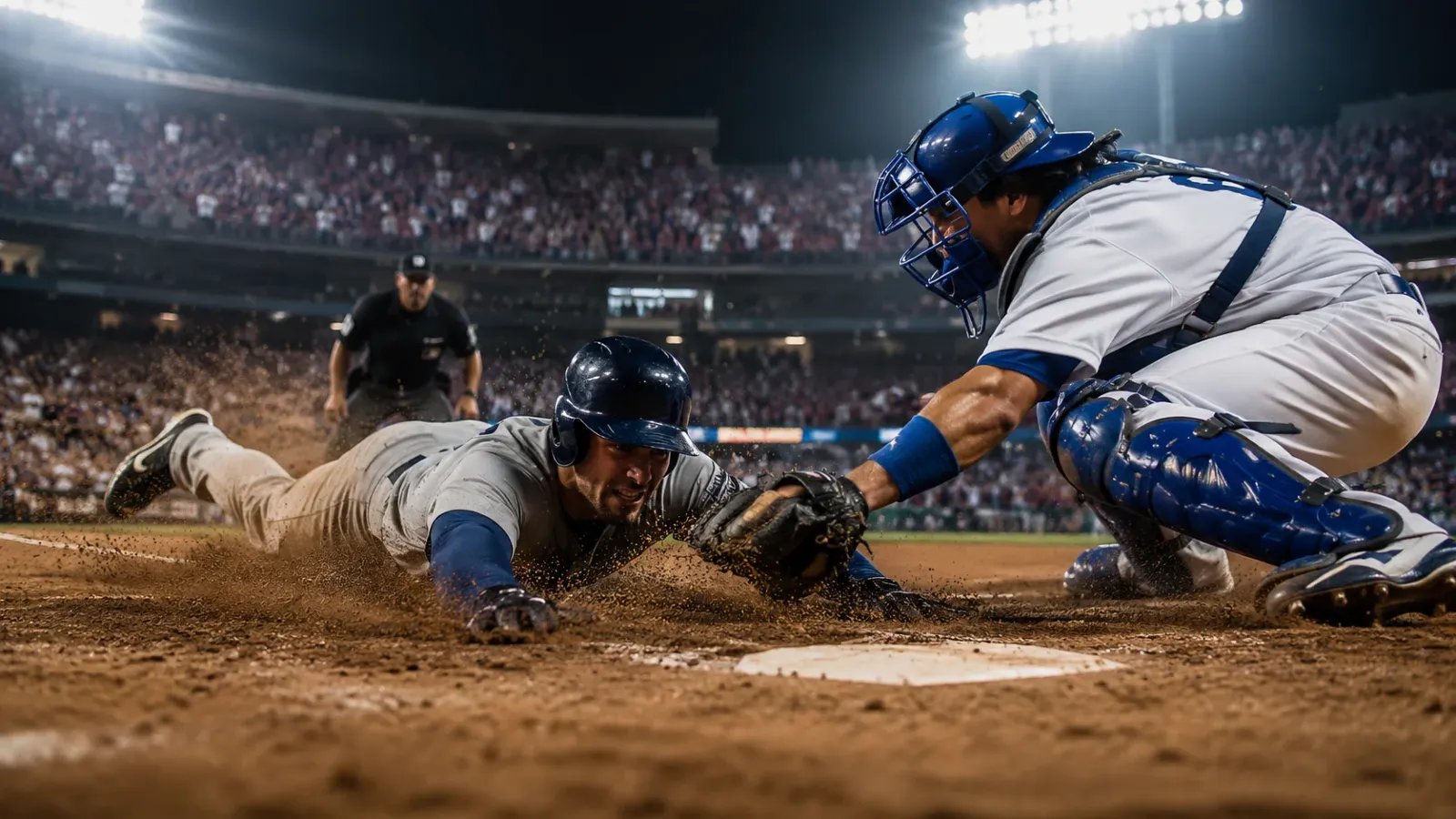
When most fans hear the words "World Series," they picture crisp autumn air, legendary home runs, and champagne celebrations, often operating under the popular misconception that the championship was originally named in honor of the "New York World" newspaper. In reality, linguistic historians and baseball researchers have long debunked this corporate sponsorship myth, proving the event was simply marketed as the "World's Championship Series" before journalists organically shortened it to save column space. Beyond the pop-culture highlights of Babe Ruth and Derek Jeter, the Fall Classic is a rich tapestry of geopolitical shifts, labor economics, extreme biomechanical feats, and strange logistical anomalies that have quietly shaped the sport for over a century. By peeling back the layers of standard baseball trivia, we can discover the fascinating scientific, historical, and statistical anomalies that elevate the World Series from a simple athletic tournament into a complex American institution.
1. The 1904 Aristocratic Boycott
While the World Series officially began in 1903, the second iteration was abruptly canceled when John McGraw and his National League champion New York Giants outright refused to play the Boston Americans. The established National League viewed the upstart American League as an inferior, unruly organization entirely unworthy of sharing a field with legitimate professionals. This socio-cultural divide within the sport created immense public backlash, forcing the owners to draft the "Brush Rules" during the following winter. These formalized regulations legally bound future pennant winners to participate in the championship, cementing the World Series as an inescapable mandate rather than a voluntary exhibition.
2. The Artificial Illumination Evolution
For nearly seven decades, the World Series was exclusively a daytime affair, deeply rooted in the natural circadian rhythms of afternoon athletics. This tradition permanently shifted during Game 4 of the 1971 World Series between the Pittsburgh Pirates and the Baltimore Orioles, which marked the first championship game played under stadium floodlights. The transition was not driven by player preference or competitive fairness, but rather by the rapidly growing economic demands of television networks seeking lucrative prime-time advertising revenues. This singular scheduling change fundamentally altered the physiological preparation of the athletes and permanently transformed championship baseball into an evening spectacle.
3. The Singular Loss-Side MVP
The World Series Most Valuable Player award is universally handed to the standout performer of the victorious franchise, with only one glaring mathematical anomaly in the history of the sport. In 1960, New York Yankees second baseman Bobby Richardson captured the MVP honors despite his team ultimately losing the seven-game series to the Pittsburgh Pirates. Richardson achieved this unprecedented feat through sheer statistical dominance, driving in a record-breaking 12 runs and batting .367 to drastically outshine anyone on the winning roster. Modern voting structures and the psychological bias of rewarding the victors make it highly unlikely that sports writers will ever crown a losing player again.
4. The Tectonic Interruption of 1989
The 1989 "Bay Bridge Series" between the Oakland Athletics and San Francisco Giants experienced an unprecedented geopolitical and geological interruption just moments before Game 3. A massive 6.9 magnitude earthquake, later known as the Loma Prieta earthquake, violently shook Candlestick Park during the live pre-game television broadcast. The seismic disaster forced the Commissioner's office to postpone the championship for ten full days while the region assessed the devastating infrastructure damage and loss of life. This forced athletes to navigate a bizarre psychological and physiological hiatus, testing their ability to maintain peak physical condition and mental focus amidst an active regional tragedy.
5. The Unmatched Perfection of Don Larsen
Achieving a perfect game in standard regular-season baseball requires an immense alignment of biomechanical precision, defensive luck, and psychological stamina, yet doing so in the World Series elevates the feat to statistical near-impossibility. During Game 5 of the 1956 Fall Classic, New York Yankees pitcher Don Larsen retired all 27 Brooklyn Dodgers batters he faced without allowing a single man to reach base. Despite thousands of World Series games being played over the last century, no other pitcher has ever managed to replicate this flawless performance under the extreme pressure of championship stakes. Larsen's masterpiece remains the ultimate athletic anomaly, representing a singular moment where human error was entirely erased from the sport's biggest stage.
6. The Shared Stadium Phenomenon of 1944
Logistical travel and adjusting to hostile visiting environments are standard challenges for World Series competitors, except during the bizarre "Streetcar Series" of 1944. Because both the St. Louis Cardinals and the St. Louis Browns shared Sportsman's Park as their regular-season home, the entire championship was played on the exact same plot of grass. This eliminated all travel days and created a peculiar dynamic where the visiting team simply occupied the opposite dugout in their own familiar stadium. The geographical quirk meant that groundskeepers had to constantly swap out the aesthetic bunting and signage overnight to reflect which franchise technically held home-field advantage for that particular afternoon.
7. The Late Arrival of the Commissioner's Trophy
Modern fans take it for granted that the World Series culminates in the hoisting of an elaborate silver trophy, but this hardware is a surprisingly recent addition to baseball's historical timeline. From 1903 until 1967, winning a championship yielded no central trophy at all; instead, franchises were awarded a commemorative pennant flag to fly at their home stadium, while players received individual pocket watches or rings. The modern Commissioner's Trophy was finally commissioned in 1967 by the St. Louis Cardinals' ownership group to align baseball with the visual marketing strategies of the NHL's Stanley Cup and the NFL's Lombardi Trophy. It remains the only major North American sports championship trophy that is not named after a specific historical figure.
8. The Only Game 7 Walk-Off Home Run
A walk-off home run is thrilling in any context, but mathematical probability dictates it is incredibly rare for a World Series to end on a sudden, game-winning swing in a decisive Game 7. Pittsburgh Pirates second baseman Bill Mazeroski holds the exclusive title for this achievement, launching a bottom-of-the-ninth home run against the New York Yankees in 1960. The situational pressure of a tied Game 7 means pitchers are typically utilizing their most dominant, unhittable relief arms to push the game into extra innings, driving down offensive production. Mazeroski's swing remains a singular historical data point where the ultimate championship prize was seized instantly with one connection of bat and ball.
9. The Physiological Marathon of 2018
Baseball lacks a game clock, allowing contests to theoretically stretch into infinity, a physiological reality that peaked during Game 3 of the 2018 World Series. The Los Angeles Dodgers and Boston Red Sox battled through 18 grueling innings over the course of seven hours and twenty minutes before Max Muncy finally hit a walk-off home run. This single event required players to essentially play two full professional baseball games back-to-back, severely draining glycogen stores, spiking injury risks, and completely exhausting both teams' pitching rotations. The sheer duration of the marathon forced managers into desperate tactical decisions, utilizing starting pitchers as emergency relievers just to survive the grueling test of human endurance.
10. The Youthful Anomaly of a 28-Year-Old Manager
Leading a professional baseball team through a World Series requires vast tactical experience and the psychological authority to command veteran players, making Bucky Harris's 1924 achievement an extreme outlier. At exactly 28 years old, Harris managed the Washington Senators to a World Series victory while simultaneously playing second base for the team. This dual role of player-manager was driven by the strict economic constraints of early baseball, but successfully executing both duties at such a young age required unparalleled mental bandwidth. Harris navigated complex bullpen management and late-inning defensive shifts from the middle of the infield, a cognitive and physical double-duty that modern front offices would never allow today.
11. The Sudden Death of the Dead-Ball Era
The infamous 1919 Black Sox scandal, where members of the Chicago White Sox conspired with gamblers to intentionally lose the World Series, nearly destroyed the sport's economic viability and public trust. To combat this institutional crisis, owners appointed the first Commissioner of Baseball, Kenesaw Mountain Landis, who implemented sweeping systemic changes to win back disillusioned fans. One of the most impactful scientific shifts was the strict mandate to frequently replace dirty baseballs during games, significantly improving visibility for hitters and instantly increasing the velocity and distance of batted balls. This desperate public relations maneuver inadvertently triggered the offensive explosion of the 1920s, permanently ending the gritty, low-scoring strategy of the dead-ball era.
12. The Canceled Series of 1994
The resilience of the World Series is legendary, having survived two World Wars, the Great Depression, and multiple global pandemics, yet it was completely dismantled by labor economics in 1994. A bitter financial dispute over an owner-proposed salary cap led the Major League Baseball Players Association to strike in August, resulting in the eventual cancellation of the entire postseason. Because baseball holds a unique, federally recognized antitrust exemption, the owners and players were locked in a localized financial monopoly where neither side was forced by market competition to compromise. This catastrophic boardroom failure marked the first time in ninety years that the Fall Classic went unplayed, proving that modern financial architecture holds more power than a century of athletic tradition.
13. The Thermodynamics of the 1997 Cryogenic Contest
Baseball is inherently designed for the warm climates of summer, meaning deep October playoff runs often subject athletes to extreme, biomechanically hostile weather conditions. Game 4 of the 1997 World Series in Cleveland holds the record for the coldest recorded temperature at first pitch, plummeting to a freezing 38 degrees Fahrenheit with heavy snow flurries accumulating on the infield. These thermodynamic extremes drastically alter the physics of the game, as decreased air density increases the drag on the baseball, effectively killing the distance of fly balls. Furthermore, the freezing temperatures reduce muscle elasticity and nerve conduction velocity in the athletes, turning a standard fastball pitch into a highly dangerous mechanism for soft-tissue injuries.
14. The Unprecedented Suspension of 2008
Meteorological interference usually results in standard delays or canceled regular-season games, but the strict rules governing championship integrity forced a bizarre outcome in 2008. During Game 5, a torrential rainstorm rendered the field unplayable while the Philadelphia Phillies and Tampa Bay Rays were tied in the sixth inning. Rather than declaring a rain-shortened victory or restarting the contest entirely from scratch, the Commissioner's office suspended the game in a frozen state, forcing it to resume exactly where it left off an agonizing 46 hours later. This unprecedented mid-game pause forced relief pitchers and hitters to artificially reset their adrenaline and tactical focus, a psychological disruption never before seen in World Series history.
15. The Designated Hitter's Geographic Schism
For decades, the World Series operated under a fractured set of rules depending entirely on which stadium was hosting the game on any given night. Following the American League's adoption of the designated hitter in 1973, the World Series refused to unify the rulebook, forcing AL pitchers to hit when visiting National League parks and allowing NL teams to use a DH when visiting AL parks. This created a jarring tactical imbalance where managers had to radically alter their roster construction, bench depths, and late-inning substitution strategies mid-series based purely on geography. The cognitive load of this shifting rule set plagued front offices until MLB finally instituted the universal DH in 2022, permanently ending the sport's strange, dual-identity championships.
Sources & References
This AI-assisted post was rigorously curated and fact-checked for accuracy by:
 Martin Roháček
How fun was this article? 🤔
Tap a star to rate it
🧠 Quiz: How closely were you paying attention?
10 questions — all answers are in the article above!
Enjoyed these facts? There's more! 💌
Fresh fun facts in your inbox. No spam, ever.