The Three-Chord Revolution: 15 Fascinating Facts About Punk Rock
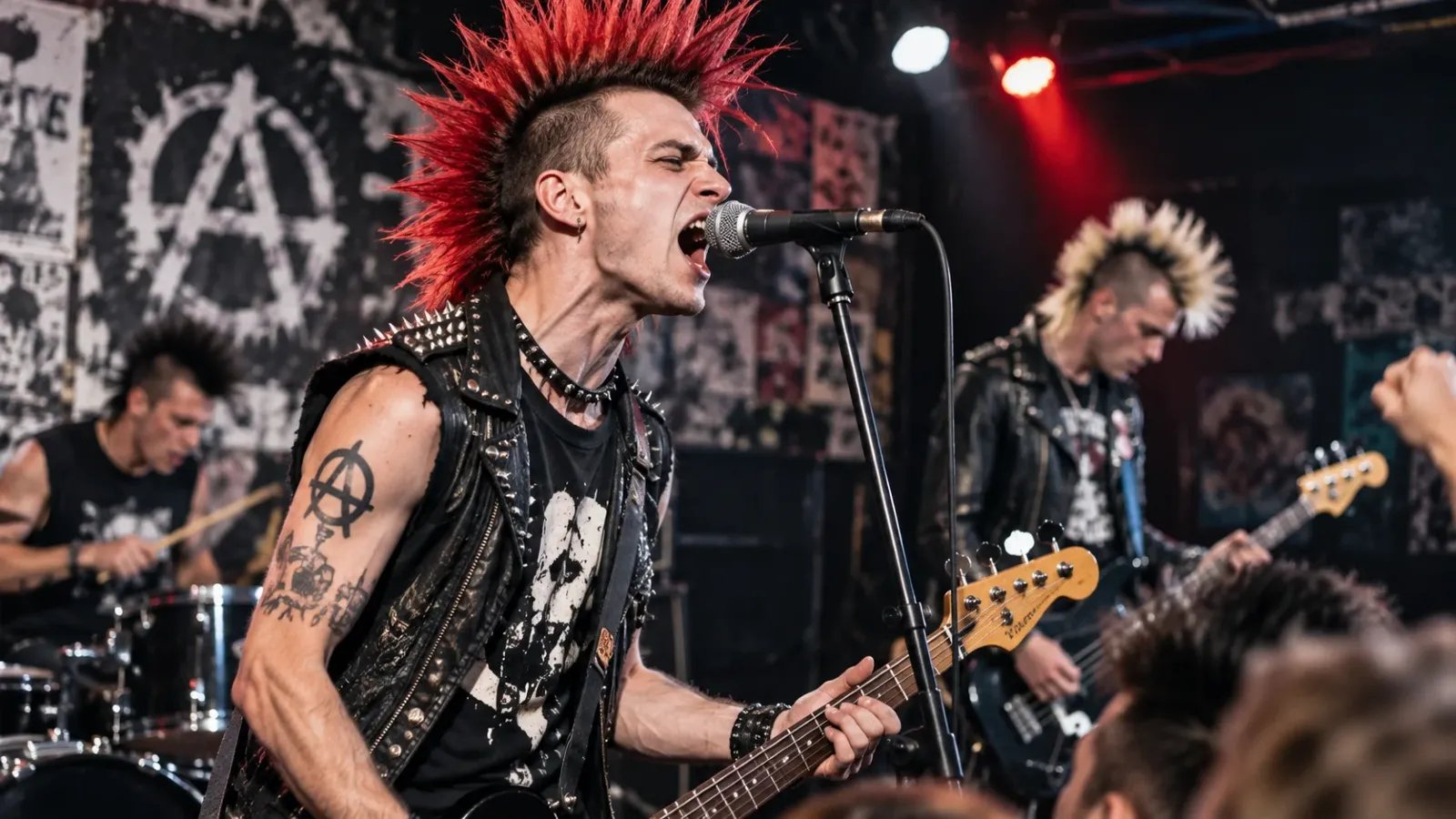
Spiky hair and safety pins, punk rock is actually a calculated artistic rebellion against musical excess and social stagnation. Born from stripped-down garage rock and fueled by economic frustration on both sides of the Atlantic, this deliberately raw genre rewired fashion, publishing, and political activism forever. Far from mindless noise, punk hides a surprisingly disciplined philosophy beneath its chaos.
1. Punk rock was a deliberate rejection of the technical virtuosity that dominated rock music in the early 1970s.
By the time punk emerged, mainstream rock had drifted toward sprawling concept albums, twenty-minute guitar solos, and orchestral arrangements pioneered by progressive rock bands. A new generation of musicians grew frustrated with a genre that seemed to demand years of formal training just to participate. Punk answered this by stripping songs down to three chords, two-minute run times, and raw, unpolished energy that anyone with a guitar and attitude could replicate. This was not a lack of skill but a philosophical statement that music belonged to everyone, not just conservatory-trained virtuosos. The genre's entire aesthetic was built around proving that passion and immediacy mattered more than polish.
2. The word "punk" was first used by rock critics to describe scrappy 1960s garage bands years before the genre officially existed.
Long before Johnny Rotten or Joey Ramone ever picked up a microphone, American music writers in the early 1970s used the term "punk rock" retroactively to describe raw, amateurish garage bands from the previous decade. Groups like The Sonics and The Seeds were celebrated in fanzines for their crude energy despite having no connection to the movement that would later claim the label. Critics such as Lester Bangs and Dave Marsh helped popularize the word as a badge of honor for music that rejected slickness. When a new scene of similarly unpolished bands emerged in New York clubs, the pre-existing term was simply repurposed to describe them. The genre effectively inherited its own name from a completely different era of music.
3. CBGB, the birthplace of American punk, was originally opened as a venue for country, bluegrass, and blues music.
The now-legendary New York club's full name, CBGB OMFUG, literally stood for "Country, BlueGrass, and Blues, and Other Music For Uplifting Gormandizers." Owner Hilly Kristal intended to book exactly that kind of roots music when he opened the venue on the Bowery in 1973. Almost immediately, local rock bands who could not find stages elsewhere in the city, including Television and the Ramones, convinced Kristal to let them play despite not fitting his original vision. The gritty, dive-bar atmosphere of the club turned out to be the perfect incubator for the raw new sound taking shape. A venue named for genres it would never actually showcase became permanently synonymous with punk rock history.
4. The Ramones' famously simple songs were the product of meticulous arrangement, not spontaneous chaos.
While their blistering two-minute blasts of noise sounded like pure impulsive energy, the band rehearsed obsessively to achieve their signature tightness. Guitarist Johnny Ramone was notoriously disciplined, insisting on precise downstroke guitar technique and strict tempo control during endless practice sessions. The band's uniform look of leather jackets and ripped jeans was also a calculated visual branding choice, not a random fashion accident. Their apparent simplicity concealed a carefully engineered formula designed to hit listeners with maximum impact in minimum time. This paradox of disciplined chaos became a blueprint that countless punk bands would later imitate.
5. British punk exploded largely as a direct response to mass unemployment and economic despair in the mid-1970s.
While American punk grew out of an art-school and garage-rock scene, the British strain was inseparable from the era's crushing youth unemployment and social decay. Bands like the Sex Pistols and The Clash gave voice to working-class frustration with a stagnant economy, class inequality, and a government many young people felt had abandoned them. Lyrics openly attacked the monarchy, capitalism, and political apathy in ways mainstream pop music never dared. This context transformed the genre from a stylistic experiment into a genuine vehicle for social protest. The music became inseparable from the bleak economic landscape that shaped an entire generation of disillusioned British youth.
6. Malcolm McLaren managed the Sex Pistols partly as a provocative art and fashion project rather than a conventional band.
Before managing the band, McLaren ran a London boutique with designer Vivienne Westwood that sold deliberately confrontational bondage-inspired clothing. He viewed the Sex Pistols less as a musical act and more as a walking advertisement for his shop and a vehicle for staged cultural provocation. McLaren orchestrated publicity stunts, encouraged controversial television appearances, and cultivated the band's chaotic reputation to generate maximum shock value. This blending of music, fashion, and performance art blurred the line between authentic rebellion and calculated marketing. The strategy proved wildly effective, cementing both the band and the punk aesthetic as global cultural symbols almost overnight.
7. Safety pins and ripped clothing became punk fashion staples out of practical necessity, not intentional style.
Early punk fans and performers were often broke, and their torn, patched-together outfits initially reflected genuine poverty rather than a curated look. Safety pins were a cheap, practical way to hold together deteriorating secondhand clothing, and some performers even used them as makeshift jewelry or piercings on a dare. Vivienne Westwood and Malcolm McLaren later recognized the visual power of this scrappy aesthetic and began deliberately manufacturing and selling distressed clothing through their boutique. What began as an improvised survival strategy was quickly commercialized into a recognizable fashion statement sold in stores. The look that seemed to reject consumerism ironically became one of its most profitable products.
8. Punk fanzines created a sprawling, underground publishing network that operated entirely outside the mainstream music press.
Frustrated that established magazines largely ignored or mocked the emerging scene, fans and musicians began producing their own cheaply photocopied zines to cover the music themselves. Publications like Sniffin' Glue in London were often handwritten, deliberately crude in appearance, and distributed hand to hand at shows and record stores. These zines reviewed obscure local bands, printed candid interviews, and famously included instructional guitar chord diagrams to encourage readers to start their own bands. This grassroots media network fostered a genuine sense of community and reinforced the genre's core message that anyone could participate, not just professional writers or musicians. It effectively became an analog precursor to the user-generated content culture of the internet decades later.
9. American hardcore punk emerged in the early 1980s as an even faster, more aggressive reaction to the original scene.
By the turn of the decade, bands like Black Flag, Minor Threat, and Bad Brains felt that even the original punk movement had grown too theatrical and commercially minded. Hardcore stripped the sound down further, favoring breakneck tempos, shouted vocals, and stark, confrontational live shows often held in small clubs and basements rather than glamorous venues. The subculture built its own extensive network of independent record labels, all-ages venues, and touring circuits almost entirely disconnected from the traditional music industry. This second wave placed even greater emphasis on physical intensity and communal mosh-pit participation over performance spectacle. Hardcore effectively pushed punk's founding do-it-yourself philosophy to its most extreme and uncompromising conclusion.
10. The straight edge movement began within hardcore punk as a direct rejection of the genre's association with drugs and alcohol.
Minor Threat frontman Ian MacKaye wrote the song "Straight Edge" in 1981, criticizing the self-destructive substance abuse he witnessed within the broader punk scene. The song's title was quickly adopted by fans as the name for a growing subculture built around abstaining from alcohol, drugs, and sometimes casual sex. Followers often marked their hands with a black X, a symbol borrowed from venues that used it to identify underage patrons who could not drink. This disciplined, almost puritanical offshoot stood in stark contrast to punk's chaotic, nihilistic public image. It proved that the genre's rebellious spirit could be channeled into self-control just as easily as into destruction.
11. Vivienne Westwood transformed punk's confrontational street style into a legitimate and influential high-fashion movement.
What started as deliberately shocking garments sold in a small London shop eventually reshaped the trajectory of international fashion design. Westwood incorporated tartan, bondage straps, safety pins, and provocative slogans into runway collections that challenged conventional ideas of elegance and taste. Her work directly influenced later designers and brought punk's rebellious visual language into museums, galleries, and luxury fashion houses. She eventually became one of Britain's most celebrated designers, receiving an OBE despite her career's origins in deliberately anti-establishment clothing. The genre's aesthetic rebellion against the mainstream ultimately became fully absorbed by the very fashion establishment it once mocked.
12. Punk directly fueled political activism through movements like Rock Against Racism in late-1970s Britain.
As far-right political groups gained troubling traction amid Britain's economic hardship, musicians and organizers formed Rock Against Racism to counter the spread of racist ideology through music. The campaign paired punk bands with reggae acts at large, multiracial concerts designed to promote unity and directly confront prejudice. Bands like The Clash became vocal supporters, using their platform to explicitly denounce racism and fascism at packed public gatherings. These concerts drew tens of thousands of attendees and are widely credited with helping curb the growing influence of extremist political parties at the time. Punk's rebellious energy proved it could be organized into an effective tool for genuine grassroots political change.
13. Skateboarding culture and punk rock became deeply intertwined through shared do-it-yourself values in 1980s California.
As skateboarding exploded in popularity across suburban California, young skaters gravitated toward punk's fast tempos and rebellious attitude as the ideal soundtrack for their sport. Bands closely associated with the skate scene, such as the Circle Jerks and JFA, wrote music specifically embraced at skate parks and backyard ramps. Skateboard companies began sponsoring punk bands and featuring their music in promotional videos, cementing a lasting cultural crossover between the two subcultures. This connection helped introduce hardcore punk to a much wider, younger audience across the country who might never have visited a traditional punk club. The partnership proved so enduring that skate punk eventually solidified into its own distinct musical subgenre.
14. Pop punk brought the genre's sound to mainstream radio and massive commercial success during the 1990s and 2000s.
Bands like Green Day, Blink-182, and Sum 41 combined punk's speed and simplicity with polished production and instantly memorable melodic hooks. This more accessible formula allowed the once-underground sound to top international charts, win major awards, and fill arenas around the world. Purists within the original scene often criticized this evolution as a betrayal of punk's anti-commercial roots and confrontational spirit. Nevertheless, this commercial wave introduced millions of new listeners to punk's broader history, driving a surge of renewed interest in its pioneering earlier bands. The genre's rebellious DNA proved flexible enough to thrive even within the mainstream machinery it originally set out to reject.
15. Punk's influence stretched far beyond music, directly shaping the sound of grunge, emo, and modern indie rock.
Nirvana and the broader grunge movement of the early 1990s drew heavily on punk's raw production values and anti-corporate ethos while adding heavier, more melodic elements. Emo bands later borrowed hardcore's emotional intensity and DIY touring circuits while shifting the lyrical focus toward introspective, personal themes. Countless independent record labels, distribution networks, and small venues still operating today trace their organizational structure directly back to punk's self-sufficient community model. Even artists with no direct sonic resemblance to punk frequently credit its rebellious attitude and rejection of gatekeepers as a foundational influence. Five decades after its explosive arrival, punk's insistence that anyone can make music remains one of the most enduring legacies in popular culture.
Sources & References
This AI-assisted post was rigorously curated and fact-checked for accuracy by:
 Martin Roháček
How fun was this article? 🤔
Tap a star to rate it
🧠 Quiz: How closely were you paying attention?
10 questions — all answers are in the article above!
Enjoyed these facts? There's more! 💌
Fresh fun facts in your inbox. No spam, ever.