The Helen of the West: 15 Fascinating Facts About Saint Lucia
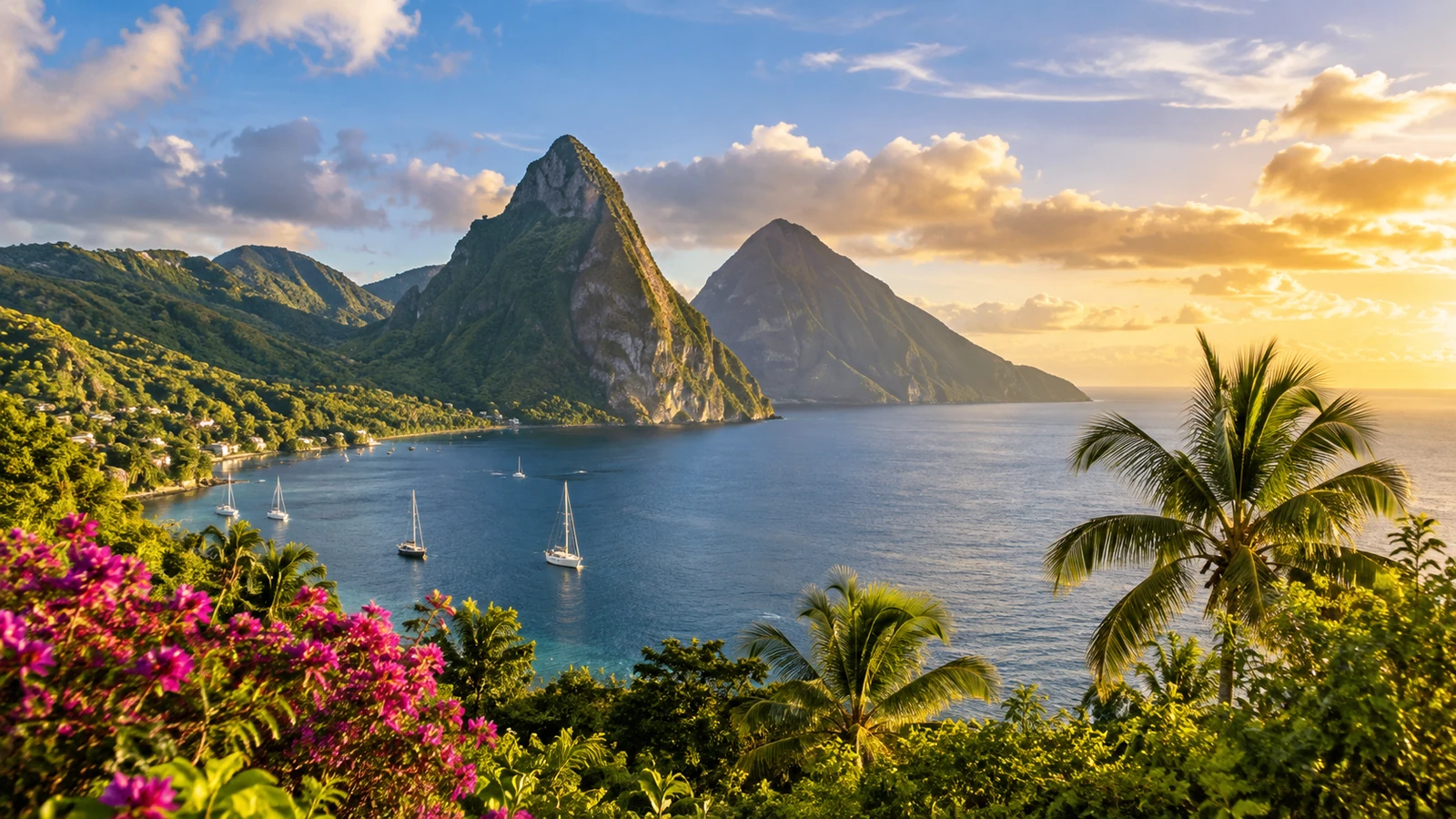
Renowned for its staggering twin volcanic peaks and lush emerald rainforests, Saint Lucia is much more than a typical Caribbean honeymoon destination. Behind the luxury resorts lies an island with a turbulent pirate past, a record-breaking intellectual pedigree, and a vibrant creole culture forged through centuries of colonial tug-of-war. Discover the unexpected history, bizarre geology, and unique flavors of this breathtaking tropical paradise.
1. The Only Nation Named After a Historical Woman
Saint Lucia holds a remarkable and often-overlooked distinction on the global stage: it is the only sovereign nation in the world named after a historical woman. French sailors supposedly shipwrecked on the island on December 13th, the feast day of Saint Lucy of Syracuse, and named the landmass in her honor. While Ireland is named after the Celtic goddess Eire, Saint Lucia stands alone in being named for a documented, mortal female figure. This matriarchal naming convention feels incredibly fitting for an island famous for its breathtaking, unmatched beauty.
2. The "Helen of the West Indies"
Speaking of striking beauty and historical conflicts, Saint Lucia was fiercely contested by European colonial powers for centuries. The British and French fought over the island a staggering fourteen times, with control shifting hands seven times for each nation between the 1600s and 1814. Because it was constantly fought over for its strategic harbor and fertile lands, historians dubbed it the "Helen of the West Indies," drawing a parallel to Helen of Troy. Ultimately, the British secured permanent control in 1814, though the deep French influence remains permanently etched into the island's culture.
3. The Majestic Pitons Are Volcanic Plugs
You cannot mention Saint Lucia without conjuring images of the Pitons, the island's spectacular twin volcanic spires that rise directly out of the ocean. Gros Piton and Petit Piton shoot up dramatically from the Caribbean Sea to heights of 2,619 and 2,461 feet, respectively. Designated as a UNESCO World Heritage Site in 2004, these striking green monoliths are actually volcanic plugs formed thousands of years ago from cooling, hardening magma within the vents of an active volcano. Today, they serve as the ultimate symbol of the island, anchoring the breathtaking southwestern coastline near the town of Soufrière.
4. Home to a "Drive-In" Volcano
Soufrière is also home to what is famously billed as the world's only "drive-in volcano." Sulphur Springs is a massive, collapsed volcanic crater, known as a caldera, that safely allows visitors to drive right up to its bubbling mud pools and steaming vents. Originally formed by a massive eruption over 40,000 years ago, this dormant volcano last experienced a minor steam eruption in the late 1700s. Instead of running away from the geothermal activity, tourists flock to the springs to bathe in the mineral-rich volcanic mud, which is reputed to have incredible detoxifying and healing properties.
5. A World Record for Nobel Laureates
Despite a population of just over 180,000, Saint Lucia punches extraordinarily high above its weight in global intellect. The island holds the impressive world record for the highest number of Nobel Laureates per capita. Sir Arthur Lewis won the Nobel Memorial Prize in Economic Sciences in 1979, the exact same year the island gained its political independence. Thirteen years later, Sir Derek Walcott won the Nobel Prize in Literature in 1992, globally celebrated for his epic poetry that beautifully captured the complex Caribbean cultural experience.
6. The Triumphant Return of the Jacquot
Deep in the mountainous interior lives the Saint Lucia Amazon, locally known as the Jacquot, a spectacularly vibrant parrot found nowhere else on earth. Recognizable by its bright green plumage, cobalt blue face, and vivid flash of red on its breast, this endemic bird is the island's proud national animal. In the 1970s, the Jacquot was teetering on the absolute brink of extinction due to habitat loss and the illegal pet trade, with only about 100 individuals remaining. Thanks to aggressive conservation campaigns and strict national protections, the population has rebounded significantly, making it a masterclass in modern wildlife preservation.
7. A Hideout for Peg-Legged Pirates
Long before luxury resorts lined its shores, Saint Lucia's hidden coves were a notorious haven for pirates, most notably the French corsair François le Clerc. Known as "Jambe de Bois" because of his wooden peg leg, le Clerc used Pigeon Island as a strategic base in the 1550s to ambush treasure-laden Spanish galleons. Pigeon Island was later fortified by the British military to monitor French naval movements from neighboring Martinique. Today, the island is a stunning national landmark connected to the mainland by a man-made causeway, offering visitors a walk through centuries of maritime conflict.
8. A Nation That Speaks in Patois
Even though Saint Lucia was a British colony for over a century and a half before its independence, the everyday language of the streets leans heavily French. The official language is English, but the vast majority of locals fluently speak Saint Lucian Creole French, affectionately known as Kwéyòl or Patois. This linguistic duality is a direct result of those fourteen colonial tugs-of-war, with early French settlers and enslaved Africans forging a vibrant creole that outlasted British administrative rule. Today, Kwéyòl is celebrated through national festivals and radio broadcasts, fiercely preserving the island's unique afro-gallic soul.
9. Green Figs and Saltfish
Saint Lucian cuisine is a brilliant masterclass in cultural fusion, seamlessly blending West African, European, and indigenous Carib culinary traditions. The undisputed heavyweight of this culinary scene is the national dish: green figs and saltfish. For the uninitiated, "green figs" are not the sweet, purple fruit, but rather unripe, boiled green bananas, which are paired with salted, flaked codfish cured in aromatic spices and local peppers. It originated as a cheap, calorie-dense meal for enslaved workers on sugar plantations, but has since been elevated into a beloved cultural staple served everywhere from local homes to high-end resorts.
10. A Historic Chocolate Destination
Before bananas dominated the agricultural export market, Saint Lucia was a major historic player in the global cocoa trade. The island's rich, volcanic soil and tropical climate provide the perfect terroir for growing high-quality cacao beans, a farming tradition dating back to the 1700s. Today, rather than simply exporting the raw beans, Saint Lucia has cultivated a booming "bean-to-bar" chocolate tourism industry. Historic estates allow visitors to graft their own cocoa plants, harvest raw pods, and craft artisanal chocolate, brilliantly blending luxury travel with deep agricultural roots.
11. Blanketed by Emerald Rainforests
It is easy to get distracted by the pristine, sandy beaches, but the true beating heart of Saint Lucia is profoundly green. Approximately 70 percent of the entire island is blanketed in dense, mountainous tropical rainforests. The Edmund Forest Reserve in the island's interior offers a lush canopy teeming with giant ferns, wild orchids, and cascading waterfalls hidden away from the coastal heat. This vast emerald interior not only provides a critical habitat for endemic wildlife but also serves as the island's primary watershed, capturing the heavy tropical rains necessary for agriculture.
12. A Capital Forged by Fire
The bustling capital city of Castries, home to nearly a third of the island's population, boasts a highly organized grid system that is an absolute joy for map-readers. However, this neat urban layout was born out of repeated tragedy rather than brilliant initial city planning. Castries was devastated by massive fires four separate times in its history—in 1796, 1812, 1927, and most destructively in 1948. Each inferno required the city to be rebuilt almost entirely from scratch, resulting in the modern, grid-like infrastructure that now seamlessly accommodates heavy local commerce.
13. The Symbolism of the National Flag
The national flag of Saint Lucia is a brilliant piece of vexillological design, perfectly encapsulating the island's unique geography and culture. Adopted in 1967 and slightly tweaked upon independence, the flag features a striking cerulean blue background representing the surrounding Caribbean Sea and Atlantic Ocean. In the center, a golden triangle represents the year-round tropical sunshine, overlaid by a black and white triangle symbolizing the harmonious blending of the island's African and European cultural heritage. Naturally, these central triangles shoot dramatically upward, perfectly mimicking the iconic silhouette of the Pitons.
14. A Global Hub for Jazz
During the first weeks of May, the island undergoes a remarkable transformation into a massive, pulsating concert venue for the Saint Lucia Jazz & Arts Festival. What started in the early 1990s as a modest marketing initiative to boost tourism during the slow season has steadily exploded into one of the premier musical events in the Caribbean. The festival spans multiple days and genres, consistently bringing in international legends of jazz, R&B, and calypso. Culminating in a massive outdoor celebration at Pigeon Island, it serves as a triumphant display of Caribbean rhythm and global artistry.
15. A Peaceful Path to Independence
Despite its complex, violent history of passing between rival European militaries, Saint Lucia officially stepped onto the world stage as a sovereign nation quite peacefully on February 22, 1979. It officially gained its independence from the United Kingdom, permanently closing the book on British colonial rule in the territory. However, the island opted to remain a proud, cooperative member of the Commonwealth of Nations, retaining the British monarch as its ceremonial head of state. Today, Saint Lucia is a thriving parliamentary democracy that fiercely protects its unique identity while remaining deeply connected to its global allies.
Sources & References
This AI-assisted post was rigorously curated and fact-checked for accuracy by:
 Martin Roháček
How fun was this article? 🤔
Tap a star to rate it
🧠 Quiz: How closely were you paying attention?
10 questions — all answers are in the article above!
Enjoyed these facts? There's more! 💌
Fresh fun facts in your inbox. No spam, ever.