The Cinematic Cybertronians: 15 Fascinating Facts About Transformers
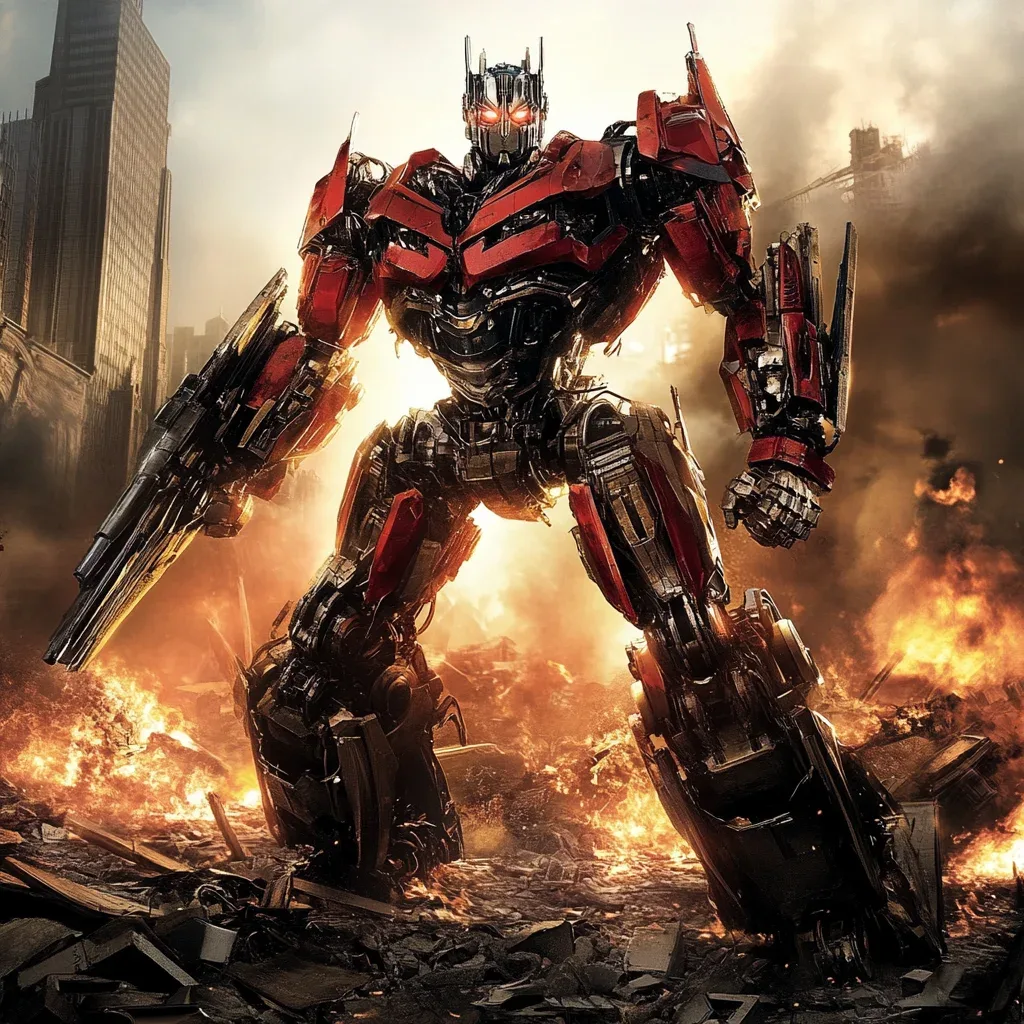
When Paramount Pictures and Michael Bay brought Hasbro's beloved toy line to the big screen in 2007, they revolutionized blockbuster visual effects and created a multi-billion-dollar franchise. Behind the explosive car chases and giant metallic warriors lies a production history filled with unbelievable technical hurdles, military partnerships, and script rewrites. From hardware-melting CGI renderings to real-life car crashes that changed plotlines, the making of these films is as chaotic as the on-screen battles. Here are 15 fascinating facts about the live-action Transformers movie universe.
1. The Marine Inspiration Behind Optimus Prime
Peter Cullen based Optimus Prime's heroic voice on his real-life brother, Larry Cullen, a decorated U.S. Marine Captain who served in the Vietnam War. Before Peter left for his audition in 1983, Larry advised him not to play a typical Hollywood drill commander who screams and acts tough, but rather someone who is "strong enough to be gentle." Cullen adopted a calm, deep, and reassuring tone that projected quiet authority without unnecessary anger. That signature vocal performance defined the Autobot leader across decades of animated series, video games, and blockbuster movies.
2. Swapping the Classic VW Beetle for a Muscle Car
In the original 1980s cartoon, Bumblebee famously transformed into a humble yellow Volkswagen Beetle, but director Michael Bay insisted on changing him into a Chevrolet Camaro for the 2007 live-action film. Bay felt that the compact Beetle too easily evoked comparisons to Herbie the Love Bug and lacked the aggressive physical presence needed for high-octane battle scenes. General Motors capitalized on the opportunity, providing modern prototypes and concept vehicles that helped reinvent Bumblebee into a tough, heroic muscle car. The sleek design makeover proved to be a massive success, helping drive sales of the resurrected Fifth-Generation Chevrolet Camaro when it finally hit dealer lots.
3. General Motors Transformed the Set into a High-Speed Showroom
The Transformers live-action film franchise essentially functioned as one of the most lucrative and high-profile product placement deals in Hollywood history through its partnership with General Motors. GM supplied the production team with hundreds of production vehicles, special concept cars, and custom builds before they were ever shown to the general public. Iconic vehicles like the Chevrolet Corvette Stingray Concept, Chevy Volt, and Pontiac Solstice were showcased prominently in extreme action sequences. The automaker even set up a dedicated facility to manufacture and modify custom auto bodies strictly for filming requirements.
4. Retiring Megatron’s Cartoon Handgun Alt-Mode
In the original Generation 1 animated series, Megatron transformed into a Walther P38 handgun, which required him to magically shrink down so another Decepticon could wield him. When adapting the franchise for live-action cinema, Michael Bay and his creative team deemed mass-shifting physically absurd and logically confusing for audiences. Consequently, the filmmakers re-imagined the Decepticon leader as a terrifying Cybertronian jet and later a heavy alien tank. This shift eliminated the bizarre physics of a giant alien leader becoming a handheld sidearm while reinforcing his role as an imposing, independent war machine.
5. A Single Frame of the Driller Took 122 Hours to Render
Industrial Light & Magic pushed the boundaries of visual effects to their breaking point while creating the colossal subterranean beast known as the Driller for Transformers: Dark of the Moon. The tentacled mechanical monster contained tens of thousands of individual animated geometry parts and complex hydraulic systems working simultaneously. Rendering just a single frame of the Driller fighting in Chicago took up to 122 hours of continuous processing time on ILM’s supercomputers. The immense computation load forced the visual effects studio to upgrade its entire render farm to complete the film on schedule.
6. Wrecking Over 500 Flood-Damaged Cars for Cinema Carnage
During the filming of Transformers: Dark of the Moon, the production crew set a Hollywood record by destroying 532 vehicles during action sequences. To achieve such massive urban destruction without wasting functional, mint-condition automobiles, the studio partnered with insurance companies to purchase flood-damaged cars slated for the scrap heap. These salvaged vehicles were stripped of hazardous fluids, re-rigged with explosives, and tossed through Chicago streets during the climax. Because the cars were legally classified as junk, Michael Bay’s team could violently smash, slice, and blow them up at zero cost to usable auto inventories.
7. Shia LaBeouf’s Real Car Crash Rewrote the Sequel
Midway through shooting Transformers: Revenge of the Fallen in 2008, lead actor Shia LaBeouf was involved in a severe real-world traffic accident that left his hand extensively crushed and requiring emergency surgery. Rather than halting the multi-million-dollar production to wait for his recovery, director Michael Bay instructed screenwriters to quickly integrate the real injury into the storyline. The team added a scene where Sam Witwicky’s hand is severely burned during a battle with Decepticons, allowing LaBeouf to wear his functional medical splint on camera. This clever narrative pivot ensured that production remained on schedule while preserving the actor's physical safety during stunt sequences.
8. Writing Action Sequences on Paper During a Writers' Strike
The 2007–2008 Writers Guild of America strike heavily impacted the pre-production phase of Transformers: Revenge of the Fallen, leaving the film without a finished screenplay when the deadline approached. Refusing to delay the release date, Michael Bay mapped out massive action set pieces himself by sketching storyboards and drafting detailed notes on paper pads without writers present. When the strike finally ended, screenwriters Alex Kurtzman and Roberto Orci had only a few weeks to draft dialogue around Bay's pre-designed battle sequences. Critics frequently cite this rushed writing process as the primary reason for the movie’s famously convoluted plot and fragmented character arcs.
9. Linkin Park Defined the Sonic Identity of the Franchise
Rock band Linkin Park played a massive role in shaping the musical atmosphere of the live-action Transformers trilogy through their chart-topping soundtrack contributions. Their hit single "What I've Done" served as the theme song for the 2007 debut, while "New Divide" was written specifically for Revenge of the Fallen and topped rock charts worldwide. The band collaborated directly with film composer Steve Jablonsky to weave their signature electronic rock melodies into the orchestral score. This distinct fusion created an aggressive, modern soundscape that became synonymous with the franchise's cinematic identity.
10. Unprecedented Pentagon Support and Military Access
The Transformers production enjoyed an extraordinarily rare level of co-operation from the United States Department of Defense, making it one of the largest military-assisted film projects in history. The Pentagon granted filmmakers permission to film with advanced military hardware, including real stealth fighters like the F-22 Raptor, CV-22 Ospreys, and C-17 Globemasters. Active-duty military personnel were also hired as extras to operate tactical equipment and lend genuine military jargon to key battle scenes. In exchange for this logistical access, the military ensured that armed forces were portrayed as competent, heroic, and highly effective allies to the Autobots.
11. Devastator’s CGI Load Overheated an ILM Computer
The massive combiner robot Devastator in Revenge of the Fallen presented one of the most complex computing challenges in visual effects history up to that point. Composed of seven distinct Construction vehicles merged together, Devastator’s digital model featured over 50,000 individual moving parts and intricate physical textures. The sheer processing power required to calculate the lighting, shadow, and geometry of the creature generated so much heat that an ILM computer processor literally melted under the stress. Animators had to split the rendering tasks into smaller chunks to prevent further hardware destruction at the studio.
12. Hugo Weaving Voiced Megatron Without Ever Meeting Michael Bay
A-list actor Hugo Weaving provided the terrifying voice of Megatron for the first three live-action movies, yet he recorded all his lines in isolated recording booths in Australia. Surprisingly, Weaving never met Michael Bay in person during his entire tenure and later admitted in interviews that he found the work detached and unfulfilling. Bay publicly fired back at the actor's dismissive comments, pointing out that Weaving was paid handsomely for very few hours of voice work. Following Dark of the Moon, original G1 cartoon voice actor Frank Welker returned to voice Megatron in subsequent films, pleasing longtime fans.
13. Tailoring Age of Extinction for the Chinese Box Office
Transformers: Age of Extinction was strategically co-produced with Chinese entertainment companies to capture the burgeoning mainland box office market. The filmmakers shot extensive action climaxes in Hong Kong and Wulong Karst, cast prominent Chinese celebrities like Li Bingbing, and included heavy product placement for Chinese brands. Additionally, a reality television contest was broadcast across China to cast four local actors in minor roles within the movie. These efforts paid off exponentially, with Age of Extinction grossing over $300 million in China and becoming the country's highest-grossing film ever at that time.
14. Bumblebee’s Radio Speech Was Sourced from Classic Media
Because Bumblebee’s vocal processor was damaged during combat prior to the events of the first film, sound designers created a unique method for him to communicate using radio sampling. Sound editor Mark Mangini painstakingly sourced hundreds of distinct audio clips, news broadcasts, classic song lyrics, and vintage radio plays to assemble Bumblebee's dialogue. This creative constraint forced the character to express his emotions through popular culture snippets and dynamic pitch changes rather than traditional dialogue. Consequently, Bumblebee became widely viewed as the most emotionally expressive and endearing Autobot in the live-action franchise.
15. Actors Reacted to Tennis Balls on Long Sticks During Filming
Since the massive Cybertronian robots were created entirely through computer graphics months after principal photography wrapped, actors had to perform dramatic scenes against blank space. To help the cast align their eye lines with fifty-foot-tall metallic warriors, director Michael Bay used tennis balls painted bright neon, mounted on long telescoping poles. In intense action scenes, crew members ran around holding these poles so actors like Shia LaBeouf and Megan Fox knew exactly where to look while screaming in terror or wonder. The actors' ability to convincingly react to simple tennis balls sold the illusion of giant alien robots to global movie audiences.
Sources & References
This AI-assisted post was rigorously curated and fact-checked for accuracy by:
 Martin Roháček
How fun was this article? 🤔
Tap a star to rate it
🧠 Quiz: How closely were you paying attention?
10 questions — all answers are in the article above!
Enjoyed these facts? There's more! 💌
Fresh fun facts in your inbox. No spam, ever.