The Striped Equid: 15 Fascinating Facts About Zebras
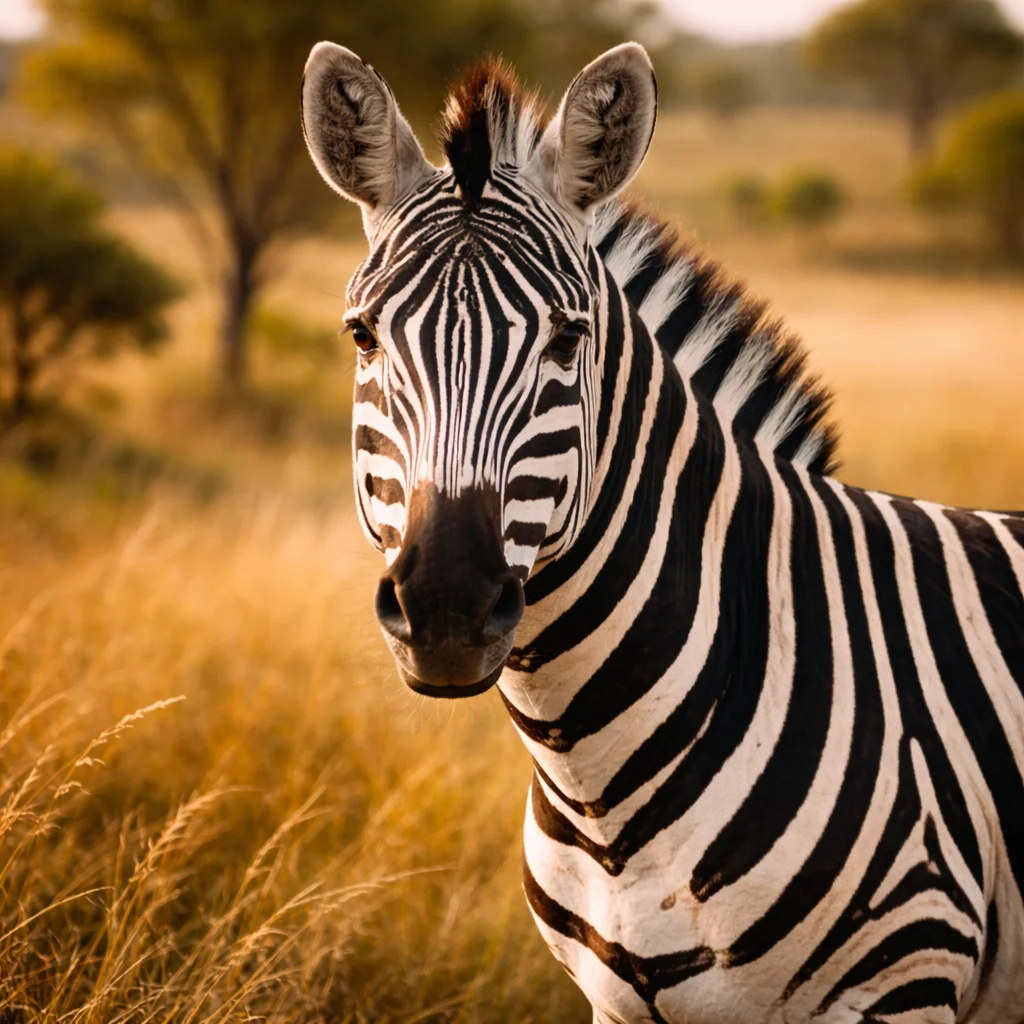
Famous for their striking monochrome coats, zebras are far more than just wild horses in striped pajamas. From deadly lion-shattering kicks and specialized night vision to complex social grooming and fly-repelling patterns, these African equids possess remarkable evolutionary adaptations. Discover the fascinating biological secrets, survival strategies, and surprising behaviors that make zebras one of the savanna's most resilient species.
1. Zebras Are Scientifically Black with White Stripes
For centuries, naturalists debated whether zebras were white animals with black stripes or black animals with white stripes. Modern embryology has finally settled the debate in favor of black skin. Early in fetal development, zebra embryos possess dark skin fully covered in active melanocytes. As the fetus grows, selective genetic switches turn off melanin production in distinct vertical bands, leaving unpigmented white hair in those sections. Therefore, the zebra's baseline color is black, and the white stripes are actually the absence of pigment.
2. Every Zebra Pattern Is as Unique as a Human Fingerprint
While all zebras share a bold monochrome design, no two individuals on Earth possess the exact same stripe configuration. The pattern develops during embryonic development through complex chemical reaction-diffusion waves, creating subtle variations in stripe width, angle, and symmetry. Biologists and conservationists regularly utilize these distinct biological barcodes to identify individual animals in field studies. Advanced computer software can now scan photographs of wild herds and instantaneously match a zebra's stripe pattern to a registered database. This non-invasive tracking method allows researchers to monitor population health and social structures without capturing or tagging the animals.
3. A Herd of Zebras Is Officially Called a Dazzle
While the term herd is commonly used for grazing mammals, a gathering of zebras carries the evocative collective nouns dazzle or zeal. The term dazzle directly references the disorienting optical illusion created when multiple striped bodies run closely together in a group. When a predator approaches a moving dazzle, the overlapping vertical lines obscure individual outlines, making it nearly impossible for a hunting lion to isolate a single target. This biological defense mechanism, known as motion dazzle, transforms the entire herd into a single visual blur. Consequently, the English language captured this brilliant anti-predator strategy in the group's official name.
4. A Zebra's Powerful Rear Kick Can Be Fatal to Lions
Despite their horse-like appearance, zebras are ferocious fighters that possess tremendous muscular force in their hindquarters. When cornered or defending offspring from predators, a zebra can execute a swift backward kick capable of delivering nearly 3,000 pounds of force per square inch. This devastating blow is frequently aimed directly at the head or jaw of an attacking apex predator. A single well-placed kick can instantly shatter a lion's jaw, leaving the big cat unable to hunt or eat. Because a broken jaw usually results in slow starvation, predators approach mature zebras with extreme caution.
5. Severe Aggression Prevented Zebras from Being Domesticated
European colonizers in Africa attempted to domesticate zebras for farm work and riding, hoping to bypass local diseases that killed European horses. However, these attempts failed due to the zebra's aggressive, unpredictable evolutionary adaptations. Having evolved alongside formidable apex predators like lions and hyenas, zebras developed a permanent reflex to duck under ropes, viciously bite attackers, and refuse to let go. Unlike horses, which possess a calm social structure responsive to human dominance, zebras maintain a fight-or-flight response that makes them dangerously aggressive in captivity. Their instinctual habit of kicking human handlers made large-scale draft work virtually impossible.
6. Monochrome Stripes Confuse and Repel Biting Flies
One of the most long-standing scientific mysteries surrounding zebra stripes was recently solved by controlled entomological experiments. Research demonstrates that the high-contrast black-and-white pattern disorients biting insects like horseflies and tsetse flies. As flies approach a striped surface, the sudden contrast disrupts their polarized visual processing, preventing them from slowing down properly before landing. Instead of alighting gracefully to feed on blood, the insects crash into the zebra's coat or fly past entirely. This natural bug repellent protects the animals from painful bites and deadly vector-borne equine blood parasites.
7. Zebras Sleep Standing Up Using Specialized Locking Joints
To survive in predator-dense African grasslands, zebras evolved a physiological apparatus that permits them to nap while standing upright. A specialized network of tendons and ligaments in their legs, known as the stay-apparatus, allows them to lock their knee and ankle joints in place effortlessly. This biological mechanism supports their full body weight without requiring continuous muscular effort, allowing them to rest without falling over. Standing while resting enables a zebra to instantly bolt at maximum speed if a predator approaches unexpectedly. However, to enter deep REM sleep, they must briefly lie down on their sides while group members keep watch.
8. Zebras Execute Zig-Zag Maneuvers to Throw off Pursuers
When fleeing from fast predators like cheetahs or lions, zebras do not simply run in a straight, predictable line. Instead, they dart rapidly from side to side in a sharp zig-zag pattern across the terrain. This erratic evasive tactic prevents predators from anticipating the zebra's trajectory or gauging the exact distance required for a final pounce. Furthermore, changing directions at high speed forces the pursuing carnivore to shed momentum, rapidly exhausting the predator. Coupled with top running speeds reaching 40 miles per hour, this dynamic maneuver allows many zebras to outlast and outmaneuver their pursuers.
9. Grevy's Zebras Can Go Up to Five Days Without Drinking Water
Among the three distinct zebra species, Grevy's zebra is the largest and most desert-adapted equid in existence. Native to the arid scrublands of northern Kenya and Ethiopia, this species has evolved exceptional water-conservation abilities. While plains zebras require frequent access to water, Grevy's zebras can survive for up to five full days without drinking a single drop. Their specialized kidneys extract maximum moisture from fibrous vegetation, and they can dig into dry riverbeds to reach sub-surface water tables. This extraordinary physiological resilience allows them to forage in harsh, barren environments where other grazers would perish.
10. Zebras Use Distinct Barking Sounds and Facial Signals
Contrary to popular belief, zebras do not make the classic whinnying sound associated with domestic horses. Instead, their vocal repertoire consists of high-pitched barks, snorts, and loud braying noises that closely resemble a dog's bark or a donkey's call. They use distinct vocal calls to alert the herd to impending danger, signal stallion dominance, or locate missing group members. In addition to vocalizations, zebras rely heavily on subtle facial expressions and ear positions to convey emotion and intent. Pushing ears flat against the head indicates extreme hostility, while pulling ears backward with an open mouth serves as a friendly greeting.
11. Zebras Lead the Great Migration by Eating Tough Grasses
Every year, over 300,000 plains zebras participate in the world-famous Great Migration across the Serengeti-Mara ecosystem. Far from being passive followers, zebras actually lead the massive moving column ahead of millions of wildebeests and gazelles. Possessing sharp incisors, zebras graze on the tough, tall, coarse tops of grass stems that other herbivores cannot digest. By shearing off the fibrous upper layer, zebras uncover the tender, nutrient-rich bottom leaves for the wildebeests following behind them. This cooperative grazing succession allows multiple herbivore species to exploit the same pastures without depleting resources.
12. Zebras Have Continuously Growing High-Crowned Teeth
The diet of a wild zebra consists primarily of coarse grasses loaded with harsh silica crystals and soil particles. Grinding down this abrasive vegetation every day causes severe mechanical wear on the zebra's teeth over time. To prevent their teeth from grinding away down to the gums, zebras evolved high-crowned (hypsodont) teeth that erupt continuously throughout their lifetime. As the exposed crown wears down from constant chewing, fresh tooth material is pushed upward from beneath the gum line. Without this adaptation, a zebra would lose its ability to chew grass and face starvation by middle age.
13. Mutual Allogrooming Reduces Stress and Strengthens Social Bonds
Zebras maintain tight-knit social groups through a tactile behavior known as allogrooming or mutual grooming. Two zebras will stand side by side facing opposite directions—a head-to-tail orientation that allows both animals to keep watch for predators simultaneously. They gently nibble and scrape each other's necks, shoulders, and backs using their incisors to clear away parasites and debris. Physiological studies have shown that this mutual nibbling lowers the animals' heart rates and reduces systemic stress hormones. This peaceful activity reinforces social bonds between family members and maintains herd harmony.
14. Exceptional Night Vision Protects Zebras from Nocturnal Hunters
Because lions and hyenas hunt primarily under the cover of darkness, zebras rely heavily on specialized visual adaptations to survive the night. Their large eyes are situated on the sides of their heads, granting them an expansive 350-degree field of panoramic vision. Inside the eye, a reflective layer of tissue called the tapetum lucidum bounces incoming light back through the retina a second time. This adaptation amplifies ambient moonlight and starlight, giving zebras night vision nearly equivalent to an owl's. Combined with their acute sense of hearing, night vision ensures that zebras are rarely caught off guard after dark.
15. Swiveling Ears Allow Zebras to Track Sounds in 360 Degrees
A zebra's ears are large, funnel-shaped, and capable of rotating almost 180 degrees independently of one another. Controlled by intricate muscle groups, each ear can point in a completely different direction to monitor multiple sound sources at the same time. This acoustic capability allows a zebra to listen to grazing herd mates ahead while simultaneously listening for rustling grass behind it. By pinpointing slight pitch shifts and directional cues, zebras can locate approaching predators long before they come into visual range. Furthermore, ear positions communicate environmental awareness to the rest of the herd without making a sound.
Sources & References
This AI-assisted post was rigorously curated and fact-checked for accuracy by:
 Martin Roháček
How fun was this article? 🤔
Tap a star to rate it
🧠 Quiz: How closely were you paying attention?
10 questions — all answers are in the article above!
Enjoyed these facts? There's more! 💌
Fresh fun facts in your inbox. No spam, ever.