From Runaway Apprentice to Impeachment: 15 Facts About Andrew Johnson
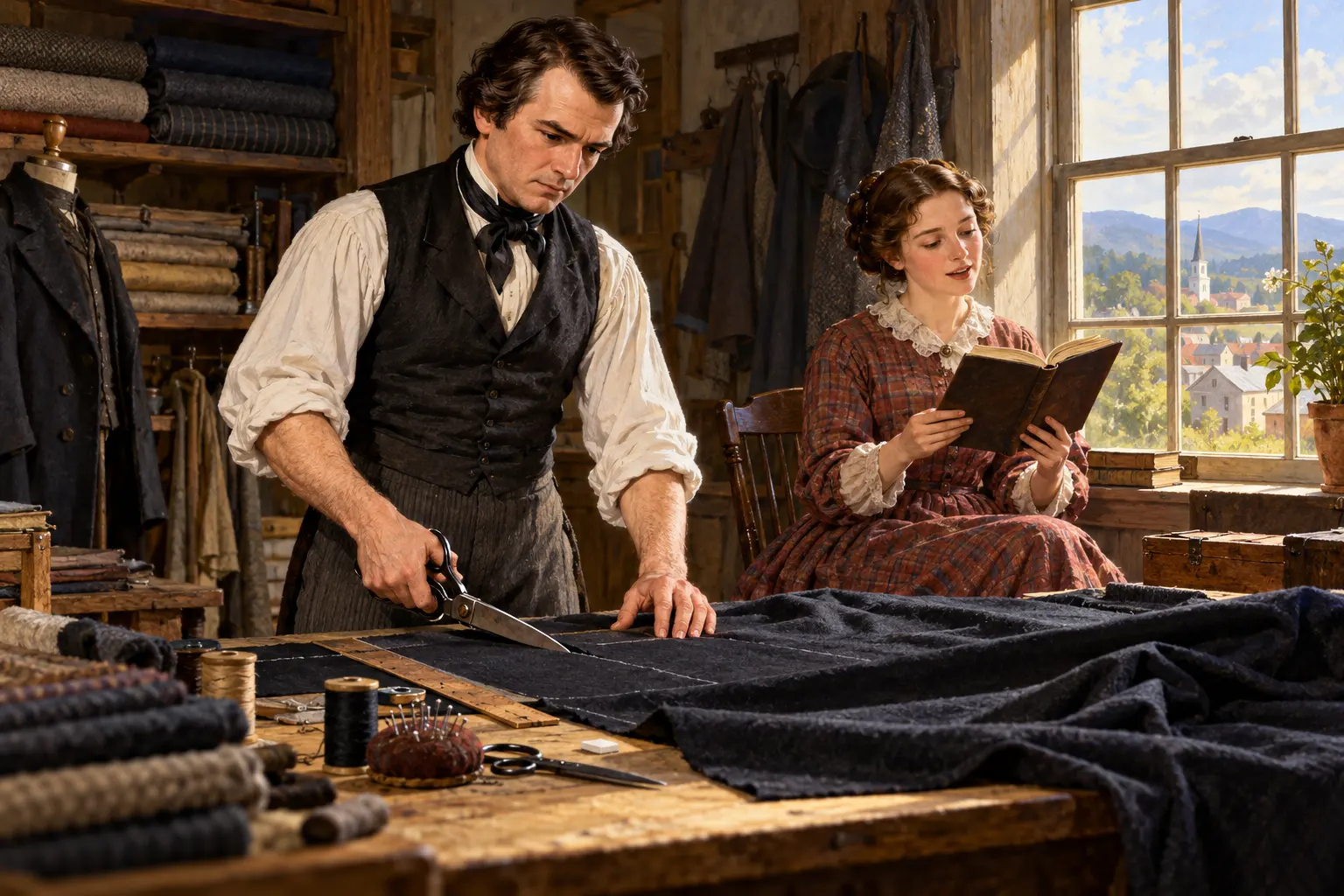
A runaway tailor's apprentice became president, survived an impeachment trial and returned to the Senate that had tried him. Andrew Johnson's story also includes a threatened assassination, a school organized by a formerly enslaved man, a visit from Charles Dickens and promises of freedom that his presidential policies failed to honor.
1. He escaped an apprenticeship and became the subject of a reward notice
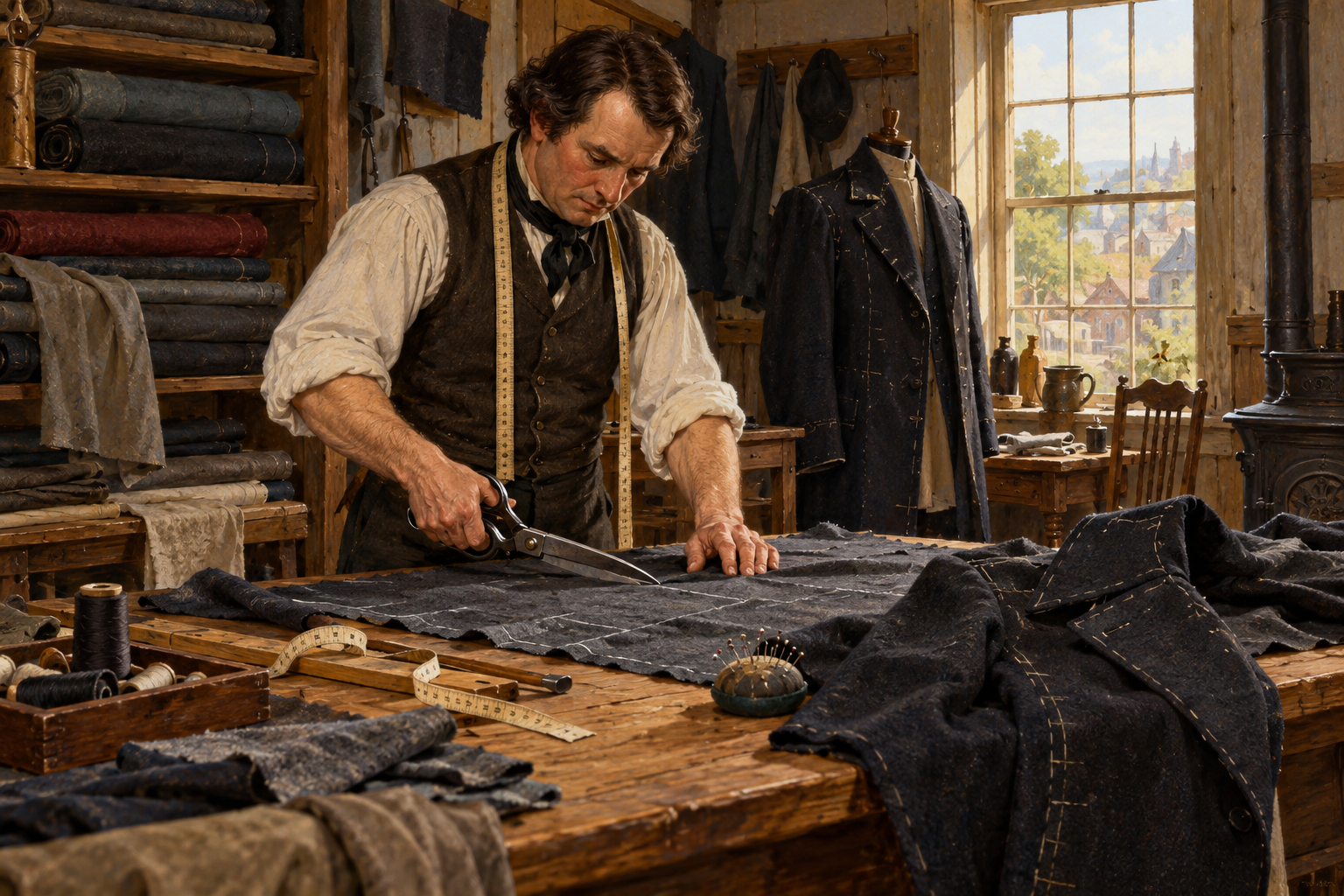
Long before campaign posters carried his name, a notice sought Johnson's return as a runaway apprentice. He and his brother William left their North Carolina tailor in 1824 before completing their terms. Johnson later settled in Greeneville, Tennessee, and built a tailoring business of his own. The historic site's exhibits preserve this uncomfortable beginning to a presidential success story.
2. His wife helped educate him, but did not start from zero
Eliza McCardle read aloud while Johnson worked in his tailor shop and helped improve his writing and arithmetic. The familiar claim that she first taught him to read oversimplifies the story: he already possessed basic skills. Their 1827 wedding has another striking connection to presidential history: the officiating justice of the peace was Mordecai Lincoln, a relative of Abraham Lincoln.
3. He kept his Senate seat when his state joined the Confederacy
When Tennessee seceded in 1861, Johnson refused to follow it. He was the only senator from a seceding state to remain in the United States Senate. His loyalty made him a Union hero and a target at home, where he was burned in effigy. Lincoln subsequently made him Tennessee's military governor, then ran with this southern Democrat on the National Union ticket.
4. Lincoln's assassins had also targeted him
John Wilkes Booth's conspiracy extended beyond the president. George Atzerodt was assigned to kill Vice President Johnson, while Lewis Powell attacked Secretary of State William Seward. Atzerodt failed to carry out his part; investigators found a loaded revolver and knife in his hotel room. Johnson survived to become president after Lincoln died, rather than becoming another victim of the same plot.
5. A man he had enslaved asked him for land for a school
In 1867 Sam Johnson wrote to the president about buying a lot for a school for Black children in Greeneville. Andrew Johnson had purchased Sam in 1842 and profited from hiring out his labor. Now Sam was helping organize education after emancipation. The president instructed an agent to arrange a survey and deed, saying he would convey the requested land without charge.
6. He promised to be a Moses, then resisted Black civil rights
As military governor in 1864, Johnson addressed Black Tennesseans in a speech recorded by contemporary newspapers. The crowd hailed him as a Moses, and he accepted the role of leading them toward liberty. His presidency took a sharply different course: he resisted federal civil-rights protections and Black voting rights. The contrast is preserved in his own speeches and veto messages.
 You might also like
From President to Chief Justice: 15 Facts About William Howard Taft
7. Congress made a landmark citizenship law over his objections
Johnson vetoed the Civil Rights Bill of 1866, objecting to its citizenship provisions and expansion of federal authority. Congress overrode him. The resulting law recognized national citizenship for people born in the United States, subject to specified exceptions, and protected rights including contracts and property ownership. The struggle over Reconstruction thus changed law through a direct confrontation between Congress and the president.
8. His campaign speeches became an impeachment charge
Johnson's 1866 'Swing Around the Circle' tour was intended to build political support. Instead, confrontations with hecklers and attacks on congressional opponents damaged his standing. Article Ten of his impeachment later accused him of trying to disgrace Congress through inflammatory speeches. Public rhetoric became part of the constitutional case against him.
9. His impeachment trial required a daily ticket system
The Senate printed one thousand admission tickets for each day of Johnson’s trial. Diplomats, senators, representatives and the chief justice received allocated shares; Johnson himself received twenty. Demand overwhelmed members of Congress with requests. Yet the president did not appear to defend himself in person: his lawyers argued the case while spectators packed the gallery.
 US Presidents
Discover the eccentricities, secret talents, and surprising hidden lives of America's most influential presidents, from frontier wrestlers to covert strategists.
See All Facts
10. A majority voted against him, but a majority was not enough
In the decisive impeachment votes of May 1868, thirty-five senators favored conviction and nineteen acquittal. Removal required a two-thirds majority, so Johnson survived by one vote. Seven Republicans joined the acquitting senators. Calling this a simple victory for one heroic senator misses the arithmetic: several votes were essential, and the Senate voted on only three of the eleven articles.
11. The Alaska payment came after the territory changed hands
Seward negotiated the $7.2 million Alaska purchase during Johnson's presidency, and the territory transferred to the United States in October 1867. The surviving Treasury check, however, is dated August 1, 1868. It was payable to Russian minister Edouard de Stoeckl, who negotiated the sale. The document separates a treaty's signing and a territorial handover from the later mechanics of paying for it.
12. Charles Dickens spent part of his birthday sizing him up
Dickens met Johnson in Washington on February 7, 1868, the novelist's fifty-sixth birthday. His private account described an exceptionally firm-looking man and an interview in which the two studied one another closely. Dickens recorded far more about his birthday presents and enthusiastic audiences than their conversation.
13. His sixtieth birthday party was for three hundred children
Johnson's last presidential birthday brought three hundred children to the White House, according to the National Park Service. Family life there also included grandchildren and informal Easter egg rolling, remembered by White House employee William Crook. These domestic scenes complicate the image of a president consumed entirely by political combat, although they do not soften the consequences of his public policies.
14. He returned to the chamber that had tried him
After unsuccessful campaigns in 1869 and 1872, Johnson won a Senate seat in 1875 following fifty-six ballots in Tennessee's legislature. He became the only former president to serve in the Senate. Vice President Henry Wilson administered his oath, although Wilson had voted for Johnson's conviction during the impeachment trial. The comeback lasted only months: Johnson died that July.
15. He was buried with the Constitution and an American flag
Johnson's devotion to his interpretation of the Constitution continued into the symbolism of his burial. His body was wrapped in an American flag and accompanied by a copy of the document. He chose a hill overlooking Greeneville that had served as a Civil War signaling point. His family's burial ground later became the Andrew Johnson National Cemetery.
How did these facts land?
Know someone who'd love these facts? Share them 👇