The Unconventional President: 15 Fascinating Facts About Jimmy Carter
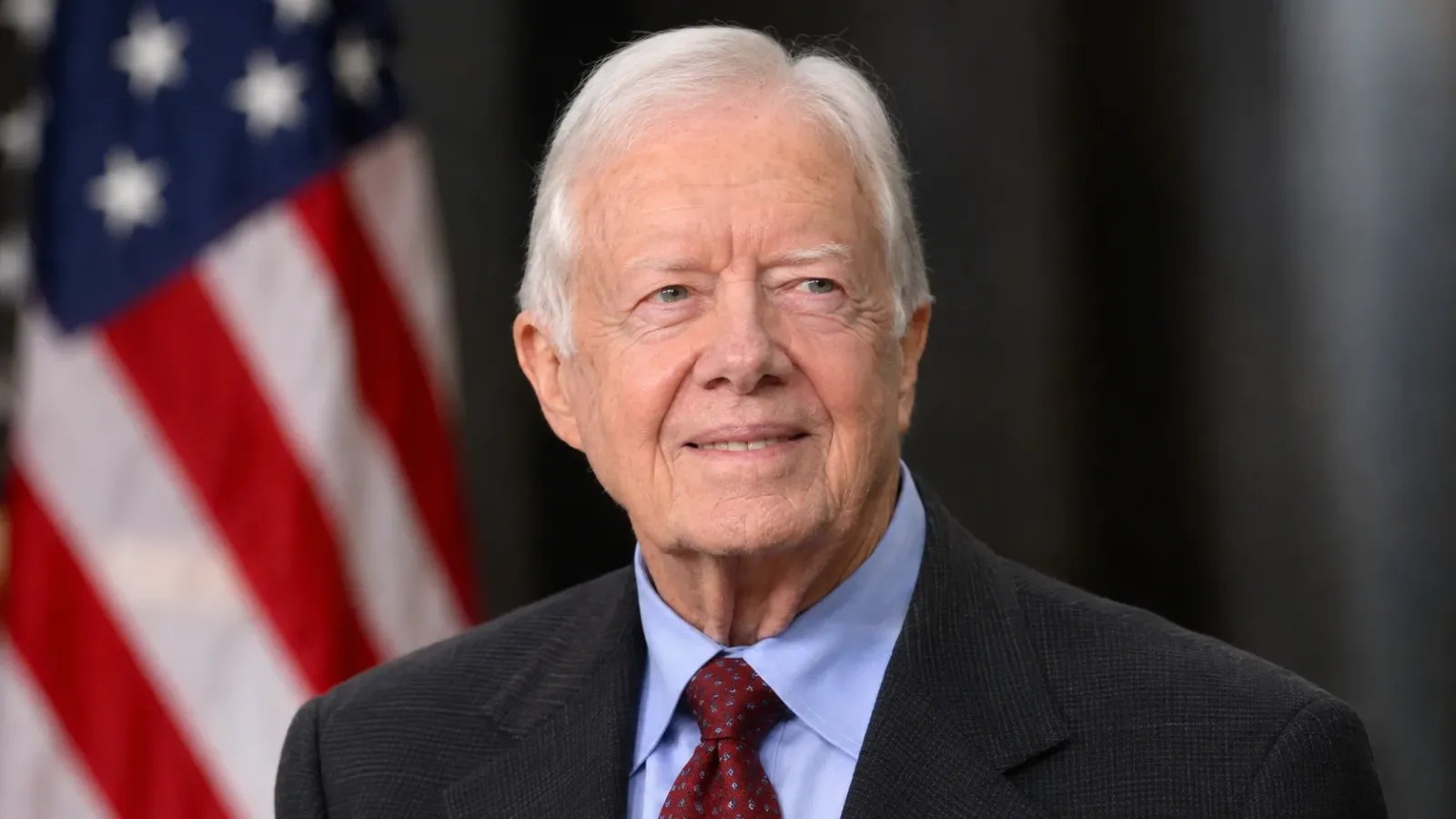
Often dismissed as just a humble peanut farmer whose presidency failed, Jimmy Carter was actually a brilliant nuclear engineer and a ruthless political tactician. Far beyond his pop-culture reputation, he eradicated ancient global diseases and fundamentally reshaped modern diplomacy. Prepare to discover the historically fascinating truths behind America's most misunderstood executive.
1. Jimmy Carter physically lowered himself into a damaged nuclear reactor in Canada to prevent a catastrophic meltdown.
In 1952, a power surge at the Chalk River Laboratories in Ontario caused a partial meltdown of a nuclear reactor, spilling millions of gallons of radioactive water. Carter, then a young naval officer training in the nascent nuclear submarine program, was deployed with his team to assist in the dangerous cleanup. Because the radiation levels were so intensely lethal, personnel could only work inside the containment vessel for ninety seconds at a time. Carter absorbed a massive dose of radiation during his brief time disassembling the reactor core, which subsequently affected his health and gave him a lifelong aversion to nuclear weapons. Despite the immense danger, his precise technical expertise helped avert a far greater environmental disaster.
2. He is the only United States president to have formally reported a UFO sighting.
Long before entering the Oval Office, Carter filed an official report with the International UFO Bureau in 1973 regarding an unusual event he witnessed four years earlier. While preparing to give a speech at a Lions Club in Leary, Georgia, he and several dozen others observed a self-illuminated object in the night sky that changed colors from blue to red to white. The object appeared to move closer to the observers before abruptly hovering, stopping, and vanishing into the distance. Though political opponents later attempted to use this report to mock him, Carter maintained a scientific perspective, attributing the sighting to an unidentified but likely terrestrial phenomenon rather than extraterrestrial visitors. His openness about the event highlighted his unvarnished honesty, even when it risked public ridicule.
3. Carter's post-presidency administration successfully spearheaded the near-global eradication of the Guinea worm disease.
Although often associated solely with his general humanitarian work, Carter's targeted assault on Guinea worm disease is one of the greatest triumphs in medical history. The disease is caused by a debilitating parasite transmitted through stagnant drinking water, which slowly erupts through the skin of its victims. Through the Carter Center, he mobilized international coalitions, ministries of health, and local villages to distribute specialized water filters and aggressively educate vulnerable populations in Africa and Asia. When the program began in the 1980s, there were an estimated three and a half million cases annually, but thanks to his relentless decades-long oversight, that number has plummeted to just a handful of cases today. This monumental achievement marks the first time a parasitic disease is on the verge of being completely wiped off the face of the Earth without the use of a vaccine or medication.
4. He installed the first solar panels on the White House roof, which a subsequent president later removed.
Responding to the devastating 1979 energy crisis, Carter took a deeply symbolic and practical step by having thirty-two solar panels installed on the roof of the West Wing. The panels were designed to heat water for the White House cafeteria, serving as a highly visible declaration of his commitment to renewable energy and conservation. He prophetically warned during the dedication ceremony that the panels could either become a historical curiosity or the beginning of a great solar energy revolution. Unfortunately, in a stark reversal of environmental policy, Ronald Reagan had the panels dismantled in 1986 during routine roof repairs and declined to reinstall them. Many of those original panels were later acquired by Unity College in Maine, where they continued to generate clean energy for decades.
5. Carter was the very first president of the United States to be born in a hospital.
Despite his reputation as a rustic farmer with deep agrarian roots, Carter holds a surprisingly modern medical distinction among American chief executives. When he was born on October 1, 1924, his mother, Lillian Carter, was working as a registered nurse at the Wise Sanitarium in Plains, Georgia. Because of her employment, she was able to secure a private room in the facility for her delivery, breaking the longstanding presidential tradition of home births. This small but historic milestone reflects the gradual shift in American healthcare during the early twentieth century, moving from domestic midwifery to institutionalized medical care. Every president born before him, from George Washington to John F. Kennedy, first drew breath in a private residence.
6. He famously micromanaged the White House tennis court schedule during his presidency.
One of the most persistent historical criticisms of Carter's executive style was his intense, almost obsessive focus on minute administrative details. He insisted on personally reviewing and approving the sign-up sheet for the White House tennis court, logging who was playing and at what times for several months. While critics cited this as proof that he was incapable of delegating authority and overwhelmed by the magnitude of the presidency, Carter's defenders argue it was merely a manifestation of his deeply ingrained engineering mindset. He approached executive governance the same way he approached a nuclear submarine, believing that systemic efficiency required complete situational awareness of every moving part. Nevertheless, this extraordinary level of micromanagement exhausted his staff and often distracted him from broader strategic initiatives.
 US Presidents
Discover the eccentricities, secret talents, and surprising hidden lives of America's most influential presidents, from frontier wrestlers to covert strategists.
See All Facts
US Presidents
Discover the eccentricities, secret talents, and surprising hidden lives of America's most influential presidents, from frontier wrestlers to covert strategists.
See All Facts
7. Carter dramatically altered the demographic makeup of the federal judiciary by prioritizing minority and female appointments.
Before Carter took office, the federal courts were overwhelmingly dominated by white men, with very few exceptions in American legal history. Recognizing this vast disparity, he completely bypassed the traditional, patronage-heavy system of judicial appointments and established merit-based nominating commissions. Through this revolutionary approach, Carter appointed more women and minorities to the federal bench than all previous United States presidents combined. His judicial appointments included the first African American woman to serve on a federal appellate court and a historic number of Hispanic judges, fundamentally reshaping the interpretation of American jurisprudence. Even without having the opportunity to appoint a Supreme Court justice, his lower-court appointments left a massive, progressive legal legacy that endured for decades.
8. He taught himself to speed-read up to two thousand words a minute to consume massive daily intelligence briefings.
Confronted with the overwhelming volume of reading required in the Oval Office, Carter realized his standard reading pace was insufficient for the extreme demands of the presidency. He and his wife Rosalynn enrolled in an intense speed-reading course shortly after moving into the White House, rigorously practicing their comprehension and scanning techniques. Carter quickly trained himself to consume up to two thousand words per minute while maintaining a staggering level of factual retention. This incredible cognitive feat allowed him to personally read up to three hundred pages of complex domestic policy memos and foreign intelligence briefings every single day. His voracious appetite for unsummarized data often unnerved his aides, who found it impossible to slip poorly researched arguments past a president who had literally read every footnote.
9. Carter personally brokered the Camp David Accords by physically preventing the Egyptian president from abandoning the summit.
The 1978 Camp David Accords stand as one of the greatest diplomatic triumphs in modern history, but the thirteen-day summit was fraught with imminent failure and intense bitterness. Tensions between Egyptian President Anwar Sadat and Israeli Prime Minister Menachem Begin were so toxic that the two leaders outright refused to speak to one another, forcing Carter to act as a relentless middleman. When Sadat grew frustrated and ordered his bags packed to abandon the negotiations, Carter physically stood in the doorway of Sadat's cabin to block his exit. Delivering an impassioned, intensely personal plea about the cost of war and their mutual obligation to their grandchildren, Carter managed to talk the Egyptian leader out of walking away. That dramatic, unscripted intervention salvaged the fragile talks and resulted in a peace treaty that has successfully held for over four decades.
10. He officially pardoned hundreds of thousands of Vietnam War draft evaders on his very first day in office.
Honoring a highly controversial campaign promise, Carter used his first executive action on January 21, 1977, to grant an unconditional pardon to men who had evaded the military draft. This sweeping clemency applied to hundreds of thousands of young Americans who had fled to Canada or gone into hiding to avoid fighting in the Vietnam War. While veterans organizations and conservative politicians expressed intense outrage, viewing the move as a betrayal of those who served and died, Carter insisted the pardon was necessary to heal the deep psychological wounds of a fractured nation. He carefully distinguished between a pardon, which forgives a crime without vindicating it, and amnesty, which implies the draft resisters were legally right. This bold, polarizing decision immediately established the moralistic and unyielding tone that would define his entire presidency.
11. The Secret Service gave him the exceptionally fitting code name Deacon due to his profound religious devotion.
Presidential Secret Service code names are often chosen to loosely reflect a defining characteristic of the executive they protect, and Jimmy Carter's moniker was strikingly accurate. Dubbed Deacon, the name paid homage to his lifelong, highly active involvement as a Sunday school teacher and spiritual leader in the Baptist church. Unlike politicians who merely pandered to religious demographics, Carter's evangelical faith was the core operating system of his entire worldview, heavily influencing his human rights-based foreign policy. Even during the most stressful periods of his presidency, and well into his late nineties, he continued to teach Sunday school classes in his hometown of Plains, Georgia. This deep-seated morality often put him at odds with the transactional, cynical nature of Washington politics, making his code name both a badge of honor and an explanation of his political struggles.
12. Carter successfully normalized diplomatic relations with China, completing a volatile process that Richard Nixon started.
While Richard Nixon is rightfully famous for his dramatic 1972 visit to Beijing, it was actually Jimmy Carter who formally established official diplomatic ties with the communist nation. On January 1, 1979, the Carter administration officially recognized the People's Republic of China as the sole legitimate government of China, formally severing longstanding diplomatic relations with Taiwan. This monumental geopolitical shift required immense political courage, as Carter faced intense backlash from conservatives in Congress who accused him of abandoning a crucial democratic ally in the Pacific. However, Carter viewed normalization as a strategic necessity to isolate the Soviet Union and open massive new economic markets to American industries. The bilateral agreements signed during this period laid the structural foundation for the deeply intertwined economic relationship that dominates the modern global economy today.
13. He is the only American president to have published a highly successful historical novel.
Proving his intellectual versatility extended far beyond science and politics, Carter authored a work of fictional literature long after his time in the White House. In 2003, he published The Hornet's Nest, a meticulously researched historical novel that explores the brutal, neighbor-against-neighbor violence of the Revolutionary War in the Deep South. Drawing heavily on his Georgian heritage, Carter detailed the complex socio-political dynamics between Native Americans, British loyalists, and colonial patriots during the 1770s. Critics were genuinely surprised by the narrative depth and historical accuracy of the book, which illuminated a theater of the war that is frequently overlooked by mainstream historians. Writing the novel required him to synthesize vast amounts of archival research, showcasing the same analytical rigor he once applied to nuclear engineering and statecraft.
14. Carter created the Department of Education and the Department of Energy as massive cabinet-level agencies.
The organizational structure of the modern American federal government owes a massive, permanent debt to Carter's bureaucratic restructuring. Reacting to the oil shocks of the 1970s and a perceived decline in American public schooling, Carter successfully lobbied Congress to elevate two crucial sectors to the President's Cabinet. He established the Department of Energy in 1977 to centralize the country's fragmented energy policies and heavily promote domestic conservation. Two years later, he signed legislation creating the Department of Education, fulfilling a major promise to the National Education Association by separating education initiatives from the sprawling Department of Health, Education, and Welfare. Despite immediate and subsequent threats from political opponents to abolish both agencies, they remain massive institutional pillars of the federal government today.
15. He personally intervened to halt the development of the devastating neutron bomb during the Cold War.
During the height of the Cold War, the United States military aggressively pursued the development of the neutron bomb, a terrifying tactical nuclear weapon designed to kill living creatures with intense radiation while leaving infrastructure intact. The Pentagon argued it was the perfect defense against massive Soviet tank invasions in Europe, but the concept deeply disturbed Carter's moral and scientific sensibilities. Drawing on his firsthand experience with catastrophic radiation exposure at Chalk River, he recognized the uniquely horrific nature of a weapon engineered explicitly for biological extermination over explosive destruction. In 1978, in a move that infuriated military leadership and NATO allies, Carter abruptly canceled the production of the neutron bomb. This fiercely independent decision showcased his willingness to prioritize humanistic ethics over conventional military deterrence strategies.
Sources & References
This AI-assisted post was rigorously curated and fact-checked for accuracy by:
 Martin Roháček
How fun was this article? 🤔
Tap a star to rate it
🧠 Quiz: How closely were you paying attention?
10 questions — all answers are in the article above!
Enjoyed these facts? There's more! 💌
Fresh fun facts in your inbox. No spam, ever.