From President to Chief Justice: 15 Facts About William Howard Taft
Taft's legacy stretches from a snowbound inauguration and the first Oval Office to postal savings, cherry trees and a new home for the Supreme Court. His career also involved colonial government, military intervention and a spectacular political rupture with Theodore Roosevelt. Even the familiar bathtub story requires more care than it usually receives.
1. He turned down the Supreme Court before eventually leading it
While governing the Philippines, Taft declined opportunities for a Supreme Court appointment offered by Theodore Roosevelt. He wanted to complete his work on the islands, despite his longstanding judicial ambition. This should not be mistaken for supporting immediate Philippine independence: he favored continued American supervision and believed Filipinos needed a lengthy period of political tutelage. The eventual chief justiceship came much later, in 1921.
2. A blizzard moved his inauguration inside the Capitol
Taft took the presidential oath inside the Senate Chamber on March 4, 1909, after snow disrupted the planned outdoor ceremony. Workers struggled through the night to clear the parade route. Helen Taft then accompanied him in the carriage back to the White House, an unprecedented role for a first lady on that return journey. His secretary Fred Carpenter recorded the change in his diary.
3. His wife's stroke transformed their first months in office
Helen 'Nellie' Taft suffered a stroke in May 1909, only two months into the administration, and lost much of her ability to speak. Her daughter and sisters took over many social duties while she recovered. She gradually resumed public activities and celebrated the couple's silver wedding anniversary at the White House in 1911. Accounts of an energetic social presidency need to include this demanding period of recovery.
4. His presidential fleet included a steam-powered car
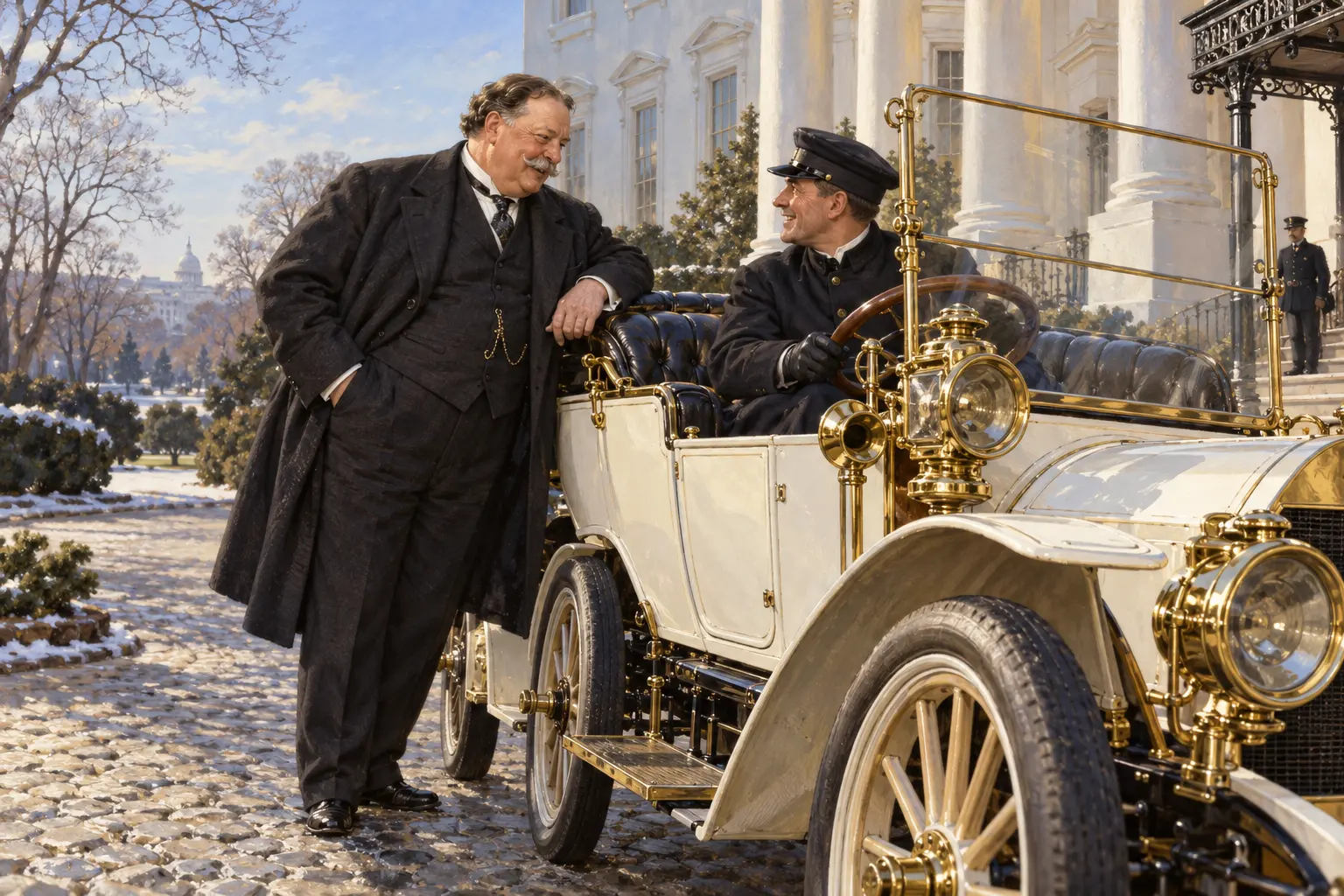
Taft secured funding for White House automobiles and converted stable space into a garage. His favored White touring car ran on steam; the fleet also included Pierce-Arrow vehicles. The change was more than a fashionable purchase: chauffeurs, maintenance and official travel arrangements became part of presidential operations. Although earlier presidents had ridden in automobiles, Taft established a dedicated White House motor fleet.
5. The first Oval Office was his, but it occupied a different location
Architect Nathan C. Wyeth expanded the West Wing for Taft in 1909 and replaced the president's rectangular workspace with an oval room. It stood at the center of the building's south side, rather than in the southeast corner used today. Taft initially kept many ceremonies in the mansion, but photographed official events in the new office helped establish its public importance. Franklin Roosevelt later relocated it.
6. He ordered Japan's first shipment of cherry trees burned
The celebrated Japanese cherry trees were not Washington's first shipment. In 1910, inspectors found pests and disease among approximately 2,000 donated trees, and Taft approved their destruction to protect American agriculture. Japan supplied a new gift of 3,020 trees in 1912. Helen Taft and the Japanese ambassador's wife planted the first pair of that shipment beside the Tidal Basin, turning a difficult quarantine episode into a lasting diplomatic symbol.
 You might also like
Unexpected Barack Obama: 15 Lesser-Known Facts
7. He started a presidential baseball ritual, not the seventh-inning stretch
On April 14, 1910, Taft threw the ceremonial opening pitch at Washington's season opener, establishing a presidential tradition. He repeated it in 1911, and the Library of Congress points to his diaries for both dates. A separate legend credits his standing up during a game with inventing the seventh-inning stretch. Evidence of spectators stretching predates his presidency, so the two stories deserve different treatment.
8. His enormous bathtub was real; the famous rescue remains uncertain
A specially built tub aboard USS North Carolina was large enough for four clothed men to pose inside it. That photograph is genuine. The tale of Taft being trapped in a White House bath is much less secure. Research published in 2026 identified an earlier, 1929 version set aboard a river steamer, based on sailors' later recollections. Discovering an older telling clarifies the legend's history without establishing the supposed incident.
9. His administration offered government-backed savings at post offices
Taft signed legislation creating the Postal Savings System in 1910. It targeted small savers, people distrustful of banks and immigrants familiar with postal banking abroad. Depositors received two percent annual interest, while most of the money was redeposited in local banks. The arrangement answered fears exposed by banking panics while trying to limit competition with private bankers. Operations began at selected post offices in January 1911.
 US Presidents
Discover the eccentricities, secret talents, and surprising hidden lives of America's most influential presidents, from frontier wrestlers to covert strategists.
See All Facts
10. Antitrust enforcement helped destroy his friendship with Roosevelt
Taft's administration brought more antitrust prosecutions than Theodore Roosevelt's, despite Roosevelt's stronger public reputation as a trust-buster. The U.S. Steel suit was particularly damaging to their relationship because it challenged arrangements Roosevelt had previously accepted. Their disagreement concerned whether officials could distinguish useful large combinations from harmful ones, or should apply the law more uniformly. It became part of the bitter rupture that split Republicans in 1912.
11. He signed the Children's Bureau into existence
On April 9, 1912, Taft approved a federal bureau dedicated to investigating children's welfare. Reformers Lillian Wald and Florence Kelley had promoted the idea for years, arguing that government should study children's conditions as seriously as crops and livestock. The bureau gathered evidence on matters such as infant mortality, birth registration and child labor. Its creation followed sustained organizing rather than a presidential idea appearing overnight.
12. His dollar diplomacy still depended on armed force
Taft promoted investment as a way to create stability and expand American influence abroad. In Nicaragua, however, this financial diplomacy accompanied military intervention. His 1912 message to Congress defended landing more than 2,000 marines and sailors during a rebellion, citing protection of American lives and property. The president's own explanation shows how loans, customs revenues and military power were connected in the policy.
13. He finished third while seeking reelection
In 1912, Roosevelt challenged his former protégé and then ran as the Progressive Party candidate after losing the Republican nomination. Democrat Woodrow Wilson won, Roosevelt placed second, and the sitting president finished third. Taft carried only Utah and Vermont, receiving eight electoral votes. It was a remarkable reversal for a candidate who had entered the White House with Roosevelt's backing four years earlier.
14. He secured a Supreme Court building he never lived to use
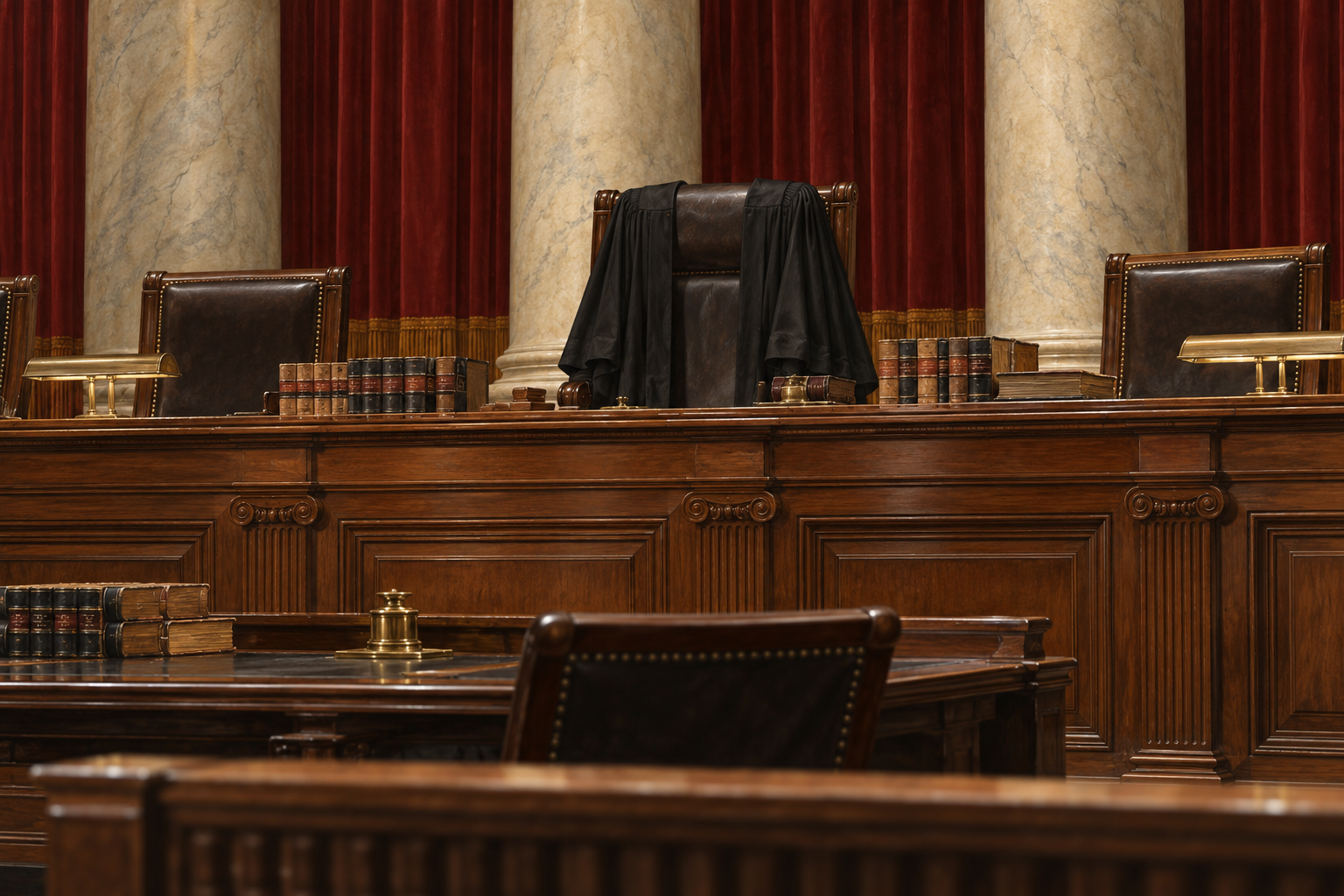
Harding appointed Taft chief justice in 1921, making him the only person to serve as both president and Supreme Court justice. Taft later persuaded Congress to authorize a permanent building for the Court, which had long occupied rooms in the Capitol. He enlisted architect Cass Gilbert, but both men died before the building opened in 1935. His architectural legacy outlasted his own judicial service.
15. He helped the Supreme Court gain greater control over its workload
As chief justice, Taft worked with fellow justices on legislation that became the Judges' Bill of 1925. It reduced many mandatory appeals and expanded the Court's discretion to choose cases through certiorari. The change helped turn the Court toward questions of broader legal importance. Alongside his campaign for a national judicial conference, it shows how strongly he valued administration as well as writing opinions.
How did these facts land?
Know someone who'd love these facts? Share them 👇