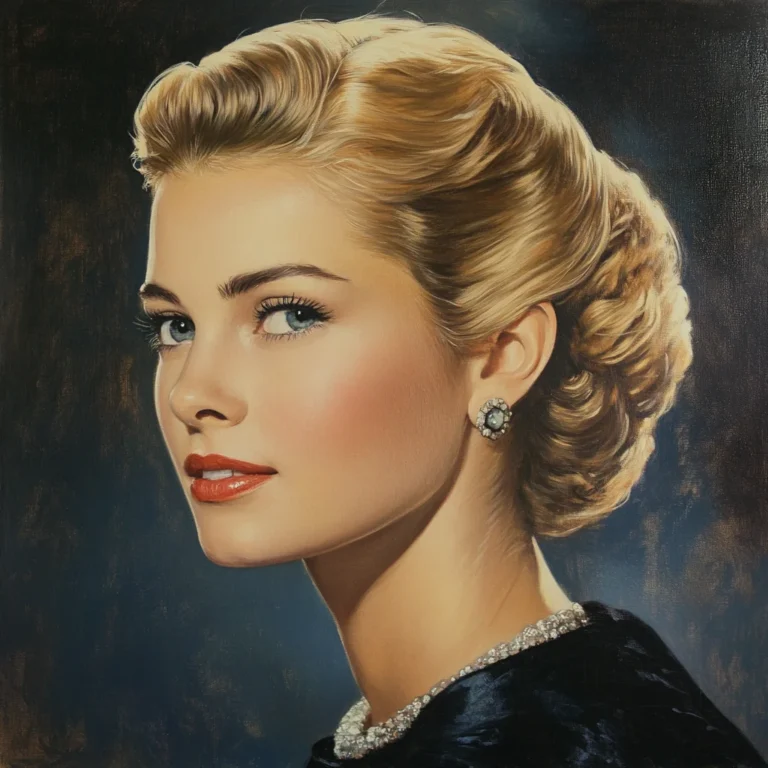
Grace Kelly remains one of the most admired women of the 20th century. She dazzled audiences in Hollywood and later became Princess of Monaco, but her real story goes far deeper. Beyond the glamour and familiar tales, Grace Kelly’s life hides intriguing details that reveal her charm, wit, and unexpected choices.
Grace Kelly
Grace Kelly made her stage debut in school productions long before Hollywood noticed her talent.
Despite her later elegance, Grace Kelly once worked as a model for advertisements and even appeared in a cigarette commercial.
Grace Kelly’s distinctive style inspired designers worldwide. She often influenced fashion trends without consciously trying.
She could memorize entire scripts quickly, which impressed directors and sped up production time.
Grace Kelly received more than 60 film offers after her Oscar win, but she chose early retirement instead.
She met Prince Rainier during the Cannes Film Festival in 1955, a meeting carefully organized by press agents.
Her wedding gown used over 270 meters of fabric, making it one of the most elaborate dresses of the century.
Although she became royalty, Grace Kelly never stopped supporting young American stage actors with scholarships.
She once taught acting classes at a theater in Pennsylvania, where students recalled her patience and sharp advice.
She loved poetry and often wrote verses. However, she rarely shared them outside her closest circle.
Alfred Hitchcock considered her his ultimate muse and reportedly tailored roles especially for her.
As Princess of Monaco, Grace Kelly created a foundation to support local arts and emerging talent in Europe.
She had a passion for gardening and planted roses personally in the Monaco palace grounds.
She appeared on a U.S. postage stamp in 1993, long after her passing, honoring her dual legacy.
Although remembered for grace and beauty, she was also known for quick humor and playful conversation.
How useful was this post?
Click on a star to rate it!
This AI-assisted post was rigorously curated and fact-checked for accuracy by:
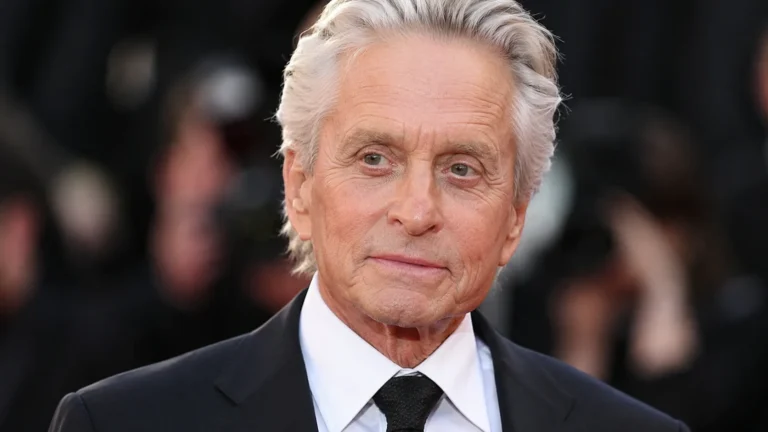
Michael Douglas is Hollywood royalty, known for his intense performances and immense success as both an actor and a producer. While most fans know him as the ruthless Gordon Gekko or the shrinking Hank Pym in the Marvel Cinematic Universe, his life behind the scenes is filled with fascinating, bizarre, and often dangerous details. From surviving aviation disasters to feuding with his legendary father over movie roles, here are fifteen truly unique facts about Michael Douglas.
Michael Douglas
1. He Was Fired by His Own Father
Before he was a famous actor, Michael Douglas took a job as an assistant director on the 1966 film Cast a Giant Shadow, which starred his father, Kirk Douglas. Tasked with driving a tractor for a scene, Michael made a mistake and ruined a crucial take. Kirk was furious and immediately fired his own son from the set, proving that nepotism only went so far in the Douglas family.
2. Roommates With Danny DeVito
Long before either of them found fame, Michael Douglas and Danny DeVito shared a tiny, cramped apartment in New York City during the late 1960s. They were both struggling young actors trying to catch a break. Their close friendship endured decades of Hollywood pressure, eventually leading them to co-star in hit films like Romancing the Stone and The War of the Roses.
3. He Denied His Father an Oscar-Winning Role
Kirk Douglas originated the role of Randle McMurphy in the stage adaptation of One Flew Over the Cuckoo’s Nest and spent years trying to get a film version made. When Michael eventually took over producing the film, he made the difficult creative decision that his father was too old to play the lead. He cast Jack Nicholson instead, which caused a temporary rift between father and son, though the film went on to win Best Picture.
4. Surviving a Helicopter Crash
In 1980, Michael Douglas was scouting locations for a film in a helicopter when the aircraft’s engine completely failed. The helicopter plummeted from the sky and crashed. Miraculously, Douglas and the other passengers survived the terrifying ordeal with relatively minor injuries, an event that profoundly changed his perspective on life.
5. A Pat Riley Inspiration
The slicked-back hair and aggressive, confident demeanor of Gordon Gekko in Wall Street became a cultural touchstone of the 1980s. Douglas and director Oliver Stone actually modeled the character’s physical appearance on Pat Riley, who was the highly successful and famously slick head coach of the Los Angeles Lakers at the time.
6. He Was Almost John Rambo
When producers were trying to get the action film First Blood off the ground, Sylvester Stallone was not the only actor in the running for the lead role. Michael Douglas was heavily considered to play the traumatized Vietnam veteran John Rambo. He ultimately passed on the project, opening the door for Stallone to create one of cinema’s most iconic action heroes.
7. The Bizarre Spanish Time-Share
Douglas and his first wife, Diandra Luker, purchased a massive, luxurious estate in Mallorca, Spain, called S’Estaca. When the couple divorced, they could not agree on who should keep the property. They arranged a highly unusual legal time-share agreement, where each of them got to live in the mansion for six months out of the year, a situation that lasted for decades until Douglas finally bought her out.
8. Producing Starman
While highly recognized for producing One Flew Over the Cuckoo’s Nest, many fans do not realize that Douglas was also the producer behind the 1984 science fiction romance Starman. The film was a critical success and earned its lead, Jeff Bridges, an Academy Award nomination for Best Actor, proving Douglas had a brilliant eye for unconventional scripts.
9. Donating the Jewish Nobel Prize
In 2015, Michael Douglas was awarded the prestigious Genesis Prize, often referred to as the “Jewish Nobel Prize,” which recognizes individuals who have attained excellence and international renown in their chosen professional fields. Douglas took the $1 million prize money and immediately donated it all to charitable initiatives aimed at promoting inclusion and diversity within the global Jewish community.
10. The Exact Same Birthday
In a remarkable cosmic coincidence, Michael Douglas and his current wife, actress Catherine Zeta-Jones, share the exact same birthday: September 25th. However, they were born exactly 25 years apart, with Douglas born in 1944 and Zeta-Jones born in 1969.
Michael Douglas posted a beautiful photo of his wife Catherine Zeta-Jones to celebrate her birthday – which she shares with him! The couple turned 55 and 80, respectively, on September 25. Many happy returns! 📸: Michael Douglas pic.twitter.com/4jSHGGwDZa
In 1980, right as his acting career was hitting its stride following his success on television, Douglas suffered a severe skiing accident. The injuries were so extensive that he was completely sidelined from acting for three full years. During this prolonged recovery, he focused heavily on his producing career, which ultimately set the stage for his massive cinematic comeback later in the decade.
12. Expulsion from Elite Prep School
Despite his privileged upbringing, Douglas was not a model student. He attended Choate, a highly prestigious preparatory school in Connecticut. However, his rebellious nature and poor academic performance eventually caught up with him, and he was expelled from the academy before he could graduate.
13. The Longest-Serving UN Messenger of Peace
Douglas is deeply committed to global humanitarian efforts, specifically focusing on nuclear disarmament and non-proliferation. He was appointed as a United Nations Messenger of Peace in 1998 by then-Secretary-General Kofi Annan. He has remained in this role for decades, making him one of the longest-serving individuals to hold the prestigious diplomatic title.
14. Luring Karl Malden to Television
When Douglas was offered the co-lead in the television series The Streets of San Francisco, the studio wanted legendary actor Karl Malden for the other lead. Malden was initially very reluctant to do television. Douglas personally convinced him by promising that Malden would always be the undisputed star of the show, a promise Douglas kept, leading to a lifelong mentorship and friendship.
15. Faking the Piano in Candelabra
To prepare for his Emmy-winning role as the flamboyant entertainer Liberace in Behind the Candelabra, Douglas spent months learning proper piano posture and finger placements. Even though the actual music heard in the film was dubbed by a professional concert pianist, Douglas wanted his hand movements on the keys to look completely authentic to musicians watching the screen.
Cate Blanchett commands the screen with an intensity that few others can match. You likely know her as the elf queen Galadriel or the villainous Hela, but her range is limitless. She once played Bob Dylan and won an award for it. Furthermore, she is the only person to win an Oscar for playing another Oscar winner. Her journey started with chocolate commercials and led to global stardom. Let’s explore the life of this versatile actress.
Cate Blanchett
She started her career as the face of Tim Tam biscuits in Australia. Consequently, she appeared in a series of commercials where she asked a genie for endless packets of the chocolate treat. This early role made her a recognizable face long before Hollywood called.
Her first movie role was an extra in an Egyptian boxing film called Kaboria. She needed money while backpacking in Egypt, so she agreed to cheer in the background of a scene. However, she hated the experience and walked off the set early.
Cate Blanchett knocked on neighbors’ doors looking for a lost dog that did not exist. Surprisingly, she played this prank as a child just to get invited inside for sweets. Thus, her acting skills developed very early in her life.
She absolutely despises the color green because of her old school uniform. The muddy shade she wore for years made her hate the color permanently. Therefore, she avoids wearing it whenever possible in her personal life.
Cate Blanchett thought her husband, Andrew Upton, was incredibly arrogant when they first met. Similarly, he thought she was aloof and difficult to talk to at the party. Fortunately, a late-night game of poker eventually brought them together.
Her husband proposed to her after just three weeks of dating. She cooked him a terrible meal of trout and walnuts because she had no other food. Nevertheless, he ate the bad food and asked her to marry him immediately.
She played the legendary singer Bob Dylan in the movie I’m Not There. Remarkably, she wore a sock in her trousers to help her walk more like a man. This strange method helped her deliver an award-winning performance.
Cate Blanchett is the only actor to win an Oscar for playing another Oscar winner. She won the award for her portrayal of Katharine Hepburn in The Aviator. This unique achievement cemented her status as a Hollywood legend.
She received two Oscar nominations for playing the same character in different movies. Specifically, she played Queen Elizabeth I in both Elizabeth and Elizabeth: The Golden Age. Only a few actors in history have ever achieved this double honor.
She voiced a character in the animated show Family Guy. She played Penelope, a toddler who tries to kill Stewie Griffin. She donated her entire salary from the episode to a charity.
She swears by Emu oil as her primary skincare secret. She applies the oil daily to keep her skin hydrated and youthful. Aboriginal Australians have used this natural remedy for thousands of years.
She shaved her head completely for her role in the movie Heaven. She found the experience incredibly liberating and enjoyed the feeling of the wind on her scalp. Furthermore, she claimed it helped her focus entirely on the character.
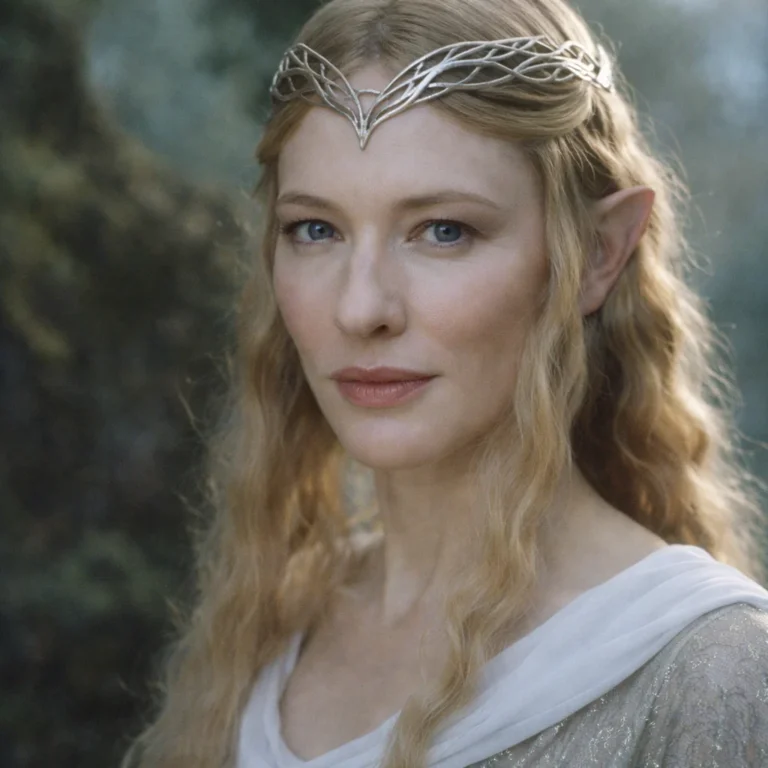
She kept her prosthetic elf ears from The Lord of the Rings. She famously played the royal elf Galadriel in the trilogy. Now, she keeps the delicate props in a safe place at her home.
She worked as a reader for casting agents when she could not get acting jobs. She sat in auditions and read lines opposite other actors who were trying to get the part. Eventually, the casting directors realized she was better than the people auditioning.
Cate Blanchett learned the Brazilian martial art Capoeira for her role in Thor: Ragnarok. She wanted her character, Hela, to move in a unique and deadly way. Thus, she trained extensively to master the fluid fighting style.