15 Surprising Facts About Kentucky
Horseback librarians, a cave map drawn from memory, and Magna Carta hidden beside America's gold: Kentucky's stories reach far beyond bourbon and the Derby.
1. An enslaved guide mapped Mammoth Cave from memory
In 1842, Stephen Bishop drew a map of Mammoth Cave while staying at Locust Grove in Louisville, far from the passages he was recording. He worked from memory. Enslaved and still a young man, Bishop had begun guiding visitors in 1838 and helped extend knowledge of the cave beyond formidable obstacles such as the Bottomless Pit. His map later appeared in an illustrated account of the cave. Behind an extraordinary feat of recall was expertise developed through years of underground exploration and guiding.
2. The first Derby's winning team included two Black horsemen
When Aristides won the inaugural Kentucky Derby on May 17, 1875, his jockey was Oliver Lewis and his trainer was Ansel Williamson, a formerly enslaved horseman. Thirteen of that race's fifteen jockeys were Black. Black riders went on to win fifteen of the first twenty-eight Derbies, making their contribution central to the race's beginnings. Later racial discrimination pushed Black horsemen out of opportunities they had helped create. The first race also covered a mile and a half, longer than today's Derby.
3. Mammoth bones from Kentucky became White House exhibits
Big Bone Lick's salty springs drew large mammals long before anyone collected their fossils. The deposits later fascinated Thomas Jefferson. Meriwether Lewis obtained specimens in 1803, but the shipment was lost when its boat sank. Jefferson tried again, commissioning William Clark to collect fossils in 1807. This shipment arrived, and some of the bones were displayed in the White House. The finds also helped scientists investigate extinction and recognize that the elephant-like mastodon was an animal distinct from living elephants.
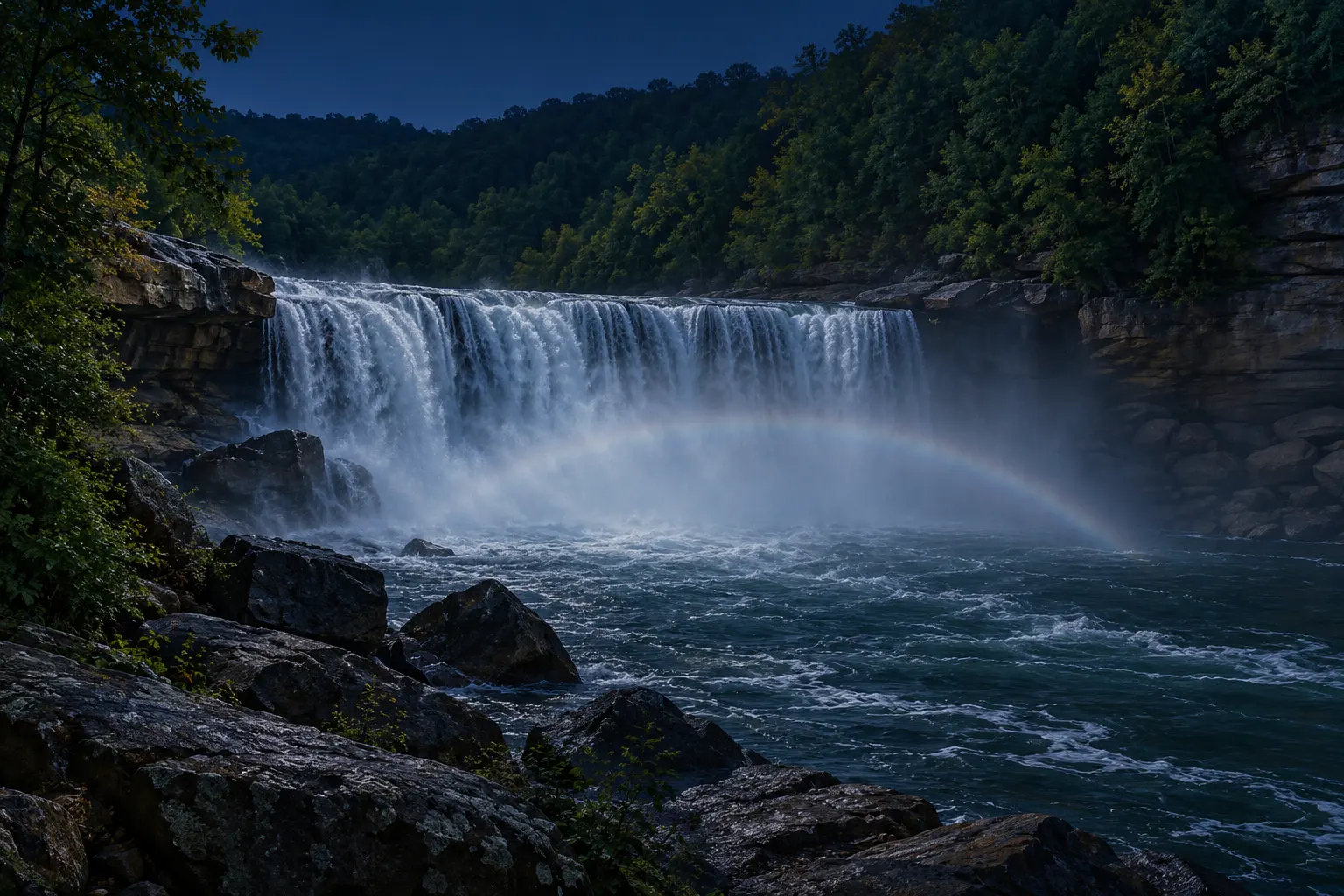
4. A waterfall can produce a rainbow by moonlight
Near a full moon, Cumberland Falls can turn its spray into a moonbow. Moonlight enters water droplets much as sunlight does in an ordinary rainbow, but the result is much dimmer. The University of Kentucky's explanation notes that it may look whitish because the light is too faint for normal color vision. Clear skies, suitable moon position, and spray all matter. A broad waterfall in a wooded gorge becomes the setting for an optical effect that many visitors have never seen after dark.
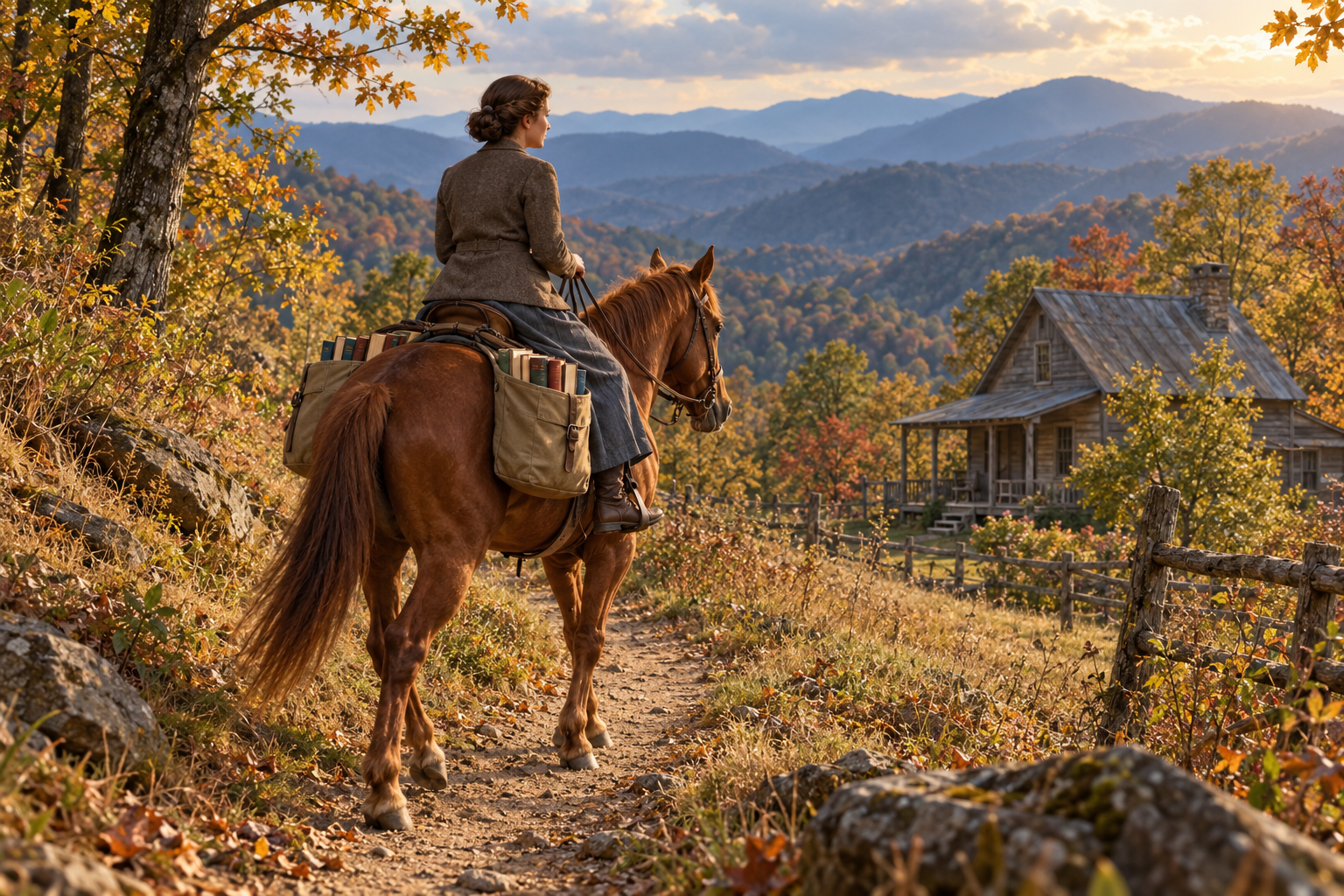
5. Librarians carried books through the mountains on horseback
During the Great Depression, Kentucky's WPA packhorse libraries reached readers who lived beyond convenient roads. Carriers, many of them women, loaded books into saddlebags and traveled on horses or mules; some routes also required walking or using boats. A National Archives photograph records librarians meeting at Hindman in Knott County to replenish their supplies. These journeys connected isolated households with reading material through a library service built around difficult terrain. The collection traveled to the reader, one mountain route at a time.
6. Magna Carta spent part of World War II at Fort Knox
One of the surviving 1215 Magna Carta documents traveled from Lincoln Cathedral to the 1939 New York World's Fair. War made its return to Britain unsafe, so it stayed in the United States. In December 1941, it was moved to Fort Knox along with American treasures including the Declaration of Independence and Constitution. The gold depository thus sheltered a medieval English charter as well as bullion. Magna Carta returned to Washington in 1944 and finally went back to England in early 1946.
 You might also like
The Run for the Roses: 15 Fascinating Facts About the Kentucky Derby
7. A sinkhole swallowed eight Corvettes inside a museum
Before opening time on February 12, 2014, the floor of the National Corvette Museum's Skydome in Bowling Green collapsed. Eight Corvettes dropped into a sinkhole, and security-camera footage captured the extraordinary event. All eight cars were eventually recovered. Some were restored, while others were preserved with their damage visible, turning a disaster into part of the museum's story. Kentucky Geological Survey specialists also visited the site to investigate. Even a building devoted to automotive engineering had become a lesson in what can happen underground.
8. Muhammad Ali's boxing story began with a stolen bicycle
In October 1954, twelve-year-old Cassius Clay Jr., later known as Muhammad Ali, discovered that his red Schwinn bicycle had been stolen outside Louisville's Home Show. He reported the theft to Joe Martin, a police officer who also coached boxing. When the furious boy talked about confronting the thief, Martin suggested learning to box first. The Ali Center traces the beginning of his training to that encounter. Six years later, the young Louisville boxer won Olympic gold in Rome's light-heavyweight division.
9. Bluegrass music took its name from a band
The genre's name traveled from Kentucky's nickname to Bill Monroe's Blue Grass Boys, and then to an entire musical style. Monroe, raised near Rosine, formed the band in 1938. Its sound drew on several traditions, including fiddle music, gospel, blues, and the influence of Black musician Arnold Schultz. Earl Scruggs's arrival in 1945 brought the three-finger banjo playing that helped define the classic lineup. The name 'bluegrass' became common later, after the music itself had already begun taking shape.
10. A water tower became famous after someone changed one letter
Florence's water tower originally advertised a shopping mall that had not yet opened. Built in 1974, it carried the words 'Florence Mall' beside the interstate. Highway officials objected to the advertising, leaving the city with a conspicuous problem high above the road. The economical solution was to alter the M into a Y and add an apostrophe. 'Florence Y'all' became the result. A practical repainting turned a commercial message into an enduring civic landmark with the sound of a friendly greeting.
11. Berea's interracial school was forced to segregate
Berea began as a one-room school in 1855, with interracial education built into its founding purpose. Its 1866–67 enrollment included 96 Black students and 91 white students. In 1904, Kentucky's Day Law prohibited Black and white pupils from being taught together, even at private institutions. Berea challenged the law, but the U.S. Supreme Court upheld it in 1908. The college helped establish Lincoln Institute for Black students; after a 1950 amendment, Berea could again admit Black students to its college program.
12. Kentucky Fried Chicken's first franchise opened in Utah
Harland Sanders built the reputation behind KFC while serving travelers in Corbin, Kentucky. But the first franchise opened near Salt Lake City, Utah, in 1952, at Pete Harman's restaurant. Early franchising meant persuading existing restaurant owners to cook and sell Sanders's chicken recipe for a fee. The Kentucky name carried the recipe's identity as the business crossed state lines. The origin story therefore has two important settings: the Kentucky roadside business where Sanders developed his reputation and the Utah restaurant that became his first franchise.
13. A Kentucky distiller moved production to Mexico during Prohibition
When Prohibition shut down her Kentucky whiskey business, Mary Dowling pursued an unusual way to keep production alive. She enlisted distiller Joseph L. Beam and members of his family to move equipment to Ciudad Juárez, Mexico. A Mexican operation was producing Waterfill & Frazier whiskey by 1927, beyond the reach of America's domestic production ban. Surviving labels, advertising pieces, and distillery images document this cross-border chapter. Dowling died in 1930, but the Mexican business continued long after American Prohibition ended.
14. Shaker hospitality included a remarkable pair of spiral staircases
At Pleasant Hill, the Trustees' Office combined business with hospitality. Built between 1839 and 1841, it housed the community's financial and legal leaders and accommodated visitors. Inside, Micajah Burnett's twin spiral staircases rise through three floors. The village's surviving buildings also reveal ingenious everyday systems: horses powered a pump that filled an elevated reservoir, allowing gravity to distribute water to kitchens and wash houses. The stairs are the eye-catching detail, but the wider settlement shows how carefully its residents organized work, services, and communal life.
15. A nighttime intervention saved state records destined for scrap
Historian Thomas D. Clark recalled receiving an urgent nighttime warning that Kentucky's state records were being sold as wastepaper. Papers from the Capitol basement had been loaded into trucks. Clark and James W. Martin hurried to Frankfort; Martin woke Governor Albert 'Happy' Chandler while Clark stayed near the loaded vehicles. Chandler ordered the papers unloaded and previously dispatched loads brought back. The rescued records went to the University of Kentucky for preservation. Decades later, Clark described the episode in an interview with the American Historical Association.
How did these facts land?
Know someone who'd love these facts? Share them 👇