The Rebellious Genius: 15 Fascinating Facts About Marlon Brando
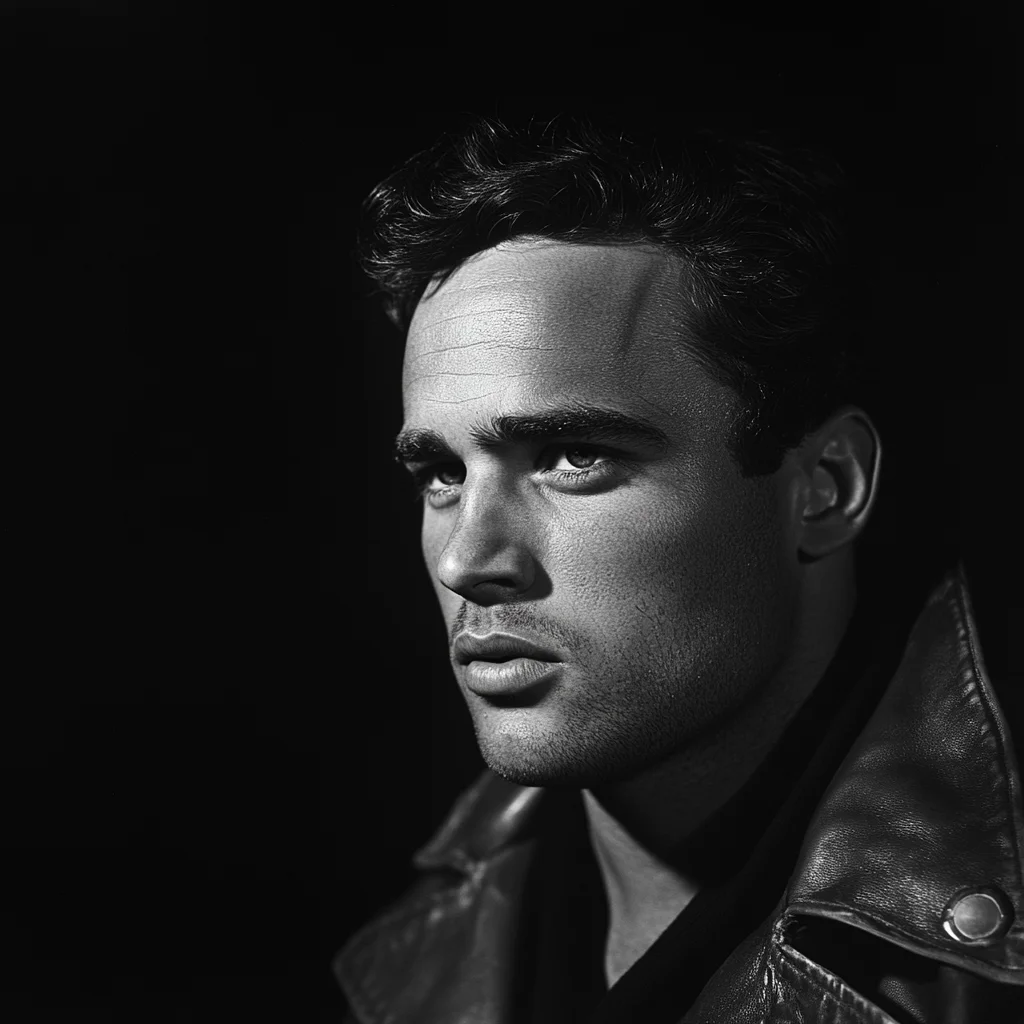
Marlon Brando fundamentally transformed the art of screen acting, replacing stiff theatrical tropes with raw, unpredictable emotional realism. From his iconic breakthrough in A Streetcar Named Desire to his legendary Oscar-winning turn in The Godfather, Brando was both an undeniable Hollywood genius and a deeply complex rebel. Off-screen, he championed civil rights, owned a Polynesian atoll, and even patented a musical invention. Here are 15 fascinating facts about the actor who redefined American cinema forever.
1. He Was Expelled from Military School for a High-Voltage Prank
Born in Omaha, Nebraska, in 1924, Marlon Brando displayed an insubordinate streak from a very young age. Sent to Shattuck Military Academy in Minnesota to learn discipline—the same school his father attended—Brando continuously clashed with authority. He was placed on probation for sneaking into town and was eventually expelled after sabotaging the school bell by tying a piece of rope to its clapper and pulling off a night raid. He even hauled the heavy brass bell mechanism off to bury it, though he confessed years later. This early rejection of rigid structure foreshadowed his disruptive, revolutionary approach to traditional Hollywood acting.
2. Stella Adler Transformed Him Into a Method Acting Pioneer
After moving to New York City in the 1940s, Brando enrolled at the Dramatic Workshop of The New School and studied under legendary acting teacher Stella Adler. Adler introduced him to the techniques of Konstantin Stanislavski, teaching actors to draw on emotional truth and sensory imagination rather than exaggerated theatricality. In a famous classroom exercise where Adler asked students to react like chickens to an impending nuclear bomb, while others ran around clucking frantically, Brando calmly sat on an imaginary nest and pretended to lay an egg. Adler immediately recognized his instinctual genius, later declaring that she had taught him nothing, but rather opened the door to his innate talent.
3. He Spent Weeks in a Paraplegic Ward for His Film Debut
To prepare for his feature film debut in 1950's The Men, Brando pioneered an extreme level of immersive preparation that surprised Hollywood veterans. Playing a paralyzed World War II veteran struggling to readjust to civilian life, Brando checked into the Birmingham Veterans Hospital in Van Nuys, California. He spent over a month living in a ward among real paraplegic patients, using a wheelchair continuously both inside and outside the hospital facility. He refused to break character during his stay, learning firsthand the physical, mental, and social hurdles faced by disabled veterans. This intense commitment set a brand-new benchmark for realism in cinematic acting long before the phrase method acting entered common parlance.
4. His Portrayal of Stanley Kowalski Redefined Male Masculinity
Brando first stunned audiences on Broadway in Tennessee Williams's 1947 play A Streetcar Named Desire, a role he reprised in the acclaimed 1951 film adaptation. His visceral, sweat-drenched performance as Stanley Kowalski shattered the polished, articulate archetype of the traditional Hollywood leading man. By introducing raw sexuality, mumbling cadence, and explosive physical power to the screen, Brando made theatrical performance feel dangerously real. The iconic torn white t-shirt he wore during the film even transformed the garment from plain men's underwear into an acceptable, mainstream fashion staple across America. He earned his first of four consecutive Best Actor Oscar nominations for the breakthrough role.
5. He Declined His Second Academy Award via a Native American Activist
When Brando won the Academy Award for Best Actor for his legendary role as Don Vito Corleone in 1972's The Godfather, he staged one of the most famous protests in television history. Instead of attending the ceremony, he sent Apache activist and actress Sacheen Littlefeather to represent him on stage. Littlefeather read a statement explaining that Brando was declining the award due to the film industry's degrading treatment and misrepresentation of Native Americans in movies and television. The startling moment shocked the Hollywood establishment and brought international attention to the ongoing occupation at Wounded Knee. It remains one of the boldest political stands ever taken at a major entertainment awards show.
6. He Acquired a Private Atoll in French Polynesia
While shooting the 1962 adventure film Mutiny on the Bounty in the South Pacific, Brando fell deeply in love with the landscape and culture of French Polynesia. In 1966, he purchased Tetiaroa, a breathtaking 12-island atoll located north of Tahiti, intending it to be a personal sanctuary and an ecological research site. Brando was deeply committed to environmental conservation, attempting to establish sea-turtle preserves, solar-powered energy systems, and sustainable farming on the island. Today, Tetiaroa hosts "The Brando," an exclusive, eco-friendly luxury resort designed around the actor's vision of low-impact sustainability and marine preservation.
7. He Held an Official US Patent for a Drum Tuning Mechanism
Beyond his legendary acting career, Brando possessed an inventive mechanical mind and a lifelong passion for playing Latin percussion instruments, particularly congas. In 2002, at the age of 78, he was granted U.S. Patent No. 6,812,392 for a specialized drum-head tuning device. His invention featured a hand-actuated linkage system that allowed percussionists to rapidly and accurately adjust the tension across a drumhead without requiring a traditional tuning key. Brando spent years refining prototypes in his home workshop, demonstrating an unexpected technical ingenuity that extended far outside the boundaries of show business.
8. He Earned a Record-Breaking Fee for Just Twelve Minutes in Superman
When producers cast Brando as Jor-El, the biological father of the Man of Steel in 1978's Superman, Brando negotiated one of the most lucrative deals in Hollywood history relative to screen time. For just 12 minutes of final screen time and less than two weeks of work, he demanded and received $3.7 million upfront plus an unprecedented percentage of the film's gross profits. His total earnings for the role eventually topped $19 million, setting a Guinness record for the highest salary per minute earned by an actor at the time. Furthermore, Brando famously insisted on reading his lines from cue cards hidden across the set, including on his co-star's diapers during baby Kal-El's scenes.
9. He Arrived Unprepared but Improvised Greatness in Apocalypse Now
Director Francis Ford Coppola faced extraordinary challenges while filming the 1979 Vietnam War epic Apocalypse Now, many of which stemmed from his lead antagonist. Brando arrived on set in the Philippines heavily overweight, having not read Joseph Conrad's Heart of Darkness upon which the film was based, and completely unprepared to play Colonel Walter E. Kurtz. Coppola halted production for days to read the source material aloud with Brando and figure out how to frame the character. Ultimately, Brando shaved his head, wore simple black garments, and demanded to be filmed almost entirely in deep shadows, improvising legendary monologues that created one of the most haunting characters in cinema.
10. He Refused to Memorize Lines, Preferring Cue Cards for Spontaneity
Throughout the second half of his career, Brando famously refused to memorize his lines before stepping in front of the camera. Rather than laziness, Brando argued that memorizing dialogue made performances rehearsed, artificial, and predictable, robbing them of genuine human spontaneity. He insisted on having his lines written on hidden cue cards placed behind off-camera actors, hidden inside props, or taped to furniture. During the filming of The Godfather, cue cards were taped to walls, bushes, and even pinned to the chest of fellow actor Robert Duvall, forcing Brando to look around naturally as if searching for the right words in real time.
11. He Directed Only One Film, Which Became a Cult Classic Western
Although widely considered one of the greatest actors who ever lived, Brando stepped behind the camera as a director exactly once for the 1961 psychological western One-Eyed Jacks. Originally slated to be directed by Stanley Kubrick, creative differences led to Kubrick's exit, prompting Brando to take full control of the production himself. Brando was famously meticulous, spending hours waiting on coastal beaches for the perfect ocean waves and shooting over five times the standard amount of film stock. Though the movie ran severely over budget and received mixed reviews upon release, modern filmmakers like Martin Scorsese heavily praise its striking cinematography and dark, antiheroic themes.
12. He Was a Passionate and Active Fighter for Civil Rights
Brando used his immense celebrity status to actively support the American Civil Rights Movement throughout the 1960s and 70s. He personally attended the historic 1963 March on Washington, standing alongside Dr. Martin Luther King Jr. during the "I Have a Dream" speech. Brando contributed substantial financial aid to civil rights organizations, provided bail money for jailed activists, and publicly advocated for the Black Panther Party. Following the assassination of Dr. Martin Luther King Jr., Brando withdrew from a major film role to devote himself full-time to fighting racial inequality and systemic prejudice.
13. He Stuffed Cotton in His Cheeks to Create Don Vito Corleone
Paramount Pictures executives originally strongly opposed casting Brando as Don Vito Corleone in The Godfather, viewing him as washed-up, difficult, and box-office poison. To convince the studio heads, director Francis Ford Coppola set up a secret videotaped screen test at Brando's home. Brando transformed himself instantly by putting shoe polish in his hair, smudging shoe wax under his eyes, and stuffing cotton balls into his lower cheeks to give his jaw a heavy, bulldog-like appearance. His gravelly voice and understated physical presence completely captivated author Mario Puzo and studio executives, securing him the role that defined his career.
14. He Had an Unconventional and Tumultuous Personal Life
Off-screen, Brando lived a chaotic personal life that was frequently documented by global media. He was married three times—to actresses Anna Kashfi, Movita Castaneda, and Tarita Teriipaia—and fathered at least eleven children across multiple relationships. His family was struck by intense tragedy in 1990 when his son Christian shot and killed Dag Drollet, the boyfriend of Brando's daughter Cheyenne, at Brando's home on Mulholland Drive. Despite his extreme stardom, Brando deeply resented the spotlight, often going to extreme lengths to avoid press interviews and safeguard his privacy in his later years.
15. He Left Behind a Legacy That Forever Changed Screen Acting
Before Brando arrived on the scene in the late 1940s, American screen acting was largely characterized by clear, theatrical enunciation, exaggerated gestures, and heroic poise. Brando brought a revolutionary naturalism, psychological vulnerability, and unpredictable emotional force to cinema screenwriting and direction. Stars like Al Pacino, Jack Nicholson, Robert De Niro, and James Dean explicitly cited Brando as their primary inspiration, acknowledging that modern cinematic acting effectively begins with his work. His indelible influence established a new artistic standard that forever reshaped how stories were told on screen.
Sources & References
This AI-assisted post was rigorously curated and fact-checked for accuracy by:
 Martin Roháček
How fun was this article? 🤔
Tap a star to rate it
🧠 Quiz: How closely were you paying attention?
10 questions — all answers are in the article above!
Enjoyed these facts? There's more! 💌
Fresh fun facts in your inbox. No spam, ever.