The Cinematic Maverick: 15 Fascinating Facts About Mel Gibson
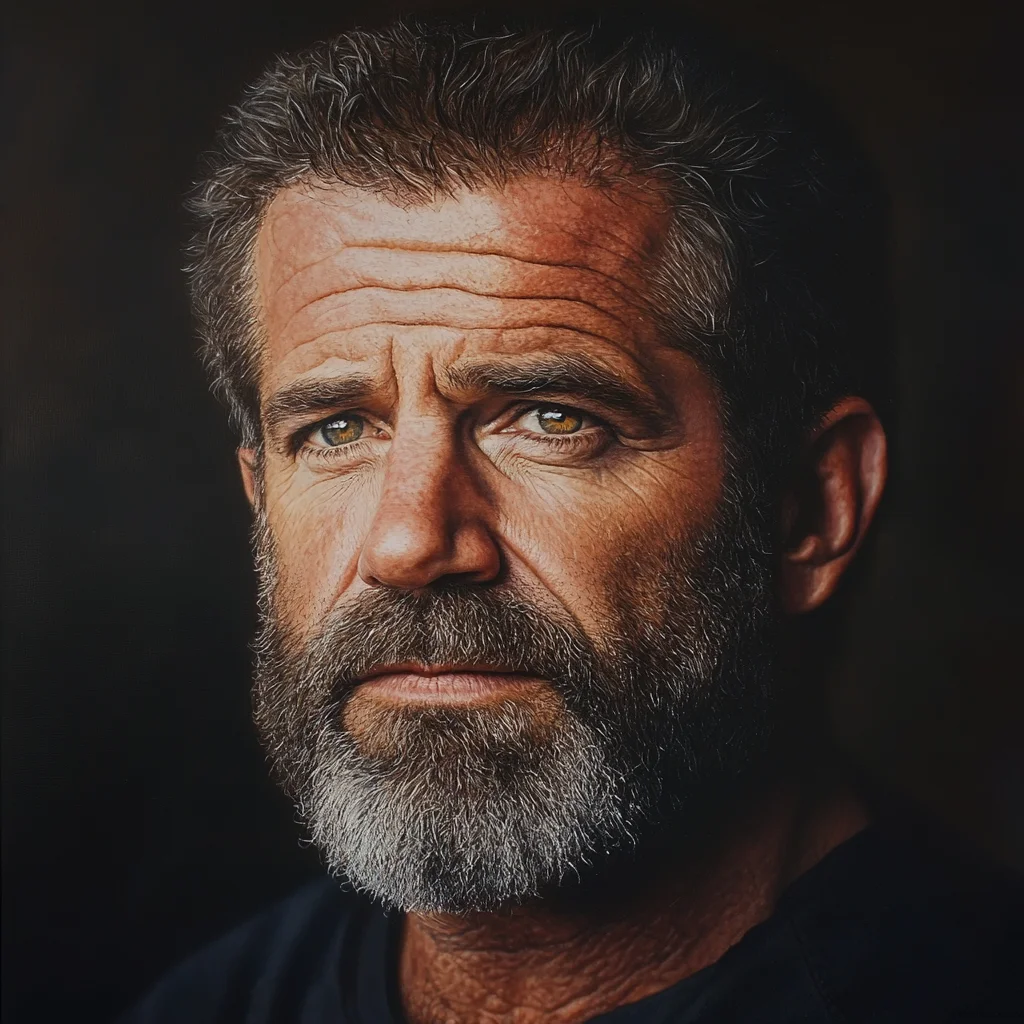
Mel Gibson stands as one of the most enigmatic and influential figures in modern Hollywood history. From his accidental discovery as a bruised drama student to becoming a record-breaking box office director, his career spans action blockbusters, epic historical dramas, and deeply personal passion projects. Beyond the camera, his life features unexpected trivia ranging from game show winning fathers to rare anatomical traits. Here are 15 fascinating facts about the life and legacy of Mel Gibson.
1. Accidental Audition for Mad Max
Mel Gibson got his breakthrough role in Mad Max (1979) almost entirely by chance. The night before accompanying his sister to her drama school audition, Gibson got into a chaotic bar fight that left his face badly bruised and swollen. Director George Miller was scouting for unconventional background faces to play post-apocalyptic gang members and told Gibson to come back when he healed. When Gibson returned three weeks later, Miller barely recognized the handsome young actor without his injuries. Impressed by his classic good looks and rugged intensity, Miller handed him the starring role of Max Rockatansky on the spot.
2. The Original "Sexiest Man Alive"
In 1985, People magazine launched a brand-new pop culture franchise by crowning Mel Gibson their very first "Sexiest Man Alive." The editors were looking for an actor who possessed both rugged intensity and romantic leading-man charm, settling on the 29-year-old action star following the global success of the Mad Max trilogy. Gibson was reportedly bewildered and embarrassed by the title, often downplaying the media frenzy surrounding his appearance. Nevertheless, the feature proved to be a massive commercial hit for the publication, establishing an annual celebrity tradition that continues to this day. His historic cover paved the way for decades of Hollywood heartthrobs receiving the same distinction.
3. Owning Mago Island in Fiji
In 2004, Gibson purchased Mago Island, a massive 5,400-acre private island located in the Lau group of Fiji. He acquired the pristine volcanic island from a Japanese corporation for approximately $15 million. Spanning over eight square miles, it ranks among the largest privately owned islands in the entire South Pacific. Rather than turning the secluded paradise into a luxury resort, Gibson chose to preserve the island's natural flora and fauna while maintaining a small private cattle farm. He also permitted native Fijians who had lived on the island for generations to remain and continue managing traditional agricultural land.
4. American Birthplace, Australian Upbringing
Despite his widely recognized Australian accent and deep cultural ties to the country, Gibson was actually born in Peekskill, New York. He lived in the United States until 1968, when his father moved the entire family to Sydney, Australia, following a workplace injury settlement and a desire to avoid the Vietnam War draft for his older sons. Gibson was twelve years old at the time of the relocation and quickly adapted to life Down Under, eventually enrolling in the prestigious National Institute of Dramatic Art. He holds dual American and Irish citizenship through his mother's lineage, as well as permanent Australian residency. His global upbringing shaped both his broad cinematic appeal and his unique accent shifts on screen.
5. Father of Nine Children
Gibson has built an extraordinarily large family, having fathered nine children across three different relationships. He had seven children—one daughter and six sons—with his first wife, Robyn Moore, whom he married in 1980 before his international stardom exploded. He later welcomed a daughter with musician Oksana Grigorieva in 2009, followed by his ninth child, a son named Lars, born to partner Rosalind Ross in 2017. Becoming a father again at the age of 61 brought his parenting journey across five distinct decades. Gibson has frequently noted that running a large household keeps him far more grounded than any Hollywood accolade ever could.
6. Declining the Role of James Bond
Following his explosive success in action cinema during the early 1980s, Gibson was actively pursued by James Bond producers to take over the role of 007. The filmmakers saw him as the ideal candidate to revitalize the franchise after Roger Moore stepped down. However, Gibson ultimately turned down the legendary license to kill because he feared being locked into a multi-picture contract that would typecast him for life. He preferred maintaining the artistic freedom to pursue diverse roles, including period dramas and original directing projects. The role eventually went to Timothy Dalton for The Living Daylights, while Gibson went on to launch the hugely lucrative Lethal Weapon franchise.
7. Self-Financing The Passion of the Christ
When major Hollywood studios refused to distribute or finance a graphic, Aramaic-language historical drama about Jesus of Nazareth, Gibson decided to fund the project entirely out of his own pocket. He invested roughly $30 million of his personal wealth into producing and directing The Passion of the Christ (2004). Industry analysts predicted the movie would be a colossal financial disaster due to its obscure dialogue and intense violence. Instead, the film became an unprecedented global box office hit, grossing over $612 million worldwide and turning Gibson's risky gamble into one of the most profitable independent films in cinematic history.
8. Voice and Singing for Disney's Pocahontas
In Disney's 1995 animated masterpiece Pocahontas, Gibson provided both the speaking and singing voice for the English explorer John Smith. While standard practice for animated films often involves hiring professional singers to dub musical numbers, director Mike Gabriel insisted that Gibson handle all of his character's vocal performances. Gibson spent weeks in intense vocal training sessions to hit the necessary pitch for demanding songs like "Mine, Mine, Mine." Though he admitted to struggling with high notes, music producers praised his rich baritone quality and warm delivery. His participation added significant star power to Disney's Renaissance era lineup.
9. The Venice Standing Ovation for Hacksaw Ridge
After spending years on the periphery of Hollywood following publicized personal controversies, Gibson made a dramatic directorial comeback with the 2016 World War II drama Hacksaw Ridge. The film premiered out of competition at the prestigious Venice Film Festival, where it received an overwhelming response from critics and industry veterans. As the end credits rolled, the audience erupted into a thunderous 10-minute standing ovation that left Gibson visibly moved. The film went on to earn six Academy Award nominations, including Best Picture and Best Director for Gibson, cementing his artistic redemption in mainstream cinema.
10. On-Set Pranks and the Hamlet Clown Nose
To relieve high anxiety and maintain lightness on set during emotionally draining film shoots, Gibson developed a reputation as a relentless practical joker. While directing and starring in the heavy 1990 adaptation of Shakespeare's Hamlet, he frequently sought ways to break the somber tension between takes. During one particularly intense scene featuring emotional breakdown, he popped on a bright red sponge clown nose without warning his co-stars. His unexpected comedic antics caught the cast off guard, triggering much-needed laughter before resuming serious drama. Colleagues have long noted that his playful disruptions served as a defense mechanism against heavy narrative material.
11. A Jeopardy! Champion Father
High intellect and quick reflexes ran deep in the Gibson household long before Mel became an international movie star. His father, Hutton Gibson, was an exceptionally gifted trivia buff who competed on the popular television game show Jeopardy! in 1968. Displaying an astonishingly vast breadth of knowledge, the elder Gibson achieved the rare feat of becoming a grand champion by winning five consecutive matches. His impressive cash winnings provided crucial financial support for the family just prior to their move to Australia. Mel often credited his father's incredible memory and sharp-witted debate style for shaping his own rapid-fire conversational cadence.
12. Devotion to The Three Stooges
Gibson has harbored a lifelong obsession with classical slapstick comedy, citing legendary vaudeville team The Three Stooges as a primary creative influence. He incorporated subtle physical comedy bits and iconic Stooges sound effects into his high-octane action roles, particularly in the Lethal Weapon series. His love for the comedy trio went far beyond homage; he actively produced a biographical made-for-TV movie titled The Three Stooges in 2000 to honor their legacy. Gibson has often argued that mastering physical comedy requires the exact same precise rhythm and timing as performing intense theatrical drama.
13. Born with a Horseshoe Kidney
On a physiological level, Gibson possesses a rare congenital condition known as a horseshoe kidney, or renal fusion. This anatomical variation occurs when an individual's two separate kidneys fuse together at the lower poles during fetal development, forming a single U-shaped organ resembling a horseshoe. The condition affects approximately 1 in 500 people worldwide and typically functions completely normally without causing health complications. Gibson's condition was discovered incidentally during a routine medical examination earlier in his life. He has occasionally joked about his unique internal layout, noting that it has never hindered his physically demanding career.
14. Costa Rican Eco-Ranching
Beyond his property in Fiji, Gibson owned a massive 400-acre estate known as Hacienda Dorada in the Nicoya Peninsula of Costa Rica for many years. Nestled amid dense tropical dry forest, the property functioned as both a private family sanctuary and an active cattle ranch. Gibson placed a strong emphasis on ecological stewardship, devoting significant resources to reforestation efforts and wildlife conservation on his land. The remote estate featured several residential villas overlooking the Pacific Ocean and served as a tranquil hideaway where he could work the land far away from paparazzi.
15. Reviving Robert Downey Jr.'s Career
When actor Robert Downey Jr. was struggling to secure movie roles in the early 2000s due to uninsurability following substance abuse legal troubles, Gibson stepped in to salvage his career. Producer Joel Silver refused to cast Downey in the 2003 musical film The Singing Detective unless someone put up an expensive insurance bond to cover potential production delays. Gibson personally paid the hefty financial guarantee out of his own bank account, demonstrating immense faith in his friend's talent and recovery. Downey's successful, trouble-free performance in that film proved he was ready for a major comeback, opening the door for his eventual casting as Iron Man.
Sources & References
This AI-assisted post was rigorously curated and fact-checked for accuracy by:
 Martin Roháček
How fun was this article? 🤔
Tap a star to rate it
🧠 Quiz: How closely were you paying attention?
10 questions — all answers are in the article above!
Enjoyed these facts? There's more! 💌
Fresh fun facts in your inbox. No spam, ever.