The Paradoxical Mammal: 15 Fascinating Facts About Platypuses
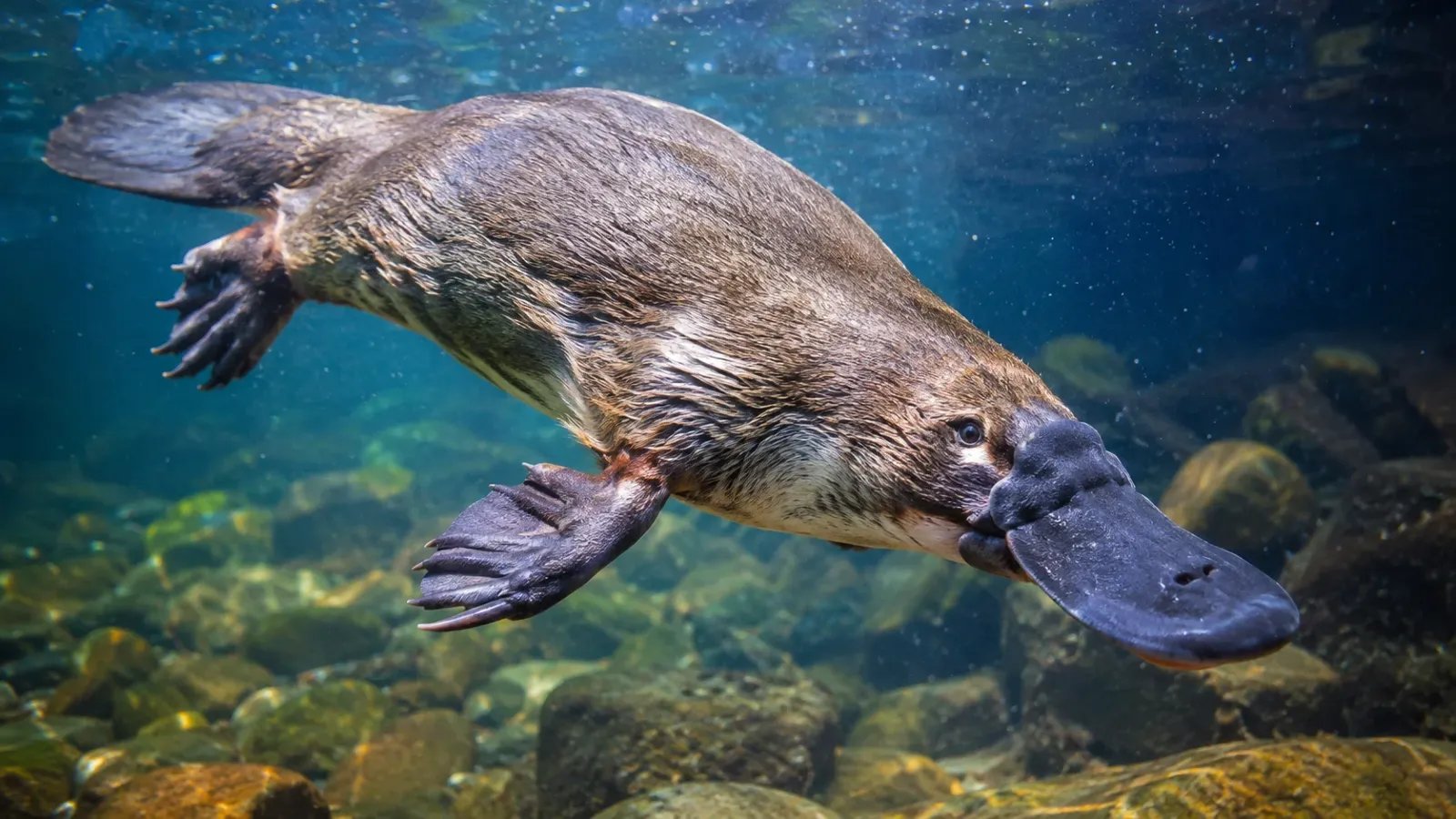
The platypus is often dismissed as a biological joke or a mere mashup of duck and beaver. In reality, this ancient monotreme is a marvel of evolutionary engineering, not an evolutionary accident. Surviving for millions of years, it defies mammalian norms with venomous spurs, sweat-milk, and an ability to sense electricity. Discover the truth behind nature's most misunderstood masterpiece.
1. Early European scientists thought the first platypus specimen they received was an elaborate hoax sewn together by taxidermists.
When British scientists, including George Shaw, examined a pelt sent from Australia in 1799, they assumed it was a prank. It was common at the time for tricksters to stitch different animal parts together for profit, like the infamous Fiji mermaid. Shaw even took scissors to the pelt to look for stitches, leaving cut marks that can still be seen on the original preserved specimen today.
2. A platypus does not have a stomach and its esophagus connects directly to its intestines.
Through millions of years of evolution, the platypus entirely lost its stomach, a rare trait it shares with its fellow monotremes and some species of fish. Because their diet of small, soft-bodied invertebrates requires no complex breakdown via highly acidic gastric juices, the genes responsible for stomach formation and digestion simply mutated and vanished over time.
3. Rather than having typical mammalian teeth, the platypus crushes its food using gravel scooped up from the riverbed.
While juvenile platypuses are born with a few temporary teeth, they lose them before leaving their breeding burrow. To process their meals of freshwater shrimp, worms, and insects, they store their prey in cheek pouches along with small stones. Once at the surface, they grind the food and gravel together using hard, keratinized pads located inside their bills.
4. The animal hunts underwater with its eyes, ears, and nostrils completely sealed shut.
When a platypus dives, folds of skin cover its eyes and ears, and water-tight valves close off its nostrils. This means it relies entirely on its highly specialized bill, which acts as a complex sensory array rather than just a mouth. This evolutionary adaptation allows it to forage effectively in murky, dark waters where vision and smell would be useless.
5. The bill of a platypus is packed with tens of thousands of electroreceptors that detect the faint electrical signals of muscular contractions in their prey.
The platypus possesses a sophisticated electrosensory system, a rarity among mammals. As a shrimp or worm flickers its tail under the mud, it generates a minute electrical field. The platypus swings its head from side to side in a motion called saccading, using its bill to map these electrical fields and pinpoint the exact location of its hidden meals.
6. Male platypuses possess venomous spurs on their hind legs capable of causing excruciating pain that is largely immune to conventional painkillers.
Many people mistakenly believe venom is strictly a reptilian or amphibious trait. The male platypus challenges this by wielding half-inch hollow spurs on its ankles connected to venom-producing crural glands. Production of this venom peaks during the mating season, suggesting it is primarily used in competitive battles with other males. While not lethal to humans, the resulting pain can last for months and does not respond to morphine.
7. Female platypuses lack nipples and instead excrete milk directly through their skin to feed their young.
As monotremes, platypuses diverged from the mammalian family tree before the evolution of teats. The mother's milk is secreted from specialized mammary gland ducts on her abdomen, sweating out into grooves on her skin. The newly hatched babies, called puggles, then lap up the nutrient-rich pools of milk directly from her fur.
8. Platypus milk contains a unique antibacterial protein that folds into a ringlet structure, which could help combat antibiotic-resistant superbugs.
Because platypus young consume milk exposed to the bacteria-rich environment of the mother's fur, they are at high risk for infection. To protect them, the milk contains a potent antimicrobial protein. Scientists have dubbed this structure the Shirley Temple fold due to its corkscrew shape, and researchers are currently studying it as a potential blueprint for novel antibiotics to treat resistant human infections.
9. A platypus has ten sex chromosomes instead of the standard two found in most other mammals.
Human genetics rely on a simple XY chromosome system to determine biological sex. The platypus, however, boasts a complex sequence of ten sex chromosomes. A male is genetically characterized as XYXYXYXYXY. This genetic chaining mechanism shares bizarre similarities with the sex chromosomes found in birds, highlighting the platypus's status as a missing link between distinct animal classes.
10. The fur of a platypus glows a vibrant blue-green when exposed to ultraviolet light.
In 2020, researchers discovered that platypus pelts exhibit biofluorescence, meaning they absorb short-wavelength UV light and re-emit it as a visible glow. While the exact biological purpose remains a mystery, scientists hypothesize that this optical trick might help them camouflage against nocturnal predators that see in the UV spectrum, essentially allowing the platypus to blend into the darkness.
11. Their tails store nearly half of the animal's total body fat, serving as an energy reserve rather than just a rudder.
It is a common misconception that the beaver-like tail of a platypus is used primarily for swimming or slapping the water. While it does provide some steering capability, a platypus propels itself mostly with its webbed front feet. The tail is actually an anatomical pantry, expanding to store fat to keep the animal nourished and insulated during harsh winters or periods of food scarcity.
12. A platypus walks on its knuckles when traveling on land to protect the delicate webbing between its toes.
The webbing on a platypus's front feet extends well past its claws, making it a highly efficient swimmer. However, this same webbing would tear easily on rocks and soil. To solve this, the platypus folds the webbing back into its palms and curls its digits, walking awkwardly on its knuckles while using its exposed, sharp claws to grip the earth and dig its burrows.
13. Platypuses are completely immune to the venom they produce, meaning they cannot kill each other during territorial disputes.
Because the male platypus uses its venomous spurs primarily to fight off rival males for mating rights, the species has evolved a natural resistance to its own toxins. A strike from a rival might paralyze a small animal or cause agony in a human, but for the platypus, it results merely in temporary weakness or localized pain, ensuring their aggressive mating rituals rarely end in death.
14. The earliest known ancestors of the platypus were giant monotremes that lived in South America and possessed massive, functional teeth.
Fossil records indicate that ancient relatives of the platypus were not confined to Australia. Millions of years ago, when the continents were joined in the supercontinent Gondwana, enormous, toothy monotremes like Obdurodon roamed the ancient forests of what is now Patagonia. Over epochs, the species shrank, migrated, and lost its teeth, surviving today only in the waterways of eastern Australia and Tasmania.
15. Platypuses spend more time in REM sleep than any other known mammal on the planet.
Despite their highly active foraging lifestyle, platypuses rest for up to 14 hours a day, with a significant portion of that time spent in Rapid Eye Movement sleep. Because they lack a high-functioning neocortex—the brain region typically associated with complex dreaming in humans—neuroscientists study platypus sleep cycles to understand how and why ancient mammalian brains first developed the need for REM sleep.
Sources & References
This AI-assisted post was rigorously curated and fact-checked for accuracy by:
 Martin Roháček
How fun was this article? 🤔
Tap a star to rate it
🧠 Quiz: How closely were you paying attention?
10 questions — all answers are in the article above!
Enjoyed these facts? There's more! 💌
Fresh fun facts in your inbox. No spam, ever.