The Cube Masters: 15 Fascinating Facts About Wombats
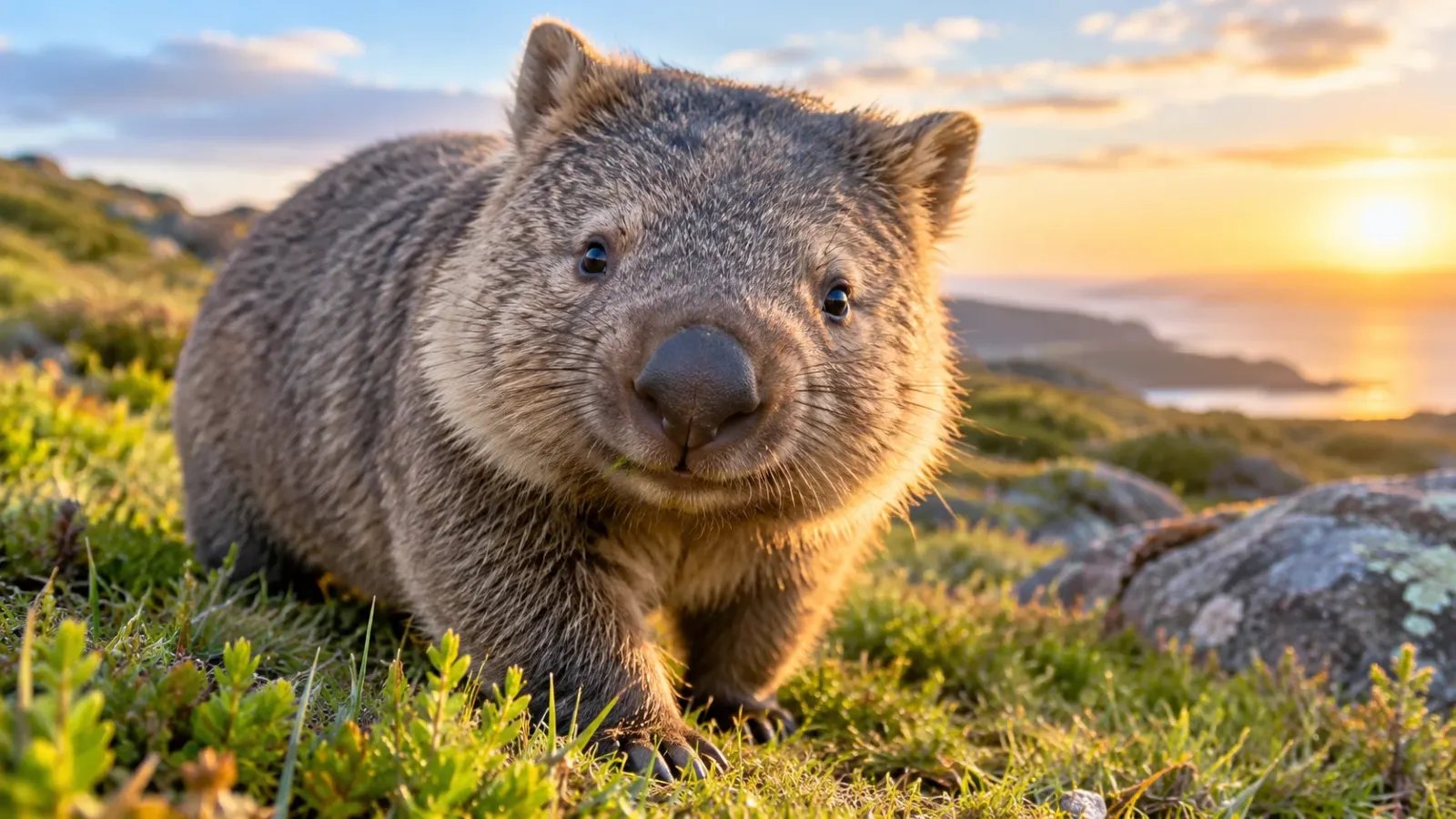
Wombats look like slow, cuddly bulldozers, but these Australian marsupials are full of surprises. They produce cube-shaped poop, carry their babies in a pouch that faces backwards and can use their rear end as a shield. Here are the strangest facts about one of Australia's best-loved animals.
1. Wombats produce cube-shaped poop.
Wombats are the only animals known to produce cube-shaped droppings. A single wombat can deposit dozens of these little cubes in one night. Scientists believe the shape is useful because wombats use their droppings to mark territory, often placing them on rocks or logs, and cubes are less likely to roll away than round pellets.
2. The secret of the cubes won an Ig Nobel Prize.
For years, nobody knew how wombats made square droppings. Researchers Patricia Yang and David Hu discovered that the walls of the wombat's intestine have stiffer and more flexible sections, which gradually shape the droppings into cubes as they dry out. Their work earned the 2019 Ig Nobel Prize in Physics, a prize for research that "first makes people laugh, then makes them think".
3. Their pouch faces backwards.
Like kangaroos, wombats are marsupials and raise their young in a pouch. Unlike kangaroos, the wombat's pouch opens towards its back legs. Because wombats are powerful diggers, a forward-facing pouch would fill with soil. The backward-facing opening keeps dirt away from the baby inside.
4. Their rear end is a shield.
Much of a wombat's rump is made of tough cartilage covered by thick skin, and it has only a stubby tail. When a predator chases it, a wombat dives head-first into its burrow and blocks the entrance with its hard backside. This makes it very difficult for an attacker to bite or grip it.
5. Their teeth never stop growing.
All of a wombat's teeth lack roots and keep growing throughout its life, like the front teeth of rodents. This is essential for an animal that chews tough grasses, roots and bark all day. Constant gnawing wears the teeth down at the same rate that they grow.
6. Digesting a meal can take two weeks.
Wombats have an extraordinarily slow metabolism. It can take them between 8 and 14 days to completely digest a meal, which allows them to extract as much water and nutrition as possible from poor-quality plants. This helps them survive in dry parts of Australia where food and water are scarce.
7. They are surprisingly fast.
Wombats usually waddle along slowly, but when they need to, they can sprint at up to around 40 kilometres per hour over short distances. That is faster than most people can run. They are also strong enough to push their way through or under fences, which makes them unpopular with some farmers.
8. They are master builders of underground tunnels.
Using their strong claws and teeth, wombats dig extensive burrow systems that can stretch for dozens of metres and have several entrances. A single wombat may use many different burrows within its home range. During bushfires, these underground tunnels can also provide shelter for other small animals.
9. They glow under ultraviolet light.
Like the platypus and several other Australian marsupials, wombats display biofluorescence. Under ultraviolet light, their fur glows with a faint colour that is invisible to the naked eye in normal light. Scientists are still debating whether this glow has any purpose or is simply a quirk of their fur's chemistry.
10. There are three species.
The three living wombat species are the common wombat, the southern hairy-nosed wombat and the northern hairy-nosed wombat. The northern hairy-nosed wombat is one of the rarest mammals in the world and is Critically Endangered. For decades it survived in a single area of Epping Forest National Park in Queensland.
11. Their name comes from an Aboriginal language.
The word "wombat" comes from the Dharug language spoken by the Aboriginal people of the Sydney area. It was first recorded by Europeans in 1798. Before the name became widespread, early colonists sometimes called the animals "badgers" because of their burrowing habits.
12. Their extinct relatives were as big as a hippo.
Wombats are related to the extinct Diprotodon, the largest marsupial that ever lived, which weighed as much as a hippopotamus. Among the wombats' own extinct relatives was Phascolonus, a giant wombat that may have weighed around 200 kilograms. These huge animals disappeared tens of thousands of years ago.
13. One wombat lived to be more than 30.
A common wombat named Patrick, who lived at a wildlife park in Ballarat, Victoria, became famous as the oldest known wombat in the world. He was about 31 years old when he died in 2017. In the wild, wombats usually live for around 15 years.
14. A deadly skin disease threatens them.
One of the biggest threats to common wombats is sarcoptic mange, a disease caused by tiny mites that burrow into the skin. It causes severe itching, hair loss and crusty skin, and it can be fatal if left untreated. Volunteers across Australia treat infected wombats by placing medicated flaps over the entrances to their burrows.
15. Wombats are much tougher than they look.
Wombats may look cuddly, but they are strong, stubborn and can be aggressive if they feel threatened. Adults can weigh up to 35 kilograms and have powerful jaws and claws. People who try to handle wild wombats can be seriously injured, so they are best admired from a distance.
Sources & References
This AI-assisted post was rigorously curated and fact-checked for accuracy by:
 Martin Roháček
How fun was this article? 🤔
Tap a star to rate it
🧠 Quiz: How closely were you paying attention?
10 questions — all answers are in the article above!
Enjoyed these facts? There's more! 💌
Fresh fun facts in your inbox. No spam, ever.