The Starman Unveiled: 15 Fascinating Facts About David Bowie
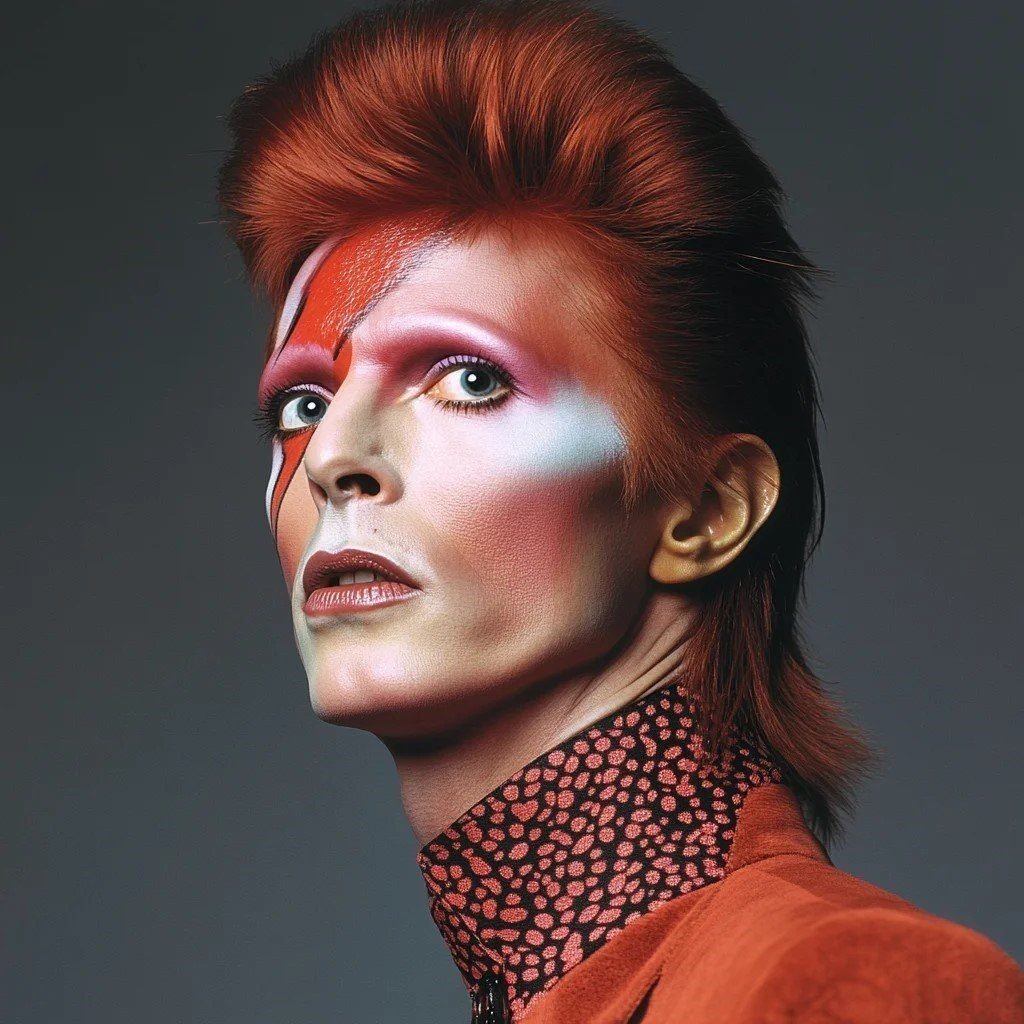
David Bowie was far more than a rock star; he was a shapeshifting cultural icon whose influence reshaped music, fashion, cinema, and modern visual art. From creating unforgettable alter egos like Ziggy Stardust to pioneering music video aesthetics and internet culture, Bowie lived on the cutting edge of artistic expression. His extraordinary career spanned five decades, marked by tireless innovation and a refusal to repeat himself. Discover the compelling story behind the Thin White Duke with these 15 fascinating facts about David Bowie.
1. His Distinct Eyes Were Caused by an Injury, Not Genetics
Many fans assume David Bowie had heterochromia, a genetic condition resulting in two different iris colors. In reality, his striking appearance was the result of a teenage altercation in 1962 with his friend George Underwood over a girl. Underwood punched Bowie in the eye, damaging the eye tissue and causing permanent paralysis of his left pupil muscle. This condition, known as anisocoria, left his left pupil permanently dilated, giving the impression that his left eye was dark brown while his right remained blue. Despite the injury, Bowie remained close friends with Underwood, who later created album artwork for several of Bowie's early records.
2. Space Oddity Was Played During the Apollo 11 Moon Landing
David Bowie released his breakthrough single "Space Oddity" in July 1969, just days before the historic Apollo 11 moon launch. The BBC picked up the track and used it as background music during its live coverage of the lunar landing. Ironically, the song's melancholic narrative describes Major Tom becoming lost in space, which was a somewhat risky choice for a live space mission broadcast. Despite the somber lyrics, the cosmic timing of the release catapulted Bowie into mainstream commercial success. Decades later, Canadian astronaut Chris Hadfield famously recorded a cover of the song aboard the International Space Station.
3. He Played an Unconventional Instrument on Space Oddity
While Bowie was a skilled multi-instrumentalist who played guitar, saxophone, keyboard, and bass, he was never afraid to experiment with unusual gear. On "Space Oddity," he famously played a Pocket Stylophone, a cheap electronic synthesizer operated with a small metal stylus. The unusual buzzy sound of the Stylophone gave the song its distinct sci-fi intro texture. Bowie bought the tiny instrument at a discount store and decided it was perfect for evoking the surreal futuristic mood of outer space. His hit record single-handedly boosted sales of the novelty pocket synthesizer across the United Kingdom.
4. He Pioneered Wall Street History with Bowie Bonds
In 1997, Bowie proved to be an innovator in high finance by inventing asset-backed music securities known as "Bowie Bonds." He packaged future royalty streams from his pre-1990 catalog of 25 albums into financial bonds sold to investors. Prudential Insurance purchased the entire offering for $55 million, receiving interest paid out from his future album sales and royalties over ten years. This move allowed Bowie to instantly liquidate the value of his intellectual property rights without selling his master recordings. The concept revolutionized music publishing and inspired other prominent artists to financialize their song catalogs.
5. The Berlin Era Saved His Life and Career
By late 1975, Bowie was suffering from severe drug addiction and exhaustion while living in Los Angeles. To escape his toxic environment, he relocated to West Berlin in 1976 alongside his friend and fellow musician Iggy Pop. Settling in the working-class Schöneberg district, Bowie drew immense creative energy from the city's avant-garde art scene and cold war atmosphere. Together with producer Brian Eno, he recorded the legendary "Berlin Trilogy": Low, "Heroes", and Lodger. During this same period, Bowie also co-wrote and produced Iggy Pop's acclaimed solo albums The Idiot and Lust for Life.
6. Fame Was Co-Written with John Lennon
Bowie scored his first number-one hit single on the US Billboard Hot 100 in 1975 with the funk track "Fame." The iconic track originated during a spontaneous, late-night jam session at Electric Lady Studios in New York City with John Lennon. Lennon contributed the song's signature vocal hook, singing the word "Fame" in a high-pitched falsetto, along with playing rhythm guitar. Bowie constructed the lyrics around the pressures, paranoia, and hollow nature of celebrity culture. The successful collaboration cemented Bowie's crossover appeal in the United States and remains one of rock history's greatest impromptu duets.
7. He Maintained an Acclaimed Film and Acting Career
Bowie was not merely a musician who occasionally acted; he was a talented dramatic actor who received critical acclaim for several major cinematic roles. He made his feature film debut in Nicolas Roeg's 1976 cult sci-fi masterpiece The Man Who Fell to Earth, playing an alien trapped on Earth. Later, he enchanted a generation of moviegoers as Jareth the Goblin King in Jim Henson's 1986 fantasy film Labyrinth. He also delivered compelling performances in Merry Christmas, Mr. Lawrence, The Hunger, and Christopher Nolan's 2006 film The Prestige. Directors repeatedly praised his captivating screen presence and deep artistic commitment.
8. He Launched His Own Internet Service Provider in 1998
Long before social media and music streaming services existed, Bowie recognized the revolutionary potential of the World Wide Web. In 1998, he launched BowieNet, his very own Internet Service Provider that granted subscriber internet access for $19.95 per month. Subscribers received exclusive music downloads, live audio streams, unreleased photos, and direct chat room access to Bowie himself. BowieNet was far ahead of its time, acting as a precursor to modern fan community platforms and social networks. Bowie personally logged into chat rooms under pseudonyms to talk directly with his fans about art and music.
9. He Shocked Fans by Killing Off Ziggy Stardust Onstage
In 1972, Bowie created Ziggy Stardust, a glam-rock alter ego who was a bisexual alien rock star sent to save Earth. The persona turned Bowie into a global superstar and revolutionized rock stage performances. However, at the height of Ziggy's popularity in July 1973, Bowie abruptly announced the character's retirement on stage at London's Hammersmith Odeon. Before playing the final song, he told the stunned audience that it was "the last show that we'll ever do." Even his bandmates were caught completely off guard by the announcement right before playing "Rock 'n' Roll Suicide."
10. He Was an Accomplished Painter and Art Collector
In addition to his musical output, Bowie was an avid painter heavily influenced by German Expressionism, Surrealism, and Neo-Expressionism. He painted throughout his life, frequently exhibiting his striking oil portraits and abstract works in galleries across Europe and North America. Bowie was also an extraordinarily knowledgeable art collector who amassed an incredible private collection over several decades. His collection included works by Jean-Michel Basquiat, Damien Hirst, and Henry Moore. Following his death, Sotheby's auctioned off over 350 pieces from his private art collection, raising more than £32 million.
11. He Turned Down Two British Royal Honors
Unlike many of his rock contemporaries who eagerly accepted royal recognition, David Bowie famously rejected royal honors on two separate occasions. In 2000, he turned down the offer to become a Commander of the Order of the British Empire (CBE). Three years later, in 2003, he politely declined a formal Knighthood, which would have granted him the title "Sir David Bowie." When asked about his decision to turn down the Queen's honors, Bowie explained that he simply had no interest in such titles. He stated in interviews that he did not know what those honors were actually for.
12. Under Pressure Was Created in a Wine-Fueled Jam Session
The iconic 1981 duet "Under Pressure" with Queen was never originally planned as a formal single. Bowie had originally visited Queen at Mountain Studios in Montreux, Switzerland, to sing backing vocals on another song. The session quickly evolved into a 24-hour, wine-fueled jam session where the musicians improvised chord progressions and vocal melodies. Bassist John Deacon created the distinctive bassline, while Bowie and Freddie Mercury famously engaged in vocal scatting battles to shape the melody. The resulting song topped charts worldwide and became a classic anthem for both artists.
13. He Changed His Name to Avoid Confusion with The Monkees
David Bowie was born David Robert Jones in Brixton, London, on January 8, 1947. Early in his career, he performed under his real name, Davy Jones, but ran into serious confusion when Davy Jones of The Monkees rose to international fame. To avoid professional confusion, he officially adopted the surname Bowie in 1966. He chose the name after Jim Bowie, the 19th-century American pioneer and knife fighter who popularized the famous Bowie knife. Bowie later remarked that he liked the name because the knife was "the ultimate American fighting knife."
14. His Final Album Blackstar Was a Meticulously Planned Farewell Gift
In January 2016, Bowie released his 25th studio album, Blackstar, on his 69th birthday. Unbeknownst to the public, Bowie had been battling liver cancer for 18 months while recording the project. He intentionally kept his illness secret from the press and his fanbase, pouring his feelings about mortality into the music and music videos. Just two days after the album's release, Bowie passed away at his apartment in New York City. Producer Tony Visconti confirmed that Bowie had deliberately designed Blackstar as a parting gift for his fans.
15. He Married Supermodel Iman and Lived Quietly in New York
In 1990, Bowie was introduced on a blind date to Somali supermodel Iman, and the two immediately fell in love. They married in a private ceremony in Florence, Italy, in 1992, creating one of the most famous power couples in fashion and entertainment. Despite their immense fame, they kept their private life remarkably low-key and grounded, away from tabloid publicity. The couple settled down in the Soho neighborhood of Manhattan, where they raised their daughter, Alexandria. Bowie spent his final years enjoying simple everyday activities in New York, often walking down the street unnoticed.
Sources & References
This AI-assisted post was rigorously curated and fact-checked for accuracy by:
 Martin Roháček
How fun was this article? 🤔
Tap a star to rate it
🧠 Quiz: How closely were you paying attention?
10 questions — all answers are in the article above!
Enjoyed these facts? There's more! 💌
Fresh fun facts in your inbox. No spam, ever.