
The Cultural Juggernaut: 15 Fascinating Facts About Melbourne Cup
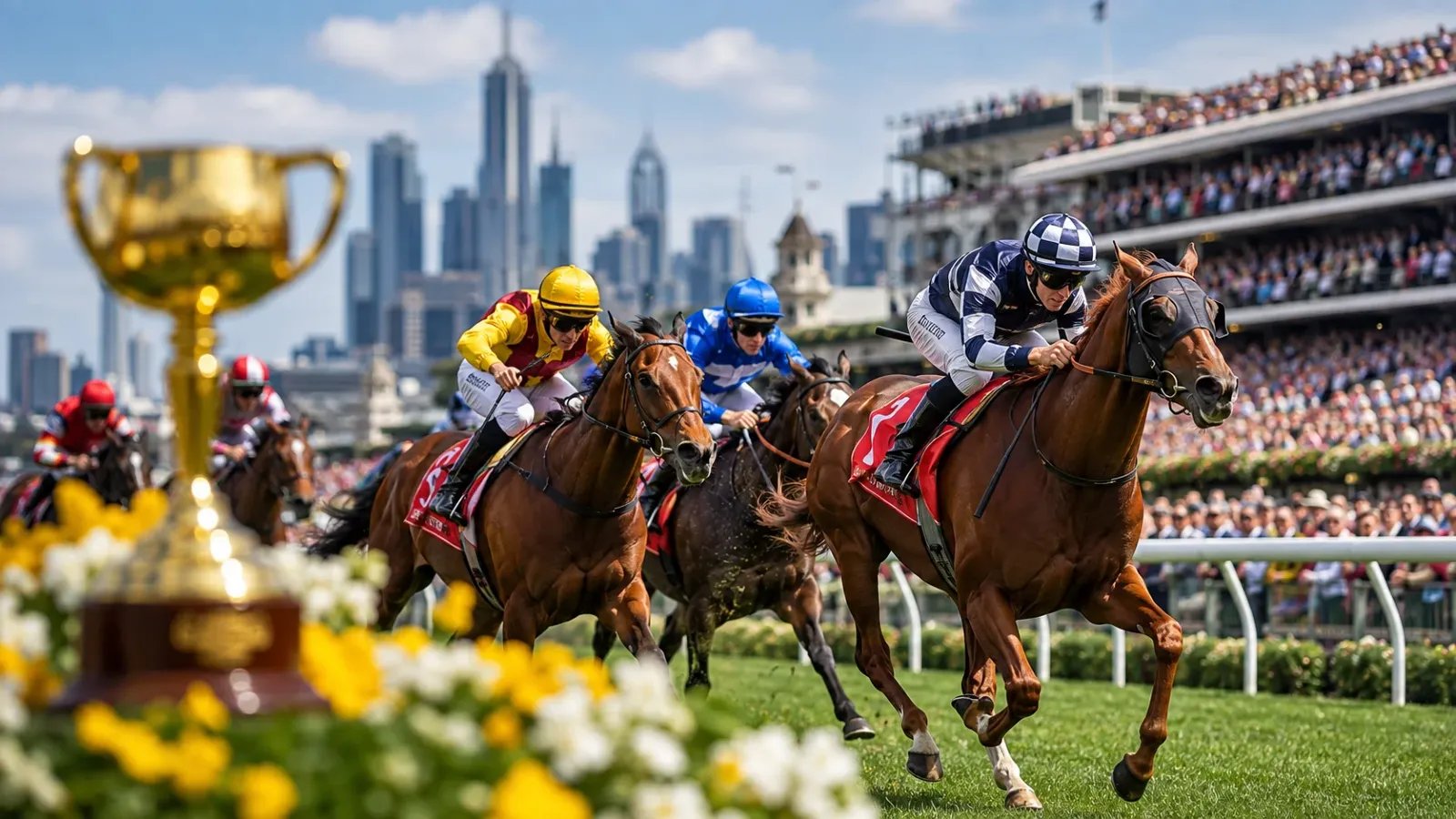
Often dismissed by casual observers as merely an excuse for Australians to don extravagant fascinators and consume excessive champagne on a Tuesday in November, the Melbourne Cup is actually a complex tapestry of equine genetics, rigorous handicapping mathematics, and deep socio-economic history. Contrary to the widespread myth that it has always been a glamorous affair reserved for the elite, the event was born in 1861 amidst the grit of the gold rush, designed to distract a restless, working-class population. Beyond the two minutes of thundering hooves at Flemington Racecourse lies a fascinating world where staggering wartime resilience, scientific breeding milestones, and bizarre historical anomalies intersect. From the debunked legends of champion horses walking hundreds of miles to compete, to the intricate physics of weight allocation that aims to engineer a dead heat, these fifteen facts reveal the true, multifaceted legacy behind the race that supposedly stops a nation.
1. The Myth of Archer's Long Walk
It is a widely repeated legend that Archer, the winner of the first two Melbourne Cups in 1861 and 1862, walked over 800 kilometers from Nowra, New South Wales, to Melbourne just to compete. In reality, historical shipping records eventually debunked this romanticized tale of endurance, proving that the champion horse comfortably traveled down the coast on a steamboat named the City of Sydney. The myth likely originated from the genuine struggles of early trainers and the working-class desire to mythologize the grit of pioneering racehorses. Nevertheless, Archer's stamina on the actual track was undeniably real, as he won the inaugural race by a massive eight lengths, a record margin that stood unchallenged for over a century.
2. The Cup Was Originally a Watch
Despite its current name and the iconic three-handled golden vessel recognized globally today, the prize for the very first Melbourne Cup was not a cup at all. In 1861, the victorious owner received a hand-beaten gold watch, as the local turf club lacked the funds and time to commission a grand trophy. The first actual cup was awarded in 1865, but it was reportedly so poorly designed that the winner promptly sold it to a jeweler who melted it down. The recognizable loving cup design, featuring three handles to represent the owner, trainer, and jockey, was not standardized until 1919, slowly evolving from a mismatched collection of silver bowls into the highly regulated masterpiece awarded today.

3. The Chaotic and Fatal Inaugural Race
Modern audiences often envision the early days of the Melbourne Cup as highly organized, gentlemanly sporting affairs, but the 1861 debut was plagued by chaos and tragedy. Raced in front of a modest crowd of 4,000 spectators, the event saw a massive, disorganized field of seventeen horses take off without modern barrier stalls, leading to a catastrophic pile-up. Two horses clipped heels and fell, resulting in the fatal injury of a third horse and leaving two jockeys with severe, life-altering fractures. This brutal beginning starkly contrasts with the highly regulated, safety-focused veterinary protocols that govern the modern race, highlighting the dangerous realities of nineteenth-century equestrian sports.
4. The Impossible Mathematics of Handicapping
Unlike standard weight-for-age races where the best horse mathematically dominates, the Melbourne Cup is a handicap, meaning officials assign varying lead weights to horses based on previous performance to theoretically ensure a multi-way tie at the finish line. The chief handicapper must analyze thousands of data points, including genetics, past track conditions, race distances, and jockey efficiency, to assign weights ranging from 49 to 58 kilograms. This creates a fascinating physics problem where a stronger horse must exert significantly more kinetic energy over the grueling 3,200-meter distance to overcome its assigned penalty. Consequently, the true triumph of the Melbourne Cup is not necessarily finding the fastest horse, but finding the one whose physiological stamina can best overcome this deliberately engineered mathematical disadvantage.
5. The Smallest Field Resulted From a Boycott
While the race is famous for its heavily congested field of up to twenty-four horses, the 1863 Melbourne Cup featured a mere seven runners due to a massive dispute over the handicapping system. Owners of several prominent horses felt the assigned weights were incredibly unfair, sparking a coordinated boycott that threatened to bankrupt the fledgling Victoria Racing Club. This dramatic walkout forced race organizers to refine their algorithms and establish more transparent weight allocation protocols in subsequent years. The sparse 1863 race remains a historical anomaly, proving that the event's survival was never guaranteed and depended heavily on the delicate political balance between elite horse owners and turf club officials.
6. A Deliberate Wartime Psychological Tool
While major global sporting events like the Olympics and Wimbledon were systematically canceled during the World Wars, the Melbourne Cup never missed a single year, serving as a calculated psychological tool for civilian morale. During World War II, the Australian government actively encouraged the race to proceed, recognizing that the familiar Tuesday broadcast provided a crucial, albeit brief, sense of normalcy and national unity. However, wartime rationing deeply impacted the event; the traditional solid gold trophy was replaced with a lesser-quality substitute, and racecourse attendance was strictly limited to conserve fuel and resources. This unbroken lineage cemented the race's status not just as a sporting event, but as an indispensable pillar of the Australian cultural psyche during periods of intense national trauma.
7. The Metric System Erased Historic Records
For over a century, the Melbourne Cup was universally known as a two-mile race, but Australia’s national conversion to the metric system in 1972 subtly but permanently altered the event's biological demands. The new distance was set at exactly 3,200 meters, which is approximately 18.6 meters shorter than the original two imperial miles. While this seems like a negligible fraction to a casual observer, in the realm of elite equine physiology, that missing distance completely changes stamina requirements and final-sprint timing for jockeys. Because the physical track length was irrevocably shortened, all time records set prior to 1972 had to be functionally retired, as modern horses are running a fundamentally different race than their historic predecessors.
8. The Genetic Anomaly of Phar Lap
The legendary 1930 Melbourne Cup winner, Phar Lap, is often celebrated for his immense heart, a phrase usually meant metaphorically, but in his case, it was a staggering biological reality. After his controversial and mysterious death in North America, necropsy results revealed that Phar Lap’s heart weighed an astonishing 6.2 kilograms, which is more than double the size of an average Thoroughbred’s heart. Modern veterinary scientists attribute this massive organ to a rare genetic mutation that allowed for exceptional cardiovascular efficiency, pumping vastly more oxygenated blood to his muscles during the grueling final stretch. This biological advantage explains why he could easily carry a crushing handicap weight of 62.5 kilograms to victory, a physical feat that would exhaust a biologically standard horse long before the finish line.
9. The Secret of New Zealand Breeding
Although branded as Australia's most iconic domestic event, the Melbourne Cup has historically been dominated by the genetic engineering of New Zealand’s breeding industry. New Zealand’s temperate climate, mineral-rich volcanic soils, and distinct ryegrass pastures create an ideal developmental environment for bone density and muscle growth in young foals. Furthermore, Kiwi breeders historically prioritized stamina and staying power over short-distance sprinting speed, cultivating bloodlines specifically optimized for the unique aerobic demands of a 3,200-meter marathon. This geographical and genetic advantage meant that for decades, the easiest way to win Australia's greatest race was to secretly import a horse raised across the Tasman Sea.
10. The Unprecedented Biology of Makybe Diva
Winning the Melbourne Cup once is a lifetime achievement, but the mare Makybe Diva shattered scientific and historic expectations by winning it three consecutive times in 2003, 2004, and 2005. Equine researchers note that mares typically face biological disadvantages in long-distance handicap races against males, including hormonal fluctuations and generally smaller skeletal frames that make carrying heavy weights more taxing. Makybe Diva, however, possessed a freakish lung capacity and a highly efficient lactic acid clearance rate, allowing her to recover her muscular energy mid-race while her competitors fatigued. Her unprecedented three-peat fundamentally altered how breeders view the physiological potential of female racehorses in grueling staying events.
11. The Photo Finish Technology Debut
Before 1948, the outcome of a tight Melbourne Cup relied entirely on the naked eye of the track judge, a flawed human system that frequently led to furious disputes among gamblers and owners. To eliminate this biological limitation, the Victoria Racing Club introduced an early form of photo-finish camera technology in 1948, a cutting-edge scientific advancement for the era. The camera utilized a continuously moving strip of film synced precisely to the speed of the horses, capturing the exact millimeter of a horse's nose as it crossed the finish line. This technology proved its worth almost immediately, resolving incredibly tight finishes that would have otherwise sparked riots, and permanently transforming horse racing into a precision-measured science.
12. The Chaos Before the Starting Gates
Today, the orderly loading of horses into the starting gates is taken for granted, but until 1958, the start of the Melbourne Cup was a terrifying and highly subjective ordeal. Horses were simply lined up behind a barrier rope or tape, relying on an official to drop it when the field looked roughly even, which naturally resulted in massive false starts, rearing horses, and severe collisions. The introduction of enclosed barrier stalls engineered a completely new psychological environment for the horses, requiring trainers to desensitize these high-strung animals to tight, confined spaces. This mechanical innovation leveled the playing field, ensuring that the race's outcome was dictated by speed and stamina rather than which horse managed to survive the chaotic, unrestrained stampede of the starting line.
13. The Precise Metallurgy of the Trophy
The modern Melbourne Cup trophy is not simply purchased from a catalog; it is a marvel of precise metallurgical engineering that takes hundreds of hours to construct. Manufactured annually by a designated jeweler, the cup is spun from exactly 1.65 kilograms of 18-carat gold, sourced exclusively from Australian mines to maintain its domestic pedigree. The metal is deliberately alloyed with small amounts of silver and copper to provide the tensile strength needed to hold its iconic three-handled shape, as pure 24-carat gold would be far too soft and prone to denting. Valued at hundreds of thousands of dollars just in raw materials, the trophy's strict elemental composition is closely guarded, ensuring each year's prize is a chemically identical clone of the last.
14. The Delayed Arrival of Female Jockeys
The Melbourne Cup was historically an impenetrable male domain, heavily reliant on the outdated myth that women lacked the upper body strength required to control a 500-kilogram animal at speeds of 60 kilometers per hour. This physiological misconception wasn't broken until 1987, when New Zealand jockey Maree Lyndon became the first woman to ride in the Cup, proving that technique and balance were far more critical than brute muscular force. The ultimate vindication of this science came in 2015 when Michelle Payne became the first female jockey to win the race, masterfully navigating the aerodynamic draft of the pack to conserve her horse's energy. Her historic victory permanently dismantled centuries of pseudo-scientific sexism within the global equestrian community.
15. The Aerodynamic Trap of the Long Straight
Flemington Racecourse is famous for its massive 450-meter final straight, a geometric layout that creates a brutal aerodynamic trap for front-running horses. In the final seconds of a 3,200-meter race, a horse is operating at maximum aerobic capacity, and leading the pack means breaking the wind resistance alone, expending up to fifteen percent more energy than the horses drafting directly behind it. Jockeys must utilize complex spatial geometry and fluid dynamics, keeping their horses sheltered within the slipstream of the pack until the absolute last moment before slingshotting outward. Moving to the front too early on this famously long straight guarantees catastrophic lactic acid buildup, explaining why so many seemingly victorious horses mysteriously collapse in speed just meters from the finish line.
Sources & References
This AI-assisted post was rigorously curated and fact-checked for accuracy by:
 Martin Roháček
How fun was this article? 🤔
Tap a star to rate it
Enjoyed these facts? There's more! 💌
Fresh fun facts in your inbox. No spam, ever.