The Contradictory Commander: 15 Fascinating Facts About Robert E. Lee
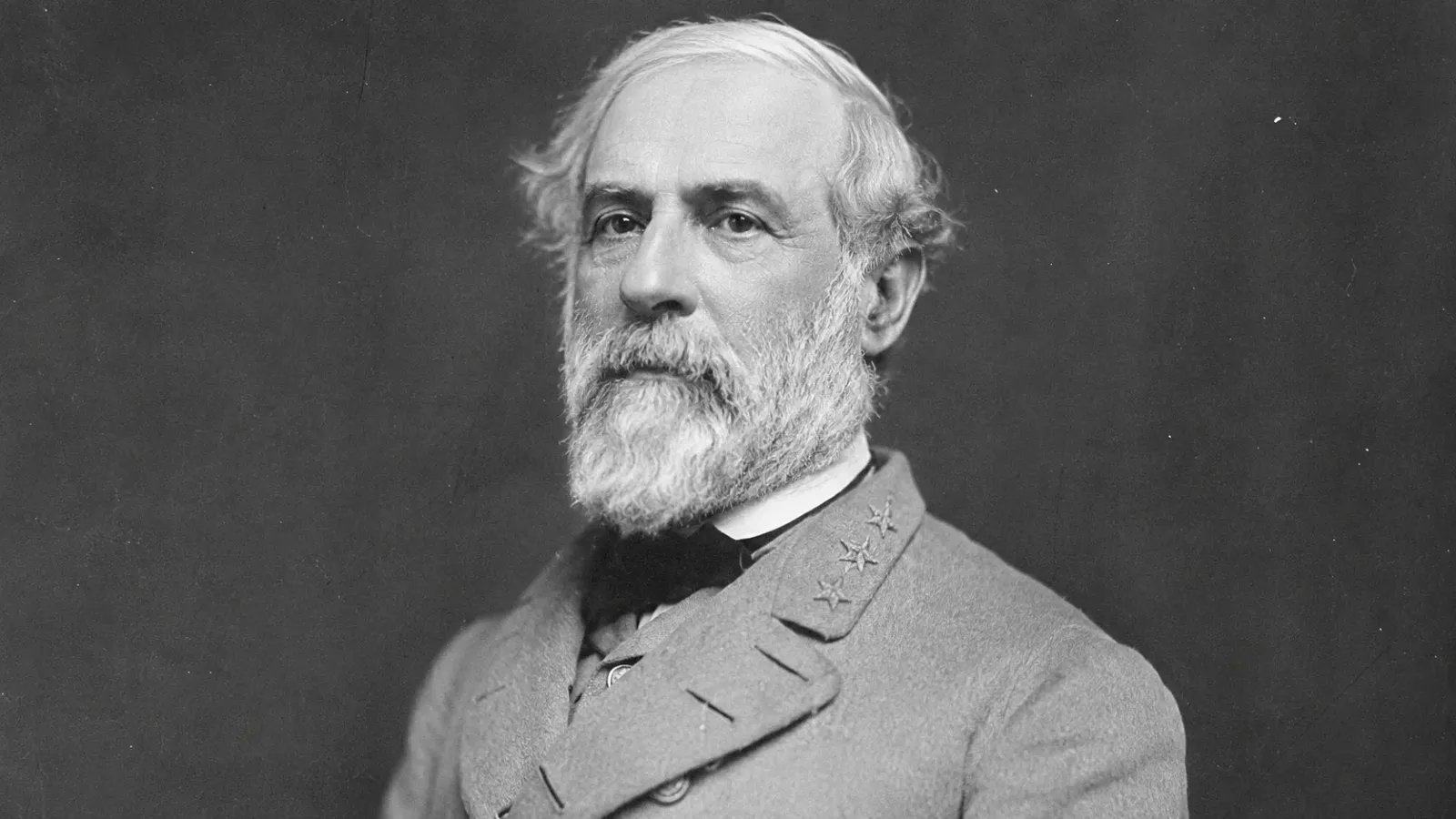
Long relegated to the overly simplified roles of either a flawless marble saint of the Lost Cause or a one-dimensional traitor to the United States, Robert E. Lee remains one of the most polarizing and misunderstood figures in American history. Beyond the pervasive myth of the reluctant, anti-slavery rebel who only fought out of an unavoidable duty to his home state of Virginia lies a deeply complex man riddled with ideological contradictions and strategic flaws. Though widely celebrated as a tactical genius, Lee made massive military blunders, harbored deep ambivalence toward the very secession movement he ended up leading, and possessed a far more brutal record on the institution of slavery than post-war apologists would have the public believe. By peeling back the layers of pop-culture reputation and historical revisionism, we can uncover a fascinating, flawed commander whose actual life is far more intriguing than the legendary statues suggest, revealing surprising truths about his early life, his military gambles, and his profound impact on a fractured nation.
1. A Legacy of Disgrace
Though often associated with Southern aristocracy, Lee grew up in the shadow of profound family disgrace and financial ruin. His father, Henry Light-Horse Harry Lee, was a celebrated Revolutionary War cavalry commander and a close friend of George Washington, but his post-war life was marred by disastrous land speculations. The elder Lee eventually landed in debtor's prison, severely plunging the family into poverty before fleeing to the West Indies and abandoning his wife and children. This traumatic childhood instilled in Robert a lifelong, almost obsessive dread of debt, scandal, and loss of control, driving his relentless pursuit of personal perfection and financial stability.
2. Marrying the Washington Myth
Lee tied himself directly to the legacy of America's foremost founding father by marrying Mary Anna Randolph Custis, the step-great-granddaughter of George Washington. Through this union, Lee gained access to the elite upper echelons of Virginia society, but he also inherited the crushing psychological weight of the Washington legacy. His father-in-law, George Washington Parke Custis, had turned their estate, Arlington House, into a shrine to the first president, surrounded by Washington's personal artifacts and command tents. Lee spent his entire life trying to emulate Washington's stoic demeanor and sense of duty, a parallel that profoundly influenced his eventual decision to side with his home state over the federal government, just as he believed Washington would have done.
3. The Burden of Arlington House
Despite his deep association with the famous Arlington House overlooking Washington, D.C., Lee never actually owned the sprawling plantation. The estate belonged to his father-in-law and was subsequently placed in a restrictive trust for Lee's wife and children, forcing Lee to act as its reluctant manager when Custis died heavily in debt in 1857. Taking a leave of absence from the U.S. Army, Lee found the transition to plantation management utterly miserable, struggling to make the neglected soils profitable while clashing bitterly with the enslaved population who had been legally promised their freedom by Custis. This period shattered the myth of Lee as a benevolent patriarch, as he resorted to exceptionally harsh measures to enforce discipline and extract labor to pay off the estate's massive debts.
4. The Flawless Cadet
Lee's obsession with control and honor manifested early during his time at the United States Military Academy at West Point, where he achieved a legendary academic and disciplinary record. Over the course of his four years of rigorous study, Lee did not receive a single demerit, an incredibly rare feat that earned him the nickname The Marble Model among his peers. He excelled in mathematics, engineering, and artillery, graduating second in the highly competitive class of 1829 while securing a coveted commission in the elite Army Corps of Engineers. This spotless record cemented his reputation as an officer of unimpeachable character, though it also masked an internal rigidity that would later influence his inflexible command style on the battlefield.
5. The Capture of John Brown
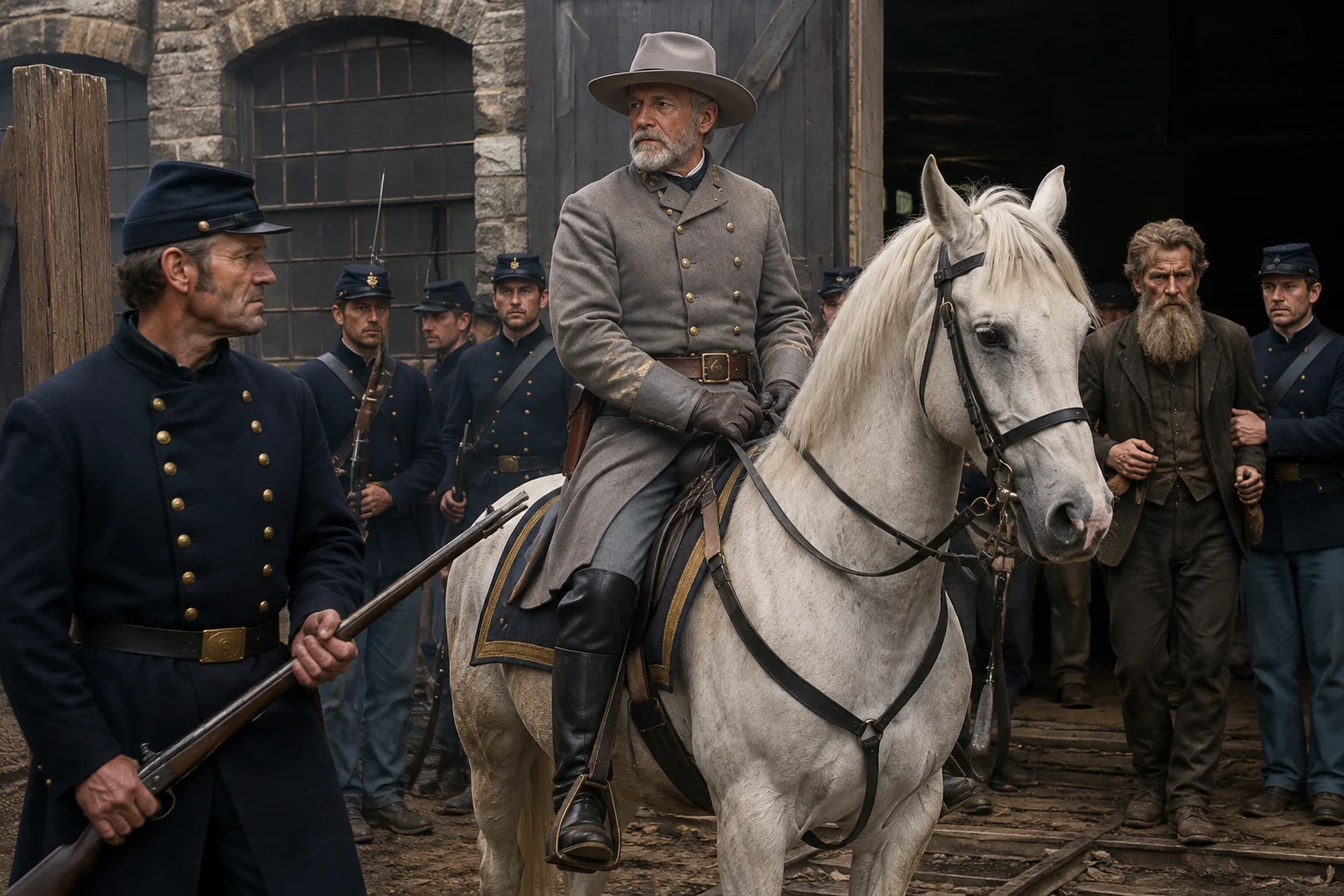
Long before the Civil War began, Lee found himself at the epicenter of the nation's violent struggle over slavery when he was dispatched to Harpers Ferry in 1859. The radical abolitionist John Brown had seized the federal armory in an attempt to spark a massive slave rebellion, prompting the federal government to send Colonel Lee and a detachment of Marines to restore order. Lee executed a swift, decisive tactical raid that breached the engine house, capturing Brown and his surviving men in a matter of minutes with minimal casualties. Though celebrated as a hero in the South for ending the crisis, Lee inadvertently set the stage for the coming war by delivering Brown to a highly publicized trial that polarized the nation beyond repair.
6. Refusing Command of the Union Army
In one of the most consequential historical pivot points in American history, Lee was actually offered the command of the entire Union Army just as the Civil War was breaking out. On April 18, 1861, acting on the wishes of President Abraham Lincoln, presidential advisor Francis Preston Blair met with Lee and officially offered him the rank of major general to lead the federal forces against the burgeoning rebellion. Lee agonized over the decision, as he deeply loved the United States Army and had served it loyally for over three decades, but he ultimately replied that he could not draw his sword against his native Virginia. He formally resigned his U.S. commission two days later, choosing state allegiance over national duty in a decision that would prolong the bloodshed for four devastating years.
7. He Viewed Secession as Treason
Contrary to the Lost Cause narrative that frames Confederate leaders as passionate defenders of states' rights and constitutional independence, Lee initially viewed the secession movement with intense disdain. In private letters written in early 1861, he explicitly described secession as nothing less than a revolution and a profound betrayal of the Constitution drafted by the Founding Fathers. He argued that a union that could only be held together by swords and bayonets held no charm for him, yet he completely rejected the legal arguments of the fire-eating secessionists of the Deep South. His ultimate decision to join the Confederacy was not driven by a belief in the righteousness of their political cause, but by a visceral, tribal loyalty to his extended family and the geographic borders of Virginia.
8. The Myth of the Anti-Slavery Crusader
A pervasive historical myth suggests that Lee was personally opposed to slavery and treated his enslaved workers with exceptional kindness, a narrative thoroughly debunked by historical evidence. While he once described slavery in a letter as a moral and political evil, he qualified this by claiming it was far worse for white people than black people and that the institution was a necessary pain for the moral instruction of Africans. During his time managing Arlington, Lee was a notoriously harsh enslaver who broke up enslaved families to fund his estate and personally ordered the severe whipping of runaway slaves who were recaptured. Furthermore, during his Pennsylvania campaigns, his Army of Northern Virginia actively captured free black northerners and sent them south into permanent bondage, demonstrating his deep complicity in the cruelest aspects of the institution.
9. Early Humiliations and Mocking Nicknames
Lee is remembered today as a tactical genius, but his first year serving in the Confederate military was marked by spectacular failures and widespread public ridicule. During his initial campaigns in western Virginia in 1861, he struggled to coordinate his subordinate commanders, faced disastrous weather conditions, and was thoroughly outmaneuvered by Union forces, leading to the loss of the territory that would soon become West Virginia. Southern newspapers relentlessly mocked him, dubbing him Granny Lee for his perceived timidity and Evacuating Lee for his tendency to retreat without a decisive fight. It wasn't until he took command of the Army of Northern Virginia in the summer of 1862 and aggressively repelled George McClellan during the Seven Days Battles that he shed these humiliating monikers and secured his legendary status.
10. A Fatal Strategic Blind Spot
For all his brilliance on the battlefield, Lee suffered from a severe lack of grand strategic vision that ultimately doomed the Confederate war effort. He suffered from a distinct Virginia myopia, focusing nearly all his energy, resources, and political capital on defending his home state while completely neglecting the vital Western Theater. While he was executing masterful tactical maneuvers at Chancellorsville and Fredericksburg, Union forces in the west were systematically carving up the Confederacy, seizing the Mississippi River, and capturing crucial rail hubs. Lee consistently resisted sending troops from his army to reinforce struggling western commanders, failing to realize that winning spectacular battles in Virginia was entirely irrelevant if the rest of the Confederacy was collapsing behind him.
11. A Hidden Heart Attack
Much of Lee's uncharacteristic behavior and controversial decision-making during the latter half of the war may be attributed to a severe, hidden medical crisis. In the spring of 1863, just weeks before his ill-fated invasion of Pennsylvania that culminated at Gettysburg, Lee suffered what modern medical historians believe was a massive myocardial infarction, or heart attack. He experienced intense pain in his chest, back, and arms, and was bedridden for weeks with a lingering illness that he brushed off to his men as a severe cold or rheumatism. This cardiovascular disease permanently damaged his health, leaving him chronically fatigued, visibly aged, and arguably impairing his mental sharpness and battlefield judgment during his greatest military test.
12. The Vengeful Creation of Arlington Cemetery
The existence of Arlington National Cemetery is the direct result of a calculated, spiteful maneuver designed to punish Lee for his treason against the United States. During the war, the Union Army occupied Lee's Arlington estate due to its high vantage point over the capital, and Quartermaster General Montgomery C. Meigs, a former friend of Lee who deeply despised him for his betrayal, took charge of the property. When military cemeteries began overflowing, Meigs intentionally directed that dead Union soldiers be buried mere yards from the door of the Arlington mansion, specifically in Mary Lee's cherished rose garden. Meigs's explicit goal was to render the estate physically and psychologically uninhabitable for the Lee family, ensuring that the Confederate general could never return to his beloved home.
13. Opposing Confederate Monuments
In stark contrast to the modern controversies surrounding Confederate statues, Lee himself was steadfastly opposed to the erection of monuments honoring the Southern rebellion. Following the war, he received numerous letters requesting his support or presence at dedications for various Confederate memorials, all of which he politely but firmly declined. Lee argued that building monuments would only serve to keep the passions of war alive, insisting that the country should instead follow the example of historical nations that sought to obliterate the marks of civil strife. He believed that the shattered South should focus entirely on economic recovery, education, and political reconciliation rather than looking backward to memorialize a failed and devastating insurrection.
14. A Century Without Citizenship
Following his surrender at Appomattox, Lee submitted a formal application for a pardon and the restoration of his United States citizenship, but he remained a stateless man until 1975. As part of the process, Lee signed a mandated oath of allegiance to the United States Constitution, but a government clerk supposedly misplaced the paperwork, and it was never delivered to Secretary of State William Seward. Because the document was never processed, Lee died in 1870 without his constitutional rights, unable to vote or hold public office in the nation he once fought to divide. The missing oath was finally discovered in the National Archives in 1970, prompting Congress to pass a joint resolution, signed by President Gerald Ford, that posthumously restored his citizenship over a hundred years after his death.
15. A Radical Educational Reformer
Lee's final act was surprisingly progressive in the realm of higher education, as he spent his post-war years completely transforming Washington College, now known as Washington and Lee University. Taking the presidency of the struggling, war-torn institution, Lee shocked traditionalists by abandoning the rigid, classical curriculum of Latin and Greek in favor of highly practical, modern education. He introduced courses in journalism, business, Spanish, and engineering, arguing that the ruined South desperately needed practical professionals to rebuild its shattered economy rather than gentleman philosophers. This forward-thinking approach, combined with the implementation of a strict honor code that abolished detailed disciplinary rules, proved vastly influential and helped set the standard for modern American university systems.
Sources & References
This AI-assisted post was rigorously curated and fact-checked for accuracy by:
 Martin Roháček
How fun was this article? 🤔
Tap a star to rate it
Enjoyed these facts? There's more! 💌
Fresh fun facts in your inbox. No spam, ever.