The Holiday Phenomenon: 15 Fascinating Facts About The Nutcracker
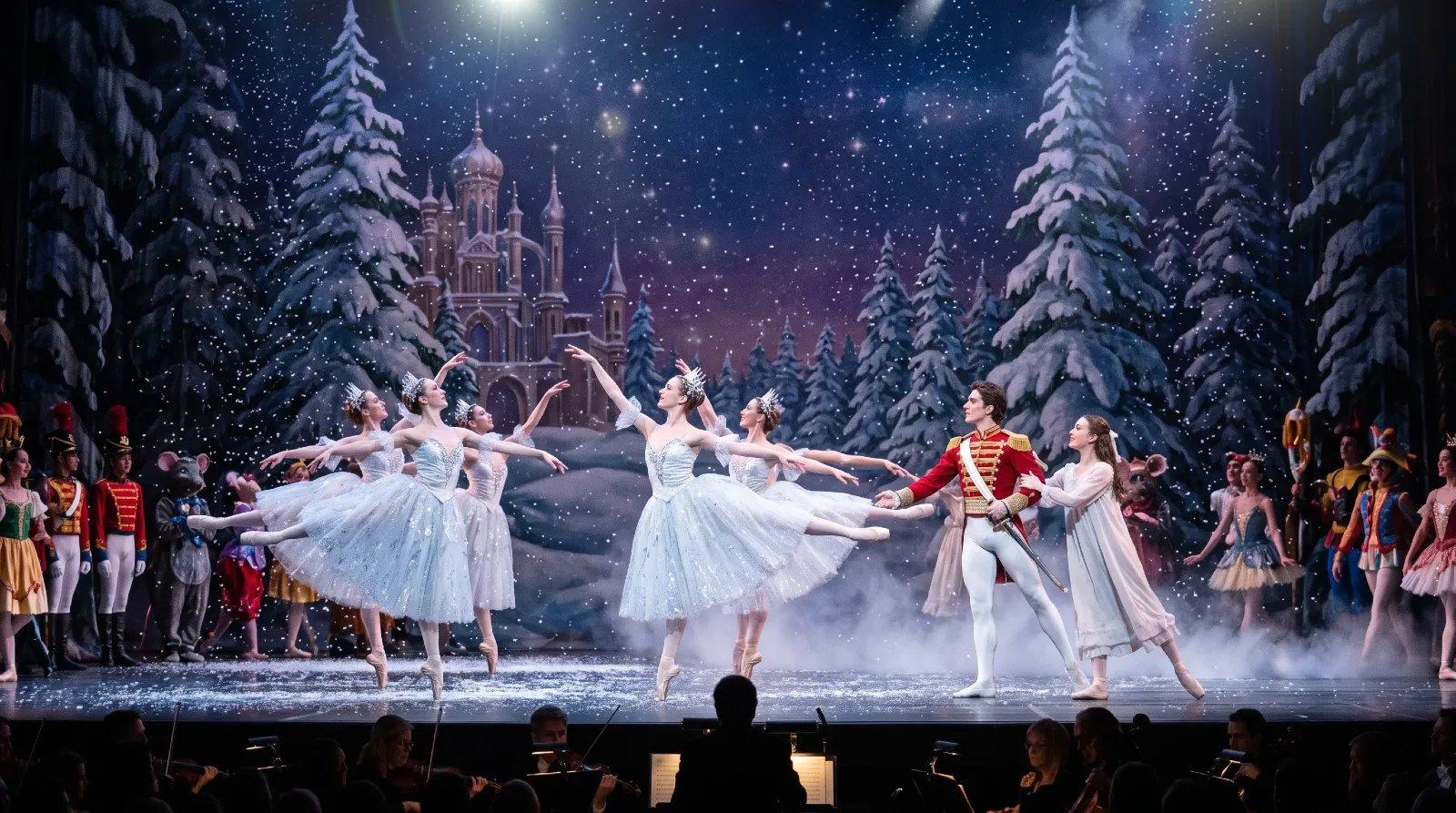
Often dismissed as a sugary holiday cliché, Tchaikovsky’s The Nutcracker was actually a critical flop that the composer himself detested. Far from a simple fairy tale, its origins involve dark psychological literature, mechanical innovations, and Cold War diplomacy. Discover the obscure history, musical genius, and surprising cultural shifts behind the world’s most performed ballet.
1. The original 1892 premiere of The Nutcracker in St. Petersburg was a massive critical and commercial failure.
Critics tore apart the choreography, the storyline, and the use of children on stage, calling the production boring and entirely disjointed. Tchaikovsky himself felt the score was infinitely worse than his previous ballet, The Sleeping Beauty, and lacked true creative inspiration. The premiere was presented as a double bill alongside his one-act opera Iolanta, which received a much warmer reception from the Russian audience. It took several decades and a relocation to the United States before the ballet found its enduring, enthusiastic audience.
2. The ballet’s story is based on a watered-down French adaptation of a profoundly dark psychological horror tale.
The original story, The Nutcracker and the Mouse King, was written by German Romantic author E.T.A. Hoffmann in 1816. Hoffmann’s version was filled with bloody battles, grotesque imagery, and complex psychological trauma, exploring the blurring lines between terrifying nightmares and reality. The ballet actually uses Alexandre Dumas’s heavily sanitized, family-friendly French translation of the tale. This lighter adaptation stripped away the disturbing existential dread, leaving behind the sugar-coated fantasy we recognize today.
3. Tchaikovsky secretly smuggled a newly invented instrument called the celesta into Russia to create the signature sound of the Sugar Plum Fairy.
While visiting Paris, the composer discovered the celesta, a keyboard instrument that strikes steel plates to produce a magical, bell-like tone. Fearful that his musical rivals, particularly Nikolai Rimsky-Korsakov, would hear of it and use it first, Tchaikovsky had the instrument shipped to Russia in absolute secrecy. He specifically requested that it be hidden from the public and other musicians until the premiere. That distinct chiming remains the defining sonic texture of the Dance of the Sugar Plum Fairy and revolutionized theatrical orchestration.
4. George Balanchine is almost entirely responsible for turning the ballet into an American Christmas tradition in 1954.
Before Balanchine choreographed his version for the New York City Ballet, The Nutcracker was rarely performed in its entirety in the United States. Balanchine drew heavily on his own childhood memories of dancing in the Mariinsky Theatre's production in Russia to create a nostalgic, visually stunning holiday spectacle. His production reached a national audience when CBS broadcast it on television in 1957 and again in 1958, with Balanchine himself appearing as Drosselmeyer in the second broadcast. Today, Nutcracker ticket sales often account for a large share of the annual revenue of American ballet companies, in some cases close to half of their yearly ticket income.
5. The iconic Sugar Plum Fairy does not actually have a name, a backstory, or any narrative purpose in the original plot.
Unlike traditional ballet heroines who drive the storyline forward through conflict, the Sugar Plum Fairy exists merely as a stationary host in the Land of Sweets. She is introduced in the second act solely to welcome Clara and the Nutcracker Prince and to perform a technically demanding showcase dance. The character has no dramatic arc, no emotional conflict, and no lines of pantomime that explain who she is or how she came to rule the kingdom. Her entire existence was an excuse for the choreographer to give the prima ballerina a dazzling, applause-generating solo.
6. The original choreographer, Marius Petipa, fell severely ill during production and had to hand the ballet over to his assistant.
Petipa was the legendary master of the Russian Imperial Ballet, but his declining health forced him to step away from the physical staging of The Nutcracker. His assistant, Lev Ivanov, took over the choreography, working strictly from Petipa’s extremely detailed instructions and stage plots. Because Ivanov was considered a subordinate, he received little to no credit for his contributions to the premiere, despite choreographing the breathtaking Waltz of the Snowflakes. Dance historians now believe Ivanov’s lyrical, less rigid style actually elevated the wintery scenes beyond Petipa’s original vision.
 You might also like
The Master Harmonist: 15 Fascinating Facts About Johann Sebastian Bach
7. His Sister's Death Interrupted the Composition
Tchaikovsky learned of his sister Aleksandra's death while working on the ballet in 1891. His correspondence describes his difficulty composing the Land of Sweets music after the news. The opening party music had already been started, so connecting that particular scene directly to the bereavement is too specific.
8. The Nutcracker suite was released and became a massive hit before the ballet itself was even finished.
Sensing that the full ballet might face production delays, Tchaikovsky extracted eight musical numbers and arranged them into a 20-minute concert suite. This Nutcracker Suite premiered in March 1892, a full nine months before the ballet debuted at the Mariinsky Theatre. The concert audience was so captivated by the vibrant orchestration that they demanded encores for nearly every movement on the program. Consequently, the music was wildly popular and frequently performed worldwide long before the corresponding choreography found its footing.
9. The role of Clara was originally danced by a young child, fundamentally changing the traditional hierarchy of the imperial ballet stage.
In 19th-century Russian ballet, principal roles were exclusively reserved for adult prima ballerinas who had spent years mastering grueling physical techniques. Casting an actual child to play the protagonist in a major production was a highly controversial and unprecedented decision at the time. Critics complained that watching children perform lengthy pantomime scenes belonged in a school recital, not the prestigious Imperial Theatre. However, this casting choice paved the way for modern productions, where the role of Clara provides a critical stepping stone for young ballet students everywhere.
 Holidays and Traditions
Explore the surprising, dark, and deeply fascinating origins of the world's most beloved holidays. From ancient pagan rituals to modern marketing triumphs, discover the true stories behind our annual traditions.
See All Facts
10. The famous Waltz of the Snowflakes features a wordless chorus of children's voices.
Tchaikovsky wanted an ethereal vocal texture to accompany the falling snow at the end of the first act, so he wrote a part for a choir of high voices singing without words. The score calls for treble voices, and many productions use a children's choir to capture the innocent, otherworldly atmosphere he had in mind. The singers are rarely seen by the audience, as they usually perform from the orchestra pit or from offstage while the dancers fill the stage with swirling snowflakes. It is one of the few moments in classical ballet where a choir becomes part of the orchestral sound.
11. San Francisco Ballet, not New York City Ballet, holds the title for staging the very first complete performance of The Nutcracker in America.
While Balanchine popularized it a decade later, the San Francisco Ballet premiered the first full-length American production in 1944. It was spearheaded by Willam Christensen, a choreographer who had never actually seen the full ballet performed himself. Christensen had to consult with exiled Russian dancers, including George Balanchine and Alexandra Danilova, to piece together the choreography and the story from their fragmented memories. Despite a meager budget and wartime fabric shortages, the production was an instant local hit and established the blueprint for regional American ballet traditions.
12. The music of The Nutcracker was used as Cold War propaganda by both the Soviet Union and the United States.
During the mid-20th century, the ballet became an unlikely cultural weapon as both superpowers sought to claim artistic superiority. The Soviets heavily promoted the Bolshoi Ballet’s hyper-athletic, adult-cast version of the production to showcase Marxist ideals of triumph, maturity, and physical strength. Meanwhile, the United States championed Balanchine’s consumerist, family-centric version to emphasize American prosperity and the abundance of the capitalist dream. Consequently, this simple holiday fairy tale became a proxy battleground for competing global ideologies.
🤔 Quick guess
Despite its exotic name, the slow and hypnotic Arabian Dance is actually based on a melody from what kind of song?
13. Mother Ginger, the giant lady who hides children under her skirt, comes from a French fairground character called Mère Gigogne.
In the second act's Land of Sweets, a towering woman lifts her enormous hooped skirt and a crowd of small children tumbles out to dance. The character was borrowed from Mère Gigogne, a comic figure of French popular theater dating back to the seventeenth century, famous for having more children than anyone could count. In the 1892 premiere she appeared with her little polichinelles, and in English-speaking productions she became known as Mother Ginger. Today the role is traditionally played by a man, often walking on stilts beneath the vast costume.
14. The exotic Arabian Dance is actually based on a Georgian lullaby.
The second act presents a series of character dances named after delicacies: Spanish Chocolate, Arabian Coffee, and Chinese Tea. Despite its name, the slow and hypnotic Arabian Dance does not borrow from Arabic music at all. Tchaikovsky based its melody on a traditional Georgian lullaby from the Caucasus, wrapping it in muted strings and a gently repeating rhythm. Its swaying, sleepy character makes sense once you know it began as a song for putting children to sleep.
15. The famous Russian Dance, or Trepak, is one of the shortest numbers in the entire ballet.
The Trepak is one of the most recognizable pieces in The Nutcracker, characterized by its stamping rhythm and an accelerating finish. It is based on the trepak, a lively Ukrainian and Russian folk dance full of high leaps and deep squats. Despite its fame, the number lasts only a little over a minute, packing an enormous amount of energy into a tiny space. Tchaikovsky scored it with tambourine and full orchestra, and the dance often earns some of the loudest applause of the evening.
How did these facts land?
Know someone who'd love these facts? Share them 👇
🧠 Quiz: How closely were you paying attention?
Think you remember the facts? 10 questions, tap an answer.