The Polymathic Ranger: 15 Fascinating Facts About Viggo Mortensen
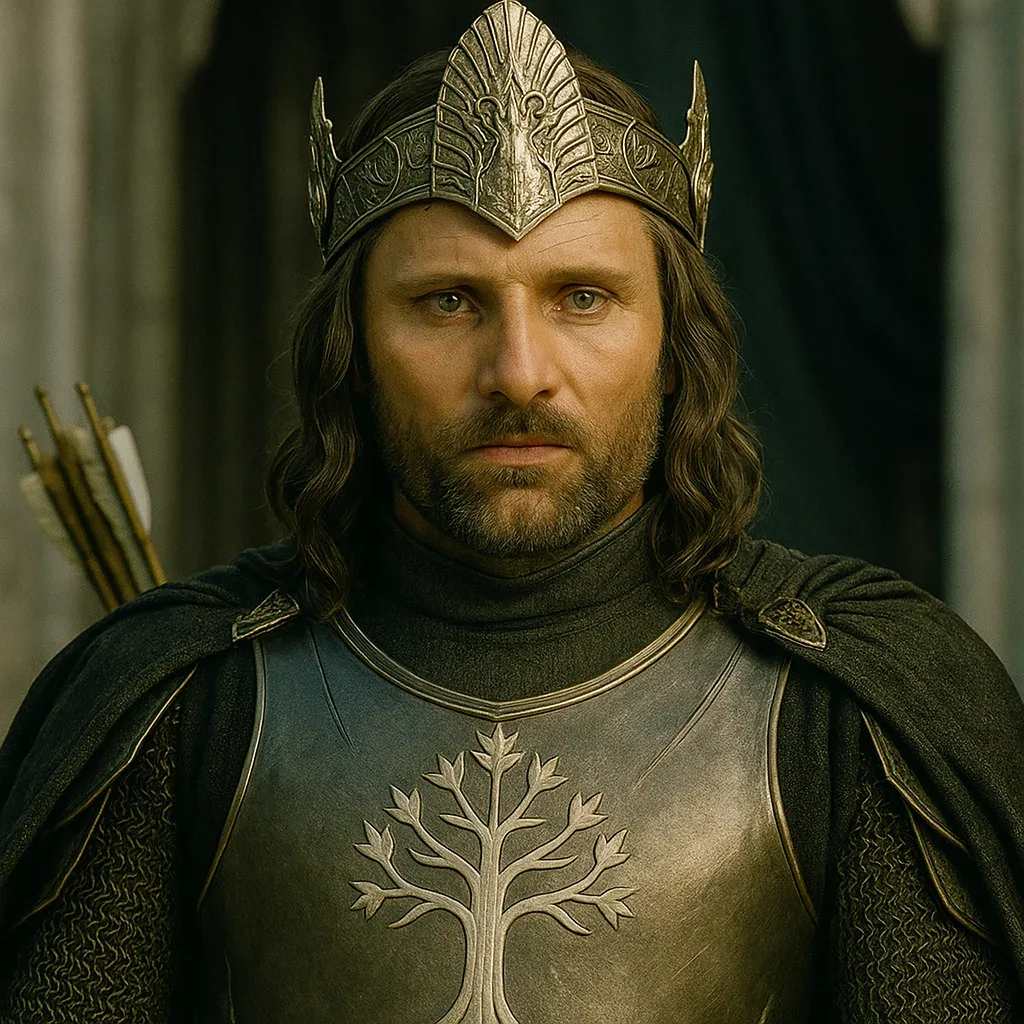
Viggo Mortensen is far more than the iconic sword-wielding king who captivated millions in Peter Jackson's blockbuster fantasy trilogy. Born to an American mother and a Danish father, the Oscar-nominated actor spent his early life living across North and South America, cultivating a deep fluency in multiple languages and artistic mediums. Beyond his legendary Hollywood career, Mortensen is a genuine Renaissance man who paints, writes poetry, composes avant-garde music, and runs his own independent publishing house. From purchasing his equine co-stars to mastering high-stakes physical stunts, his intense dedication to his craft makes him one of modern cinema's most fascinating figures.
1. He Grew Up Multilingual Across Three Continents
Born in New York City to a Danish father and an American mother, Viggo Mortensen spent much of his early childhood living in Argentina and Venezuela before moving back to upstate New York. Thanks to this international upbringing, Mortensen grew up speaking both English and Spanish fluently, while also learning Danish from his father. Over the years, he expanded his linguistic repertoire to include conversational French, Italian, and Norwegian, alongside a working knowledge of Catalan. His ability to switch effortlessly between languages has allowed him to star in international film productions across Europe and Latin America without needing dubbing or accent coaching. This cross-cultural background deeply influences his approach to acting, as he frequently seeks out roles that explore themes of displacement and cultural identity.
2. He Was a Last-Minute Replacement for Aragorn
It is almost impossible to imagine anyone else playing Aragorn in Peter Jackson's The Lord of the Rings trilogy, but Mortensen was not the original choice for the legendary ranger. Actor Stuart Townsend had already spent four weeks rehearsing in New Zealand when director Peter Jackson realized Townsend was too young for the role. Desperate for a replacement, the production team called Mortensen, who had never read J.R.R. Tolkien's books and was hesitant to leave his family on short notice. However, his eleven-year-old son Henry, an avid fan of the fantasy novels, begged his father to take the part. Mortensen boarded a plane to New Zealand immediately, reading Tolkien's work on the flight and stepping onto the set to perform high-stakes sword fights within days of his arrival.
3. He Performed His Own Stunts and Suffered Real Injuries
Mortensen's commitment to physical realism during the filming of The Lord of the Rings became legendary among the cast and crew. He insisted on performing his own swordplay and stunt work, carrying a heavy steel prop sword everywhere he went to stay in character. This extreme dedication came at a physical cost: during the filming of The Two Towers, Mortensen kicked an Orc helmet in frustration and broke two of his toes on camera, a painful moment that Jackson kept in the final film cut. In another scene, he chipped a front tooth during a grueling battle sequence, but rather than stopping production, Mortensen asked to superglue the tooth back into place so he could finish the day's shooting. Director Peter Jackson eventually insisted that the actor visit a local dentist before continuing work.
4. He Bought the Horses He Bonded With on Set
Mortensen forms deep personal bonds with his equine co-stars during filming, often purchasing the horses after production wraps. After completing The Lord of the Rings, he bought Uraeus, the chestnut stallion that portrayed Aragorn's steed Brego, as well as Kenny, the horse he rode as Hasufel. Showing characteristic generosity, he also purchased a third horse from the New Zealand production—a white stallion named Florian—and gifted it to the stuntwoman who had ridden the horse in the film but could not afford to buy it herself. Years later, while starring in the 2004 western Hidalgo, Mortensen formed a similar connection with a paint stallion named T.J. and bought him as well to live on his personal ranch.
5. His Real Artwork Appeared in 'A Perfect Murder'
Long before he became a household name in cinema, Mortensen was an accomplished visual artist who expressed himself through painting and mixed-media collage. When he was cast alongside Michael Douglas and Gwyneth Paltrow in the 1998 thriller A Perfect Murder, his real-life talent was written directly into his character's back-story. Mortensen played a bohemian artist, and the large, abstract paintings filling his character's Greenwich Village studio were painted by Mortensen himself. The film's director, Andrew Davis, was so impressed by Mortensen's art that he featured the actor actively painting on set, capturing genuine creative work on film. Today, Mortensen's fine art photography and paintings have been exhibited in galleries across the United States and Europe.
6. He Founded His Own Independent Publishing House
In 2002, using earnings from his blockbuster film success, Mortensen co-founded Perceval Press, an independent publishing company named after a knight of King Arthur's Round Table. The press was designed to give a platform to emerging poets, photographers, and fine artists whose work might be considered too avant-garde or non-commercial for traditional publishing houses. Mortensen oversees the production quality meticulously, ensuring that books are printed on high-grade paper with exceptional color reproduction while keeping prices accessible. Perceval Press operates without commercial advertising, relying entirely on word of mouth and the quality of its titles to reach readers. Through this venture, Mortensen has published dozens of art books, essays, and poetry collections, including several of his own works.
7. His Tattoos in 'Eastern Promises' Shocked Real Gangsters
To portray a rising operative in the Russian mafia for David Cronenberg's 2007 crime thriller Eastern Promises, Mortensen underwent hours of daily makeup application to apply hyper-realistic fake tattoos. In Russian criminal culture, these tattoos function as a visual resume detailing a criminal's convictions, rank, and prison history. Mortensen spent months researching Russian prison culture and language, listening to language tapes and reading criminal memoirs. One afternoon in London, Mortensen walked into a Russian restaurant with his fake tattoos still visible, and the patrons immediately fell silent out of fear, believing he was an authentic high-ranking mob boss. His terrifyingly believable performance earned him his first Academy Award nomination for Best Actor.
8. He Has Released Avant-Garde Experimental Music Albums
In addition to painting and poetry, Mortensen is an adventurous musician who plays piano, guitar, and various percussion instruments. He has released over a dozen experimental spoken-word and avant-garde jazz albums, often featuring his own poetry recited over ambient soundscapes and improvised instrumentation. His most notable musical collaborator is the enigmatic guitar virtuoso Buckethead, former member of Guns N' Roses, with whom Mortensen recorded several full-length albums. Their collaborations blend haunting guitar riffs with Mortensen's abstract piano compositions and recorded spoken field audio. Rather than seeking commercial success, Mortensen views his music as an extension of his visual art, prioritizing creative expression over radio appeal.
9. He Worked Odd Jobs Across Europe Before Becoming an Actor
Before pursuing a dramatic career in his mid-twenties, Mortensen lived a nomadic life across North America and Europe. After graduating from St. Lawrence University with a degree in Spanish Studies and Politics, he moved to Denmark to connect with his paternal heritage. While living in Copenhagen and northern Denmark, he supported himself through a wide variety of odd jobs, including selling flowers on the street, driving trucks, and working as a dockside laborer. He also spent time working as a waiter in England and selling ice cream in New York. These diverse life experiences gave Mortensen a grounded perspective on labor and survival, which he credits with helping him understand characters from all walks of life.
10. A Surfing Accident Required Selective Camera Framing
During downtime from filming The Lord of the Rings in New Zealand, Mortensen and several fellow cast members took up surfing in the local coastal waters. During one outing, Mortensen suffered a bad wipeout, colliding face-first with his surfboard and sustaining a severe bruise along the left side of his face. Because the filming schedule was extremely tight, director Peter Jackson could not afford to halt production until the swelling subsided. Instead, Jackson shot Mortensen exclusively from his right side during the pivotal scene in Moria where the Fellowship encounters the tomb of Balin. Careful viewers can notice that Aragorn's face is strictly filmed from a single profile angle throughout that entire sequence.
11. He Is a Fanatical Supporter of San Lorenzo Football Club
Having spent crucial formative years in Argentina, Mortensen developed a passionate, lifelong devotion to San Lorenzo de Almagro, a historic football club based in Buenos Aires. His fandom is legendary among sports journalists, as he frequently wears the team's signature red-and-blue badge or scarf under his formal attire on Hollywood red carpets. During the 2008 Academy Awards, Mortensen secretly carried a San Lorenzo flag inside his tuxedo coat, pulling it out for photo opportunities. He has donated money to support the club's youth academy and community initiatives, and he regularly writes column pieces about Argentine football for fan publications. In San Lorenzo, Mortensen is celebrated as an honorary club ambassador.
12. He Made His Silver Screen Debut in 'Witness'
Mortensen made his silver screen debut in Peter Weir's acclaimed 1985 crime drama Witness, starring Harrison Ford. Mortensen played Moses Hochleitner, the younger brother of Alexander Godunov's character in an Amish community in Pennsylvania. Prior to this breakthrough, he had actually landed roles in Jonathan Demme's Swing Shift and Woody Allen's The Purple Rose of Cairo, but his scenes were completely cut during post-production. Determined not to give up, Mortensen's brief but memorable performance in Witness opened the door to steady acting work in independent cinema throughout the late 1980s and early 1990s. His early career choices emphasized character depth over commercial appeal, laying the groundwork for his reputation as an actor's actor.
13. He Wrote, Directed, and Scored His Own Feature Films
In recent years, Mortensen expanded his creative resume into filmmaking, making his directorial debut with the 2020 drama Falling. In addition to directing and starring in the movie as a man dealing with his aging, conservative father, Mortensen wrote the original screenplay and composed the film's entire musical score. He followed this success with his 2024 feminist Western The Dead Don't Hurt, which he also wrote, directed, scored, and starred in alongside Vicky Krieps. Mortensen spent years meticulously researching period-accurate details for the Western, refusing to use typical Hollywood tropes in favor of realistic historical drama. His transition behind the camera has earned praise from film critics for its quiet intimacy and precise visual storytelling.
14. He Has Earned Three Academy Award Nominations for Best Actor
While many blockbuster stars struggle to gain critical respect, Mortensen has earned widespread recognition from the Academy of Motion Picture Arts and Sciences. He received his first Oscar nomination for Best Actor in 2008 for his portrayal of a mysterious Russian mobster in Eastern Promises. Nine years later, he earned his second Best Actor nomination for playing an eccentric father raising his children off the grid in 1970s wilderness in Captain Fantastic (2016). His third Best Actor nomination arrived in 2019 for his performance as Italian-American bouncer Tony Lip in the Oscar-winning drama Green Book. Mortensen's ability to completely transform his physicality and voice for radically different characters has made him one of the most respected dramatic actors of his generation.
15. He Is an Outspoken Humanitarian and Political Essayist
Far from the glitz of typical Hollywood celebrity culture, Mortensen frequently uses his platform to publish political essays and advocate for social causes. Through his articles published on Perceval Press and independent media outlets, he has written extensively about international diplomacy, environmental conservation, and indigenous rights. Mortensen is known for his sharp opposition to military conflicts and corporate exploitation, often speaking publicly at peaceful rallies and university panels. Despite his high-profile career, he avoids personal publicity stunts and social media platforms, preferring to express his activism through written word, photography, and independent documentary projects. This principled approach to fame has earned him a reputation as one of cinema's most humble and authentic figures.
Sources & References
This AI-assisted post was rigorously curated and fact-checked for accuracy by:
 Martin Roháček
How fun was this article? 🤔
Tap a star to rate it
🧠 Quiz: How closely were you paying attention?
10 questions — all answers are in the article above!
Enjoyed these facts? There's more! 💌
Fresh fun facts in your inbox. No spam, ever.