A Lost Nomination and a Nuclear Test: 15 Facts About Zachary Taylor
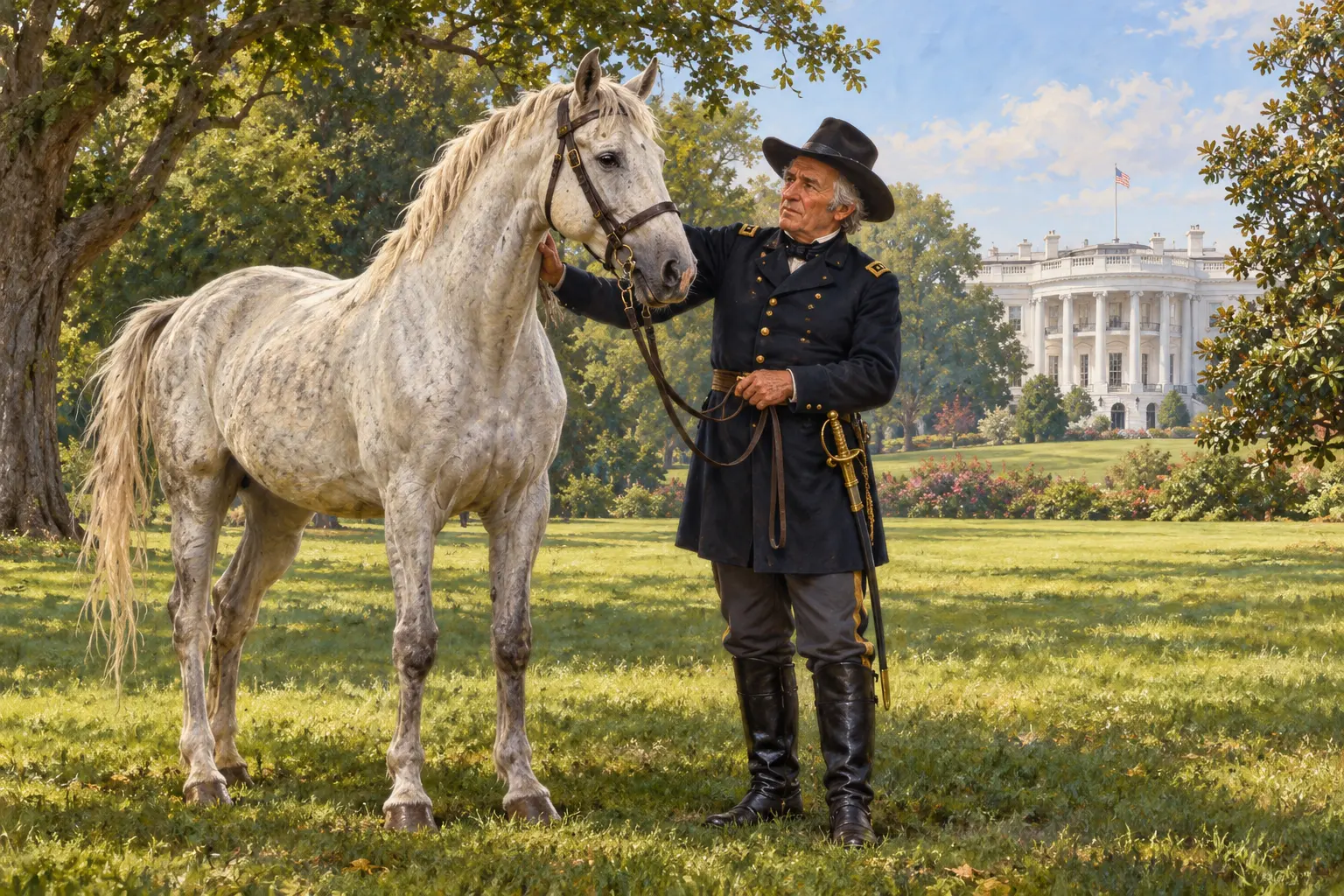
Zachary Taylor's official presidential nomination went to the dead letter office because he would not pay the postage. His warhorse attracted souvenir hunters, his family later stood on both sides of the Union's struggle, and his death eventually became a problem for a nuclear laboratory. The career soldier's brief presidency left a stranger and more complicated story than its sixteen-month length suggests.
1. His nomination letter ended up in the dead letter office
The Whig convention's official notice of Taylor's 1848 nomination arrived postage-due. He refused unfamiliar unpaid mail, so the letter joined forty-seven others sent to Washington's dead letter office. He already knew the news through other channels, but lacked formal notification. A prepaid follow-up finally reached him in July, and he accepted the nomination the next day.
2. He reached a presidential election without a voting record
Taylor had held no civilian political office and had never voted before his own presidential campaign. Much of that history reflected army postings far from home, at a time when absentee voting was rarely available. His letters also expressed real reluctance about the job: in 1847, he told a correspondent that his life's pursuits had not prepared him for civil office.
3. His early military reputation grew from defending a burning fort
In September 1812, Taylor commanded Fort Harrison in Indiana Territory during an eleven-day siege by Native warriors. Fire burned through part of the fort's wooden defenses. The garrison improvised repairs and held the post, a conspicuous American success during a period of military reverses. Taylor received a brevet promotion to major for the defense.
4. A reduced army helped make him a presidential contender
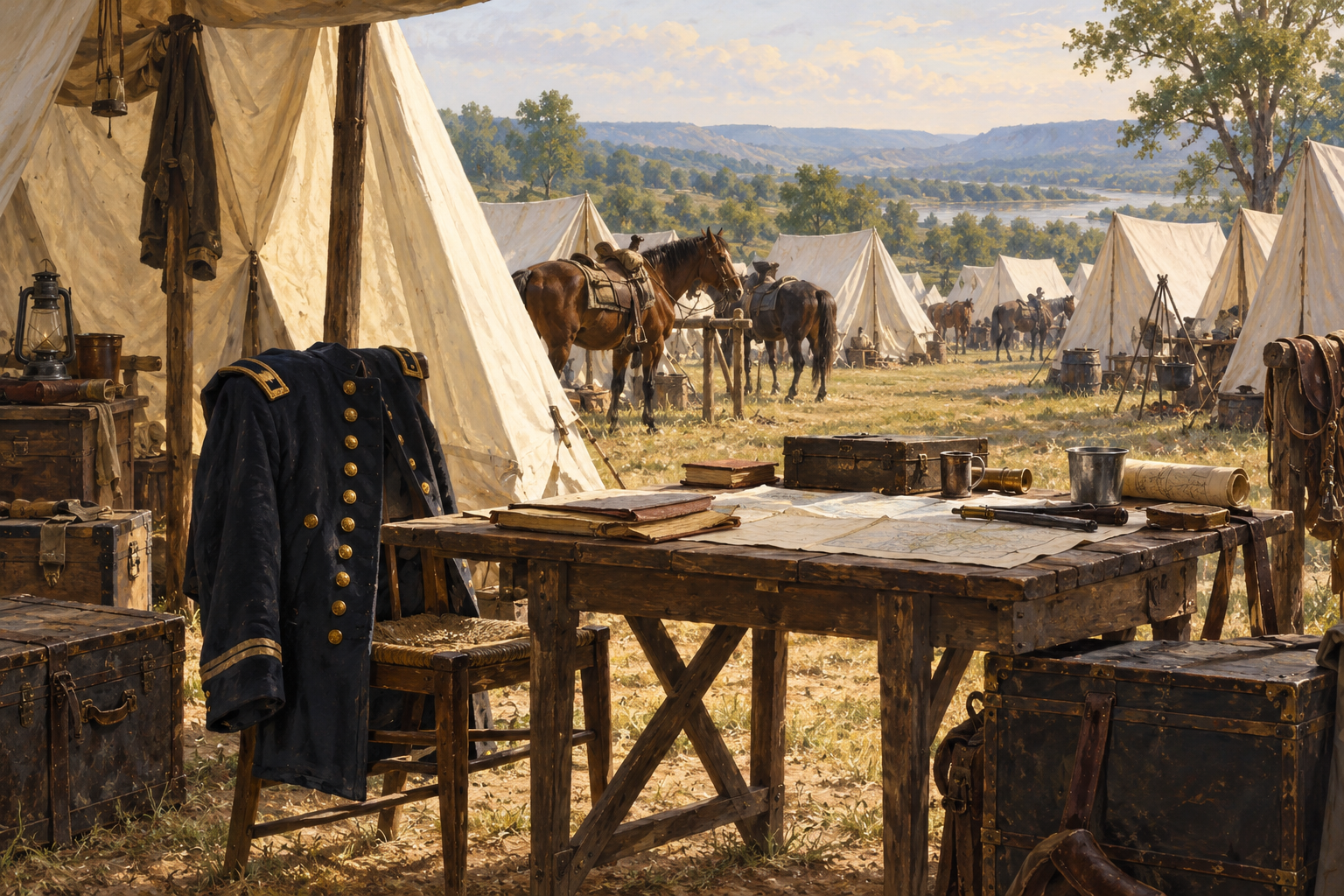
During the Mexican-American War, troops were transferred from Taylor's command to support Winfield Scott's campaign against Veracruz. Santa Anna then attacked Taylor's smaller force at Buena Vista in February 1847. Taylor's successful stand against a larger army made him a national hero. He suspected political motives behind the troop reduction; the resulting fame helped propel him toward the White House.
5. Souvenir hunters thinned his warhorse's tail
Taylor brought his famous warhorse Old Whitey to the White House. Writer N. P. Willis described the horse's tail as thinned by people seeking a hair to keep as a memento. The animal's celebrity survived its military career: Old Whitey also followed Taylor's hearse in the president's 1850 funeral procession.
6. Jefferson Davis was his son-in-law
Taylor's daughter Sarah Knox married the young Jefferson Davis in 1835, despite her parents' opposition. She died of malaria within three months. Davis later fought alongside Taylor in Mexico, helping mend the family breach. The future Confederate president was therefore connected by marriage to a U.S. president who would firmly oppose threats to break up the Union.
 You might also like
The Defiant Founder: 15 Fascinating Facts About John Adams
7. His daughter handled the White House's formal entertaining
First Lady Margaret Taylor welcomed relatives and friends privately but avoided formal social functions. Their twenty-five-year-old daughter Betty Bliss took on the official hostess's duties instead. Betty's husband, William Wallace Smith Bliss, was also the president's adjutant and secretary. The family thus supplied both a public hostess and an important member of Taylor's working staff.
8. His Sunday inauguration delay created a durable presidential myth
March 4, 1849, fell on a Sunday, and Taylor took his oath on Monday. A story developed that Senate president pro tempore David Rice Atchison had been president for the intervening day. The Senate's historical office rejects that claim. Atchison himself wrote that he never acted as president, although he enjoyed joking about his supposedly spotless administration.
9. He wanted California and New Mexico to skip territorial government
Taylor urged California and New Mexico to write constitutions and seek statehood directly. He expected them to exclude slavery and hoped to avoid a divisive congressional struggle over territorial governments. That proposal disturbed southern supporters who had counted on a slaveholding president to protect their interests. It also put him at odds with the compromise taking shape in Congress.
 US Presidents
Discover the eccentricities, secret talents, and surprising hidden lives of America's most influential presidents, from frontier wrestlers to covert strategists.
See All Facts
10. He threatened secessionists, but his son later became a Confederate general
As president, Taylor reportedly threatened to lead troops against rebellion and hang those who forcibly disrupted the Union. After his death, his only son Richard joined the Confederate army and rose to lieutenant general. Richard commanded forces in Louisiana and surrendered his department in May 1865. The father's declared Unionism did not determine the son's wartime allegiance.
11. His war secretary profited from a government payment
The Galphin claim concerned a debt dating back to the Revolutionary era. George W. Crawford had represented the claimant family before becoming Taylor's secretary of war. While serving in the cabinet, he received a large share of a government settlement paid to those clients. The affair brought damaging criticism of the administration shortly before Taylor's death in 1850.
12. The hero of a foreign war warned Americans against invading Cuba
In August 1849, Taylor issued a proclamation against a planned private armed expedition, believed to be targeting Cuba. He called on officials to arrest offenders and warned participants that they could not expect U.S. protection if their venture went wrong. Military glory in Mexico had not translated into presidential permission for citizens to launch their own overseas conquests.
13. His canal agreement concerned Nicaragua, decades before Panama
Taylor's administration negotiated the Clayton–Bulwer Treaty with Britain in 1850 over a proposed canal through Nicaragua. Neither power was to obtain exclusive control or build fortifications commanding the canal. The project never advanced beyond planning. The famous Panama Canal came much later; the agreement belongs to an earlier struggle over who would control a shortcut between oceans.
14. He bought another plantation's enslaved workforce near the end of his life
Opposing slavery's expansion did not make Taylor an abolitionist. Shortly before his death, he purchased the Louisiana plantation Fashion for his son and acquired sixty-four enslaved people to work it. His will divided enslaved people among family members rather than freeing them. This private conduct complicates accounts that present his resistance to southern political demands as opposition to slavery itself.
15. A nuclear reactor helped test whether he was poisoned
Taylor died in July 1850 after a rapidly worsening intestinal illness. In 1991, investigators examined hair and nail samples from his exhumed remains at Oak Ridge National Laboratory, using neutron activation analysis at its High Flux Isotope Reactor. The arsenic levels did not support the poisoning theory. That finding addressed a specific suspected poison; it did not establish exactly what caused his fatal illness.
How did these facts land?
Know someone who'd love these facts? Share them 👇