
Flying Foxes and a Park on Village Land: 15 Fascinating Facts About American Samoa
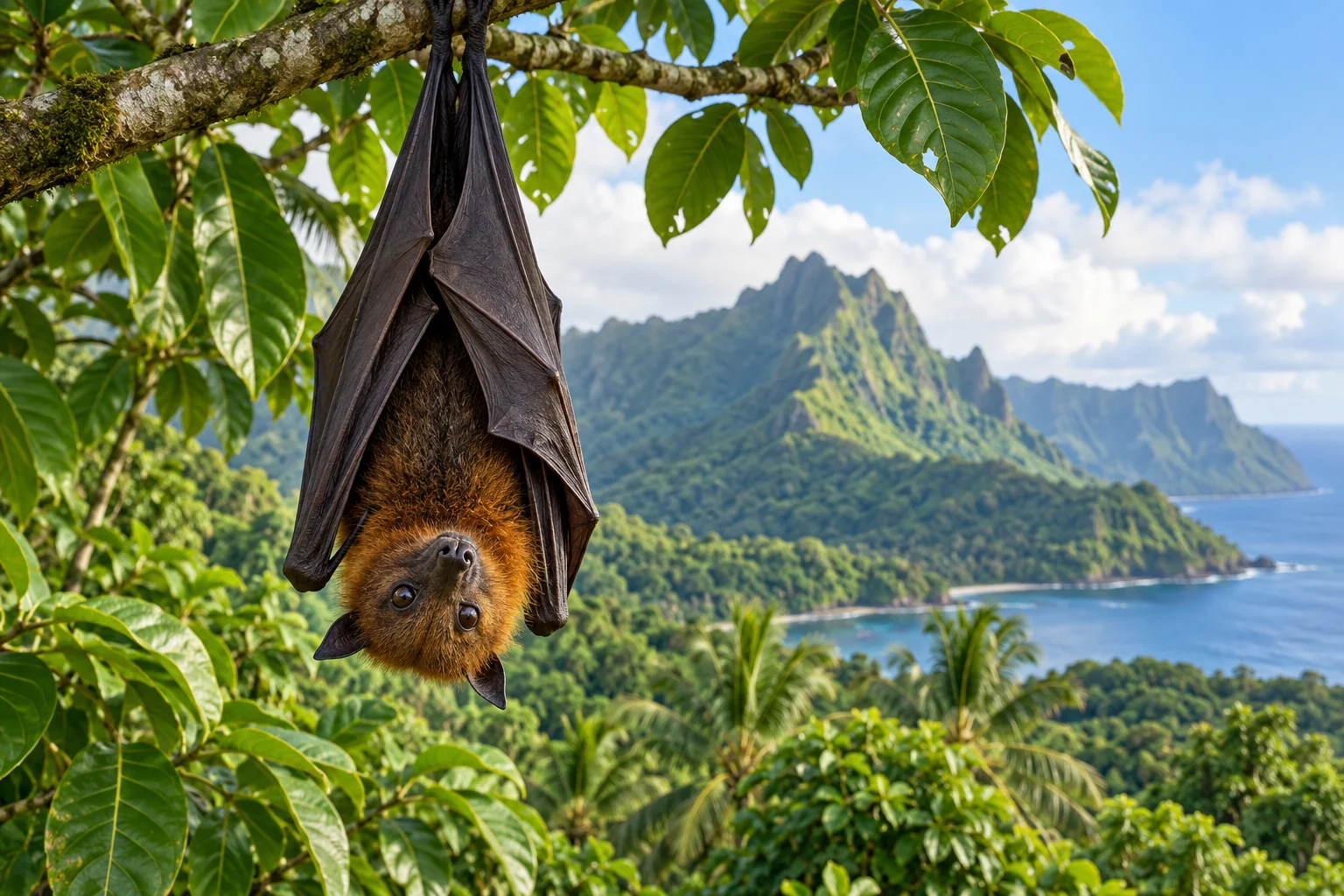
American Samoa brings together volcanic islands, reef lagoons and a living culture built around family and community. Its national park operates through an unusual agreement with local landholders, while large fruit bats help keep the forest growing. These fifteen facts explore a South Pacific territory whose geography and institutions reward a closer look.
1. Its relationship with the United States developed in stages
Chiefs ceded Tutuila and Aunu'u in 1900, followed by the Manu'a islands in 1904. Swains Island became part of American Samoa in 1925. These were separate acts in the formation of the territory, rather than one transfer covering every island at once. The sequence helps explain a political geography that includes both high volcanic islands and distant low-lying islands.
2. Nationality and citizenship are different here
Under U.S. law, birth in American Samoa generally confers U.S. nationality without automatic U.S. citizenship, unless another citizenship provision applies. A person may therefore hold a U.S. passport identifying them as a non-citizen national. This differs from the ordinary rule in several other inhabited U.S. territories. Individual circumstances matter, so the distinction should not be reduced to a claim that every person born there has identical status.
3. American Samoa and Samoa are separate political places
The Samoan archipelago spans both American Samoa and the independent country of Samoa. Shared language, family connections and cultural traditions coexist with different governments and political histories. A reference to 'Samoa' therefore needs context. The distinction is especially important when discussing laws, travel or institutions, even though the human connections across the archipelago are much older than its modern boundaries.
4. Family leadership is central to fa'asamoa
Fa'asamoa, the Samoan way of life, places strong emphasis on extended family, respect and communal responsibilities. Matai lead families and represent them in village councils, or fono. The role includes obligations to the welfare of the family, not simply authority over it. Understanding that framework helps make sense of landholding, village decisions and the relationships visitors encounter beyond the islands' natural scenery.
5. The national park uses land leased from villages
The federal government does not own the national park's village lands. A fifty-year lease agreement signed in 1993 enabled the National Park Service to work within the traditional communal land system. The arrangement made protection possible without replacing that system with ordinary federal ownership. The park's existence thus rests on a continuing relationship with local communities as well as on conservation law.
6. Authorization and the land agreement came five years apart
Congress established the National Park of American Samoa in law on October 31, 1988. The lease creating its practical land base followed in 1993. Both dates appear in park histories because they describe different milestones. Separating them avoids the impression that one source must be wrong whenever a brief account gives a different founding year.
 You might also like
Boundary Stones and a Capital Built Twice: 15 Fascinating Facts About Washington, D.C.
7. Its national park lies south of the equator
The National Park of American Samoa is the only National Park Service unit in the Southern Hemisphere. Its South Pacific location places it far from the continental landscapes most people associate with the U.S. park system. Rainforest, cloud forest, coast and reef all fall within its conservation story. The park expands the meaning of an American national landscape into a very different oceanic setting.
8. The flying foxes are large bats, not birds
Two large fruit-bat species inhabit the islands: the Samoan flying fox and the white-naped or insular flying fox. Their wingspans can approach three feet, and they may be visible in daylight as well as at dusk. A smaller insect-eating bat also occurs in the archipelago. The large animals' conspicuous silhouettes make the forest canopy a good place to reconsider the idea that bats are always tiny and nocturnal.

9. Fruit bats help plant the forest
Flying foxes disperse seeds as they feed and move through the landscape, and they also contribute to pollination. Their importance extends far beyond the individual trees where they roost. Moving seeds connects patches of forest and helps new trees establish. Protecting the bats therefore supports the broader ecosystem, linking the survival of an animal with the future composition of the rainforest around it.
10. The park is spread across three islands
Its main units lie on Tutuila, Ofu and Ta'u, each with different combinations of forest, coast and reef. They are not adjoining sections of one road-accessible park. That dispersed geography reflects the archipelago itself and gives the protected area several distinct settings. A description based only on the most visited Tutuila unit captures one part of the park's environmental range.
11. The islands rise from enormous volcanic foundations
The high islands are built from shield volcanoes rising thousands of meters from the Pacific floor. Lava flows and layers of erupted material produced rock that later weathering, erosion and coastal processes reshaped. The steep green ridges visible from shore represent only the upper portion of that construction. Their scale becomes much more impressive when the unseen submarine base is included.
12. Ofu's lagoon shelters a rich reef community
The Ofu unit contains a shallow protected reef with diverse corals and fish. Its lagoon is part of the park's marine landscape, complementing the forested slopes above the beach. Octopuses and sea turtles are among the animals visitors may encounter. The view that joins mountains and clear water is therefore an ecological connection, not merely two attractive backgrounds sharing a photograph.
13. Giant clams use sunlight through microscopic partners
Giant clams in local reefs host photosynthetic organisms in their tissues. When the clam opens its colorful mantle to the light, those symbionts help supply energy, while the animal also filters food from the water. The relationship helps explain why these clams live in relatively shallow, clear environments. Their vivid colors belong to a functioning biological partnership rather than simple decoration.
14. Rose Atoll is a very different kind of island
Far east of Tutuila, Rose Atoll consists of a reef rim, lagoon and two tiny low islands. It contrasts sharply with American Samoa's steep volcanic landscapes. Samoan names associated with the atoll refer to seabirds, reflecting its importance as habitat. The Fish and Wildlife Service protects it as a refuge, while a larger marine monument encompasses surrounding waters.
15. A traditional home comes with a different social setting
The fale, or Samoan home, is closely connected with customs governing hospitality and respect. National Park Service guidance asks visitors to sit before speaking, eating or drinking, and to observe village practices such as evening prayers. These customs show why access to a beautiful place is also an encounter with someone's community. The islands' cultural landscape remains part of daily life, not just a historical exhibit.
How did these facts land?
Know someone who'd love these facts? Share them 👇