Flour Sacks and Morning Workouts: 15 Facts About Herbert Hoover
Herbert Hoover's life includes mine management in Australia, a scholarly translation with Lou Henry Hoover, food relief in Belgium and Soviet Russia, and an exercise game played before breakfast. These stories also examine his response to the Depression, the Bonus Army and his return to humanitarian work after World War II.
1. An orphaned student helped pay his way with a laundry business
Hoover lost both parents in childhood and eventually lived with relatives in Oregon. At the newly opened Stanford University, he combined geology studies with paid work and student activities. He worked in the registration office and organized a laundry service, while also managing athletic teams. His route toward engineering wealth began with practical campus enterprise rather than a family fortune or an effortless academic career.
2. His Australian mining career included tough labor policies
In 1898, the young Hoover became general manager of the Sons of Gwalia mine in Western Australia. The local museum records that he lengthened working hours, changed shifts and removed some premium payments. He also sought immigrant contract workers as a counterweight to unionized labor. His later image as a humanitarian should not obscure the harder cost-cutting priorities of his early work as a mine manager.
3. He and Lou translated a sixteenth-century mining classic
The Hoovers jointly produced an English translation of Georgius Agricola's De Re Metallica, originally published in Latin in 1556. Their edition appeared in 1912, with extensive historical and technical scholarship. Lou's Latin skills were essential, and both received the Mining and Metallurgical Society of America's gold medal in 1914. Calling it simply the president's translation erases an important intellectual partnership.
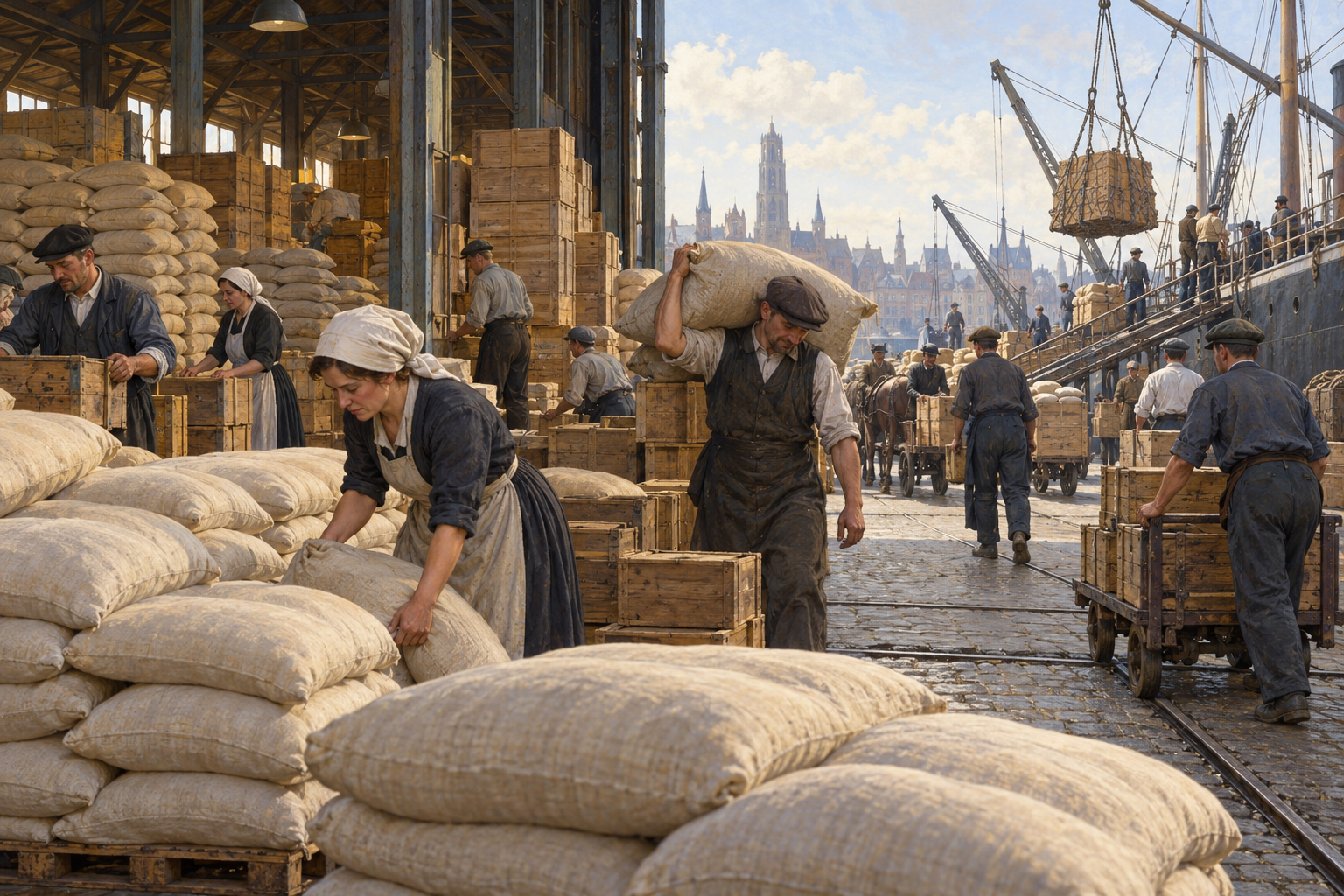
4. Belgian flour sacks became art, income and acts of defiance
Hoover's Commission for Relief in Belgium shipped food into occupied territory during World War I. Empty cotton flour sacks were carefully controlled because of their potential military use, then transformed into clothing, embroidery and paintings. Their sale supported relief and provided work for artists and women. Resistance organizer Marthe Boël described the decorating as a way to keep sacks from German hands. Many surviving examples were gifts of thanks to Hoover.
5. He helped feed Soviet Russia while opposing communism
During the famine of 1921–1923, Hoover directed American Relief Administration assistance after an appeal from writer Maxim Gorky. Relief workers negotiated access with Soviet authorities and delivered food, clothing and medical supplies. Hoover's political hostility to communism did not prevent aid to starving people living under it. Library of Congress records describe an operation credited with saving millions, rather than treating the recipients' government as a reason to withhold food.
6. Lou corrected heroic exaggerations about their time under siege
The Hoovers were in Tianjin during the Boxer uprising in 1900. Later accounts cast Lou as an armed defender standing on a wall and Herbert as a machine-gunner. In a corrective letter, she rejected both versions: her role centered on the kitchen and dining room, while his involved barricades, food and water. Their experience was dangerous enough without replacing essential logistical work with invented combat scenes.
 You might also like
Newsprint, Naval Treaties and Scandal: 15 Facts About Warren G. Harding
7. A presidential retreat led to a school for nearby children
While using Rapidan Camp in Virginia's Blue Ridge Mountains, the Hoovers learned that nearby children lacked convenient schooling. Hoover funded a schoolhouse and supplies, while Virginia provided a teacher. The school opened in February 1930. Accounts of the inspiring encounter with a local boy vary, so the sturdier story is the documented result: a presidential getaway also became the starting point for a small rural educational project.
8. A tea invitation exposed the racism surrounding White House society
In June 1929, Lou Hoover invited Jessie De Priest, wife of the only Black member of Congress, to tea. The invitation was carefully handled, and the event was placed among several separate gatherings for congressional spouses. It nevertheless triggered angry racist reactions and extensive press coverage. The episode was a meaningful breach in social exclusion, while the secrecy and management of attendance reveal the limits surrounding it.
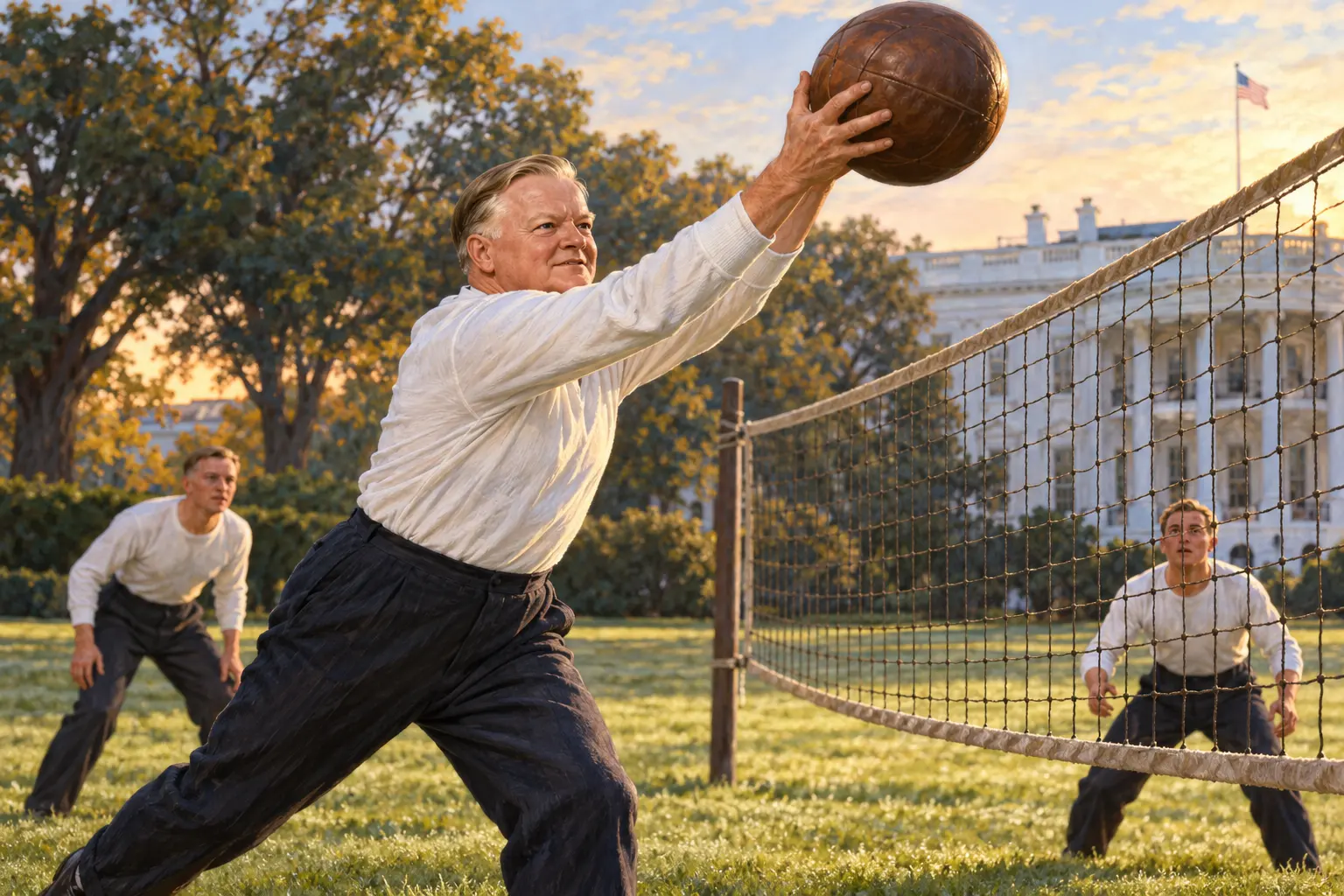
9. His morning workout became a sport called Hoover-ball
White House physician Joel T. Boone adapted a shipboard medicine-ball exercise into a game for the president. Players caught and immediately threw a six-pound ball across an eight-foot net, using tennis-style scoring. Hoover and invited officials played early on the South Lawn, becoming known as the Medicine Ball Cabinet. A journalist supplied the Hoover-ball name in 1931; the president himself was not its sole inventor.
 US Presidents
Discover the eccentricities, secret talents, and surprising hidden lives of America's most influential presidents, from frontier wrestlers to covert strategists.
See All Facts
10. A Christmas fire produced an unusual set of children's gifts
On Christmas Eve 1929, a fire broke out in the West Wing during a White House children's party. Lou Hoover kept the gathering going while staff worked to save records and firefighters tackled the blaze. The following Christmas, children received toy fire engines commemorating the previous year's event. A surviving memorandum from the Akerson family explains the gifts, grounding this remarkable holiday story in a specific contemporary record.
11. More than a thousand economists urged him to reject a tariff bill
In 1930, 1,028 economists signed a statement opposing general tariff increases. Hoover nevertheless approved the Smoot–Hawley Tariff, which raised duties on numerous agricultural and manufactured goods. The law aggravated international trade tensions and became a lasting symbol of protectionism. It did not single-handedly start the Depression: the stock-market crash and economic contraction were already underway before the bill became law.
12. A major federal lending institution began under him
Hoover signed the Reconstruction Finance Corporation Act in January 1932 to provide emergency credit to financial institutions and other parts of the economy. Its operations included lending to institutions without normal access to Federal Reserve facilities. The measure did not end mass unemployment, but it makes a purely passive portrait of Hoover inaccurate. It also became an important instrument available to the Roosevelt administration that followed.
13. His response to the Bonus Army became a political disaster
In 1932, unemployed veterans came to Washington seeking early payment of promised benefits. After a deadly clash with police, Hoover authorized troops to clear the disorder. General Douglas MacArthur extended the operation to the veterans' Anacostia camp despite instructions not to cross the bridge. Tanks, tear gas and burning shanties became enduring images. Hoover's public statement blamed radical agitators, rather than acknowledging the veterans' experience of the eviction.
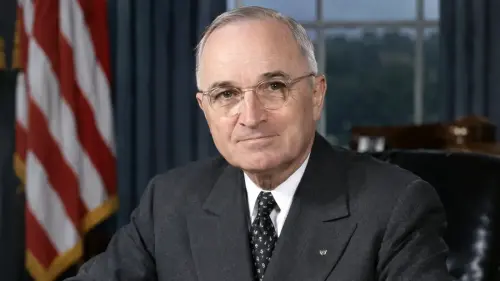
14. Truman brought him back for another worldwide food mission
In 1945, Harry Truman invited Hoover to discuss Europe's food emergency. The former president, long politically isolated, returned to major humanitarian service. At seventy-one, he undertook a worldwide mission in 1946, visiting dozens of countries and territories to assess shortages and mobilize supplies. Their cooperation grew into a friendship despite sharp political differences. Hoover's public career therefore extended far beyond his defeat during the Depression.
15. He was still publishing about fishing in his late eighties
Fishing remained one of Hoover's favorite escapes from public business. In 1963, he published Fishing for Fun—and to Wash Your Soul and sent inscribed copies to friends. A letter preserved by his presidential library records fellow engineer Arthur Beeby-Thompson responding with memories of fishing around the world. The exchange offers a quieter view of two aging international professionals, still connected by outdoor experience long after their main careers.
How did these facts land?
Know someone who'd love these facts? Share them 👇