Newsprint, Naval Treaties and Scandal: 15 Facts About Warren G. Harding
A newspaper office, a prison release, a naval disarmament conference and a dog cast from newsboys' pennies all belong in Warren Harding's story. These facts also revisit his race speech, restrictive immigration policy and scandals, separating surviving records and later genetic evidence from persistent rumors.
1. His newspaper's survival was a partnership with Florence
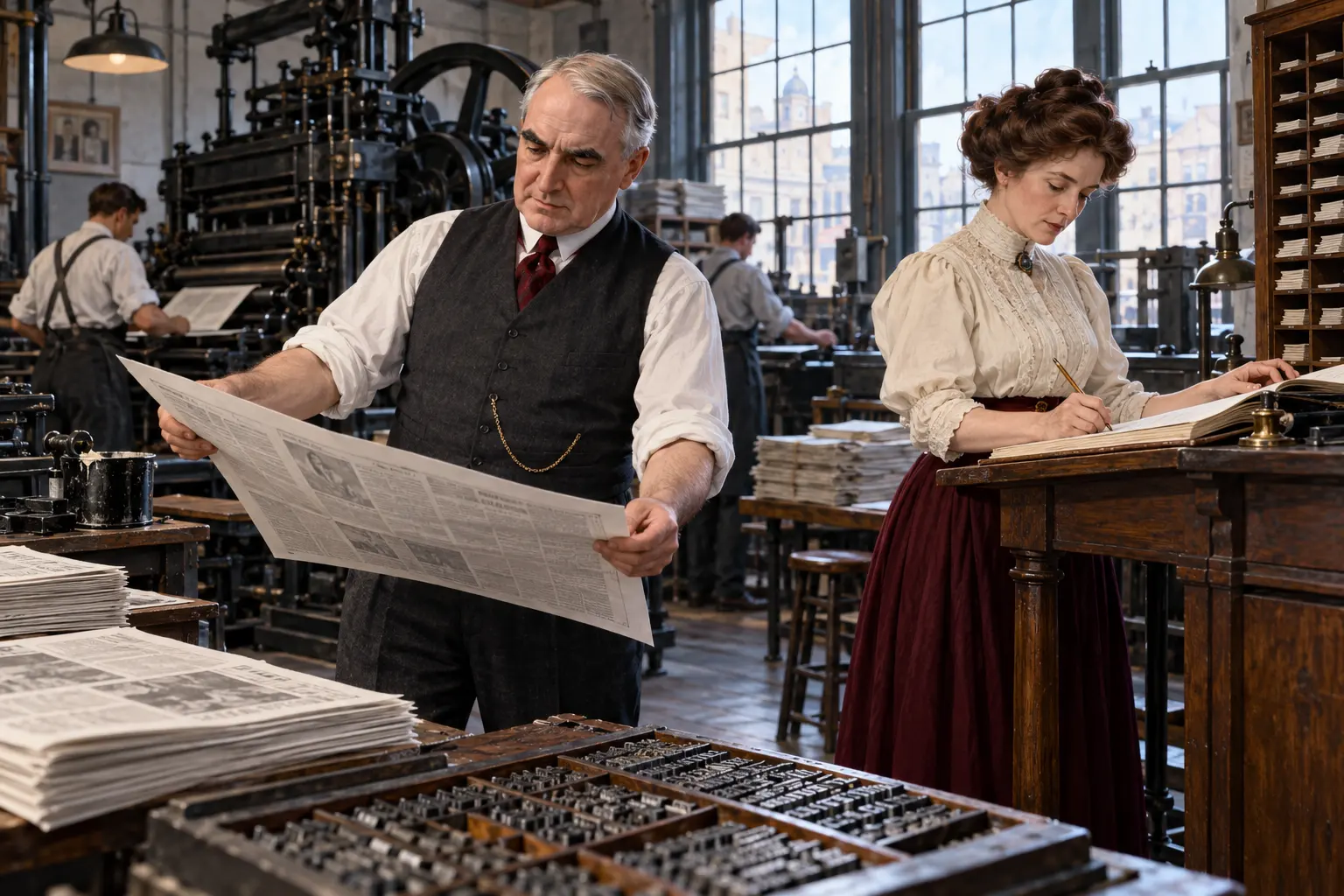
At nineteen, Harding joined two partners to buy the struggling Marion Daily Star. They left, but he persisted. Florence later reorganized deliveries, watched the accounts and helped the paper become profitable, allowing him to concentrate on its editorial work. He owned it for nearly forty years. The newspaper was a business, a community platform and the foundation of his political career.
2. His presidential opponent also owned an Ohio newspaper
The 1920 election matched Harding, associated with Marion's Star, against James M. Cox, owner of the Dayton Daily News. Their campaign styles diverged: Harding received delegations at home, while Cox traveled extensively. Cox's running mate was Franklin D. Roosevelt; Harding's was Calvin Coolidge. Election Day fell on Harding's fifty-fifth birthday, giving his victory a personal calendar coincidence as well as a political meaning.
3. His voice reached audiences through several different technologies
Harding's 1921 inaugural address used electric amplification, carrying his words beyond the reach of his unaided voice. A radio receiver arrived in the White House in 1922, and his speeches began reaching listeners by radio that year. In 1923, connected stations carried an address from St. Louis. These were distinct stages of a transition: recorded campaign speeches, loudspeakers and live broadcasting did different jobs.
4. He freed Eugene Debs and then received him at the White House
Socialist leader Eugene V. Debs ran for president from prison in 1920 after conviction over an antiwar speech. Harding commuted his sentence, allowing his release on Christmas Day 1921, and invited him to the White House. The distinction matters: this was a commutation, not a pardon clearing the conviction. A conservative Republican president met a political opponent whose wartime prosecution had raised profound questions about free expression.
5. His Birmingham race speech combined voting rights with segregationist assumptions
In Birmingham on October 26, 1921, Harding argued for Black political participation and educational opportunity. Yet the speech also rejected social equality and described racial separation as natural. Reading the text prevents turning a qualified and paternalistic argument into a modern call for desegregation. It reveals both the significance and the severe limits of his public challenge to southern disfranchisement.
6. He helped establish the modern federal budget process
Harding signed the Budget and Accounting Act on June 10, 1921. It created the Bureau of the Budget and the General Accounting Office, combining presidential coordination of spending proposals with an independent auditing institution. His subsequent executive orders specified how departmental estimates should be assembled and revised. This durable administrative change is easy to overlook in a presidency more often remembered for financial misconduct.
 You might also like
The Cinematic President: 15 Fascinating Facts About Ronald Reagan
7. He approved maternal-health aid that had taken years of organizing
The Sheppard–Towner Act, signed in November 1921, supplied federal support for state maternal and infant health programs. Jeannette Rankin had introduced an earlier version, and women's organizations campaigned for its passage. One revealing twist is that Alice Mary Robertson, then the only woman in Congress, opposed it. The law's history shows that expanded female political participation did not produce a single agreed position on welfare policy.
8. His administration negotiated limits that required scrapping warships
The Washington Naval Conference of 1921–1922 aimed to interrupt an expensive postwar arms race. Secretary of State Charles Evans Hughes led negotiations that produced limits on capital-ship strength, commonly summarized as a 5:5:3 ratio for the United States, Britain and Japan. Signatories agreed to halt certain construction and scrap ships. The arrangement was substantial, but gaps in its coverage left room for later competition in other ship categories.
9. His immigration law used a census to decide who could enter
The Emergency Quota Act of 1921 tied admissions from covered nationalities to three percent of their foreign-born populations recorded in the United States in 1910. This favored established immigrant groups over more recent arrivals, particularly from southern and eastern Europe. The law did not impose the same quotas on the Western Hemisphere. A stricter 1924 system followed under Coolidge, so the two administrations' laws should not be conflated.
 US Presidents
Discover the eccentricities, secret talents, and surprising hidden lives of America's most influential presidents, from frontier wrestlers to covert strategists.
See All Facts
10. The Teapot Dome inquiry began while he was alive
A Senate investigation began in April 1922 after reporting on a secret lease of naval oil reserves. The inquiry eventually exposed Interior Secretary Albert Fall's corrupt dealings and sent him to prison. Harding's death in 1923 preceded the scandal's full legal aftermath, but not the opening investigation. The cases also helped establish Congress's power to compel testimony, giving the affair a lasting constitutional consequence.
11. His love letters spent decades under legal restriction
Correspondence with Carrie Fulton Phillips documents an affair beginning in 1905 and continuing at least until 1920. The Library of Congress opened the collection in 2014 after a fifty-year restriction expired. The letters include coded forms of address, travel plans and political discussion alongside intimate writing. They provide direct evidence of the relationship, unlike sensational stories resting only on later recollection.
12. DNA evidence supported Nan Britton's long-rejected paternity claim
Britton's 1927 book identified Harding as the father of her daughter, Elizabeth Ann. For decades the claim was disputed and Britton was vilified. In 2015, Ancestry announced genetic results comparing Elizabeth's son with Harding's grandniece and grandnephew, supporting the stated family relationship. This evidence concerns paternity; it does not independently verify every encounter or detail recounted in Britton's memoir.
13. Newsboys funded a memorial in the shape of his dog
After Harding's death, newsboys contributed pennies toward a life-size sculpture of his Airedale, Laddie Boy. Sculptor Bashka Paeff created the memorial, and its inscription honored Harding as the newsboys' friend. Smithsonian archival records preserve photographs and the dedication. The unusual choice linked the former newspaper publisher, young newspaper sellers and one of the White House's earliest nationally famous pets.
14. His final journey included a landmark visit to Canada
Returning from Alaska, Harding attended an official reception in Vancouver on July 26, 1923. Canada's welcome to a sitting American president generated letters and telegrams of goodwill, preserved in a University of Calgary collection assembled afterward. He also played golf during the visit. The stop places his final trip in diplomatic history as well as the more familiar account of illness and death in San Francisco.
15. The Alaska Railroad's golden spike was gently tapped into a prepared hole
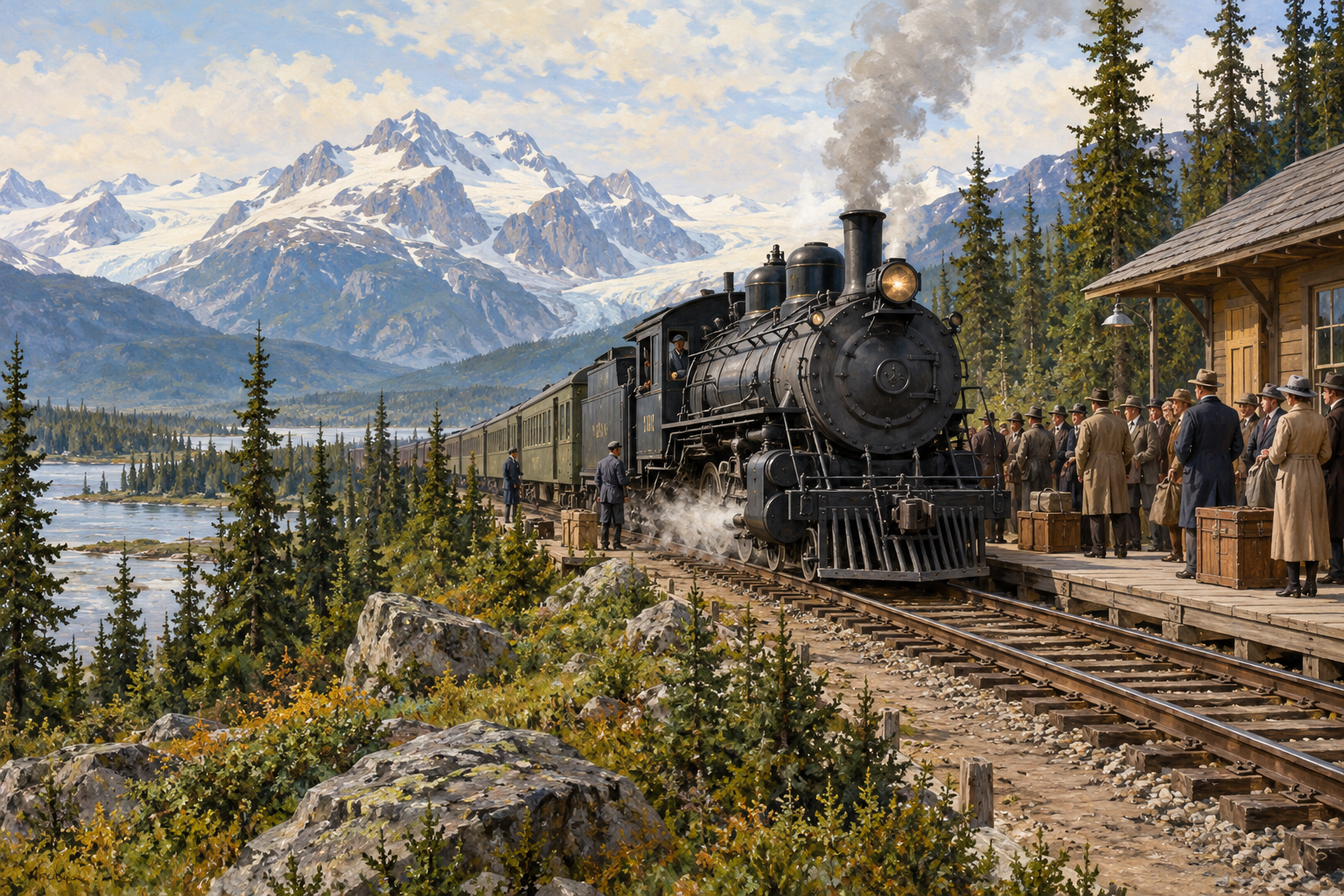
On July 15, 1923, Harding marked completion of the Alaska Railroad at Nenana. The ceremonial gold spike had been purchased by Anchorage residents as a gift to engineer Frederick Mears and loaned for the event. A National Register account records that Governor Scott Bone placed it in a prepared hole before Harding tapped it. The photograph records a symbolic final act, not the president driving ordinary track hardware into untouched timber.
How did these facts land?
Know someone who'd love these facts? Share them 👇