The Golden Knight: 15 Fascinating Facts About the Oscar Statuette
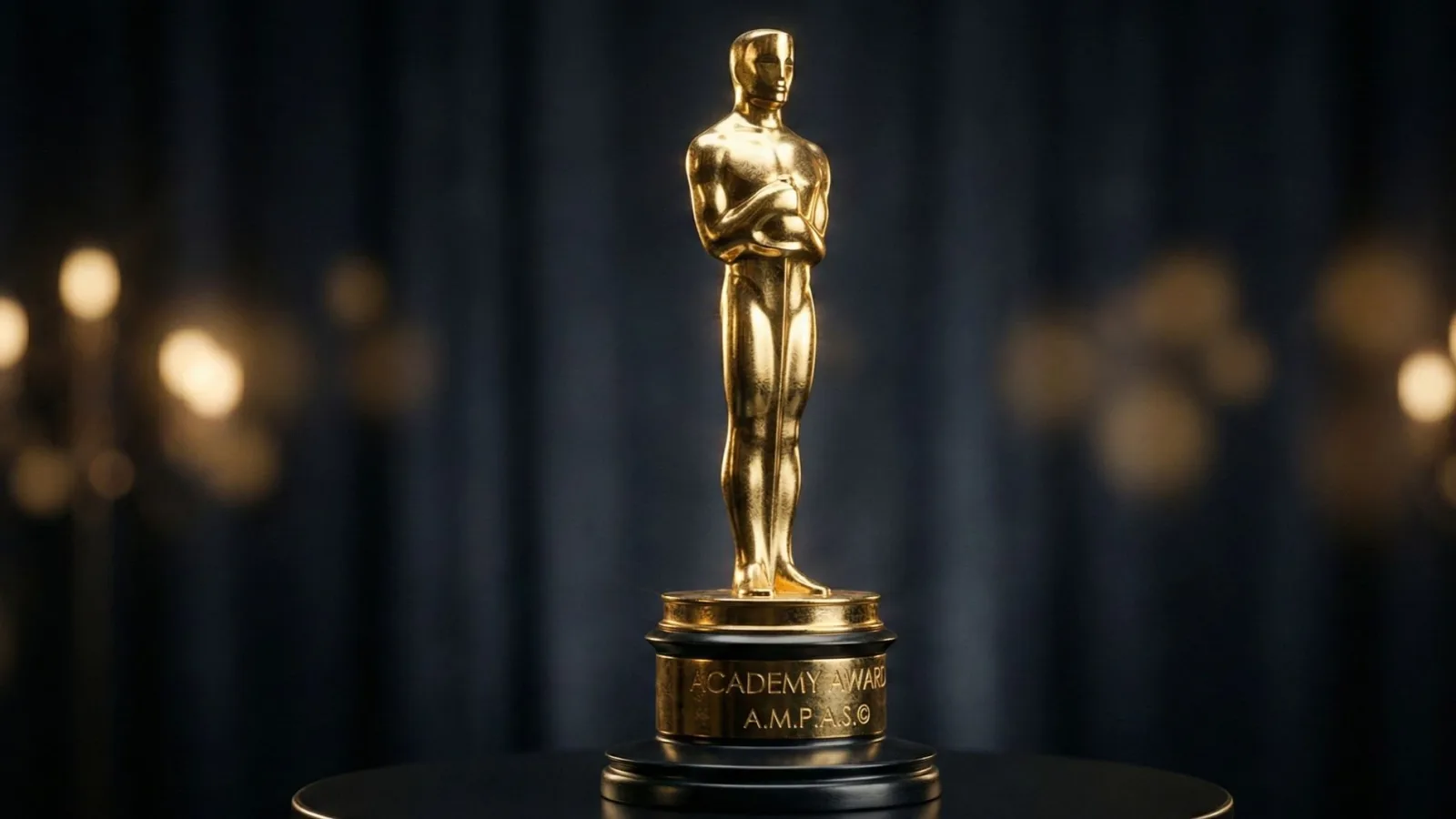
Standing 13.5 inches tall and weighing a surprisingly hefty eight and a half pounds, the Oscar statuette is the ultimate symbol of cinematic achievement. Officially titled the Academy Award of Merit, this gold-plated bronze knight holds a storied history filled with wartime sacrifices, secret designs, and bizarre thefts. From its hidden symbolic details to strict legal restrictions on resale, the trophy's journey is just as dramatic as the movies it honors. Discover 15 fascinating facts about Hollywood's most coveted prize.
1. The Official Name Is Not Oscar
While known globally by its cheerful moniker, the physical trophy is officially titled the Academy Award of Merit. The exact origin of the nickname "Oscar" remains one of Hollywood's most debated legends. Executive director Margaret Herrick famously claimed in 1931 that the statuette looked just like her Uncle Oscar, a farmer from Indiana. Meanwhile, legendary actress Bette Davis insisted she coined the name after her first husband, Harmon Oscar Nelson. Writer Sidney Skolsky also claimed credit for using the nickname in print in 1934 to demystify the prestigious award. Regardless of who said it first, the Academy officially adopted the moniker in 1939.
2. Designed by a Hollywood Art Director
The iconic silhouette of the trophy was originally drafted during a dinner meeting in 1927 by MGM art director Cedric Gibbons. Gibbons sketched a stylized knight standing atop a reel of film while holding a knightly broadsword. To bring the two-dimensional sketch into three dimensions, the Academy hired Los Angeles sculptor George Stanley. Stanley carved the original design in clay, which was then cast in molten bronze. Gibbons himself would go on to win 11 Academy Awards during his career, taking home the very statuette he had helped create.
3. The Film Reel Hides Five Spokes
The base of the statuette features a sleek film reel that serves more than just a decorative purpose. If you examine the design closely, you will notice exactly five distinct spokes on the reel. These five spokes were crafted to symbolize the original five branches of the Academy of Motion Picture Arts and Sciences. When the organization was founded in 1927, those branches consisted of actors, directors, writers, producers, and technicians. Although the Academy has since expanded into dozens of specialized branches, the five original spokes remain untouched on the base.
4. He Is Much Heavier Than He Looks
Celebrities reacting with surprise when handed an Oscar are not just acting for the camera. The statuette stands 13.5 inches tall and weighs a surprisingly heavy eight and a half pounds. Because the core is solid bronze, holding the trophy aloft with one hand requires considerable strength. Winners frequently mention in backstage interviews that they were caught off guard by the object's sheer physical density. In fact, many stars end up switching the trophy between hands during prolonged speeches to avoid arm fatigue.
5. World War II Forced a Switch to Plaster
During the height of World War II, critical metals like bronze and copper were strictly rationed for the military effort. To support the nation's wartime needs, the Academy suspended metal casting for three consecutive years starting in 1943. Instead, winners were presented with statuettes made from painted plaster. These plaster awards were significantly lighter and far more fragile than their metallic predecessors. Following the end of the war, the Academy invited recipients to turn in their plaster trophies to be replaced with traditional gold-plated bronze models.
6. Winners Cannot Legally Sell Their Trophies
Winning an Oscar confers immense cultural prestige, but it does not grant complete economic freedom over the physical object. Before a recipient can take their statuette home, they must sign an agreement with the Academy. This policy dictates that neither the winner nor their heirs may sell the trophy without first offering it back to the Academy for just one dollar. The rule was established to prevent historical awards from being commercialized or auctioned off on the open market. While older pre-1950 trophies that predate the rule occasionally appear at auction, modern awards remain legally bound to this agreement.
7. Handcrafted in the Hudson Valley
Although the star-studded ceremony takes place in Los Angeles, the physical statuettes are manufactured on the opposite side of the country. Since 2016, the trophies have been handcrafted by Polich Tallix Fine Art Foundry in Rock Tavern, New York. Artisans use a high-tech 3D printer to create wax moldings based on digital scans of the 1929 original. Each trophy is then cast in liquid bronze, hand-polished to a mirror sheen, and electroplated with 24-karat gold. Producing a batch of 50 statuettes takes the dedicated foundry crew roughly three full months of continuous work.
8. The Academy Always Makes Secret Extras
Because the outcome of the voting remains strictly confidential until the envelope is opened, the Academy never knows exactly how many statuettes will be handed out. Categories involving multiple producers, co-writers, or technical teams can dramatically change the total count on any given night. To prevent any awkward onstage shortages, the organizers always order dozens of surplus trophies. These excess golden knights are kept locked in a secure vault backstage throughout the broadcast. Any statuettes that go unawarded are safely stored away to be used during the following year's ceremony.
9. Trophies Are Completely Blank Stage Props
When an actor or filmmaker accepts their trophy live on stage, they are actually holding a completely blank statuette. To prevent leaks and preserve complete secrecy, nameplates are not engraved prior to the broadcast. In the early days of the awards, winners had to mail their trophies back to the Academy to have their names affixed weeks later. Today, a specialized engraving station is set up directly at the official Governors Ball after-party. Winners can sip champagne while watching technicians permanently attach their custom laser-engraved nameplate to the base.
10. The Great Oscar Heist of 2000
Just three weeks before the 72nd Academy Awards ceremony in March 2000, a major crisis struck the organizers. A shipping container carrying 55 brand-new statuettes was stolen from a loading dock in Bell, California. The loss sparked an urgent nationwide investigation by local police and federal agents. Nine days after the theft, a man named Willie Fulgear discovered 52 of the missing statuettes inside cardboard boxes near a supermarket dumpster in Los Angeles. The Academy rewarded Fulgear with cash and two tickets to the ceremony, while the missing trophies were safely returned.
11. Only One Person Named Oscar Has Won One
In a curious bit of trivia, millions of people have watched the broadcast over the decades, but only a single recipient named Oscar has ever claimed the award. Legendary American lyricist Oscar Hammerstein II made history when he won two Academy Awards for Best Original Song. He earned his first victory in 1941 for "The Last Time I Saw Paris" from the film Lady Be Good. He took home his second golden trophy in 1945 for "It Might as Well Be Spring" from State Fair. To this day, Hammerstein remains the sole individual named Oscar to take home his namesake trophy.
12. The Metal Core Has Changed Over Time
While the statuette has maintained a remarkably consistent appearance, its internal metal composition has evolved across the decades. The earliest trophies awarded in 1929 were crafted from gold-plated solid bronze. During the 1930s, the Academy transitioned to a lighter alloy called Britannia metal, composed primarily of tin, antimony, and copper. This metal blend remained the standard core material for over eight decades. However, in 2016, the Academy chose to return to its original roots, partnering with a new foundry to cast the trophies in pure bronze once again.
13. Walt Disney Won Special Custom Statuettes
Walt Disney holds the all-time record for individual Academy Awards, accumulating 26 wins out of 59 total nominations. However, one of his most memorable awards came in a completely unique physical format. At the 11th Academy Awards in 1939, Disney received a special Honorary Award for his groundbreaking animated feature Snow White and the Seven Dwarfs. To commemorate the landmark achievement, child star Shirley Temple presented him with one full-sized statuette alongside seven miniature Oscars mounted on a stepped wooden base. It remains one of the most famous custom trophies ever created by the Academy.
14. Ventriloquists Received a Wooden Oscar
The custom Snow White trophies were not the only time the Academy departed from its standard design. At the 10th Academy Awards in 1938, famed ventriloquist Edgar Bergen received a special honorary award for creating his famous wooden dummy, Charlie McCarthy. To honor the unique nature of ventriloquism, the Academy commissioned a statuette made entirely of carved wood with a fully functioning, movable lower jaw. Bergen's wooden trophy stands as a rare artistic exception in the long history of the traditional metallic award.
15. The Physical Manufacturing Cost Is Surprisingly Modest
While an Oscar statuette represents the absolute pinnacle of achievement in the film industry, its physical production cost is remarkably modest. The materials and specialized labor required to hand-cast and electroplate a single statuette cost approximately $400. However, because of the strict legal restrictions prohibiting winners from selling their awards on the open market, the theoretical resale price is legally pegged at just one dollar. Despite this low monetary figure, the cultural prestige associated with the trophy makes it virtually priceless to the artists who dream of holding it.
Sources & References
This AI-assisted post was rigorously curated and fact-checked for accuracy by:
 Martin Roháček
How fun was this article? 🤔
Tap a star to rate it
🧠 Quiz: How closely were you paying attention?
10 questions — all answers are in the article above!
Enjoyed these facts? There's more! 💌
Fresh fun facts in your inbox. No spam, ever.