Tiffany Glass and a Stranger's Letters: 15 Facts About Chester A. Arthur
Chester A. Arthur's life connects courtroom challenges to slavery and segregation with political patronage, a striking White House makeover and a landmark exclusion law. Private letters, surviving artworks, naval records and international conference proceedings reveal a president more complicated than either the party boss or the unexpected reformer of familiar summaries.
1. He helped Elizabeth Jennings challenge segregated streetcars
In 1854 Elizabeth Jennings refused to leave a New York streetcar after a conductor challenged her right to ride. She was forcibly removed and sued. The case went to the law firm's young partner Chester Arthur, who won damages for her. The company desegregated its cars, although ending segregation across the city's other lines required further action by Black activists.
2. He worked on a freedom case involving people passing through New York
Eight enslaved people were brought from Virginia to New York in 1852 while their enslavers planned to continue to Texas. A New York judge ordered them freed. Arthur later worked on the appeals with the firm of Culver, Parker and Arthur; William Evarts argued the appeals. The case tested whether merely bringing enslaved people onto New York soil ended their bondage.
3. His Civil War generalship depended on logistics
Arthur held a general's rank during the Civil War, but his main work involved New York's defenses, troop accommodation, food and equipment. He dealt with contractors and the practical machinery of mobilization rather than commanding a famous battlefield charge. This administrative experience helped build the reputation that later carried him into one of the federal government's most lucrative offices.
4. His customs income once rivaled the president's salary
As collector of the Port of New York, Arthur received salary plus a share of certain customs penalties. His annual income exceeded $50,000 before the 1874 Anti-Moiety Act reduced it to a fixed $12,000 salary. The office also supplied jobs and political contributions for Roscoe Conkling's machine. Hayes removed him in 1878, three years before he became president.
5. His modernizing navy still carried sails
In 1883 Congress authorized the ships remembered as the 'ABCD' group: Atlanta, Boston, Chicago and Dolphin. They represented the transition toward a modern steel Navy during Arthur's presidency. Yet modernization was gradual: these vessels combined steel hulls and steam machinery with the ability to use sails. The supposedly new fleet visibly retained features of the age it was replacing.
6. He first took the presidential oath in a Manhattan home
After Garfield's death in September 1881, Arthur took the oath at his own New York residence, rather than beginning with a grand Washington inauguration. Judge John R. Brady administered it in the early hours of September 20. Arthur repeated the oath in Washington on September 22. The private beginning reflected an emergency succession while the country mourned its assassinated president.
 You might also like
The Reluctant Politician: 15 Fascinating Facts About Dwight D. Eisenhower
7. A stranger appointed herself his conscience and he visited her
Julia Sand sent Arthur at least twenty-three letters between 1881 and 1883. She offered blunt political advice, asking for no office or favor, and condemned Chinese exclusion legislation. Arthur left no known written replies, but unexpectedly visited her family's home on August 20, 1882. Her subsequent letters show that he had read the correspondence, even if she felt their meeting lacked the conversation she wanted.
8. The patronage politician signed a law against political job pressure
Arthur's career had depended on the spoils system, yet in January 1883 he signed the Pendleton Act. It introduced competitive examinations for covered jobs and prohibited demands for political service or contributions from federal employees. Initially the hiring reforms covered only about ten percent of the federal workforce. The change was substantial, but it did not instantly replace patronage throughout government.
9. His veto of Chinese exclusion was followed by his signature on it
Arthur rejected a bill that would suspend immigration by Chinese laborers for twenty years, arguing that it overstepped treaty commitments and was excessive. Congress shortened the period to ten years, and he signed the revised law in May 1882. It also barred Chinese immigrants from naturalization. His initial veto should therefore not be mistaken for a final rejection of racial exclusion.
 US Presidents
Discover the eccentricities, secret talents, and surprising hidden lives of America's most influential presidents, from frontier wrestlers to covert strategists.
See All Facts
10. A memorial to his wife faced the White House across the square
Arthur entered the presidency as a widower: Ellen 'Nell' Herndon Arthur had died in 1880. A stained-glass Resurrection window at St. John's Church commemorated her. At his request, it faced south so he could see it illuminated from the White House at night. The window was made by the Lorin studio of Chartres, distinct from Tiffany's famous work inside the presidential mansion.
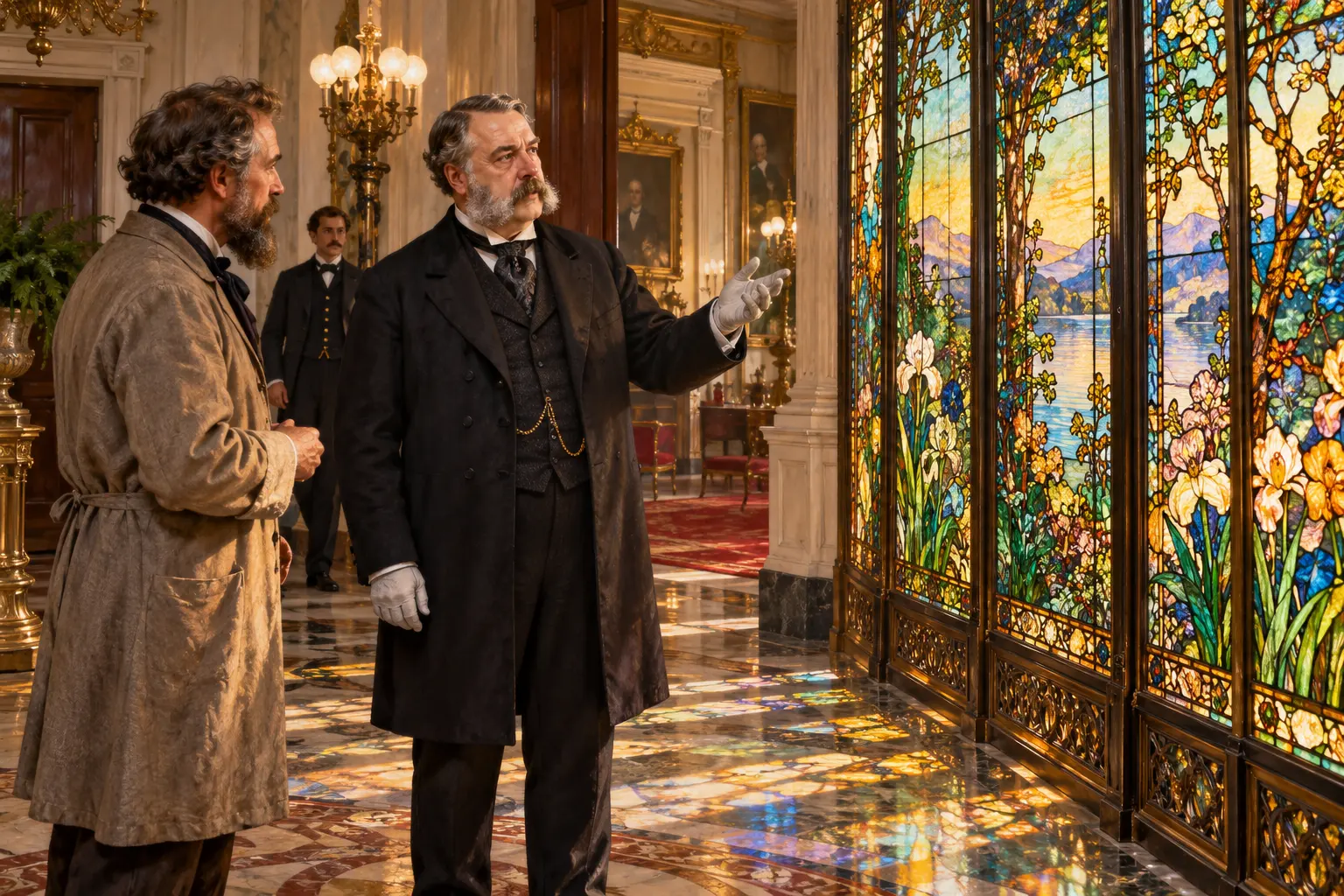
11. He commissioned Tiffany's spectacular entrance screen
Arthur hired Louis Comfort Tiffany's Associated Artists to transform the White House's public interiors. A celebrated result was the opalescent-glass screen across the Entrance Hall, installed in 1883. It survived only until Theodore Roosevelt's 1902 renovation. Auctioned in 1903, it is believed to have gone to a Maryland hotel and to have been lost when that building burned.
12. He crossed the Brooklyn Bridge at its grand opening
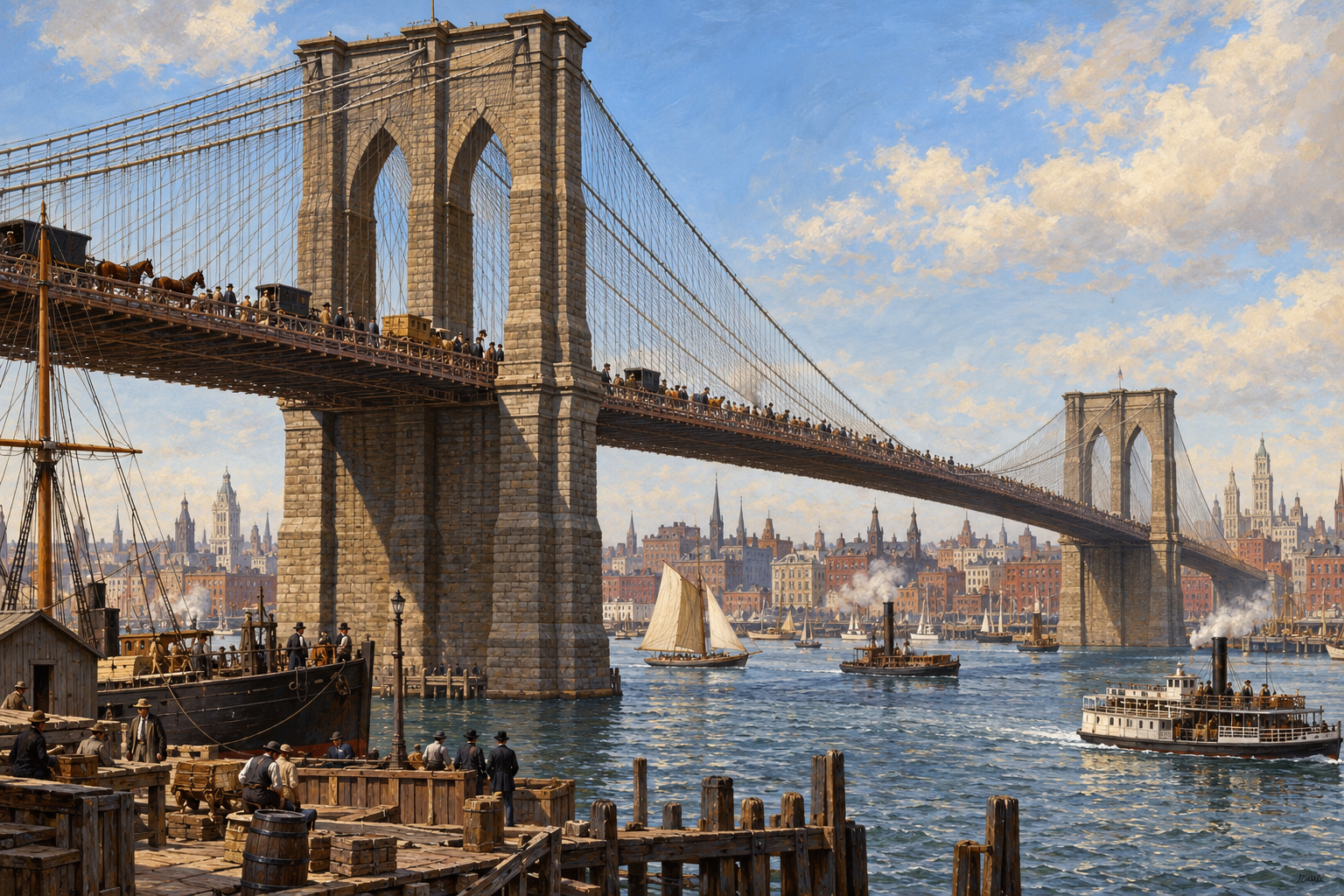
On May 24, 1883 Arthur joined the celebrations opening the Brooklyn Bridge. He crossed with New York mayor Franklin Edson and was greeted on the Brooklyn side by mayor Seth Low. The ceremony included cannon fire, and fireworks lit the evening. The president was celebrating a bridge between two separate cities: Brooklyn did not become part of consolidated New York City until 1898.
13. He convened the conference behind the world's prime meridian
At congressional direction, Arthur invited governments to an international conference in Washington in October 1884. Delegates considered a common prime meridian and universal day, recommending Greenwich as longitude zero. This was an international standardization process, not a president personally inventing time zones. In December Arthur sent Congress the conference proceedings in both English and French.
14. His Yellowstone visit generated a false kidnapping story
Arthur became the first president to visit Yellowstone in August 1883. Photographs and Associated Press dispatches document the expedition. Newspapers also circulated a dramatic claim that kidnappers planned to seize the president's party for ransom. Another newspaper debunked it, yet versions continued to appear. The trip offered an early example of presidential travel attracting sensational misinformation alongside genuine reporting.
15. The destruction of his papers left a lasting archival gap
Shortly before Arthur died in 1886, many of his papers were burned. A family account preserved by the Library of Congress described three large containers of material destroyed on his orders. Historians therefore work with a much smaller surviving record than they might have had. Julia Sand's extraordinary letters are among the documents that escaped that loss.
How did these facts land?
Know someone who'd love these facts? Share them 👇